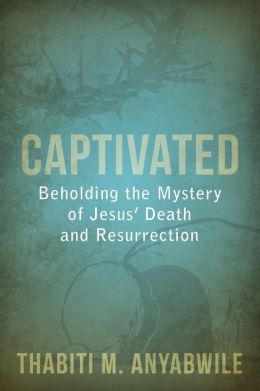
Book Review : Captivated

captivatedIt is possible to be exposed to something for so long it loses its significance and value. I believe this has happened as it relates to Jesus Christ. So many books, so many moves, so many sermons have been dedicated toward the life and ministry of Jesus Christ. Sadly, He is becoming common-place, with all of the wonder and reverence quietly diminishing. Thabiti Anyabwile, pastor of First Baptist Church Grand Cayman has written a new book entitled, “Captivated; Beholding the Mystery of Jesus’ Death and Resurrection”. In this relatively short work, ninety-four pages, Anyabwile makes a passionate plea to return our attention and amazement back to the person of Jesus Christ. With the Easter holiday season fast approaching, the timing for this book is perfect.

Captivated takes an honest and probing look at five questions surrounding the death and resurrection of Jesus Christ. These events stretch from Jesus before Pilate to the resurrection itself. Captivated began as a series of sermons Anyabwile shared with his congregation. I enjoyed the subject matter very much. A challenge to refocus and reexamine the teachings we have heard for years is always a good thing. There are a few things I did not like about the book. Due to the weightiness of the subject matter, the brevity of the book is a hindrance. I believe there is a lot more that could and should have been said in order to fully develop some points. Books that begin as sermons often struggle to capture what the original listeners heard. The flow seemed to clearly be one of “preaching points”. Although scripturally sound and passionately written, Anyabwile’s work is good, but not great.

Disclosure of Material Connection: I received this book free from CrossFocused Reviews Publishers as part of their Blogger Review Program. I was not required to write a positive review. The opinions I have expressed are my own. I am disclosing this in accordance with the Federal Trade Commission’s 16 CFR, Part 255: “Guides Concerning the Use of Endorsements and Testimonials in Advertising.”

Book Review : Heaven and Hell

heavenhellWhen it comes to controversial topics in the church today, the question of the existence of a literal Heaven and Hell is sure to generate heated discussion and debate. Most people readily embrace the thought of a Heaven and believe they will go there someday. On the other hand, there are many who do not personally believe in a Hell and simply can’t embrace the thought that God would allow such a place. In his new book, “Heaven and Hell; Are They Real?” author Christopher Hudson investigates the existence and nature of these places that he believes are “thrown around flippantly these days.” A quick breakdown of the book’s structure is necessary. Hudson’s book has two main parts, obviously. Part One, Heaven, is made up of five subsections and contains thirty-one questions. Part Two, Hell, is made up of six subsections and contains thirty questions. Hudson’s approach to the writing of this book appears to be an attempt to answer what he believes are the most commonly asked questions about Heaven and Hell.

What I Liked.

I liked the fact that Hudson wrote a book on Heaven and Hell. In my pastoral experiences, there is a great deal of uncertainty and confusion about these two eternal destinies. I applaud Hudson’s approach to simply let the Bible speak on these subjects. The flow and structure of the book reflect my preferred learning style (main points, sub-points, short chapters, etc.) I liked that. This book is an easy ready. Heaven and Hell moves from one sub-section to the next dealing with the related questions

What I Did Not Like.

I’m afraid there is more that I didn’t like than what I did like. I believe the book is too broad. With sixty-one questions ranging from “Does Everyone Go to Heaven Eventually?” to “Is Heaven a Real Place?” to “Does God Banish People to Hell or Do They Choose That Destruction Themselves?”, adequate time and attention to each are not afforded. Included are what I would consider just plain silly questions such as “Will There Be Animals in Heaven?”, “Will There Be Sex in Heaven?”, and “Will I Be Smarter in Heaven?” Time taken for these sorts of questions could have been given to the weightier and more important questions. In almost every case, once Hudson poses the question, he allows someone else to answer the question for him. Hudson simply makes a few comments after each. There are lengthy quotes throughout the book as supplemental voices work to answer Hudson’s questions. This is somewhat problematic to me because Hudson rarely states his position. The reader is left to conclude that Hudson agrees with the position of his quoted source. Also, some of the questions are repetitive and could have been absorbed with other like-themed questions.

Heaven and Hell is good primer work. In my opinion, it serves as a conversation starter and may leave the reader with unanswered questions. However, if you are looking for a deep, scholarly, theological work, this is not the book for you. I would have mixed emotions about recommending it to others because of its width and lack of depth.

Disclosure of Material Connection: I received this book free from Thomas Nelson Publishers as part of their Blogger Review Program. I was not required to write a positive review. The opinions I have expressed are my own. I am disclosing this in accordance with the Federal Trade Commission’s 16 CFR, Part 255: “Guides Concerning the Use of Endorsements and Testimonials in Advertising.”

Book Review : Futureville

futurevilleIt has been said that our belief about the future will have a positive or negative effect upon our life in the present. In his new book, “Futureville; Discover Your Purpose for Today by Reimagining Tomorrow”, author Skye Jethani writes about two different tension-filled times: today and tomorrow. He sets these times against each other by using the 1939 World’s Fair as an example of this tension. The World’s Fair came at a time when Americans were still reeling from the effects of the Great Depression. Into this period of poverty and hopelessness, the World’s Fair offered a look into a future that was brighter, overtly optimistic, and nothing like current reality. This glimpse of hope and “what might be” enabled Americans to better handle “what currently is”. Jethani writes, “How we interpret our present suffering, our work, our purposes, even our relationships is defined by how we think about what lies ahead.”

Futureville appears to have two main sections. The first section deals with the ways in which people generally approach the future. Jethani offers three viewpoints. Evolution offers the world hope that the human race can make the world a better place. Evacuation speaks of the desire of being pulled out of this world before it crashes in around us. Jethani writes of Resurrection, “Still, the incarnation of Christ among us and his cultivation of order, beauty, and abundance is not all there is to this third pathway to Futureville. Jesus came to give us more than mere glimpses of hope. He came to unleash a power that would make all things new.” In the second section, Jethani describes those things that will be made new: vocation, order, beauty, abundance, and hope.

Futureville is an okay book. There is nothing earth-shattering within the covers. I had high hopes for this book. After reading the introduction and diagnostic questions Jethani asked, coupled with the brilliant World’s Fair analogy, I was disappointed that he never connected dots. I found this book to be repetitive and disjointed, making it hard to follow. I would not recommend this book.

Disclosure of Material Connection: I received this book free from Thomas Nelson Publishers as part of their Blogger Review Program. I was not required to write a positive review. The opinions I have expressed are my own. I am disclosing this in accordance with the Federal Trade Commission’s 16 CFR, Part 255: “Guides Concerning the Use of Endorsements and Testimonials in Advertising.”

Book Review : Life in Christ

lifeinchristThere are millions upon millions of people in this world today who are without Christ. They do not know the freedom of forgiveness. They do not know what true joy is. They do not know what it is like to have a heavenly advocate. They do not know the blessing of an abundant life. On the other hand, there are millions upon millions who are in Christ (belonging to Him through a personal relationship). Their life is much different. They understand and appreciate forgiveness. Joy marks their lives. They lean on their heavenly advocate and enjoy an abundant and full life here made possible through God’s gift of salvation. In his new book, “Life in Christ; Becoming and Being a Disciple of the Lord Jesus Christ”, pastor and author Jeremy Walker explores the natural progression of the Christian life; moving from knowing Christ personally, following Christ intentionally, and becoming like Christ ultimately. The Bible speaks of the “unsearchable riches of Christ” that belong to the Christian as a result of being “in” Him. Walker explains how or understanding and appreciation or these “riches” will enable the believer to be a true disciple of Christ.

Life in Christ delves into the areas of a believer’s relationship with Christ that do not often receive a great deal of attention. walker explores six critical areas which make up the great majority of the book. In chapter one, Walker deal with the believer’s call to salvation and the promise of God to save. In chapter two, the believer’s position of being “in” Christ is more fully developed. In chapter three, Walker brings to the forefront what the “unsearchable riches” of Christ are: joy, grace, power, to name a few. Chapter four deals with the believer’s adoption as sons and daughters of God. The author gives chapter five to the positive and negative sides of a believer’s assurance of salvation. Finally, speaking again positively and negatively, the marks of a true believer are explained.

Life in Christ is a much-needed work. Walker invites his readers on a journey into a deeper walk with Christ by reminding them of all that is theirs because of their personal relationship with Jesus Christ. Written from a pastor’s heart and a scholar’s mind, Life in Christ is an encouraging and challenging work. I highly recommend.

Disclosure of Material Connection: I received this book free from CrossFoucsed Reviews as part of their Blogger Review Program. I was not required to write a positive review. The opinions I have expressed are my own. I am disclosing this in accordance with the Federal Trade Commission’s 16 CFR, Part 255: “Guides Concerning the Use of Endorsements and Testimonials in Advertising.”

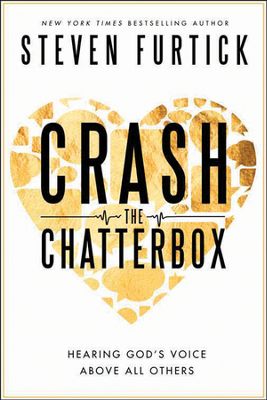
Book Review : Crash the Chatterbox

crashVoices. Many, many voices. Voices of praise. Voices of discouragement. Thoughts of worthlessness. Voices of sorrow. Thoughts of inferiority. Voices of criticism. Our lives are filled with the voices and thoughts that are competing for the prime real estate that is our mind. Every day we must decide which thoughts and voices we will give attention to and which ones we won’t. The choices we make here may determine how effective and productive we become in life. In his new book, “Crash the Chatterbox; Hearing God’s Voice Above All Others”, pastor and author Steven Furtick exposes the reader to the enemy’s continual and strategic barrage of negative and harassing thoughts whose purpose is to cripple the believer’s confidence and effectiveness. Furtick refers to these thoughts as a “chatterbox”. The chatterbox is the collection of lies that that keep us from reaching out full potential. Furtick writes, “But let’s think together about the possibility that 80 percent of our thoughts are not only devoid of any power to help us but actually work against us. When we allow thoughts to go unchecked, a steady drip of lies cements the wrong patterns within our minds, building a Berlin Wall of bad beliefs.”

The scaffolding for “Crash the Chatterbox” is four confessions that are, in the author’s words, “meant to function like noise-canceling headphones for your mind, heart, and soul. These are truths about God and truths about you that come straight from God’s Word.” These confessions, which also make up the book’s four sections, are:

Confession #1: God Says I Am – Overpowering the lies of the enemy in your insecurities.

Confession #2: God Says He Will – Overpowering the lies of the enemy in your fears.

Confession #2: God Says He Has – Overpowering the lies of the enemy in your condemnation.

Confession #4: God Says I Can – Overpowering the lies of the enemy in your discouragement.

These four confessions are meant to revolutionize the way we think and to help us respond to the thoughts and voices that mimic an irritating Facebook feed. Each of the four sections is built around a particular category of chatter and the confession relating to God’s dealings with it. In each section, Furtick uses personal experiences powerfully and God’s Word ultimately to show how each believer can possess the victory over the enemy’s crippling chatter. Each section has its own strengths and highlights. However, Chapter Nine, Counterfeit Conviction, is the most powerful one and is worth the book’s price itself. Furtick sums up the purpose of these confessions with this statement, “The change the confessions will make n out lives are revolutionary. Not because the confessions are fancy or brilliant, but simply because they are powerful. And they are God’s truths.”

Cleverly titled and simply written, “Crash the Chatterbox” is a great work. Furtick’s writing style is unique. It is a mixture of flamboyance and passion tempered with heart-felt transparency. Of his previous works, Sun Stand Still and Greater, Crash the Chatterbox is by far the best. It is obvious that Furtick’s writing comes from the overflow of what God is doing in his life. Read it.

Disclosure of Material Connection: I received this book free from Waterbrook Multnomah Publishers as part of their Blogger Review Program. I was not required to write a positive review. The opinions I have expressed are my own. I am disclosing this in accordance with the Federal Trade Commission’s 16 CFR, Part 255: “Guides Concerning the Use of Endorsements and Testimonials in Advertising.”

FIFS : Genesis 39:2

The LORD was with Joseph, and he was a successful man; and he was in the house of his master the Egyptian.’

Knowing the position Joseph was in, this verse, on the surface, does not make a whole lot of sense. The Lord was with Josesph when he was sold by his brothers into slavery? The Lord was with Joseph and he is now in Egypt removed from his homeland, his family, and the familiar surroundings of his Hebrew faith? The Lord was with Joseph in prison for refusing to sin against God with Potiphar’s wife? Yes, to all three. This verse causes us to think, “How can that be?” or “I don’t see that at all”. All of the events that unfolded in Joseph’s life were part of a larger plan God had for him. A plan that led to the rescue of his family during a severe famine. The events that happen  in our lives, even those seemingly unexplainable ones (you know the kind), are part of a larger plan.

The Lord was with Joseph and placed him in a country where resources were plenty. The Lord was with Joseph in prison and choreographed the meeting with Pharaoh’s imprisoned officials. This meeting in turn led to Joseph finding favor with Pharaoh and becoming the superintendent over all the land of Egypt. God is constantly at work in our lives. He moves us along and orders the events that will bring His plans to pass. We may not like these events. These events may not be comfortable. These events may call for a reorder of our lives. However, they are always right. It is the uncomfortable events of life that stretch our faith. I believe the lesson we learn from Joseph is worth remembering. The lesson is this, my uncertain circumstances do not negate the certainty of God’s presence.

Book Review : Exploring Christian Theology

exploreWhen it comes to the word theology, images of dusty books, seminary classes, and Greek/Hebrew translation come to mind. Volumes upon volumes have been written in an attempt to explain and understand the nature of God. Dallas Theological Seminary professors Nathan Holsteen and Michael Svigel has offered a contribution with their joint effort, “Exploring Christian Theology; The Church, Spiritual Growth, and the End Times”. The goal of their book is to make the very basic tenets of theology available to everyone. Their choice of doctrine to explore includes the church, sanctification, and end times study.

Exploring Christian Theology is written in two parts: Spiritual Growth and the Church (Holsteen) and End Times (Svigel). Each part is subdivided the same way containing the following elements: High Altitude Survey, Passages to Master, Retrospect, Facts to Never Forget, Dangers to Avoid, Principles to Put into Practice, Voices from the Past, and Shelf Space. What I enjoyed most were the Retrospect, High Altitude Survey, and Passages to Master sections in each part. The authors did a nice job of laying the proper historical groundwork so that a modern application could be made. Holsteen and Svigel’s commentary on the most prominent and familiar scripture passages within the section of writing was very helpful. Although this is a theology book, the authors chose not to use difficult language which makes the books very readable. This is a plus.

I had some minor issues with the book. The format of the book is counterproductive. It appears the authors desired to include as much information on their material as possible. The inclusion of unnecessary peripheral material takes away from what they set out to do. For example, there are 31 pages of quotes from authors, scholars, and church leaders from the time periods of their writing. The section on recommended and further reading could have been left out as well.

My greatest issue with this book is the simply the choice of subjects to be covered. Their goal was to cover the basic tenets of theology. For the time, space, and length of work the authors chose, I believe the three that were chosen are not the most basic of tenets. Doctrines such as Theology Proper (God), Christology (Jesus Christ), Harmatology (Sin), Soteriology (Salvation), and Pneumatology (Holy Spirit) would have been preferable if the goal was to provide the basics. As a pastor, if I were asked to recommend a theology book, it would not be this one.

Disclosure of Material Connection: I received this book free from Baker Publishing as part of their Blogger Review Program. I was not required to write a positive review. The opinions I have expressed are my own. I am disclosing this in accordance with the Federal Trade Commission’s 16 CFR, Part 255: “Guides Concerning the Use of Endorsements and Testimonials in Advertising.”

Contributing Factors to the Current Decline and Eventual Demise of the Baptist Association : Part #3

Disclaimer: The thoughts, beliefs, and conclusions drawn belong solely to the author and do not necessarily reflect the views of Port Royal Baptist Church.

This is the final post in a series of in what I believe are the contributing factors to the current decline and future demise of the Baptist association. The first four factors were:

1. Failure to properly train leaders.

2. The choice of pastors/church leaders to be involved in networks as opposed to associations.

3. Inability to effectively assist member churches in navigating the changing culture.

4. Duplication of resources.

5. A favoring of church plants over established churches. Let me say this from the beginning and please hear me clearly: I am not opposed to church planting. Just the opposite. I believe more churches are needed in order to reach the groups of people that the established church can’t or are unwilling to reach. I applaud the efforts of or North American Mission Board in making church planting a priority in the major cities across North America. In fact, it is my prayer that our church will be able to partner with a new church plant this year. This emphasis on church planting has found its way into the Baptist association. More and more associations are developing policies on how o fund, support, and sustain new church plants. In some areas, associational leadership is taking on new designations that reflect this new priority (i.e. Directors of Missions now being called Church Planting Catalysts). I have no problem with this. The concern I am expressing here is a real one because I have seen it first-hand.

For a period of time, I was under the leadership of a Director of Missions who gave the impression that he favored church plants over established churches. As I observed it, more time and attention was given to church plants than to the established churches that were struggling and could have benefited from the same passion and care. To this day, that association is splintered as a result. With a renewed emphasis on church planting, balance is critical. Established churches and church plants need each other. Established churches can be of benefit to church plants. They offer funding, experience, leadership, and encouragement/prayer support. Church plants can be of benefit to the established church. They offer refreshing views on vision, focus, ministry, and they challenge the established church to stretch. For the Baptist association to remain meaningful to its member churches, there has to be a commitment to both/and when it comes church health. To shift to an either/or model will cause all churches to suffer. (Note: the North American Mission Board has also launched a Church Revitalization emphasis geared to help struggling and unhealthy churches become healthy again.)

6. Lack of participation. This is not so much a contributing factor as it is a signpost along the road. Lack of participation is the natural outcome of the previously mentioned factors and is the symptom that cries out the loudest. I have heard it said throughout my years of ministry that people vote with their wallets and their feet. If they support something, they will give to it and go to it. If they do support it, they won’t give and they won’t go to it. We are seeing some of this in the Baptist association today. I can’t explain it exactly. Of all the reasons that could be offered, I believe one key issue may be leading to this lack of participation: generational challenges. There is an ever-widening gap between the ages. There are more and more senior adults participating and less and less young adults participating. To be fair, this same trend is seen in many of our churches today. In our association, by far the most highly attended and visible event is our senior adult celebration which sees more than 200 in attendance. This is not a bad thing. Since, no other age-related event/ministry is given as much attention and planning, what message is being sent?

Our association has thirty member churches. This lack of participation is seen in a number of areas such as the annual meeting (78 in attendance this year), bi-monthly executive board meetings (average of 8 pastors in attendance), and monthly minister’s fellowship meeting (average of 4 in attendance). I believe there are some difficult questions that need to be asked and answered. Strong and focused leadership is needed. I believe the days of “participate because you belong” are over. If participation continues to wane, and associational leadership can’t right the ship, the future of the Baptist association seems dim.

There are some really good things coming out of our associations today. As a church, we will continue to support (financially, volunteer, etc.) our association in any way that we are asked and able to do so. Decline is reversible. When all is said and done, I believe the Baptist association has a place and function in the Kingdom. The question that the Baptist association will have to answer is one similar to this: “In light of current decline, are we willing to make the necessary changes in order to equip and assist our member churches in ministering more effectively in their individual contexts?”
Contributing Factors to the Current Decline and Eventual Demise of the Baptist Association : Part #2

Disclaimer: The thoughts, beliefs, and conclusions drawn belong solely to the author and do not necessarily reflect the views of Port Royal Baptist Church.

This is the second in a series of posts relating to what I believe are the contributing factors to the current decline and future demise of the Baptist association. The first two factors were:

1. Failure to properly train leaders.

2. The choice of pastors/church leaders to be involved in networks as opposed to associations.

3. Inability to effectively assist member churches in navigating the changing culture. The New Testament church is on the front line of ministry, not the Baptist association, or the state conventions for that matter. This may sound a bit strong and even offensive to some. Associations are made up of local churches from which leadership and funding is drawn. Local churches make up the state and national conventions from which leadership and funding is drawn. Our mission boards are made up of missionaries who were called out of and have a relationship with a local church. Funding to keep them on the field comes from local churches that give generously and consistently. Because the local church comes first, associations would not exist without it. It is my belief that the Baptist association exists to assist its member churches with their ministry and not engage in ministry on their behalf. This is the lens that I view everything through.

As the cultural landscape is changing and the church is routinely faced with difficult and problematic scenarios within areas such as traditional marriage, right to life issues, building and constructions needs, child protection, religious liberty, and legal considerations (bylaws, property, human resources, etc.) I believe this is an area where the association can get out front and be of greater assistance. More often than not churches with concerns and needs within these areas are referred to the state convention or other agencies. To be fair, it would be impossible for an association with limited staff and resources to anticipate every need of every member church. I get that. However, if a church feels as if they are on their own when it comes to these challenges in ministry, the association becomes less and less of a priority. The days of “call us if you need us” are long gone. Let me share at least two questions that are not being asked by associational leadership, in my experiences.

1. “What challenges are you facing for the first time as a local church that are the result of a cultural shift?”

2. “How can we walk with you through it?”

4. Duplication of resources. As I mentioned in the previous post in this series, the Baptist association is made up of ministry departments such as Youth Ministry, Men’s Ministry, Women’s Ministry, WMU, Sunday School, Discipleship Training, Stewardship, Pastoral Ministries, VBS. and others. Baptist state conventions have similar departments within their structure as well. As the pastor of a church who is member church of an association and a state convention, I receive a great deal of information and publications twice. Everything I have access to at the associational level I also have access to at the state level. I believe this will grow to be more problematic for the association as time goes on. Churches will begin, if they have not done so already, asking questions such as this one: “If there are resources that I can only find at the state level, and everything I can find at the association can also be found at the state, why not skip the association?” I believe this is a fair question. To be honest, when I am in need or training and assistance, I prefer the state convention. Why? Well, there is a possibility that I may be referred there anyway and we can be resourced faster at the state level. As more and more leadership, training aids, and resources are made available to the churches from the state convention, the Baptist association will find itself in the position of an awkward middleman. This is an unintended consequence of the state convention’s work. I am not sure how the Baptist associations can reverse this trend and become the first choice of its member churches.