Christmas : A Day of Birth and Death

Today is Christmas. It is a day of birth. The gospel writer Luke speaks of it. “10 Then the angel said to them, “Do not be afraid, for behold, I bring you good tidings of great joy which will be to all people. 11 For there is born to you this day in the city of David a Savior, who is Christ the Lord.” This is  very important. It marks the entry into this world the One whom the prophets of old had spoken. It marks the entry into this world the One who would lay aside all claims of royalty and live as a servant to all. It marks the entry into this world the One who would make the journey from the manger to the cross securing for fallen man his redemption and forgiveness. This is reason to celebrate. If no Christmas, there is no Easter. If no Easter, there is no hope. It is no secret that this is my favorite time of the year. I look forward to this season more than any other. This season brings with it a sense of amazement and child-like wonder. The carols, family gatherings, gift giving, and the sense of good will on behalf of and toward our fellow man only add to the enjoyment of the true reason for this season. To God I am thankful for this day of birth for it brings a reason to believe and One in whom to believe.

Today is a day of death as well. I lost my dad on December 25th, 2012 after a brief six-month battle with lung cancer. It still doesn’t seem real. I remember the events of that day clearly. We were spending Christmas vacation with Terri’s parents in Tallahassee, Florida. Dad was in a nursing home in Tifton, Georgia, about two hours away. We had seen him the day before and knew his conditioning was worsening quickly. We received a call from my step-mother around 6:00am that if we wanted to see him we needed to do so. We made the trip to Tifton. The Hospice nurse was in the room and shared with us what we could expect over the next few hours. I have sat with many, many families as the same information was shared. I must admit, it was very different being on the other side of the conversation. I had the privilege of being in the room alone with my dad when he took his last breath. To have been there to do so, I am very thankful.

My relationship with my dad was better the last ten years than it was the previous thirty. As I shared at his funeral, my dad battled many personal demons that at time led to turmoil and distance. My dad was a Christian. He came to know the Jesus as his Savior through a faith-based alcohol treatment program at the rescue mission where he was living. For this I am thankful. I miss my dad terribly. There are many things I would love to share with him. I would give anything to be able to join him at the Waffle House (his favorite restaurant) and talk over a cup of coffee. One day. Two profound events. Countless emotions. I am thankful that the baby born in the manger is now the Prince of Peace. More than ever, the words of Isaiah 26:3 ring true, “You will keep him in perfect peace, whose mind is stayed on You. Because he trusts in You”.

Missional Monday : Lessons Learned Through Community Ministry in 2013

My first pastor, Lamar Anderson, whom I was called to the ministry under used to say, “It is a sorry frog that won’t croak over his own pond”. So, let me croak. At Port Royal Baptist Church we place a high priority on community ministry and missions. The reason: God’s Word teaches that we are to care for and serve others in the name of Jesus Christ. I must say that our people take seriously the missions mandate given to the local New Testament church. They are compassionate, generous, and caring. When presented with a ministry opportunity, they always rise to the occasion. I have at times challenged our people to invest more in current ministries and add new. I have never been disappointed and our community has been the beneficiary of their love and care. I appreciate Port Royal Baptist Church greatly for placing such a high priority on the care of our community. Your commitment to minister to all people, regardless of their race and economic background, surpasses any place I have ever been a part of.

We have had a full and fulfilling year in 2013. We have been able to touch our community in many, many ways. From mentoring elementary school children to assisting families with staying in their home, we put them first. From helping a sister church minister to migrant workers in VBS to serving lunch to state park workers just to say thank you, we put them first. From assisting families provide Christmas gifts for their children to food baskets for nourishing meals at Thanksgiving and Christmas, we put them first. From community improvement projects to giving out free cold water in the summer, we put them first. From giving and going to meet the needs of those in the mountains of Kentucky to giving the most basic needs such as laundry detergent to our partner apartment complex. We have used these opportunities, along with others, not to make our name known, but to foster relationships and build bridges for gospel conversations. Through all of this, I have learned two lessons this year that I would like to share with you here.

Lesson #1. Be Open. You must be willing to be taken advantage of in order to reach your community. I have often shared with our people that we must give to our community with no expectation of return. Many find this troubling. There are those who believe that everyone we help during the week should be in church with us on Sunday. That would be nice. The hard truth is that most of those we serve in our community will not attend Port Royal Baptist for one reason or another. What really matter is the opportunity to minister to them where they are. If our willingness to serve is taken advantage of, so be it. In the course of this year’s ministry opportunities, has our giving been taken advantage of? I know it has. In the course of this year’s ministry opportunities, have we suffered offense through the actions and responses of those we were helping? Absolutely. In the end, I have learned that we are only responsible for why we do ministry. If we give and serve with the sole motive of being obedient to Christ and a blessing to our community, we have nothing to worry about. The possibility that we may be taken advantage of is real, but it should not stop us from serving our community.

Lesson #2: Be Intentional. You must plan and prepare. Life-changing ministry doesn’t “just happen”. I am proud to say that our missions and ministries leaders see the value of being prepared. Some ministry opportunities require very little planning while other opportunities require a great deal of planning. Nothing could be more counterproductive than to arrive at a ministry site and not have the food, the supplies, the craft, the gift, the lesson that is needed to be a blessing. Being prepared shows the community we care. Being prepared shows the community that we have thought about them in advance. As I said earlier, our ministry calendar was very full this past year and I expect it to be the same this coming year. I have learned that without planning we would be far less effective than we were. I am so thankful that our people are opposed to flying by the seat of their pants. I am a firm believer in the old adage that says “when you fail to plan you are planning to fail”.

Contributing Factors to the Current Decline and Eventual Demise of the Baptist Association : Part #1

Disclaimer: The thoughts, beliefs, and conclusions drawn belong solely to the author and do not necessarily reflect the views of Port Royal Baptist Church.

Lately I have been giving serious thought to the work and ministry of the local Baptist association. Three years ago I wrote about the purpose, challenges facing, and future of the Baptist association. You can read my thoughts here, here, and here. So why write about it again you may ask. Have my thoughts and opinions changed? No. The reason for writing: Good or bad, the Baptist association is part of our church’s life. What it does or does not do effects us. We choose to willingly cooperate with a group of like-minded churches tethered by similar and agreed upon doctrinal standards. Member churches are asked to support the association’s work through financial revenue and manpower. It is important to me that our investments be utilized for the greatest good possible. I am not anti-association. However, I do believe the Baptist association has a major uphill battle before it.

I have been in the gospel ministry for fifteen years and have been part of four associations in two different states. During this time I have served in leadership roles at different times and in different capacities. This participation has led me to a position of belief. Simply, the importance and significance of the Baptist association is in decline and if no correction is made, will one day cease to exist in its current form. Over the next three posts, I will share what I believe are the (7) factors that are contributing to the current decline, and future demise, of the Baptist association.

1. Failure to properly train leaders. John Maxwell is credited with the words, “everything rises and falls on leadership”. This statement is true whether leadership the offered is secular or spiritual. Most associations have a similar structure which consists of departments (ministries) such as Men’s Ministry, Women’s Ministry, WMU, Youth Ministry, Evangelism, etc. Directors of these ministries make sure that their respective ministries are planned, promoted, and carried out. At times however, there is a breakdown in ensuring proper leadership training takes place. In my experiences, I have observed a two-fold failure in this area.

First, associational leadership has failed to train the department leaders. Often, leaders are elected to a position and then left to figure out for themselves what their duties and responsibilities are. How can a department leader train and equip leaders from the member churches if they have not been properly trained themselves? What happens in this case is that leaders either create their own way to carry out their jobs or thy settle into that safe place of tradition. Second, department leaders have failed to provide and ensure training for those within their own department. There are a number of departments within associational life that are tiered based on age-related or ministry-specific needs (Sunday School, Discipleship Training, WMU, etc). Enlisting people to serve without proper training leads to frustration, embarrassment, and a reluctance to serve in the future. I could only speculate as to why leaders are not training leaders. I do know that training is available so the issue has to lie somewhere else. If the next generation of ministry leaders are not prepared and trained for service, the Baptist association will be ill-prepared to face the ministry challenges of the future.

2. The choice of pastors/church leaders to be involved in networks as opposed to associations. Traditionally, Baptist associations are defined and determined by rigid geographical boundaries such as city limits, counties, and townships. As a result, pastors/church leaders become part of the association because the church they serve is a member of that association. Some pastors/church leaders find that within that association of churches there are differing theological preferences. Over the past couple of years, networks have begun to offer a different means of communication and fellowship. Pastors/church leaders are connecting with other like-minded leaders not based on a geographical location. Instead, they are connecting based on passion, theological interpretation, and ministry practice. Within these networks there is something tribal about the loyalty given to the leader. Consider this example. A pastor whose church is a member of a Baptist association and is reformed in his theology and influenced by the teachings of John Piper and J.I. Packer may choose to network with other like-minded pastors whether they are Methodist, Church of God, or Presbyterian. In the years to come, I believe that more and more pastors/church leaders will prefer networks over associations. It is here that they will be able to enjoy the freedom of collaborating with those they most closely identify with without the baggage that comes with the Baptist association.

Book Review : Nelson’s Annual Preacher’s Sourcebook, Volume Three

preachAs a pastor, the ministry to which the bulk of my time is devoted is the preaching/teaching ministry. My goal is to share a God’s Word in a relevant and interesting way. However, this is not my only ministry. With time being so valuable, it is important to have good resources in place to aid in the research, preparation, and delivery of a sermon. I am always on the look-out for inspiration and help that would allow me to better do what I have been called to do. One such resource is Nelson’s Annual Preacher’s Sourcebook, Volume 3, edited by Dr. O.S. Hawkins, former pastor of First Baptist Church in Dallas, Texas and President of Guidestone Financial Resources. Dr. Hawkins pulls together outlines, examples, and advice from many of today’s well-known preachers, seminary professors/presidents, and Bible scholars in a beautiful collaborative work. Contributors to the book are:

Daniel L. Aiken, President of Southeastern Baptist Theological Seminary
Mark L. Bailey, President and Professor of Biblical Exposition at Dallas Theological Seminary
Matt Carter, Pastor of Preaching and Vision, Austin Stone Community Church in Austin, TX
Steve Dighton, Senior Pastor, Lenexa Baptist Church in Lenexa, KS
David Epstein, Senior Pastor of Calvary Baptist Church, New York, NY
JD Greear, PhD, Lead Pastor, The Summit Church
Jeff Iorg, President, Golden Gate Seminary, Mill Valley, CA
James MacDonald, Senior Pastor, Harvest Bible Chapel in Chicago, IL
Adrian Rogers, Pastor Emeritus, Bellevue Baptist Church in Memphis, TN
K. Marshall Williams, Pastor, Nazarene Baptist Church in Philadelphia, PA
Jim Henry, Pastor Emeritus at First Baptist Church, Orlando, FL

I was hesitant to pick up this book. Because it contains sermon outlines, I was not sure what kind of message it may send. Dr. Hawkins states in the beginning how this book should be used. He writes, “It is not designed as an ‘easy fix’ for late Saturday night sermon preparation. Rather, it is a sourcebook designed to lay alongside all your other tools of word studies, exegesis, commentaries, prayer and analytical thought that goes into a fully developed and crafted sermon.” This sourcebook also contains a DVD with all the notes and outlines that are printed inside. Nelson’s Annual Preacher’s Sourcebook is about 600 pages long and contains far more material than can be used in a single year. At the end of the book, Dr. Hawkins has included sample forms and suggested further reading in the form of essays. As he does every year, Dr. Hawkins has put out a great work that will be asset to preacher and other ministry leaders. A word of caution is due here. At one time in my life, I worked for a construction contractor. He had one simple rule which he was passionate about. His rule was that tools were to be used for their intended purpose only. Those who utilize this book should take great care that is serves as a means of inspiration and does not become a liability which brings reproach upon the preacher or the church which he serves. Great work. I will be looking forward to volume four.

Disclosure of Material Connection: I received this book free from Thomas Nelson Publishers as part of their Blogger Review Program. I was not required to write a positive review. The opinions I have expressed are my own. I am disclosing this in accordance with the Federal Trade Commission’s 16 CFR, Part 255: “Guides Concerning the Use of Endorsements and Testimonials in Advertising.”

Worth Repeating : James Montgomery Boice

“…if the death of Christ on the cross is the true meaning of the Incarnation, then there is no gospel without the cross. Christmas by itself is no gospel. The life of Christ is no gospel. Even the resurrection, important as it is in the total scheme of things, is no gospel by itself. For the good news is not just that God became man, nor that God has spoken to reveal a proper way of life for us, or even that death, the great enemy, is conquered. Rather, the good news is that sin has been dealt with (of which the resurrection is a proof); that Jesus has suffered its penalty for us as our representative, so that we might never have to suffer it; and that therefore all who believe in him can look forward to heaven. …Emulation of Christ’s life and teaching is possible only to those who enter into a new relationship with God through faith in Jesus as their substitute. The resurrection is not merely a victory over death (though it is that) but a proof that the atonement was a satisfactory atonement in the sight of the Father; and that death, the result of sin, is abolished on that basis.

Any gospel that talks merely of the Christ-event, meaning the Incarnation without the atonement, is a false gospel. Any gospel that talks about the love of God without pointing out that his love led him to pay the ultimate price for sin in the person of his Son on the cross is a false gospel. The only true gospel is of the ‘one mediator’, who gave himself for us.”

James Montgomery Boice

Book Review : Strange Fire; The Danger of Offending The Holy Spirit With Counterfeit Worship

strangefireAs a pastor, I am often asked a question similar to this one, “Why are there different denominations of churches today?” Most simply put, the interpretation of Scripture often draws denominational and tribal lines. For a person to say they are Baptist, Methodist, or Presbyterian means they subscribe to a particular interpretation of the Bible. Denominational lines are drawn around topics such as Bible translations, infant baptism, loss of salvation, election, priesthood of the believer, and the ministry of the Holy Spirit. It is this last area that John MacArthur deals with in his newest book, “Strange Fire; The Danger of Offending the Holy Spirit With Counterfeit Worship”. Strange Fire serves as a theology proper study of Pneumatology, or study of the work and ministry of the Holy Spirit. Although MacArthur’s book has three parts, there are two major divisions within. First, MacArthur demonstrates how the Holy Spirit is falsely presented and maligned in the church today through fake healings, speaking in tongues, and false prophecy. Secondly, he sets out to give the reader an accurate picture of the work and ministry of the Holy Spirit according to the Bible itself. A setting of the record straight, if you will.

In Section One, Confronting a Counterfeit Revival, MacArthur places before the reader what he believes “the heart of the problem is”. MacArthur leans on John Ankerberg and John Weldon here “Pentecostals and charismatics elevate religious experience over biblical truth. Though many of them pay lip service to the authority of God’s Word, in practice they deny it.” It is here that we are introduced to the father of modern Pentecostalism, Charles Parham. Mac Arthur gives an in-depth history of the modern Pentecostal/Charismatic movement, providing the place and personalities in which the movement was founded. Due to the rise in popularity and growth of the Pentecostal/Charismatic movement, designations such as New Reformation, the Third Great Awakening, and New Pentecost have been assigned. MacArthur deals with and exposes the Word of Faith movement which is deeply embedded within the Pentecostal/Charismatic movement. It is also in this section that MacArthur deals with testing the spirits, an admonition from 1 John 4:1-8. In this passage, an outline is given for “assessing the true nature of any teaching”. Jonathan Edwards, eighteenth century preacher and theologian, placed this outline against revivals in his day. Edwards formed five questions related to the testing of spirits. MacArthur uses these five questions to test the legitimacy and truthfulness of the Pentecostal/Charismatic movement today. The five questions are: 1) Does the work exalt the true Christ? 2) Does it oppose worldliness? 3) Does it point people to the Scripture? 4) Does it elevate the truth? 5) Does it produce love for God and others? To put it lightly, the Pentecostal/Charismatic movement fails the test miserably.

In Section Two, Exposing the Counterfeit Gifts, MacArthur devotes individual chapters to each of the sign gifts of the early church (tongues, healing, miracles, prophecy, and the apostolic office). MacArthur writes from a cessationist viewpoint, believing these gifts have ceased. In his chapter on apostles, he argues that there can be no modern day apostles because the biblical criteria cannot be met. The criteria: an apostle had to be a physical eyewitness of the resurrection of Christ, an apostle had to be personally appointed by Christ, and an apostle had to be able to authenticate his apostolic appointment with miraculous signs. His chapter on tongues is especially strong and helpful. Many of the Pentecostal/Charismatic movement use the speaking in tongues as an evidence of salvation. MacArthur exposes this teaching for the lie that it is. He provides a thorough teaching of the tongue gift of Acts 2. He shows that the disciples were speaking in known languages that they did not know for the purpose of gospel advancement. He writes, “In short, the glossolalia practiced by today’s charismatics is a counterfeit that by every measure falls short of the gift of tongues described in the New Testament. Today’s tongue-speakers claim to have received the biblical gift, but ultimately they have no acknowledgement that the gibberish they are speaking has none of the characteristics of real language.” Finally, MacArthur deals with “healings”. He introduces the reader to the modern-day father of faith-healing, Oral Roberts and his protégé’ Benny Hinn. As MacArthur deals with Hinn’s “healing ministry”, he concludes these “healings” are not biblical. In his section, “Benny Hinn Versus the Bible”, MacArthur places Hinn’s “healings” alongside the six differences between New Testament healing and the counterfeit “healings” of the Pentecostal/Charismatic movement.

In Section Three, rediscovering the Spirit’s True Work, MacArthur, after dealing with the false and counterfeit views put forward by Pentecostals and Charismatics, gives a solid biblical teaching on the role of the Holy Spirit in salvation, sanctification, and the Scriptures. He deals solidly with subjects such as regeneration, fellowship, conviction, repentance, illumination, and inspiration. MacArthur concludes with an open letter to his Continuationist friends who believe the sign gifts of the early church must still be present today. He shares, in his own words, eight “dangerous manifestations of the continuationist position. MacArthur then challenges the New Testament church to guard against the strange fire of the Pentecostal/Charismatic movement.

“Strange Fire” is a hard-hitting; no holds barred, honest, not for the weak of heart, “call it for what it is” type of book. He pulls no punches. I am glad that he didn’t. In his own words, he describes the Pentecostal/Charismatic movement with such terms such “fraud”, “hoax”, “counterfeit”, “sham”, and “con-artists”. Although this may sound harsh, unfair, bigoted, and cruel, MacArthur takes a balanced approach to his writing. He utilizes some of the leading voices, authorities, and historians of the Pentecostal/Charismatic movement in order to be fair to both sides. This book will encourage some and anger others. It will strike a chord of truthfulness with some and strike a nerve of disapproval with others. This is a much-needed work on the subject on the danger of offending the Holy Spirit with counterfeit worship.

Disclosure of Material Connection: I received this book free from Thomas Nelson Publishers as part of their Blogger Review Program. I was not required to write a positive review. The opinions I have expressed are my own. I am disclosing this in accordance with the Federal Trade Commission’s 16 CFR, Part 255: “Guides Concerning the Use of Endorsements and Testimonials in Advertising.”
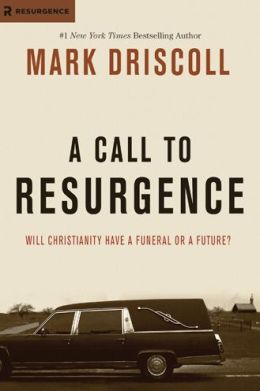
Book Review : A Call to Resurgence – Will Christianity Have a Funeral or a Future?

acalltoresurgenceAccording to Mark Driscoll, pastor of Mars Hill Church in Seattle, WA and author of the new book, “A Call to Resurgence; Will Christianity Have a Funeral or a Future?”, Christendom is dead. Christendom, a culture of religious influence and acceptance, found its beginning in America through the Christian faith of the founding fathers who governed by those same Christian values. As a result, Judeo-Christian values have influenced legal systems, social ministries, educational systems, and even the vocabulary of today. In short, Driscoll argues that the world in which we live no longer is influenced by the Christian faith. Throughout chapter one of this book, Driscoll’s plea to churches, pastors, and Christians today is to be more concerned with authentic Christianity and the advancement of the gospel than simply a religious culture that doesn’t clearly point the individual to Jesus Christ. It is a call, as Driscoll writes, “not of retreat but of resurgence”.

In chapter two, Driscoll asserts that the Christian church today is suffering from a standing knockout. This is a boxing term in which a boxer is literally unconscious after multiple blows but is still standing. Driscoll names the series of blows that have left the church dazed and confused. As he sees it, New Paganism, Homosexuality, Pornography, Intolerant Tolerance, bad Dads, and Cheap Christians are hindering Christianity’s witness today. Chapter three speaks of an identity shift among Christians from denominations to tribes. Driscoll quotes Seth Godin here, “A tribe is a group of people connected to one another, connected to a leader, and connected to an idea. For millions of years, human beings have been part of one tribe or another. A group needs only two things to be a tribe: a shared interest and way to communicate”. Consider this example to tribalism today. A Baptist pastor who is reformed in his theology and is influenced by the teachings of John Piper and J.I. Packer may choose to relate to and network with other like-minded pastors whether they are Methodist, Church of God, or Presbyterian, rather than his national denomination. Tribes today, as Driscoll suggests, are centered on key issues such as Reformed vs. Armenianism (the sovereignty of God and salvation), Complementarian vs. Egalitarianism (roles of women and men in the church), Continuationist vs. Cessationist (spiritual gifts), and Fundamentalist vs. Missional (the purpose of the church today).

In chapter four, Driscoll introduces the concept of understanding borders. He writes, “Primary border issues are points of division between Christians and non-Christians. Secondary border issues are points of distinction among Christians. These issues merit discussion, debate, and distinction among tribes, but they should not be a point of division of we are to see a resurgence of real Christianity.” He then lists thirteen primary border issues with a description of each, as well a few of the second-tier issues. Driscoll gives chapter five to the Holy Spirit. He offers a theology on the person and ministry of the Holy Spirit in the church today. He also gives attention to the Holy Spirit‘s role in the gift of tongues, which is a prominent tribal division. Chapter six, which Driscoll has entitled, “Repentance”, brings back the six blows from chapter two that Christianity has taken in the recent decades and lays out the need to repent of these in order to make a lasting change going forward. Finally in chapter seven, Driscoll proposes seven principles for resurgence that he believes will help the church go forward in the future. The principles are:

1. Preach the Word. Churches must make the preaching of God’s Word the central activity of the church.

2. Love the Church. The local New Testament church is at the heart of God’s plan.

3. Contend and Contextualize. Without compromising the truth of God’s Word, we must be willing to change its delivery.

4. Be Attractional and Missional. Balance is needed throughout church ministry.

5. Receive, Reject, and Redeem. Keep what is profitable and let go of what is not.

6. Consider the Common Good. Everything the church does is for the good of others.

7. Evangelize Through Suffering. The church is to be prepared to suffer as the gospel message is shared.

This is the first book that I have read that was written by Mark Driscoll. Contrary to the “shock-jock pastor” label he is often given, I found “A Call to Resurgence” to be well-written, passionate, and true to God’s Word. Although we are not part of the same tribe, his love and concern for the church and the gospel is something that I as a pastor can relate to and get behind. I believe chapters 1-2 and 5-7 are the strongest. Driscoll presents the problems facing the church today and offers solid suggestions on how to recover from our standing knockout. If I had to say anything negative, it would be that chapters 3- are 4 are just a little too broad. I appreciate his tribal vs. denominational discussion and enjoyed it very much. I simply believe his tribal lines could have been a bit more definitive. That being said, this is a book that Christian leaders need to read. His effective use of Scripture, personal experiences (family and church) and outside quotes and data make this book work very well.

Disclosure of Material Connection: I received this book free from Tyndale House Publishers as part of their Blogger Review Program. I was not required to write a positive review. The opinions I have expressed are my own. I am disclosing this in accordance with the Federal Trade Commission’s 16 CFR, Part 255: “Guides Concerning the Use of Endorsements and Testimonials in Advertising.”
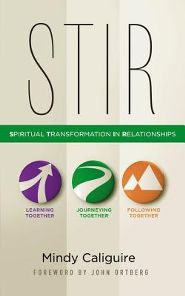
Book Review : STIR

STIRIn the Christian church today, the ministry area that is often neglected and problematic is that of discipleship. For the most part, our churches understand evangelism and its importance in the growth of the church. For the most part, our churches understand worship and offer a variety of styles and formats. However, churches are struggling with how to effectively move believers along a pathway from spiritual infancy to maturity. Churches are beginning to ask questions such as “What is a disciple?” “What is the best way to grow a believer?” “Is there a program that will help me?” For the longest time, the church’s answer to “how will growth take place in a believer’s life?” has been “it just will”. In her new book, “STIR: Spiritual Transformation in Relationships”, Mindy Caliguire who is the executive director of Engage International of the Willow Creek Association, has written a book that she believes will help chart an effective course that will move believers toward maturity.

Caliguire writes “relational isolation just doesn’t fit with the way the church as a God-infused, God-centered community was designed to exist.” She argues that each believer, depending where they are in their growth process, will need certain types of relationships, guidance, and areas of study. In her opinion, one size does not fit all. Caliguire asserts that there are three stages in spiritual transformation. The stages are Learning Together, Journeying Together, and Following Together. These three stages and their individual elements and nuances make up the lion’s share of the book. In each of the three sections, Caliguire shares two critical relational elements: direction (levels of structure) and discernment (individual decision making based on guidance from God and others).

Stage one is Learning Together. The given objective here is that of settling on core beliefs and biblical literacy. Certain “signs of life” should be present in stage one. Caliguire believes that God-awareness, personal encouragement, openness to God’s wisdom, and new behavior will be present as believers begin to live their faith. Stage Two is Journeying Together. The given objective here is for the believer to develop a familiarity with one’s own story, allow brokenness, and develop a deeper dependence upon God. The signs of life here include a steady faith, freedom from the past, a growing dependence upon God, obedience, and growth in humility. Stage Three is Following Together. The given objective here is for the believer to discern God’s will based on solid biblical foundation and a dependence upon God. Again, the signs of life in this stage include openness to seek help, a desire to engage the world in service, name strengths and weaknesses, and enjoying a sense of fulfillment in service and sacrifice. In each stage, Caliguire discusses the types of relationships and the preferred type of leader that will provide the greatest possibility of success. As the believer moves from stage one to three, the level of direct supervision decreases and the lever of individual discernment increases.

STIR is a needed book in an area of church ministry that really needs the help. Caliguire writes with passion and conviction. Her offering of a fluid process is much better than a simple list of “dos and don’ts” This book makes a great deal of sense. I will be applying portions of Caliguire’s processes. I recommend this book to church leaders who are searching for help in growing believers in their faith.

Disclosure of Material Connection: I received this book free from Thomas Nelson Publishers as part of their Blogger Review Program. I was not required to write a positive review. The opinions I have expressed are my own. I am disclosing this in accordance with the Federal Trade Commission’s 16 CFR, Part 255: “Guides Concerning the Use of Endorsements and Testimonials in Advertising.”
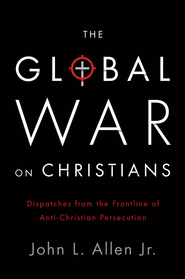
Book Review : The Global War on Christians

global warWestern Christianity enjoys a safe existence. We do not see churches burned and bombed simply because Christians meet in them like we do in other parts of the world. We do not see Christians imprisoned for simply possessing a Bible like we do in other parts of the world. We do not see outlandish laws passed to intimidate Christians like we do in other parts of the world. We do not see court proceedings deliberately punish Christians like we do in other parts of the world. Christians in Asia, Africa, and Europe deal with the above issues and many more every day for only one reason: they choose to believe in and worship Jesus Christ. In his new book, “The Global War on Christians; Dispatches from the Frontline of Anti-Christian Persecution”, senior correspondent for the National Catholic Reporter and senior Vatican analyst for CNN John L. Allen, Jr writes of the challenges, atrocities, and persecution that the greater majority of Christians are facing in the world today.

Allen’s book is divided into three sections. In section one, Anti-Christian Persecution Around the World, Allen begins with an in-depth introduction that gives the book a firm footing. Allen takes a moment to define the word “persecution” ad introduces the various forms that it takes on. These forms include discrimination (societal, institutional, employment, legal), suppression of Christian missionary activity, suppression of conversion to Christianity, suppression of corporate worship, forced conversion from Christianity, violence against individuals, and community oppression. Allen them gives specific, heart-breaking, and eye-opening of Christians who have been persecuted throughout Africa, Asia, Latin America, The Middle East, and Eastern Europe. He highlights individual countries within these regions of the world. Within each region, Allen profiles a single individual who suffered as a result of faith in Jesus Christ. In section two, Myths About the Global War on Christians, Allen gives the reader the common myths that surround the persecution of Christians. These myths include:

1. Christians are at risk only where they’re a majority.

2. No one saw it coming.

3. It’s all about Islam.

4. It’s only persecution if the motive is religious.

5. Anti-Christian persecution is political issue.

This is arguably the best section in the book. Dealing with each myth individually, Allen brings real-life experiences to bear on his arguments that these myths have been hindering proper communication of just how prevalent this persecution is. For each myth, Allen explains why each myth is “toxic”. In section three, Fallout, Consequences, and Response, Allen introduces what could be called the “domino effect” of persecution in the societal and political arenas. He also deals with the consequences anti-Christian persecution. Because Christians are being persecuted, there are real and measurable side-effects. So that the reader does not believe that nothing can be done in this war, Allen concludes by giving areas if involvement which includes prayer, thinking globally about the church, institutional humanitarian relief, and several others.

“The Global War on Christians” is a timely, well-researched, and concise work. Allen’s telling of the stories of fellow Christians enduring torture and hatred for their faith is encouraging, but also sobering. Because of his association and travels with news media outlets, Allen has been able to witness this war first hand. Allen’s book is not just another “Foxe’s Book of Martyrs”. Although Allen recounts the lives of these martyrs, it is also a call to action to become more aware of the assault upon Christians today. Saddening. Inspirational. Convicting. I would highly recommend this book to all Christians who want to better understand the struggles and challenges that other Christ-followers have to endure in all of the not-so-safe places in the world.

Disclosure of Material Connection: I received this book free from Waterbrook Multnomah Publishers as part of their Blogger Review Program. I was not required to write a positive review. The opinions I have expressed are my own. I am disclosing this in accordance with the Federal Trade Commission’s 16 CFR, Part 255: “Guides Concerning the Use of Endorsements and Testimonials in Advertising.”