Book Review : The Book That Made Your World

In his new work, The Book That Made Your World; How The Bible Created the Soul of Western Civilization, Indian Christian Vishal Mangalwadi has written an impressive and relevant  book that I believe settles the age old question that the Bible is simply a collection of stories and fables with no value for today. The Book That Made Your World handles the Bible’s influence on the western world with solid fact, concrete reasoning, and appropriate personal testimony, when coupled together, reveal the power of the Living Word to change the face of civilization.

Mangalwadi sets out to demonstrate how the Bible has affected, and in fact influenced, many areas of lives as westerners that we may not have considered, or have been willing to accept. The author breaks the Bible’s influence into broad categories. He then gives detail, through the Bible itself, and other academic works that supports his thesis. For example, Mangalwadi demonstrates how the Bible has enabled women to find a place in society and be empowered to make a difference. He demonstrates how the early-held idea of what makes a hero has changed with the biblical demonstration  of a hero. The Bible, as the author writes, changed forever the platform  in which education was received. Other areas of biblical influences such as language, science, technology, morality, wealth, and compassion are discussed as well.

This is very interesting and long book (almost 400 pages) and at times seemed dry and purely academic. Yet, it is well worth your patience. Mangalwadi’s work is not directed solely toward those in professional ministry. This was my first reading of Vishal Mangalwadi. I want to read more of his work. The layout of this book allows it to be understood and embraced by all who want to know exactly how the Bible has influenced western civilization.  A very powerful reminder that God’s written Word is alive and active. I recommend this book highly. The Book That Made Your World would be enjoyed by historians, as well those simply curious about the Bible.

Book Review : In a Pit With A Lion on a Snowy Day

I enjoy the obscure passages in the Bible. Stories of the lesser-known’s such as Shamgar and Jabez intrigue and encourage me. Whether defeating an entire army with a simple farm implement or verbalizing a prayer that asks God to move heaven and earth, their lives demand attention. The story of Benaiah, told in 2 Samuel 23:20-21 is no different. It is the story of lion chaser. It is the story of an odds defyer. It is the story of a man who chased a lion into a pit on a snowy day, a won.

 In his book, “In a Pit With a Lion on a Snowy Day; How to Survive and Thrive When Opportunity Roars”, National Community Church pastor Mark Batterson expands and sheds light on a very obscure passage in the Old Testament. He tells the story of Benaiah, an Israelite warrior who fought Moabite warriors and killed an Egyptian warrior. In this book, Batterson deals with opportunity. Each one of us have to determine what we will do with every opportunity presented to us. Using the phrase “lion chasers’, Batterson challenges each believer to go after and seize every God-given opportunity. He clearly shows there is a difference lion tamers and lion chasers. He skillfully points out that we all face lions of some sort in our lives. These lions come in the form of life-changing decisions, career moves, and economic opportunities. He encourages the reader to jump in the pit with the lion and tackle it head on.

Batterson focuses his writing on seven lion-chasing skills needed to take advantage of every opportunity. These skills are overcoming adversity, unlearning fears, embracing uncertainty, calculating risks, seizing opportunities, defying odds, and looking foolish.

“In a Pit With a Lion on a Snow Day” is not a new book, but I believe it is one of those books that remain for a long time and make an impact for years to come. I greatly enjoyed this book. Batterson’s style of writing is balanced, clean, precise, and inspirational. He mixes scripture, ancient custom, and personal experience artfully in such a way that makes this book an easy and consuming read. The wisdom expressed in this book has the potential to be life-changing. I recommend this book to those who are dreaming God-sized dreams, yet are reluctant to climb into the snowy pit.

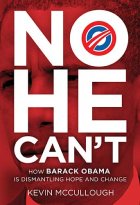
Book Review : No He Can’t; How Barack Obama is Dismantling Hope and Change

No He Can’t; How Barack Obama is Dismantling Hope and Change is the newest book syndicated radio talk show host Kevin McCullough. In his book, McCullough takes an honest, factual, and hard-hitting look at the presidency of Barack Obama and how it matches up to the campaign platform of “hope and change” that he was elected on. McCullough, who worked in Chicago at the same time President Obama was just a community organizer, has followed, studied, and wrote about the president’s political career from his early days in Chicago, to the Senate of Illinois, and finally to the White House. Kevin McCullough was the first political pundit to predict, accurately, that Barack Obama would be elected as president. He did so in December of 2006.

‘No He Can’t’ is divided into four sections; Economics, National Insecurity, Erosion of Rights, and Accountability to Caesar. It is in these four sections that McCullough expresses the missteps, mistakes, inaccuracies, and omissions that President Obama has made during his presidency. He demonstrates in a balanced and well-researched way that the campaign promise of hope and change has gone out the window. We have been left with much change and very little hope.

I enjoyed this book a great deal. I appreciate the way McCullough handles this subject. Although disagreeing with the president on many subjects such as human rights, national security, the economy, and other hot topics, this is not a “bash-Obama” book. McCullough backs up his statements with the words of the president himself, all placed in proper context. At the end of every section, the writer gives suggestions as to how the president could regain the support and trust of the American people. I highly recommend this book to anyone who is concerned about the current state of affairs in our country.

Book Review : The Fight of our Lives

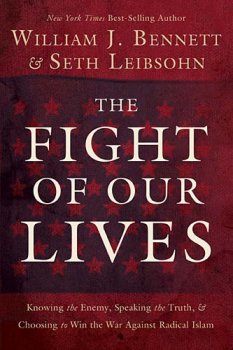
 The terrorist attacks of September 11, 2001 will be forever etched into the memory of all Americans. It was a day of tragedy, hate, loss, and outrage. It was also a day that propelled the United States into a war with an unconventional enemy. The outrage and anger that Americans felt that day fueled a desire to win the war so that events such as 9-11 never again happened on American soil. In their new book, “The Fight of Our Lives; Knowing the Enemy, Speaking the Truth, and Choosing to Win the War Against Radical Islam”, William Bennett and Seth Liebsohn suggest that America’s desire and resolve to win the war on terror is waning.

Bennett and Liebsohn have written this book to wake Americans up to the fact that we are still at war and that radical Islam is the enemy. Through detailed research, interviews, quotes from politicians, military leaders, and Islamic leaders on both sides, the authors chronicle more than ten years of terrorist attacks against the United States and its allies; including the shooting at Ft Hood, embassy bombings, the attack on the USS Cole, and many other that we see daily in the news. Bennett and Liebsohn cite, time and time again, the connection between the Islam and those perpetrating the attacks. “The Fight of our Lives” also demonstrates how US policy has shifted since 9-11. Beginning there, the leadership of our nation used the words “terrorism”, “terrorist”, and “war” openly and took a firm stance against those harbored terrorists. The authors suggest that through years of tolerance, appeasement, and political correctness, we hardly hear these words anymore. The authors write to remind Americans that terrorism has not went away.

This book is hard-hitting and to the point. It is very “in your face” about the issues of terrorism and Islam. You may not agree with every point the authors make. You will however be challenged to evaluate the facts and decide for yourself whether or not Islam is the real enemy of the United States.

Book Review : The Band That Played On

 I enjoy reading books that are inspired by true stories. One such story that has had much written about it is the sinking of the RMS Titanic on April 15, 1912 as a result of striking an iceberg on her maiden voyage from Southampton, England to New York City. There have been many different approaches taken in telling this story. A new and refreshing approach to this maritime disaster comes from author Steve Turner in his new book, The Band That Played On, The Extraordinary Story of the 8 Musicians Who Went Down with the Titanic. In his work, Turner investigates and chronicles the stories of the eight men that had played aboard the Titanic and the personal journeys that had brought each of them to that ill-fated voyage.

 Turner has done a superb job of telling the story of these eight men without going into detail about the tragedy itself, only sharing what is necessary to tie the story together. He explores each of the band member’s early lives, education, musical passion, and reasons for boarding the Titanic (ranging from the adventure, to the financial support of family, to the challenge of new experiences in their chose field. Prior to boarding the Titanic, these men had experienced limited popularity. Three of them had never been aboard ship, while the other five had moved quite a bit from ship to ship under contract.

 At the heart of the book is the account of a number of the band members who made their way to the deck after the Titanic struck the iceberg. The band played on while the ship sank, hoping in some way to calm the passengers in spite of the chaos around them. They remained at their post until the very end with their final musical piece being the hymn “Nearer, My God to Thee”. Much of the information in this book is newly discovered and will be a great find for history and Titanic enthusiasts. “The Band That Played On” is well written, inspirational, and does great justice to the music profession. It serves as a story of bravery, passion, and compassion. I highly recommend it.

Book Review : Mere Churchianity

I will admit that I chose this book to review based on the title alone. It sounded strangely familiar. Mere Churchianity: Finding Your Way Back to a Jesus-Shaped Spirituality by Michael Spencer is a book written to challenge believers to allow Jesus Christ to shape and form their spiritual formation and mindset. Spender is better around the blogospehere as the Internet Monk, where he has been blogging since 2000. I found myself agreeing entirely with him at times and disagreeing passionately at others. These reactions to his book were the same reactions I had in reading his blog for several years. Spencer’s style of writing is passionate, whimsical, thoughtful, engaging, and provocative.

 Spencer’s audience for this book is those who have left the church or are considering leaving. He challenges them not give up on Jesus Christ. He asks these who are on the fence to not judge Jesus on the often times hypocritical and judgmental actions of the “church” that are not accurate reflections of the life of the Son of God. Spencer asserts that the church today is guilty of turning Jesus into some sort of genie-in-a-bottle, culture-warrior, political activist, and relationship guru that is here to wait on us hand and foot. As churches turn Jesus into their ideal, who they want and need him to be, those looking for a spirituality that is shaped and formed by the Jesus of the gospels, they abandon the church and seek Jesus elsewhere.

There were some things I liked about this book and some things I did not. I liked the fact that Spencer brought the concern and reality to the forefront. The reality, whether we want to realize or not that the church gets in the way sometimes of people seeing Christ. Spencer challenges believers to get back to the main point of the gospel: Jesus Christ. Allow His life and earthly ministry to challenge us and shape us. Allow His teaching to mold us His death, burial, and resurrection to define us as Christ followers. What I did not like about this book is that Spencer makes the case, whether intentional or not, that a believer can grow spiritually without belonging to a local body of believers. As a pastor, I will be the first one to say that he church is not perfect. However, the church is the bride of Christ. I see it as an impossibility to love Christ and want nothing to do with His bride. Spencer seems to be saying that because the church is not perfect, nor useful, then it is not necessary.

I would hope that this book is successful is reaching believers who may have abandoned the church to not quit on Jesus. I hope the mixed message does not get in the way.

Book Review : While The World Watched

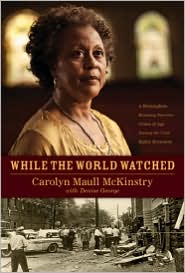
 It is difficult to imagine what it would have been like to grow up as an African American in the segregated South during the period of Jim Crow Laws. It is conceivable that something as simple as the color of a person’s skin could cause such anger, hatred, violence, and unrest between people. These are the circumstances that Carolyn Maull McKinstry grew up in. In her new book, While The World Watched, McKinstry tells her personal story of growing up in what was known as the most segregated city in America, Birmingham, Alabama, during the Civil Rights Movement of the 1950’s and 60’s. She writes from a personal perspective, sharing with the reader how every part of her life was affected by the horrors of segregation.

 The majority of the world has only the benefit of reading about the struggle of African Americans to secure the most basic rights for themselves. McKinstry lived it. Her book begins with her early childhood describing the security she felt within her family and church life. The pivotal point of the book, and arguably her life, was the bombing of her church, Sixteenth Street Baptist Church in Birmingham by the Ku Klux Klan. In this bombing, McKinstry lost four of her best friends, and the naivety that people treated each other fairly. This event was her wake-up call to the hard reality that whites did not value the lives of African Americans equally.

While The World Watched is a history lesson for us all, as well as a personal memoir of someone who was part of that history. She provides excerpts of famous speeches from those on both sides of the Civil Rights Movement such as Martin Luther King Jr., Governor George Wallace, and President John F. Kennedy. A timeline of events that made up the Civil Rights Movement, vivid photographs, and a sample of the Jim Crow Laws provide the reader with a better perspective of the sin and struggles of segregation. I believe this book is a must read, as some of the feelings of Civil Rights Movement still exist today. This book will sadden you, encourage you, anger you, and challenge you in ways you don’t expect. While The World Watched is very well written and definitely worth your time.

Book Review : Soulprint

“There has never been and never will be anyone else like you. But that isn’t a testament to you. It is a testament to the God who created you.” This is the opening line from author and pastor Mark Batterson in his latest book, “Soulprint; Discovering Your Divine Destiny”. Batterson starts from the beginning that this is not a self-help type of work. Rather, it is a call to embrace and enjoy the person God has created you to be by understanding that your uniqueness is a gift from God.

It is common knowledge that each person has a unique fingerprint, unlike anyone else’s. Batterson applies this same thought to your “soulprint”, which is your true identity before God. He uses King David as a case-study in embracing uniqueness. David’s life was up and down, it was one on embraced opportunities and missed opportunities. His was a life of tragedy and triumph, of regret and rejoicing. He had many defining moments in his life. The sum experiences of his life defined who he was, good and bad. Batterson argues that our lives are no different. Our perceived disadvantages are actually hidden advantages to be cultivated. Every hardship we face, every obstacle that we cross, and every challenge we embrace, God uses these to bring us to our full potential.

I enjoyed this book. It is light, inspirational, and an easy read. I appreciate that it was written in the vein of self-discovery and not self-help. Batterson has written a stirring, practical, ands useful work that is enhanced by biblical case-study and personal experience. Soulprint is well worth your time.

Book Review : The Goodness of God

In his book, “The Goodness of God”, Randy Alcorn tackles the subject of suffering, and God’s presence during. The discussion over suffering is not a popular one, nor an easy one to bring an answer to. Suffering puts on many faces in our lives today; emotional, spiritual, financial, and physical are a few. Each one uniquely different.  Regardless of the form of suffering, every believer has to come to terms with the purpose for suffering, first answering “Is there a purpose for suffering and can any good come from it?”

“The Goodness of God” is a condensed version of Alcorn’s earlier, and more exhaustive work “If God is Good”. Alcorn approaches the subject of suffering from the biblical perspective and handles a difficult subject thoroughly and honestly. He deals with the origin of suffering (which he concludes is that of evil), various viewpoints surrounding suffering, Christ’s redemptive work through suffering, and God’s sovereignty over suffering. Although this book is short in length it is by no means a light read. He deals with doctrinal topics without becoming academic. I enjoyed this book. I appreciate how the author did not try to minimize suffering or lead one to believe that some are exempt from it. Great book and well worth the read.

Book Review : The Jesus Inquest

In his latest book, “The Jesus Inquest”, British lawyer Charles Foster puts forth an in-depth, scholarly, and virtually exhaustive study of the events surrounding (tomb, death, burial) and finally the resurrection of Jesus Christ. Putting his trial skills on display, Foster puts the resurrection on trial, presenting both sides of the resurrection debate. Foster is involved in an internal debate. A debate in which Foster himself admittedly does not know what side he will come down on.

The format and style of this book is unlike any I have ever read. The premise is a debate between two characters, X and Y. Character X takes on and plays the role of the skeptic while Character Y takes on and assumes the role of the Christian. The skeptic takes the floor first with massive amounts (too much at times, I’m afraid) of research ready to refute the possibility of a physical resurrection. X has done his homework, but at times builds “straw-man” arguments. In typical trial fashion, the Christian takes the floor next. He deals with each point that X puts forward with a sense of reality and brevity (which I think helps his case). As in a real court case, there is a jury to weigh out the evidence and argument and come to a conclusion. In this book, the reader is the jury.

Overall this is a good work from the apologist standpoint. One negative issue I had with this book is that the research put forward from X’s position makes this book seem like a “textbook”. As a Christian, some of the phrases and terminology used by X to characterize Y were at times offensive. Although I didn’t agree with everything Foster wrote, it does not negate the fact that he has put forth a great work that is well-written and well worth your time. As a pastor, I encourage my people to read behind people they don’t agree with in order to be better prepared to defend what they do believe in. “The Jesus Inquest” provides such an avenue.