Book Review : Implosion : Can America Recover From Its Economic and Spiritual Challenges in Time?

“The United States stands as the wealthiest, most powerful nation on the face of the earth. But now, in the midst of unprecedented and skyrocketing federal debt, severe economic troubles, political uncertainty, declining morality, a weak church, growing spiritual apathy and apostasy, historic disasters, and myriad of other daunting challenges, many wonder of America’s best days are behind her” are the words of best-selling author and political expert Joel Rosenberg in his latest book Implosion; Can America Recover From Its Economic and Spiritual Challenges in Time? Rosenberg gives an honest, eye-opening, and sobering assessment of the challenges and dangers facing our country today. Rosenberg gives four possible scenarios that he believes “could make America unable or unwilling to play a key role in the unfolding prophetic events of the last days.” Although these scenarios are only speculative, they are well supported by facts, statistics, and current events.

Scenario #1: Economic Implosion – The United States implodes financially and economically.

Scenario #2: War on Terrorism – The United States is devastated by a surprise military or terrorist attack or series of attacks.

Scenario #3: Natural Disasters – The United States is devastated by an unprecedented series of natural disasters.

Scenario #4: The Rapture – The United States suddenly loses millions, or tens of millions, of people when the Rapture happens, leaving the rest of the American people devastated and triggering any number of cataclysmic events.

Rosenberg offers a fifth scenario, one that is far more optimistic. This scenario is one of a Third Spiritual Awakening. He devotes an entire chapter to the people, events, and results of the First Great Awakening and an entire chapter to the people, events, and results of the Second Great Awakening. Rosenberg believes these two spiritual movements in the history of the United States gives hope for another movement of God across our country, despite the perceived lack of hope and vision that abounds.

Implosion is an excellent book. It has something for everyone. It is not a book on partisan politics and does not set out to blame the federal government solely for the ills of this country. It is not another “the sky is falling” doomsday project. Instead, Rosenberg lays out before the reader the current state of affairs in America. Rosenberg encourages the reader to incorporate a biblical worldview, a “third lens” as he calls it, when looking at the challenges we face. It is well written and researched, fair and balanced. An outstanding work that I highly recommend.

Disclosure of Material Connection: I received this book free from Tyndale House Publishers as part of their Blogger Review Program. I was not required to write a positive review. The opinions I have expressed are my own. I am disclosing this in accordance with the Federal Trade Commission’s 16 CFR, Part 255: “Guides Concerning the Use of Endorsements and Testimonials in Advertising.”

Book Review : What’s Next?

In What’s Next? Navigating Transitions to Make the Rest of Your Life Count, the concept of life transition is dealt with through the lens of pastor and marriage/family therapist H. Norman Wright. Wright defines a transition as “a bridge between two different stages of life.” The one major principle that Wright leans on throughout the book is the fact that transition and change will happen. The manner in which the individual deals with the transition and its effects will determine the outcome and success of that transition.

Wright brings to the attention of the reader many of the transitions we may face in our lifetimes. He writes about transitions such as marriage, parenting, children leaving home, children returning home, loss of loved ones, aging, retirement, death of a spouse, and finding peace in each one. Across the sixteen chapters, Wright walks through these transitions giving the reader the steps to successfully navigating each. I found the chapters on “The Never-Ending Seasons of Parenting” (Chapter Three), “The Empty Nest” (Chapter Five), and “The Second Half of Marriage” (Chapter Six), and to be very informative. I have been married almost twenty years with a son who is about to finish his freshman year of high school. These chapters dealt with the topics I am looking at in life.

This book is not an exhaustive look at transitions. A book could be written about each chapter. Through the use of personal experiences, the right amount of statistical data, and biblical insight, Wright has penned a great book that serves, I believe, as a starter for further study, introspection, and understanding of the periods of change in our lives. While the intended audience seems to be those married and with children, there is still great and useful insight for those of every stage of life. A very timely and necessary book.

Disclosure of Material Connection: I received this book free from Bethany House Publishers as part of their Blogger Review Program. I was not required to write a positive review. The opinions I have expressed are my own. I am disclosing this in accordance with the Federal Trade Commission’s 16 CFR, Part 255: “Guides Concerning the Use of Endorsements and Testimonials in Advertising.”

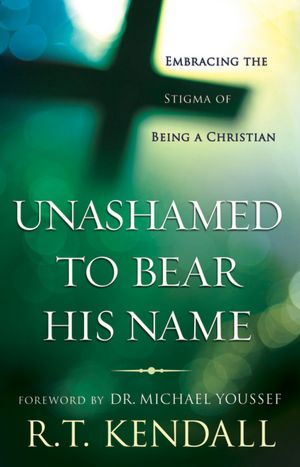
Book Review : Unashamed To Bear His Name

Prior to reading Unashamed To Bear His Name; Embracing The Stigma of Being a Christian, I had never heard of former pastor and author R.T. Kendall. The premise of his new book is to better understand the stigma and shame that comes from being a Christ-follower and learn to appreciate and embrace the negativity that comes from being a Christian in the modern era. Kendall uses the Greek definition of scandal and stigma to give the reader a proper word picture by which to frame how we are called to live as Christians. “Scandal” in the original language means to be caught in a trap or snare. Today, scandal refers to that which offer the moral sensibilities. “Stigma” in the original language meant marked with a reproach. Kendall’s use of the these words show that being a Christian is offensive to many and that we are marked people today.

Kendall begins the book with a brief history of his early life, including his 25 years as pastor of Westminster Chapel in London. The following chapters explain why the gospel of Christ is so offensive to many. He writes, “What is so offensive about the Christian faith can be briefly summed up: Jesus Christ is the only way to God and faith in the blood that He shed on the cross fits a person for heaven when they die”. Kendall uses the lives of the Old Testament saints such as Noah, David, Joseph, and others to show how far back this stigma has applied. Chapters nine and ten, “The Reason the Jews Missed Their Messiah” and “The Stigma of No Vindication” are the best in the book. Kendall then goes on to point out how scandalous the ministry and work of the Holy Spirit is in the world today.

I cannot agree theologically with everything Kendall wrote. That being said, I enjoyed and appreciated the way Kendall puts for the gospel and our proper response to it. I can recommend this book with great enthusiasm. Kendall’s quote from the beginning of the book gives a proper summation. He writes, “I write this book basically for one reason: that you will be unashamed to accept the scandal that arises from following Jesus Christ. More than that, you should become willing to embrace that scandal, to take it with both hands and rejoice in the privilege that you are a part of the greatest enterprise on the planet – namely, to be associated with the name Jesus Christ.”

Disclosure of Material Connection: I received this book free from Baker Books as part of their Blogger Review Program. I was not required to write a positive review. The opinions I have expressed are my own. I am disclosing this in accordance with the Federal Trade Commission’s 16 CFR, Part 255: “Guides Concerning the Use of Endorsements and Testimonials in Advertising.”

Book Review : 1000 Days

Jonathan Falwell, son of the late Dr. Jerry Falwell, has written a new book entitled, 1000 Days; The Ministry of Christ. This book takes a chronological look at the three and a half years of Jesus’ earthly ministry leading up to His death and resurrection. The focus of the book is more than just the facts that Jesus came and died. 1000 Days focuses on what Jesus did while on earth. Falwell draws the reader into the personal and public ministry of Christ as it was directed toward others. Jesus’ preaching, teaching, and healing are highlighted to show that Jesus came to impact the lives of people, and this care for all people was in stark contrast to the Jewish religious leadership of the day.

One of the things I appreciated about the book is that direction that Falwell chose to address Christ’s 1000 days. This direction can be summed up in the word “intentional”. Jesus was intentional and did everything with a specific purpose in mind. Falwell explains Jesus’ purpose  in everything from why Jesus chose the disciples that He did, to the timing of His miracles and confrontations with the Pharisees and other leaders, to the language and wording of His teachings. All of these were for a specific purpose. Falwell’s use of Greek word study throughout the book captures the truest sense of what Jesus spoke to the people He came to minister to. 1000 Days is a great read for both long-time Christians and new believers as well. This book is not a complicated read, nor is an exhaustive account of every action of Jesus Christ. The personal stories in each chapter are relatable to the topic at hand and introduce specific actions. Each chapter contains study questions that enable this book to be used a good small-group resource. This book will be well worth your time.

Disclosure of Material Connection: I received this book free from Thomas Nelson Publishers as part of their Blogger Review Program. I was not required to write a positive review. The opinions I have expressed are my own. I am disclosing this in accordance with the Federal Trade Commission’s 16 CFR, Part 255: “Guides Concerning the Use of Endorsements and Testimonials in Advertising.

Book Review : When Work and Family Collide

I am a fan of Andy Stanley. I enjoy his writing style which seems effortless. I respect the way he is able to communicate biblical truth s in a way that is practical and engaging. His new book, When Work and Family Collide; Keeping Your Job From Cheating Your Family is a homerun. In this book, Stanley sets up the struggle and tension between work and family. He shows how the demands of work are equally felt whether you work for someone else, are self-employed, are in the ministry, or are a stay-at-home parent. As a pastor, this book goes to the heart of the greatest struggle I have, balancing ministry and my church family with my family (wife and son) at home. Stanley puts before his readers principles that make striking a balance easier to achieve.

The word “cheat” and “cheating” are used often throughout the book. In this context, Stanley defines cheating as “choosing to give up one thing in hope of gaining something else of greater value.” When Work and Family Collide is broken up into two parts. In part one (chapters 1-5), Stanley focuses on the dynamics of the person (spouse, child) who has been cheated. Part one can be summed up in the following quote, “The problem is this: there’s not enough time to get everything done that you’re convinced – or others have convinced you- needs to get done.”

In part two (chapters 6-10), he shares principles for change. In the second part of the book, Stanley introduces us to Daniel. As he shares principles on how to change the order of our lives and bring new balance, he uses the biblical account of Daniel to show it is possible to firmly hold to a conviction while retaining the respect of those around us. Stanley reveals three important steps to reordering an out-of-balance life. First, make up your mind. He writes, “you’ve got to decide to quit cheating at home before you know how you’re going to pull it off. This step is discussed in detail in chapter seven. Second, come up with a plan. He writes, “an exit strategy from your current schedule and present it to your employer.” This step is discussed in detail in chapter eight. Third, set up a test. This step is discussed in detail in chapter nine.

This book is a great resource. It is well-written, easy to read, and too lengthy (133 pages). Stanley’s use of real-life examples. scripture references, and personal stories lay the framework for a great book. A useful and helpful guide to those who know they are cheating at home. You will not be disappointed.

Disclosure of Material Connection: I received this book free from Waterbrook Multnomah Publishers as part of their Blogger Review Program. I was not required to write a positive review. The opinions I have expressed are my own. I am disclosing this in accordance with the Federal Trade Commission’s 16 CFR, Part 255: “Guides Concerning the Use of Endorsements and Testimonials in Advertising.”
Book Review : God Forsaken

“God Forsaken; Bad Things Happen. Is There a God Who Cares? Yes. Here’s Proof.” is Dinesh D’Souza’s new book. As the title suggests, there is a portion of the population who feel this way. They feel as though God has abandoned them. They feel as though God does not care and even may be “out to get them”. D’Souza tackles what is arguably the most often-asked and most difficult question of our day to answer. How is it that God can be so good and at the same time allow evil and suffering in the world He created? He sets out to answer this question using a modern and scientific approach. D’Souza gives three purposes for writing this book. First, to “answer the atheist argument that evil and suffering in the world somehow contradict the idea of a God who is both omnipotent and good.” Second, to “convince both unbelievers and believers that there is a reason and purpose for evil and suffering”. Third, to “specifically address Christians who are suffering.”

D’Souza writes from the vantage point of a debater, who through the years has debated many of the leading atheists of the day. For the most part, this book is written to address their own positions as it relates to the omnipotence of God and human suffering. In Chapter three, “Limits of Theodicy”, D’Souza defines theodicy as the “task of reconciling divine omnipotence and goodness with the existence and extent of evil and suffering in the world.” He says that for centuries Christian authors and thinkers have been active in this practice and have offered many different theories of vindication for God. D’Souza believe the standard and usual answers are no longer sufficient.

God Forsaken meticulously lays out the reasons why an omnipotent God may allow evil and suffering in this world. Such reasons are that He may have a morally sufficient reason to allow it, there may be a greater good to be revealed through the evil and suffering, some evil is necessary for humans to exist, and much evil caused at the hands of humans themselves and not by God. These are simply stated here, but D’Souza defends these positions in great detail throughout his work. This book is not an easy read. It is written from a scientific approach, which at times is a hindrance. There is also very little scripture references throughout. Chapters five and six, covering God’s sovereignty and man’s free choice will likely frustrate the Calvinist readers and bring out the “straw man” arguments. I found the target audience to be a bit confusing. Is it a book for Christian apologists geared toward atheists, or is it book for Christian apologists to encourage other apologists? In spite of this ambiguity, this book will be well worth your time.

Disclosure of Material Connection: I received this book free from Tyndale House Publishers as part of their Blogger Review Program. I was not required to write a positive review. The opinions I have expressed are my own. I am disclosing this in accordance with the Federal Trade Commission’s 16 CFR, Part 255: “Guides Concerning the Use of Endorsements and Testimonials in Advertising.”
Book Review : The Next Christians

I am intrigued by books with unusual titles. I tend to gravitate toward titles that are eye-catching, off-the-wall, or hard-to-believe. When I saw the title of Gabe Lyons’ new book “The Next Christians; Seven Ways You Can Live The Gospel and Restore the World”, I knew it was a book I wanted to read. I wondered who the “next” Christians were. My question was answered in the very beginning of the book. Lyons’ basis for the book comes from a research project conducted by his non-profit organization where he discovered “the Christian faith is quickly losing traction in Western culture, not only as a result of unchristian behavior, as significant as that is, but because we haven’t recognized our new reality and adapted.” The New Christians would be those who, in the future, will act, react, and love differently than those today. Lyons goes on to say “They want to be a force of restoration in a broken world even  as we proclaim the Christian Gospel. They want the label Christian to mean something good, intelligent, authentic, true, and beautiful.”

Lyons sets the stage for the bulk of his work by taking a look at the five labels that Christian wear today. First, he describes the Insiders. Their lives revolve primarily around “Christian” activities, influences, and people. Next, he describes Culture Warriors. These Christians are about causes and believe that being Christian and American are synonymous. Next, Lyons describes Evangelizers. Their sole purpose in life is getting people saved no matter what, no matter how, and no matter where. Blenders are described next. They do their best to ride the fence between Christian beliefs and modern culture. As a result, they become uncomfortable in both. He then describes the Philanthropists. These Christians place a high value on doing good works and service.

Lyons uses the term “restorers” to describe the “Next Christians”. He describes their passion in the following way, “telling others about Jesus is important, but conversion isn’t their only motive. Their mission is to infuse the world with beauty, grace, justice, and love.” The majority of the book is spent giving the seven descriptions of what the “next” Christians will look like. Briefly, “restorers” are:

Provoked – Darkness and brokenness do not offend them, rather urge them to act.

Creators – Instead of criticizing the past, they create a new, more focused future.

Called – Secular jobs are places of service.

Grounded – Christ is the center of their lives. He’s their anchor.

Community – Individualism is the not the best venue for connection.

Civil – Meaningful conversations are essential in communicating with those of opposing views.

Countercultural – Passion exists to replace the negative image of Christianity with a positive one

Lyons has written a great book. It is humorous in parts, witty, angering, and instructive all at the same time. It is an easy read. This book would be beneficial for Christians of all ages and generations. I highly recommend.

Disclosure of Material Connection: I received this book free from Waterbrook Multnomah Publishers as part of their Blogger Review Program. I was not required to write a positive review. The opinions I have expressed are my own. I am disclosing this in accordance with the Federal Trade Commission’s 16 CFR, Part 255: “Guides Concerning the Use of Endorsements and Testimonials in Advertising.”
Book Review : The Founders Key

There is a great deal of discussion and debate across the emotionally charged political landscape of America today in regards to the Constitution. Should it be changed? Should it be thrown out? Should it be amended regularly to accommodate the ever-changing fabric of society? Is it still relevant? Is it open to individual interpretation in its enforcement? What were the framers really thinking when it was first penned? Can we ignore it and still have some resemblance of organized and civilized government? While many find the Constitution outdated, questionable, and rigid, there are the same that lean toward another founding document, the Declaration of Independence, to provide a pattern for governance.

In Dr. Larry Arnn’s new book “The Founders Key; The Divine and Natural Connection Between the Declaration and the Constitution and What We Risk by Losing It”, he brings an intense light upon the Progressive Movement in government today. “Progressives”  are the new liberals, those on the opposite side of the aisle from the conservatives. This book is Arnn’s attempt to refute the Progressives position of greater freedom of thought when it comes to the basic purpose and principles of the Constitution and Declaration. In Chapter Two, Arnn gives a recent example. He , he relates a story that on October 22, 2009, a reporter asked then Speaker of the House Nancy Pelosi, “Where specifically does the Constitution grant Congress the authority to enact an individual health insurance mandate?” To which she replied, “Are you serious? Are you serious?” Pelosi’s response is representative of the thought that as times change, the government has to change.

There is a sense given by progressives that there is a need to extend the scope of government to some form of non-representative style. One that is less ruled by the people and more by those who were elected by those very same people to be their voices in government. Arnn describes the Progressive Movement of today as ready to embrace the expressed rights of the individual given by the Declaration, which are not law, while at the same time divorcing themselves of the Constitution, which being law, gives the principles of how these inalienable rights are protected. Former President Woodrow Wilson also carried a negative view of the Constitution. Since his days in office, the Constitution has weathered an increasingly hostile attack from the “progressives” in this country. Arnn writes, “They say every kind of negative thing against its meaning, its goodness, its relevance, its scope, its legality, its advisability, its comprehensibility, its connection or harmony with the rest of the Founding and especially with the Declaration of Independence. This practice has now persisted so long as to become tradition, nearly half as old as the Constitution itself.”

The point of Arnn’s book is to show that the Constitution and the Declaration are inherently linked. The inalienable rights that are spelled out in the Declaration which were the genesis of the Revolution are cemented in the Constitution. Arnn argues that the Declaration is the “why” of freedom and the Constitution is the “how” of freedom. Arnn provides extensive and useful material from some of America’s most foundational writings: select Federalist Papers, the Constitution of the United States, and the Declaration of Independence. All are included in the back of the book so the reader can make easy reference.

The Founders Key is not an easy read. Although the actual book is only 123 pages (the remaining 75 pages are the foundational writings), it cannot be skimmed, rather, must be digested slowly. This book will not be enjoyed by all. That being said, everyone should read it. It’s truthful, insightful, and enlightening. A must read for those concerned about the direction and future of America.

Disclosure of Material Connection: I received this book free from Thomas Nelson Publishers as part of their Blogger Review Program. I was not required to write a positive review. The opinions I have expressed are my own. I am disclosing this in accordance with the Federal Trade Commission’s 16 CFR, Part 255: “Guides Concerning the Use of Endorsements and Testimonials in Advertising.”

Book Review : The Coming Revolution

I must admit that I have always had an interest in the political landscape of our nation. I do my best to keep up with the leaders, decisions, and trends that will affect, positively or negatively, the future of the nation of which I am a citizen. The current political climate in America reminds me of someone who continues to put air into a balloon, while all the while ignoring the warning signs of the impending burst. I cannot remember a time when the decisions being made on behalf of the people of these United States were so drastic and monumental. The current political setting has caused many to become discouraged and fearful; to wonder, at times out loud, what the future hold for the United States of America.

In Dr. Richard G. Lee’s new book “The Coming Revolution; Signs From America’s Past That Signal Our Nation’s Future”, Lee reveals through past history and present circumstances that our country is on the verge of another revolution reminiscent of 1776. This coming revolution is not one of bullets and battles, but one of the ballot box. Of this coming revolution, Lee writes, “What this book proposes is a revolution that is far superior to a violent rebellion. It is a revolution of faith and ideas, a new commitment to a higher cause. It is a revolution that will fulfill the charge our forefathers gave us during the founding era. A tremendous hunger for restoration of accountability exists in this country, and the popular reaction to the progressive agenda in Washington may be a blessing. Excessive control and a burdensome taxation are driving the people of this country back to the basics and, hopefully, leading to a renewal and resurgence of the American Spirit”. Lee begins his book by giving the reader a portrait of our nation. He does so by  taking a brief look at the founding of our country, the major advances that lead to America’s greatness, and the current social and political issues we face today.

Dr. Lee references many of the early documents that make up the scaffolding of what the values and principles of this country rest upon. He describes what is known as the “American Spirit” which is defined  as the sense of unity that existed between the early American colonies that allowed them to work together, grow together, worship together, and prosper together. He shows how this American spirit originated with the Puritans and the sermons of the Great Awakening. Lee lists the influences the Great Awakening had upon early America. These include unity and community among the colonies, moral and spiritual worldview, a spirit of independence, and a belief in manifest destiny, among others. Lee also shows the areas where America is losing ground to popular culture. He includes health care, education, the institution of marriage, to name a few.

A note to readers. Those who label themselves as moderates, progressives, liberals, or socialists will not enjoy this book. Lee often cites how the current administration has drifted from the intentions and principles of the founding fathers. This book is written in support of the Tea Party Movement that has taken a prominent position over the past year. He said this of the Tea Party, “the movement stands for a smaller government, fiscal responsibility, individual freedom, and a conservative view of the nation’s founding documents.”. Lee chronicles just how far the Obama administration has gravitated from these formative beliefs.

The best part of this book, in my opinion, is the fact that after Dr. Lee lays out the problem, he does not leave the reader there wondering what can be done. Instead, he lists ten things that can be done right now in order to make a difference. Some of these are pray for America, register to vote and know the issues, and let your elected officials know how you feel, to name a few. I highly recommend this book. It is not an easy read, in that there is a great deal of historical information which is necessary in order to understand Lee’s position. The Coming Revolution is great food for thought on the issues facing America today.

Disclosure of Material Connection: I received this book free from Thomas Nelson Publishers as part of their Blogger Review Program. I was not required to write a positive review. The opinions I have expressed are my own. I am disclosing this in accordance with the Federal Trade Commission’s 16 CFR, Part 255: “Guides Concerning the Use of Endorsements and Testimonials in Advertising.”
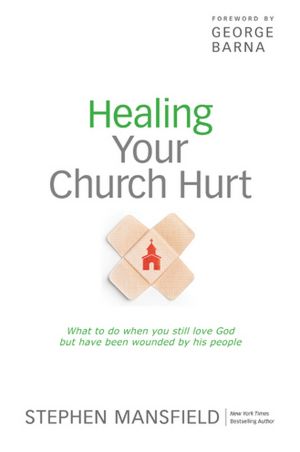
Book Review : Healing Your Church Hurt

If you have ever been part of what the Greeks knew as the ecclesia, or “the called out ones”, better known today as the New Testament church, then it is likely that you have witnessed or been involved in a church hurt. As a result, either you or someone you know, made a decision to walk away from the “church”. George Barna says this “decision to permanently withdraw from a congregation” can be called “ecclesia exitus” or church dropout. In Stephen Mansfield’s new book  “Healing Your Church Hurt; What To Do When You Still Love God But Have Been Wounded By His People”, he dives in to this issue and epidemic of hurt, offense, and discouragement within the body of Christ. Having been the pastor of a church who experienced a devastating church hurt himself, Mansfield is able to speak to this topic successfully.

Mansfield did not write this book to simply tell the reader that people get hurt in church. Instead, he writes to assure those who were hurt that it is possible for them to reconnect with the body of Christ. Mansfield begins by giving the root of the problem of offense and hurt: human nature and sin. He then takes a look at how we tend to look at others. He believes that how we look at others may determine our willingness to mend a relationship and length of time it might take. This chapter brings out these types of questions: Have our expectations of others that didn’t prove to be true given weight to our hurt? Are we guilty of forgetting how ugly the human nature can be?

Chapters four and five are the best chapters in the book and are very powerful. Chapter four entitled, “Lessons From a Season in Hell”, Mansfield asks the reader to do something. He asks, “I want you to take the most agonizing season of your life and examine it piece by piece.” He does this by asking five pointed and probing questions. They are:

1. Of the things your critics said, what do you know to be true?

2. How did you try to medicate your wounded soul?

3. Were you clinging to anything that contributed to your church hurt?

4. What did those closest to you do when you went through the fire?

5. During the bruising season, what fed your inspirations and your dreams?

In Chapter five, “The Throne Room of Your Mind”, Mansfield deals with how our minds process the hurt and how we tend to play the hurtful act over and over, rehearsing all the “should-have, could-have, and would-haves”. He demonstrates this by sharing a recurring dream that he has. As he sits on a grand throne, everyone who has wounded him becomes aware of their offense and they line up and come before him to make amends and tell him how sorry they are. As he enjoys having them in the palm of his hand, he touches them with his scepter and declares them forgiven. They exit thanking him for forgiving them, promising never to offend again. Of course, this is a fantasy. He says that we all have in our own minds a similar throne-room experience. Mansfield goes on to say that being hurt is about being offended, or suffering an offense. It is in this chapter that he gives to us a piercing word study demonstrating how devastating an offense can be. He concludes the book by dealing with forgiveness and restoration. He suggests that God may have a divine purpose for our hurt.

Stephen Mansfield has written a powerful book. It is efficient and to the point. His advice is practical and immediately helpful. Healing Your Church Hurt is a must read for those who have been wounded by the body of Christ. He sums up his reason for writing, “There is a myth that we need to knock in the head – and we need to knock it in the head now. When we’ve been hurt by the church we often tell ourselves that we are going to keep loving Jesus but that we no longer want anything to do with his people. The Bible makes it clear that we cannot love Jesus and hate his people.”

Disclosure of Material Connection: I received this book free from Tyndale House Publishers as part of their Blogger Review Program. I was not required to write a positive review. The opinions I have expressed are my own. I am disclosing this in accordance with the Federal Trade Commission’s 16 CFR, Part 255: “Guides Concerning the Use of Endorsements and Testimonials in Advertising.”