Book Review : Raising Able

Depending on the environment you grew up in, the concept of chores may be a familiar or foreign one. Raising Able; How Chores Cultivate Capable Confident Young People by Susan Tordella argues the value of children taking an active part in the family unit through chores in order to build confidence, discipline, and a sense of contribution. Tordella’s point is well taken. She relates that too often in today’s family children are not expected to make a contribution to the family unit and that parents end up waiting on their children like servants. This non-expectation leads to a sense of entitlement and selfishness as children grow into young adults.


Tordella calls on her experience as a mother of four in the writing of this book. I enjoyed the fact that the advice and counsel given to parents comes from methods that have been proven in the laboratory of the family unit. I also enjoyed the testimonies offered by many that spoke of the value of chores at a young age. There is a lot of information in this book, yet it is not overwhelming. The author stresses the importance of family meetings, chore charts, age-appropriate chores, and consequences for not following through on chore without beating up the parent.

Susan Tordella has written a humorous, real-life, and down-to-earth book that is worth your time and attention. I believe parents would benefit from her experiences and counsel in making chores a vital part of healthy families and healthy children. I want to thank Susan for sending me a copy of this book for read and review.

Book Review : The Beauty of the Small Church

I recently finished Les Puryear’s new book, The Beauty of the Small Church; Essays to Encourage and Equip Small Church Leaders. Les is the pastor of Lewisville Baptist Church in Lewisville, NC and a tireless small church advocate. Les has made significant contributions to the importance and presence of the small church across our Southern Baptist Convention. The Beauty of the Small Church is written from the author-given standpoint “I’m not anti-large church; it’s just that I am pro-small church”. Les gives us the accepted definition of a small church as being one with fewer than 200 in Sunday morning worship attendance. I was drawn to this book for two reasons. First, by definition I pastor a small church (175 average on Sunday morning). I felt this book would describe the church that I pastor and the effect a church our size can have in this world. I was right. Second, I have been reading Les’ blog for better than two years. I have seen his consistent and heart-felt commitment to the small church by sharing his own experiences and challenges. Les has also put together the first Small Church Conference across the SBC which specifically focuses on the needs, struggles, and challenges facing the small church today.

Les has written a great book. It is an easy read, yet challenging and comforting at the same time. As I read this book, I found myself saying “I’ve seen that before” and “I know just what you’re saying.” He writes from the standpoint that the small church is not broken and that “small” does not describe the passion, love, and desire when it comes to reaching the lost with the gospel. Les pulls back the façade that only large churches can be blessed by God. Although this book challenges the small church pastor to persevere, it is honest and transparent.

 All small church leaders would benefit from reading The Beauty of the Small Church if for no other reason than to be reminded that God has not abandoned the small church. It also serves as a reminder that we as pastors and leaders of small churches should judge “success” by eternal contribution and not temporary accolades. Great book Les.

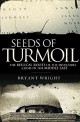
Book Review : Seeds of Turmoil

 It is very unusual these days to watch the evening news and not see a news item related to the conflict in the Middle East. Many ask themselves, “Why can’t they get along?” or “What is all the fighting about?” We heat names like Jerusalem, Israel, Palestine, West Bank, the Golan Heights and wonder what’s the difference. It is no secret that religion is at the center of this emotional and long-running conflict. How do we come to the place where three of the world’s major religions are in constant conflict over the land that all claim to have had its’ beginning?

In his most recent book, Seeds of Turmoil, The Biblical Roots of the Inevitable Crisis in the Middle East, Dr. Bryant Wright takes on this crisis head-on and sets out to help the reader understand the genesis of this conflict. I was looking forward to reading this book. Not just because the author (Dr. Wright is the current president of our Southern Baptist Convention), the title and content was intriguing. Like a great many people, I did not fully understand all the ins and outs and intricacies of the Middle East conflict. I hoped this book would clear some of this up for me. I was not disappointed.

Wright goes to the beginning. He begins with the promise that God made to Abraham to provide a son of whom a great nation would be built. However, Abraham’s lack of faith in God led to the birth of his son Ishmael b Sara’s servant Hagar. Wright traces the lineage and paths of both Isaac, the son of promise and Ishmael, the son of disobedience. So it began there, Isaac the father of the nation of Israel and Ishmael, the father of the Arab nation. The thrust of this book is wrapped around the claims of both sons of Abraham in terms of land and blessing. Dr. Wright did a great job blending all three perspectives (Jewish, Christian, and Muslim) to give a balanced, fair, and comprehensive analysis of the situation.

Dr. Wright has written a wonderful book. It is informative and written from a biblical perspective. He handled difficult and often confusing terms and storylines without coming across as a teacher or professor. Seeds of Turmoil is an easy read and not cumbersome. The beauty of the book is the chapter study guides that have been made available in the book and lend themselves to small group discussion.  This book is a must-read for anyone who wants to better understand how the conflict in the Middle East come to be. This book left me wanting more and challenged me to further individual study of this conflict in which the world is closely watching.

See You In October

I am going to be taking some time off from writing here at The Road Less Traveled. Although I don’t write every day, I have the desire to. I have some things away from here that I need to focus my attention on. So, once again, I am going to give myself permission not to write for the next month. I have several book reviews that are due so I will be posting them.  I will return to writing on October 3rd with a special post.

Katrina : It Does Not Seem Like Five Years

Five years ago today, Hurricane Katrina slammed the coastlines of Louisiana, Mississippi, and Alabama, with the most severe damage occurring in the city of New Orleans. This storm literally drowned a city. The effects of this hurricane were, and still are, monumental. Katrina displaced thousands and thousands of people from what they knew as home. Families lost loved ones, billions of dollars in property damages were suffered, the sense of peace and security that everyone enjoyed was stripped away, and tragically a sense of trust in our government was lost by many. Katrina is believed to believed to be the most destructive and costly natural disaster to have ever taken place on US soil. In just a few hours, the lives of millions of people were permanently changed forever. I was living in Perry, Florida during this time. Being a Florida native, hurricanes were nothing new. However, I as well as many more had never seen anything like Katrina. I can remember being glued to FOX News watching these events unfold. Most Americans were hanging on every news update. I was amazed, saddened, and angry all at the same time. I remember asking “How does an entire city find itself underwater?” I can remember asking “How will the residents of New Orleans and the other states that were affected even begin the clean-up process? I remember asking “Can enough relief aid reach these victims?” I remember asking “How long until the sense of normalcy returns?”

There is still much work to do along the Gulf Coast. As God’s people, we need to continue to pray  for both the residents of this region as they continue to put their lives back together, and the relief workers who are still giving their time in the rebuild effort. In August 2005, Casting Crowns released a song that was, and is, a reminder of the sovereignty of God. That song was Praise You in the Storm. It is a reminder that even when I don’t understand it or can’t see it, the will and purposes of God go forward. We are reminded that as we rest in the fact that God’s guiding hand is upon the events of life, I am to praise Him. Praise Him in the good, and the bad. Praise Him in the positive, and the negative. Praise Him in sickness, and in health. Praise Him in victory, and in defeat. It is true that music has a way of taking you back to a place in time. It has a way confirming the truths that God wants to teach us. It has the capacity to touch our hearts like no written word can. I believe this song will be forever linked to this tragedy. Below is a video of the scenes of five years ago, set to the words of this gripping song. Take time and listen to the words as you pray for, remember, and reflect upon those who were touched by this tragedy. May we all pray that God would spare us from any such future tragedy.


Worth Repeating

“It’s important to understand why churches are so strategically important to carrying out the mission that Jesus described in Luke 4, of bringing the good news of the kingdom of God to the whole world. As individuals, we all have an important role to play in demonstrating the gospel through our lives. We can pray, give, volunteer, and become effective personal ambassadors for the gospel. However, our greatest power to change the world is released when we come together in collective action to organize and focus the resources of the whole body of Christ. A church of one thousand members can have a much more powerful impact by harnessing the power of the whole than its individual members can have by acting alone. God established the institution of the Church as a key strategy for building His kingdom and for leading the social revolution required by the gospel – ‘on earth as it is in heaven’ (Matt 6:10). Said another way, without the collective and organizing power of churches, the ability of Christians to impact the world is greatly compromised.”

Richard Stearns, President of World Vision, from his book, “The Hole in our Gospel”

Book Review : Great Parents, Lousy Lovers

It is no secret that marriages bring with it its own set of problems and difficulties. Couples struggle with issues like extended family, finances, and careers. An additional stressor on couples is the responsibility of raising children. In their book, “Great Parents, Lousy Lovers: Discover How to Enjoy Life With Your Spouse While Raising Your Kids”, Dr. Gary Smalley and Ted Cunningham address the many issues that couples deal with every day while raising children. As parents, there is a tendency when raising kids to put the focus upon them and forget about the marriage relationship. Smalley and Cunningham remind us that it is important to stay connected as a couple, learn to laugh together, come to terms with the role that each person plays in the family unit,  and to make our homes couple-centered and not kid-centered. They also show us that each person in the family is on a spiritual journey and that journey must be nurtured individually.

“Great Parents, Lousy Lovers” is an easy and enjoyable read. Smalley and Cunningham mix in humor, experience, and biblical advice that makes this book beneficial. It is a book that you will want to reread as your children grow up and your marriages develops. The most important thing I learned from this book is that our kids deserve parents who are happy and experience joy in their marriage. This sets a positive example for them years down the road. This book is most definitely worth your time.

Book Review – Lee: A Life of Virtue

I enjoy all things Civil War. So, for me to have the opportunity to read about on the period’s greatest generals was for me a no-brainer. John Perry has written a compact biography entitled, “Lee: A Life of Virtue”. He has given the reader a comprehensive portrait of General Robert E. Lee. Perry walks the reader through Lee’s childhood, his days as a cadet at West Point, his early assignments including the Mexican War, and finally to his position as one of the most famous and loved generals of the Confederacy.  The title “A Life of Virtue” is correctly given. Using the definition of virtue as “possessing moral excellence or goodness”, this describes the life of R.E. Lee. Perry does an excellent job in his book of showing the human and moral side of Lee. Woven throughout the pages of this book are the relationships with family, friends, and fellow leaders that show virtue in action. Lee often gave care to his mother as a young boy. The moral, health, and welfare of his troops were always at the forefront of his mind. Lee’s wife was sick for a great part of her adult life and he cared for her considering it one of his greatest opportunities. He took extended periods of leave in order to take care of her. Loyalty marked his life.

Lee’s virtue can be seen in one clear example given by Perry. After Lee surrendered to Grant at Appomattox, the two generals began to work out the terms of the surrender. They agreed the Confederate officers could keep their firearms and horses. In a gesture that was consistent with putting others before himself, Lee stated that enlisted soldiers had provided their own horses and would now need them for spring planting. Grant agreed.

I found this book to be an interesting and encouraging read. I learned some things about General Lee that I did not know before and some things I knew were confirmed. Buried within this book is a challenge. It is a challenge to live a life of virtue, integrity, and goodness. It is a challenge to place others before self and to always do right by others. I recommend this book without reservation. Even if you do read books about the Civil War, you will find this book a good investment of your time.

FIFS : Galatians 1:6-7

Today is a Saturday edition of Friday is for Scripture.

6 I marvel that you are turning away so soon from Him who called you in the grace of Christ, to a different gospel,
7
 which is not another; but there are some who trouble you and want to pervert the gospel of Christ.

The apostle Paul was a lot like the circuit-riding preachers of the early twentieth century. These preachers usually covered a certain area or a number of congregations.  They would then ride that circuit on a schedule either monthly or quarterly. We can see some of the travel habits in Paul’s letters. He was responsible, in at least some part, for the establishment of the churches we are familiar with in the New Testament (Galatia, Colosse, Thessalonica, Philippi, Ephesus). Paul would travel around to these churches and minister to and encourage them. He would write letters (our NT books) to encourage, teach, and address problems and issues they were facing. We see this happening in the first part of Galatians. Paul had delivered to the Galatians that the resurrection of Christ was the center of the gospel. He taught them the death of Christ was sufficient for the forgiveness of their sin. The Galatian Christians were being led astray as Paul says in v.6, I marvel that you are turning away so soon from Him”. He says that he is surprised how fast they turned from the truth of the gospel to something different. Paul spoke of a desire of some in his day to pervert the gospel. The same desire exists today.

The gospel is very simple and amazingly clear. The resurrection is the power of the gospel and grace is the vehicle that delivers it. 1 Corinthians 15:3-4 says, “For I delivered to you first of all that which I also received: that Christ died for our sins according to the Scriptures, and that He was buried, and that He rose again the third day according to the Scriptures”. Paul wrote in Ephesians 2:8-9, “ For by grace you have been saved through faith, and that not of yourselves; it is the gift of God, not of works, lest anyone should boast.” To “pervert” means to “misinterpret or distort”. Across the landscape of Christianity we can see the pure gospel that has been delivered to us being perverted regularly. Here are a few examples.

1. The gospel is perverted by suggesting that Jesus Christ is just simply one of many ways to the Father.

2. The gospel is perverted by suggesting that grace is not sufficient and human efforts (works) are needed to complete salvation.

3. The gospel is perverted by suggesting that an individual can accept Jesus Christ as their personal Lord and Savior and continue living as they did before.

As believers who have been changed from the inside out, we have a responsibility to ensure that those who are lost receive the true gospel. They deserve the gospel, as offensive and difficult as it might be to hear, it is the only message that will release them from the bondage of their sin.

The Baptist Association : Part #3: Future

Over the past two posts, I have attempted to make the purpose of the Baptist association a little more clear. I also wanted to show that the association has some challenges facing it that will keep it from accomplishing its’ intended purpose. When you mix together the purpose of and the challenges facing the association, you are left with one question, “What is the future of the association?” “Does the association even have a future?” Depending upon whom you ask, the answer to this question is both varied and consistent, positive and negative, hopeful and hopeless. For example, Monty Hale, Director of Association and Pastoral Ministries for the South Carolina Baptist Convention said, “The association will be the face of Southern Baptists in the future. Most church leaders relate to the association to accomplish their God-given task of reaching the world for Christ.” Dr. Jimmy Draper, former president of Lifeway Christian Resources made the following statement, “In our obsession with what is new in world of church growth, let us not forget that all traditions are not bad and all of the past cannot be jettisoned. It is our tradition that builds our communities. The bedrock of that tradition in Baptist life is the local association.” Pastor Kyle Waddell of Pine Level Baptist Church in Early Branch, South Carolina says, “If I could sum my view up in one word it would be bleak. I personally have served in churches from three different associations in our state and have never seen the total effects come from any association in the capacity it was created to produce. I believe as do many in leadership in the SBC convention that the local association has outlived its usefulness in its present state and that if it were to close its doors many of our churches would never know.”  Dr. Jerry Nash, Director of Missions for the Harmony Baptist Association in Trenton, Florida writes, “With cooperative Southern Baptist pastors and effective leadership, the future of the Association is very bright.  It ultimately is at the local level that working relationships are built and trustworthiness is established.  As the SBC and state convention leaders and entities acknowledge and affirm the local Association we will be stronger as Southern Baptists.  It is just my opinion, but I believe to ignore or bypass the local Association will ultimately lead to the decline of Southern Baptists.”

I want to begin by saying that I believe the local Baptist association can have a future. I hold out hope that it is a bright future. I don’t believe it is automatic. It is my belief that the association’s future will look different than it does in the present. It appears to me that a great majority of associations still operate, at least in some manner, to the way they did fifty to sixty years ago. In the 1950’s and 1960’s the Baptist association served as a conduit for denominational programs from the SBC (Nashville) to the local church. For the most part the association still has the same programs (Brotherhood, WMU, Youth, Sunday School, Discipleship Training, Evangelism, Music, etc.) The strain comes when local churches either no longer utilize established programs or develop new ministries while the association continues with the traditional ministry structure. I believe relevancy is the Achilles heel of the Baptist association. Bobby Gilstrap, Director of Missions for the Huron and Southeastern Associations in Michigan wrote, “In the past, the associations and its leadership had predominately focused on two things: (1) How to get more churches involved in associational ministries and meetings, and (2) How to increase the giving of the churches to the association. As a result, there was a clear problem of relevance to our churches. The pastor’s frustration was they found no relevance in the association and our ability to provide for them as they struggled to fulfill their mission and calling. This brought me to a reality check. Our associations could not be the same as in the past or even the present. Our organization had to reinvent itself to be relevant and effective. We first realized that the association is not a church. That seems obvious, but many associations have been trying to do things that the church should be doing. That means, that the Associational Director of Missions is not the pastor and the association is not the church. The association should be a resourcing organization. In other words, the role of the association is to assist and resource the God-given vision of the churches.”

There are some who say that the association should not do ministry for the church. Others will say that this is not a problem. I believe it is in this discussion that the relevancy issue comes to light. Again, Dr. Nash writes, “As with the local church, there is a strong correlation between the strength of the ministry and missions program and the vision and leadership of the leader.  There is disagreement about whether it should be churches or Associations who do missions and ministry.  I challenge those who say Associations shouldn’t start churches or have ministries.  In the world in which I live, I do not have a single church which would be able to fund our Pregnancy Center. But together we have a vibrant ministry.” These are the issues that will shape the future of the Baptist association.

The future of the association is going to be shaped, at least in some part, by the Great Commission Resurgence Task Force recommendations that were approved by SBC messengers this past June. Mike Day, Direcctor of Missions for the Mid-South Baptist Asssociation in Memphis, Tennessee has an interesting opinion as to how these recommendations will shape the future of the association. He wrote, “Most associations I know of, large or small, struggle with “activity overload.” Our efforts to be all things to all churches often result in us becoming less than what we are supposed to be. We design programs, events, and ministries that often position us as a substitute for the church. As we affirm the GCR Recommendations, particularly the core values set forth in Recommendation #2, we are affirming the centrality and primacy of the local church and its Great Commission assignment for penetrating lostness and taking the gospel to the nations. An association’s acceptance of this principle puts us in position to affirm that the Great Commission was given to the church and not to a denomination. It provides us opportunity to focus on the “organism” that is the church rather than the organizations of a denomination. Our association will be strengthened as we sharpen our focus and concentrate upon what we can do to help the churches accomplish the Great Commission, rather than what the churches can do to help us accomplish our objectives.”

For the Baptist association to have a viable and fruitful future, the local church will have to be the focal point. The future of the Baptist association will depend upon the success of the local churches. As I see it, the church does not exist for the benefit of the Baptist association. If there were no association, the church would still exist. The association exists for the benefit of the local church. If there were no church, there would be no association. I believe that Dr. John McInnis, former Sunday School Consultant for the Florida Baptist Convention, said it right, “The association will be viable and effective to the extent that it understands and operates its mission to help churches accomplish their individual missions – one church at a time.”