FIFS : Nehemiah 4:6

“So we built the wall, and the entire wall was joined together up to half its height, for the people had a mind to work”.

Nehemiah, burdened by a love for God and his fellow countrymen, set out to rebuild the walls of Jerusalem. The city of Jerusalem was the center of the Jewish faith and community. It was the place that signified both strength and protection. To see the walls of this cherished city destroyed caused Nehemiah to act. Not everyone rejoiced and not everyone enjoyed the same excitement as Nehemiah. He was constantly harassed and troubled. His troubles, at times, come from within. He found discouragement in the words and actions of his fellow Jews. He was also harassed and troubled by those outside their community. In spite of all this negativity, strife, and constant threat of physical attack, the walls were being rebuilt and the honor of God’s city restored. The reason: the people of God had resolved to finish, amid the difficulty.

As the church of God today ministers, labors, and reaches out, there are some who don’t share our zeal and passion. They see no need for the church today. Our God has given us a mind to work. We know what we are to be doing. The church is to be the hands and feet of Christ to a world that needs Him. We know where our power comes from. The indwelling of the Holy Spirit is a constant source of strength. We are building walls today. We are building walls of morality in the midst of an immoral society. We are building walls of faith in a faithless society. We are building walls of love around a society that may not know how to love. Despite the opposition and resistance, the NT church has been given a mind to work. The question is this: Will we do it?

Worth Repeating : Billy Graham

“What does it mean to be born again? It is not just a remodeling job, performed somehow by us on ourselves. Today we hear a lot about recycling, reconstruction, and reshaping. We renovate houses and add on more rooms. We tear down old buildings and build new ones in our cities, calling it urban renewal. Millions and millions of dollars are spent every year on health spas, beauty resorts, and exotic cosmetics – all by people hoping to reshape their faces or renew their bodies.

 In like manner, people frantically pursue all sorts of promised cures for the renewal of their inner lives. Some people hunt for renewal at the psychiatrist’s office. Others search for spiritual renewal in exotic oriental religions or processes of inward meditation. Still others seek for inner peace and renewal in drugs and alcohol. Whatever the path, however, they eventually come to a dead end. Why? Simply because man cannot renew himself. God created us. Only God can recreate us. Only God can give us the new birth we so desperately want and need.”

Billy Graham, How To Be Born Again, 1977

Book Review : The Band That Played On

 I enjoy reading books that are inspired by true stories. One such story that has had much written about it is the sinking of the RMS Titanic on April 15, 1912 as a result of striking an iceberg on her maiden voyage from Southampton, England to New York City. There have been many different approaches taken in telling this story. A new and refreshing approach to this maritime disaster comes from author Steve Turner in his new book, The Band That Played On, The Extraordinary Story of the 8 Musicians Who Went Down with the Titanic. In his work, Turner investigates and chronicles the stories of the eight men that had played aboard the Titanic and the personal journeys that had brought each of them to that ill-fated voyage.

 Turner has done a superb job of telling the story of these eight men without going into detail about the tragedy itself, only sharing what is necessary to tie the story together. He explores each of the band member’s early lives, education, musical passion, and reasons for boarding the Titanic (ranging from the adventure, to the financial support of family, to the challenge of new experiences in their chose field. Prior to boarding the Titanic, these men had experienced limited popularity. Three of them had never been aboard ship, while the other five had moved quite a bit from ship to ship under contract.

 At the heart of the book is the account of a number of the band members who made their way to the deck after the Titanic struck the iceberg. The band played on while the ship sank, hoping in some way to calm the passengers in spite of the chaos around them. They remained at their post until the very end with their final musical piece being the hymn “Nearer, My God to Thee”. Much of the information in this book is newly discovered and will be a great find for history and Titanic enthusiasts. “The Band That Played On” is well written, inspirational, and does great justice to the music profession. It serves as a story of bravery, passion, and compassion. I highly recommend it.

Worth Repeating

“Satan has free reign in the hearts and cultures that have rejected or never heard of the hope that can be found in Jesus Christ. He uses godless rulers, government authorities, legal restrictions, and social pressures to maintain his dominion and deprive God of being glorified among the peoples of the world. ‘We know that we are of God, and the whole world is under the sway of the evil one’ (1 John 5:19). If his strategies prove to be vulnerable, his backup plan is to work among God’s people to create indifference and lethargy. Instead of pressing the battle with conscientious urgency, Satan has readily convinced Christians that missions is optional or is the responsibility of only an elite few who have a special mysterious call to serve as missionaries. Regardless, it appears the strategies of our enemy have been immensely successful as we see the realities of a lost world and the formidable barriers to proclaiming the gospel today.”

Dr. Jerry Rankin, from his book Spiritual Warfare and Missions

My Bucket List

A couple of years ago a movie hit the theaters titled The Bucket List. This movie was about two cancer patients who, together, started crossing off the list all the things they wanted to do before they died. The movie caused many to begin thinking about the very same thing. The movie caused many to ask the question, if only to themselves, “Why wait until bad news comes to begin doing all the things I want to do?”

I had been giving this kind of thing some thought long before the movie come out. However, like most people I imagine, I began to actually write down those things I would like to do while I still have the opportunity to do so. I am listing my top five below.

1. I want to go to Israel.  

2. I want to tour the White House. I am a history lover. This kind of stuff fascinates me.

3. I want to write a book. I at least have an idea.

4. I want travel to the West Coast on the old Route 66. A great trip for me would be to start on in the east, making and all the stops along the way. A trip down memory lane of early Americana would be refreshing.

5. I want to travel to Rome and stand in the center of the Coliseum. There is so much Christian history linked to this site. It would be an amazing place to visit.

Book Review : Mere Churchianity

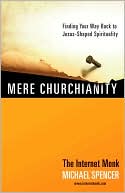
I will admit that I chose this book to review based on the title alone. It sounded strangely familiar. Mere Churchianity: Finding Your Way Back to a Jesus-Shaped Spirituality by Michael Spencer is a book written to challenge believers to allow Jesus Christ to shape and form their spiritual formation and mindset. Spender is better around the blogospehere as the Internet Monk, where he has been blogging since 2000. I found myself agreeing entirely with him at times and disagreeing passionately at others. These reactions to his book were the same reactions I had in reading his blog for several years. Spencer’s style of writing is passionate, whimsical, thoughtful, engaging, and provocative.

 Spencer’s audience for this book is those who have left the church or are considering leaving. He challenges them not give up on Jesus Christ. He asks these who are on the fence to not judge Jesus on the often times hypocritical and judgmental actions of the “church” that are not accurate reflections of the life of the Son of God. Spencer asserts that the church today is guilty of turning Jesus into some sort of genie-in-a-bottle, culture-warrior, political activist, and relationship guru that is here to wait on us hand and foot. As churches turn Jesus into their ideal, who they want and need him to be, those looking for a spirituality that is shaped and formed by the Jesus of the gospels, they abandon the church and seek Jesus elsewhere.

There were some things I liked about this book and some things I did not. I liked the fact that Spencer brought the concern and reality to the forefront. The reality, whether we want to realize or not that the church gets in the way sometimes of people seeing Christ. Spencer challenges believers to get back to the main point of the gospel: Jesus Christ. Allow His life and earthly ministry to challenge us and shape us. Allow His teaching to mold us His death, burial, and resurrection to define us as Christ followers. What I did not like about this book is that Spencer makes the case, whether intentional or not, that a believer can grow spiritually without belonging to a local body of believers. As a pastor, I will be the first one to say that he church is not perfect. However, the church is the bride of Christ. I see it as an impossibility to love Christ and want nothing to do with His bride. Spencer seems to be saying that because the church is not perfect, nor useful, then it is not necessary.

I would hope that this book is successful is reaching believers who may have abandoned the church to not quit on Jesus. I hope the mixed message does not get in the way.

The Problem With The Associational VBS “Expo” Model

VBS training is in full swing. State conventions are training associational leadership, and associational leadership are in turn preparing to train church leaders to have evangelistic and life-changing Vacation Bible School’s. These times of training take on different looks. One of primary ones is the clinic on the associational level where, traditionally, the local church is trained on how to lead the individual age groups and rotation sites.  Recently I learned that a few of the associations across our state are employing an “expo” style of VBS clinic. What this means is that the association will set up a display of some or all of the other publishers, in addition to Lifeway, who offer Vacation Bible School material. Some of those publishers include Group, Gospel Light, Standard, Regular Baptist Press, Concordia, and Cokesbury. Once the seven or eight options are presented, churches from the association “shop around” for the curriculum that best fits their need. In my opinion, this process of selecting a Vacation Bible School is flawed on several levels.

Now let me say up front, as a disclaimer, that I don’t believe that Lifeway is perfect. It would be unwise for me to say or to infer that. I believe that Lifeway is the best of all the rest. I personally have areas that I struggle with within the area of publication choices. Some of my children’s Sunday School teachers have some valid concerns with teaching material that I hope to see addressed one day in the future. I have pastor friends of mine who struggle with the cost of curriculum that is passed on to the churches. I have been involved in the teaching of VBS leaders at the state level for many years for two state conventions. I have intentionally studied other publishers VBS materials. In years past, I have used publishers other than Lifeway for our church’s VBS. I feel confident and qualified to say here, and hereafter, that Lifeway VBS is the best of all the rest. I don’t expect everyone to agree, and that it fine. I’m OK with that.

I want share why I think the “expo” style of clinic for the association is flawed. The reasons I believe this style of clinic is flawed are the same reasons I feel Lifeway VBS is the best one for our churches. Two come to mind.

1. The Issue of Doctrinally Integrity

Lifeway’s VBS is doctrinally sound. Churches that choose to use Lifeway curriculum won’t have to worry about the biblical content. There is a confidence in knowing that the material is written through the lense of the Baptist Faith and Message. The flaw of the “expo” model is that the DOM or some representative of the association would have to make sure that each of the publishers they were allowing to be modeled was doctrinally sound. Someone has to ask a question like “Does this curriculum present Jesus Christ as the sole means of salvation?” Someone has to ask a question like “Does this curriculum present the Bible as the perfect word of God?” Someone has to ask a question like this one “Does this curriculum acknowledge that man is lost and in need of a Savior?” In an associational “expo” clinic, that someone should be the DOM.

2. The Linking of  Southern Baptist Missionaries

In addition to being doctrinally sound, Lifeway VBS draws attentions to the work of our Southern Baptist missionaries. With the inclusion of a Missions rotation, students have the opportunity to study real life missions and missionaries from around the world and understand how Cooperative Program monies work. I believe this is invaluable for our children and adults as well. In the “expo” clinic model, this is absent. I cannot for the life of me understand why a Southern Baptist association would choose to model for its churches a VBS that does not highlight what our Southern Baptist missionaries are doing.

Some may say that it is “just” Vacation Bible School, it is no big deal. I don’t buy that. Some would say just pick the best looking theme that the kids would like. That should never be basis for a decision. Some would say that cost should be the deciding factor. I don’t believe that should even be the deciding factor. VBS has the potential to affect and change the lives of children, adults, and churches. I believe that within the ministry of VBS our future teachers, pastors, missionaries, and lay leaders will be called out. This is the reason why that as a pastor I am so passionate about VBS . It is also the reason why I believe it should not be treated so lightly and as carelessly as it seems to be treated at times.

Book Review : While The World Watched

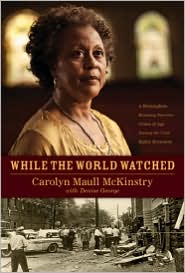
 It is difficult to imagine what it would have been like to grow up as an African American in the segregated South during the period of Jim Crow Laws. It is conceivable that something as simple as the color of a person’s skin could cause such anger, hatred, violence, and unrest between people. These are the circumstances that Carolyn Maull McKinstry grew up in. In her new book, While The World Watched, McKinstry tells her personal story of growing up in what was known as the most segregated city in America, Birmingham, Alabama, during the Civil Rights Movement of the 1950’s and 60’s. She writes from a personal perspective, sharing with the reader how every part of her life was affected by the horrors of segregation.

 The majority of the world has only the benefit of reading about the struggle of African Americans to secure the most basic rights for themselves. McKinstry lived it. Her book begins with her early childhood describing the security she felt within her family and church life. The pivotal point of the book, and arguably her life, was the bombing of her church, Sixteenth Street Baptist Church in Birmingham by the Ku Klux Klan. In this bombing, McKinstry lost four of her best friends, and the naivety that people treated each other fairly. This event was her wake-up call to the hard reality that whites did not value the lives of African Americans equally.

While The World Watched is a history lesson for us all, as well as a personal memoir of someone who was part of that history. She provides excerpts of famous speeches from those on both sides of the Civil Rights Movement such as Martin Luther King Jr., Governor George Wallace, and President John F. Kennedy. A timeline of events that made up the Civil Rights Movement, vivid photographs, and a sample of the Jim Crow Laws provide the reader with a better perspective of the sin and struggles of segregation. I believe this book is a must read, as some of the feelings of Civil Rights Movement still exist today. This book will sadden you, encourage you, anger you, and challenge you in ways you don’t expect. While The World Watched is very well written and definitely worth your time.

Book Review : Soulprint

“There has never been and never will be anyone else like you. But that isn’t a testament to you. It is a testament to the God who created you.” This is the opening line from author and pastor Mark Batterson in his latest book, “Soulprint; Discovering Your Divine Destiny”. Batterson starts from the beginning that this is not a self-help type of work. Rather, it is a call to embrace and enjoy the person God has created you to be by understanding that your uniqueness is a gift from God.

It is common knowledge that each person has a unique fingerprint, unlike anyone else’s. Batterson applies this same thought to your “soulprint”, which is your true identity before God. He uses King David as a case-study in embracing uniqueness. David’s life was up and down, it was one on embraced opportunities and missed opportunities. His was a life of tragedy and triumph, of regret and rejoicing. He had many defining moments in his life. The sum experiences of his life defined who he was, good and bad. Batterson argues that our lives are no different. Our perceived disadvantages are actually hidden advantages to be cultivated. Every hardship we face, every obstacle that we cross, and every challenge we embrace, God uses these to bring us to our full potential.

I enjoyed this book. It is light, inspirational, and an easy read. I appreciate that it was written in the vein of self-discovery and not self-help. Batterson has written a stirring, practical, ands useful work that is enhanced by biblical case-study and personal experience. Soulprint is well worth your time.

FIFS : Ecclesiastes 10:10

“If the ax is dull, and one does not sharpen the edge, then he must use more strength; but wisdom brings success.”

In the book of Ecclesiastes, Solomon pens his thoughts about life, love, wealth, friends, health, and wisdom. He uses a series of contrasting images to set the unwise alongside the wise. One such image that is crystal clear is the one he writes of in verse ten. The image is of a person taking on the job of cutting wood, with the ax being the tool of choice. As this person continually swings the ax against the wood, over time a dulling occurs. The longer this person works without sharpening the ax, the more strength is needed to make a difference. Solomon says that “wisdom brings success”. In this case, the wise move would be to stop, sharpen the ax, and continue the job. In essence, work smarter and not harder.

 This is a thought worthy of consideration. As we serve in the ministry of the local church, we must regularly evaluate what strength we are working under. It is very easy to set out on a work for the Lord under our own strength and neglect the greater strength available to us. Our tendency is to swing, swing, swing harder, and all the while wonder why we are not making progress. With wisdom bringing success, our goal should be to do what is wise and seek what is wise.

If we think about this on the practical level it becomes clear. The person swinging the ax is you. The blade of the ax represents power. The wood to be chopped is the ministry to be completed (teaching believers, witnessing to the lost, healing of relationships, restoration of families, etc). The real issue of ministry that is God-honoring is the power by which it is done. It is possible for us to attack ministry under our own human and limited power (the dull ax blade). On the other hand, we can attack ministry with God’s divine and unlimited power (the sharp ax blade). One choice will result in frustration, stress, anger, and a desire to give up. The other choice will lead to success, fulfillment, peace, and a desire to continue. It is really is a matter of working smarter and not harder. As Solomon wrote, “wisdom brings success”. We must be wise enough in the Lord to recognize the blade dulling.