Not Just Another Bible Book Store

Recently my friend Randy Coy opened a new book store in the Habersham Marketplace called The Bible Student. This shop is not your average Bible book store. Most, if not all, other shops of this nature exist to sell Bibles, commentaries, study helps, etc. with the express purpose of making a profit. Nothing wrong with that. As I talked with Randy in the months prior to the launch of The Bible Student, he shared with me that his vision was far more than selling Bibles. He wanted a place where the average person could learn how to approach Bible reading and draw the most from the very deep well that is the Bible.  From their website:

Of course, buying a Bible can be easier than actually reading it.   And so The Bible Student offers a variety of classes to help beginning and advanced readers learn the geography, historical context and structure of the Bible.  We’re always learning about the Bible and how to read it.  And we’re happy to share what we’re learning in group classes or personal tutoring sessions (it’s like personal fitness training for Bible reading!)  The Bible Student was created as a way to approach  Bible reading without any pressure to join a group or church, or to have doctrinal issues pressed upon you.   We guess you could say it’s a “safe” or non-committal way to diving into a really good read of a really great book — and get just the amount of help you want.


The Bible Student is a unique shop. People are encouraged to just stop in, read, and browse. The environment is very relaxed and given to study. You can ask the questions you need to ask or be left alone to read. Classes are regularly offered that cover a wide variety of topics such as: Is the Bible relevant for 2013? How was the Bible compiled? Who wrote the Bible? Bible Apps for Mobile Devices, How to mark (make notes) in your Bible. The importance of Jerusalem in the Bible. I’ve had a chance to visit The Bible Student. It is a great place. In addition to Bibles, you can find commentaries, journals, maps, and other resources that help you understand the Bible and bring it to life. Two things I truly appreciate about The Bible Student as a pastor. First, the  emphasis on the importance of Bible literacy is so important. Second, I appreciate that The Bible Student, in Randy’s words, was not created to compete with or replace the local church. Instead, to work alongside in the area of Bible reading and study. Check them out on the web at www.thebiblestudent.com or on Facebook at www.facebook.com/TheBibleStudent.

 

Abraham Lincoln’s Thanksgiving Day Proclamation

On this Thanksgiving Day it is proper and fitting to look back and see where the see the call for a day of national thanksgiving originated. In the midst of a  civil war, the rebuilding of a nation, and the struggle of slavery, Abraham Lincoln knew there was great reason to be thankful. He also knew to whom all thanks belonged. Enjoy.
The year that is drawing toward its close has been filled with the blessings of fruitful fields and healthful skies. To these bounties, which are so constantly enjoyed that we are prone to forget the source from which they come, others have been added which are of so extraordinary a nature that they can not fail to penetrate and soften even the heart which is habitually insensible to the ever-watchful providence of Almighty God.
In the midst of a civil war of unequaled magnitude and severity, which has sometimes seemed to foreign states to invite and to provoke their aggression, peace has been preserved with all nations, order has been maintained, the laws have been respected and obeyed, and harmony has prevailed everywhere, except in the theater of military conflict, while that theater has been greatly contracted by the advancing armies and navies of the Union.

Needful diversions of wealth and of strength from the fields of peaceful industry to the national defense have not arrested the plow, the shuttle, or the ship; the ax has enlarged the borders of our settlements, and the mines, as well as the iron and coal as of our precious metals, have yielded even more abundantly than heretofore. Population has steadily increased notwithstanding the waste that has been made in the camp, the siege, and the battlefield, and the country, rejoicing in the consciousness of augmented strength and vigor, is permitted to expect continuance of years with large increase of freedom.

No human counsel hath devised nor hath any mortal hand worked out these great things. They are the gracious gifts of the Most High God, who, while dealing with us in anger for our sins, hath nevertheless remembered mercy.

It has seemed to me fit and proper that they should be solemnly, reverently, and gratefully acknowledged, as with one heart and one voice, by the whole American people. I do therefore invite my fellow-citizens in every part of the United States, and also those who are in foreign lands, to set apart and observe the last Thursday of November next as a day of thanksgiving and praise to our beneficent Father who dwelleth in the heavens. And I recommend to them that while offering up the ascriptions justly due to Him for such singular deliverances and blessings they do also, with humble penitence for our national perverseness and disobedience, commend to His tender care all those who have become widows, orphans, mourners, or sufferers in the lamentable civil strife in which we are unavoidably engaged, and fervently implore the imposition of the Almighty hand to heal the wounds of the nation and to restore it, as soon as may be consistent with the divine purpose, to the full enjoyment of peace, harmony, tranquillity, and union.

Washington, DC—October 3, 1863

Reflections on the 2012 SCBC Annual Meeting

This past week I attended the South Carolina Baptist Convention in Greensville, SC. I look forward to this time of the year. It is a time of encouragement found in challenging messages and powerful worship, as well as fellowship with other pastors and church leaders. Our annual meeting is also a time of information. We are able to hear the latest news and opportunities from our colleges and universities, mission boards, and other convention ministry partners and agencies. No annual meeting would be complete without conducting some sort of business. We heard and adopted resolutions, approved a ministry budget, and approved major bylaw changes in the eligibility and selection of institutional trustees. To some, these business sessions may seem boring and pointless. However, I believe they are invaluable because with them is a certain beauty. Here is what I mean. A messenger, the average person representing their church (large or small), can address the entire body, have their voice heard, and request some action be taken in an area of convention life they may have concerns about or feel an improvement could be made. During the course of the meeting as I walked around, listened, and talked with people, certain thoughts come to mind. I would like to share with you my observations from the SCBC Annual Meeting in Greenville, as I see it.

1. Baptist Faith and Message 2000. Messengers approved bylaw changes that made the BFM2000 the statement of faith for South Carolina Baptists. I believe this is a critical, wise, and timely decision. One that was long overdue. Our convention now has agreed upon theological parameters drawn from Scripture that will help to guide us in doctrinal integrity and cooperation. Trustees of our institutions will now be asked to affirm this statement of faith as part of their service agreement.

2. Debate Decorum. There was a spirit of graciousness present during this year’s meeting. Although everyone did not agree with everything being presented, their objections were offered in a spirit of grace and love. Brad Atkins, presiding president, moderated with compassion, a needed sense of humor, and a Christ-like spirit. He set the tone for the entire meeting.

3. Theme. The spirit of the Great Commission Resurgence Task Force recommendations adopted last year is alive and well. This year’s theme, “Great Commission Living”, was evident and well presented. Messengers could not have left without understanding how committed South Carolina Baptists are to fulfilling the Great Commission. The theme interpretations given by the four speakers were spot-on and delivered with passion and conviction. The Committee on Order of Business and others responsible for the selection of speakers, musicians, and program features are to be applauded for bringing the theme from just words on paper to a passionate plea for life change.

4. Convention Staff. I just want to say a word about our South Carolina Baptist Convention staff. I found them to be helpful, gracious, accommodating, patient, and willing to go the extra mile to ensure messengers had a positive and encouraging experience. To an often under-appreciated staff, thank you.

5. Service. There seems to be a continual and growing dissatisfaction with the current breakdown in representation on our convention boards, committees, and agencies. Messengers have in past years, and again this year, voiced their desire for specific ways in which new voices and new faces can be involved denominational service. We often hear this referred to as “bringing more people to the table”. I am interested in seeing where the common ground will  be found.

6. Fellowship. The annual meeting is as much a place for fellowship as it is for anything else. It was interesting to see groups gathered in the hallways and the exhibit hall talking and catching up with each other. It is an opportunity to create new friendship, form new partnerships, and rekindle old friendships. I believe there will always need to be a time of coming together such as this. Over the past years, especially at the SBC level, there has been an increased call to be able to virtually attend a meeting and vote online. While I understand the logistical concerns of travel and such, that convenience cannot replace the need for the real reason for these meetings. After all, voting is one small part. People are the larger and more important part.

Book Review : Jesus; A Theography

Do we really need another book about the life and ministry of Jesus Christ? Is there really anything new to be said that has not been said already? I believe that another book was needed. I believe this book was needed. Leonard Sweet and Frank Viola have come together to write, “Jesus; a Theography”. The authors offer as a given that most books on the person of Jesus Christ start with the manger in Bethlehem and for the most part single out the gospels from which to tell His story. Sweet and Viola reveal early on what their intent and focus of the book will be. They write, “we are less concerned with every fact and detail of Jesus’ life than we are about the narratives, metaphors, signs, and symbols that reveal pictures of God’s touching of humanity through the person and identity of Jesus.”

This book has a unique approach. It begins with the Old Testament (the authors call it the First Testament) which they show is the story of Jesus Himself. The authors take the reader all the way back to creation and then begin walking forward highlighting all the signs, forms, shadows, people, structures, and pictures that show Jesus existed before creation itself. This forward-walking from the past also highlights man’s sin and the reason why Jesus can be the once-for-all atonement for his sin.

As the authors approach the New Testament (they call it the Second Testament), they do so chronicling  Jesus’ presence ad activity not only in Bethlehem, but through His childhood, earthly ministry, call of the disciples, healing and miracles, His trial, death, burial, resurrection, and ascension. While sharing the New Testament Jesus, the authors faithfully looked back and connected Jesus’ life to the Old. Their purpose for this approach is further stated when they write, “The twenty-seven books of the New Testament are largely a commentary on the Old Testament, and each part of the Bible is a signpost to Jesus. Once this is properly understood, everything changes, including our own identities.”

 “Jesus; a Theography” is well written and well researched. Although this book has better than 300 pages and is extensively documented, it does not a have that textbook feel. I believe all Christians can pick up this book and be enlightened, challenged, and blessed. I believe the uniqueness of this book, the one trait that sets it apart, is the fact that the authors show Jesus’ relationship to the Old and New Testaments not as an “either/or” choice, but as a “both/and” fact. Outstanding work. I highly recommend.

 Disclosure of Material Connection: I received this book free from Thomas Nelson Publishers as part of their Blogger Review Program. I was not required to write a positive review. The opinions I have expressed are my own. I am disclosing this in accordance with the Federal Trade Commission’s 16

Book Review : 10 Secrets to Life’s Biggest Challenges

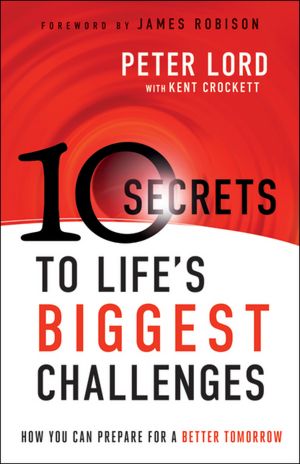
I recently completed Peter Lord’s new book, “10 Secrets to Life’s Biggest Challenges: How You Can Prepare For a Better Tomorrow”. Something about the title drew me in. I mean, everyone has challenges. Life is full of them. Who would not want to become better prepared in dealing with these challenges? Lord provides a solid framework to overcoming life’s major challenges. With a healthy and balanced mixture of scripture, personal experience, and practical wisdom, Lord has presented a deep subject with ease and clarity. The ten challenges are as follows:

1. Making Decisions
2. Overcoming Temptations
3. Developing Relationships
4. Resolving Conflicts
5. Healing Your Hurts
6. Adjusting Your Attitudes
7. Managing Money
8. Trusting through Trials
9. Submitting to Authorities
10.Preparing for Death

Lord presents these ten challenges broadly on the front end, but then narrows them down by giving specific steps, instructions, and keys to overcoming each challenge. Each chapter (challenge) also contains study and reflection questions that further allow the reader to understand the make-up and pitfalls of each challenge. I am glad I picked up this book. Although this book is written for a Christian audience, the lessons and principles are universal. A great work, one that I will use in the future.

Disclosure of Material Connection: I received this book free from Bethany House Publishers as part of their Blogger Review Program. I was not required to write a positive review. The opinions I have expressed are my own. I am disclosing this in accordance with the Federal Trade Commission’s 16 CFR, Part 255: “Guides Concerning the Use of Endorsements and Testimonials in Advertising.”

Book Review : American Patriots

We often hear of the sacrifices our founding fathers made for their country. We often hear of the price our founding fathers had to pay to ensure the freedoms we all enjoy today would always be. We often hear of these “founding fathers”, but we are rarely introduced to them or enlightened as to their personal sacrifices. In his new book, “American Patriots; Answering the Call to Freedom”, Senator Rick Santorum presents the reader a fresh and insightful look as twenty-five of the heroes and heroines of our nation’s founding.

Santorum starts his book by revealing what he believes to the “anchor” of America. This anchor, he says, makes up the “why” of America and is summed up in the simple but familiar words of the Declaration of Independence. He quotes, “We hold these truths to be self-evident, that all men are created equal, that they are endowed by their Creator with certain unalienable Rights, that among these are Life, Liberty, and the Pursuit of Happiness.” Santorum breaks the book down into three main sections entitled “Life”, “Liberty”, and “The Pursuit of Happiness”, respectively. Here are a few of the heroes you may never have heard of that Santorum introduces us to in this book.

John Laurens was a man of great wealth who joined the Patriot cause against the desires of his father. He gave his life in the defense of the principle that all people should be able to live free (including the 260 slaves owned by his father).

Frances Marion fought against the British with a small group a men hiding in swamps and using tactics he learned while fighting the Cherokee in the French/Indian War. Marion earned the nickname “swamp fox” and served as the inspiration for Mel Gibson’s character Benjamin Martin in “The Patriot”.

American Patriots is a good book. It is an easy read at only 136 pages. Santorum challenges the reader to think about the past prices that were paid for the freedoms we enjoy today. I found this book to be very interesting and engaging. If you enjoy American history, you will enjoy this book.

Disclosure of Material Connection: I received this book free from Tyndale House Publishers as part of their Blogger Review Program. I was not required to write a positive review. The opinions I have expressed are my own. I am disclosing this in accordance with the Federal Trade Commission’s 16 CFR, Part 255: “Guides Concerning the Use of Endorsements and Testimonials in Advertising.”


Book Review : Accidental Pharisees

There is a natural tendency for us to be less forgiving and more critical of others for the same offenses we ourselves are guilty of. We see our intentions and motives as being sincere and upright while looking for the hidden agendas in others. It is very easy for us to see the sin and faults in others, yet look past the glaring inconsistencies in our own lives. This tendency becomes more troubling when it makes its way into our spiritual lives. Understanding and dealing with this tendency is the subject of Larry Osborne’s new book “ Accidental Pharisees; Avoiding Pride, Exclusivity, and the Other Dangers of Overzealous Faith.” Osborne takes the reader back to the New Testament and examines the Pharisees. The Pharisees were the main religious leader of Jesus’ day. They were looked upon highly by the people of the day as being models of devotion to God, spiritual passion, and commitment to the spiritual disciplines of prayer, fasting, and giving. By others, they were seen as “hypocritical, narrow-minded, and puffed-up” according to Osborne.

Osborne makes the case that there is a sense of “over-zealousness” in the modern church today. Christians are adopting this sense and spirit of “pharisaism” more and more, albeit by accident. Osborne writes that the essence of the accidental Pharisee is simply “extra”. At times, well meaning Christians make up extra-biblical rules to make sure everyone stays inside the fences they believe are necessary. Many well meaning Christians require extra-biblical behavior (usually restrictive) to ensure everyone looks and acts the same. After all, the accidental Pharisee, whether he/she realizes it or not, wants everyone to look, act, and sound just like them. Osborne does a very good job of describing how the journey towards an accidental Pharisee happens. He says that usually some event takes place in a person’s life (speaker, conference, book, etc) that challenges the believer to step out in faith. As the individual presses forward, they discover that not everyone is running at the same speed, or may be lagging behind. At this point, as Osborne writes, something critical happens, “If you allow your frustration to turn into disgust and disdain for people you’ve left behind, you’ll end up on a dangerous detour. Instead of becoming more like Jesus, you’ll become more like his archenemies, the Pharisees of old, looking down on others, confident in your own righteousness.”

Accidental Pharisees has seven divisions. These divisions paint a picture of the dangers of pharisaism by detailing its characteristics. In part one, Osborne deals with the characteristics of our own pharisaism. In part two, “Pride”, Osborne describes the sin of pride and how it causes us to look at others. In part three, “Exclusivity”, Osborne shows how the Pharisees wanted to raise the bar to keep others out and how we should resist the urge to “thin the herd”. In part four, “Legalism”, he talks about how unreasonable litmus tests are used to ensure people are “true” Christians. In part five, “Idolizing the Past”, we learn how idealism can distort true reality. In part six, “The Quest for Uniformity”, Osborn writes that uniformity is not unity and a quest for everyone to be just like us is not healthy. Finally in part seven, “Gift Projection”, he shows how gifts can become the basis for comparison.

Osborne has a winner here. This is a great book. Accidental Pharisees would serve new believers and experienced believers  well in order to know the trappings of pharisaism and how to avoid it. Very well written on a very important topic.

Disclosure of Material Connection: I received this book free from Cross Focused Reviews as part of their Blogger Review Program. I was not required to write a positive review. The opinions I have expressed are my own. I am disclosing this in accordance with the Federal Trade Commission’s 16 CFR, Part 255: “Guides Concerning the Use of Endorsements and Testimonials in Advertising.”

Book Review : Greater

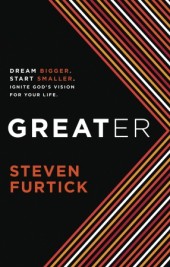
Steven Furtick, pastor of Elevation Church in Charlotte, NC has written a new book entitled “Greater”. Furtick writes on the premise that the Christian can have a better and greater life than the one they are living. He writes, “most believers aren’t in imminent danger of ruining their lives. They’re facing a danger that’s far greater, wasting them.” He deals with the choices of lives we as believers can live. There is Good Enough, baseline life marked by mediocrity. There is Greatness, unrealistic aspirations of somehow doing better only to be frustrated. There is Greater, in his words, “the life-altering understanding that God is ready to accomplish a greatness in your life that is entirely out of human reach.” Furtick loosely pins his book to one single verse, John 14:12. The framework of this book is the story of the calling of the Old Testament prophet Elisha. Each of the latter chapters deal with different aspects of Elisha’s life and ministry.

There is nothing new in this book. I found “Greater”, in my opinion, to be too far on the side of “Name It Claim It” theology. Furtick writes, “You only have to be willing to believe and press into the greater things God has already prepared for you.”  He writes, “it is true that God has a greater life in store for you than anything you have known before.” He further writes, “You’ve come too far to give up now.” The best part of this book is the story of Elisha’s calling. Furtick communicates this powerful Old Testament story very well. As far as the focal verse of John 14:12 goes, I believe the true meaning and context of the verse did not match the premise of the book. “Greater” is “Sun Stand Still” with a different story line. To be perfectly honest, if you have read Joel Osteen’s “Your Best Life Now”, don’t waste your time on this book.

Disclosure of Material Connection: I received this book free from Waterbrook Multnomah Publishers as part of their Blogger Review Program. I was not required to write a positive review. The opinions I have expressed are my own. I am disclosing this in accordance with the Federal Trade Commission’s 16 CFR, Part 255: “Guides Concerning the Use of Endorsements and Testimonials in Advertising.”

Book Review : inSIGNIFICANT

Each of us have our days when we would rather give than go on. We have our days when we would rather, if given the choice, quit instead of continue. I think that most of us at one time or another have thought about just dropping off the radar of life because we felt as if our lives don’t matter and we’re not making a difference. If no one else can identify with the above, I certainly can. Sometimes you just feel insignificant. “Insignificant; Why You Matter in the Surprising Way God is Changing the World” tells the story of Chris Travis, a successful pastor who gave up his pastoral position and moved to New York City to become a middle school math teacher in one of the toughest schools in the entire city.

 This book is an honest look into the journey and struggles that Travis and his family dealt with in his transition from the comfortable suburban life to the uncomfortable life of the inner-city. It is the honest look of his transition from the certain significance to seemingly insignificance. The book takes place in his classroom and he writes with great honesty about the dealings and conversations with his students. He speaks of his times of wanting to give up, while at the same time sharing the God-given victories along the way that allowed him to keep going. These victories showed him that he was truly making a difference in the lives of his students and that he mattered in the kingdom of God.

This book teaches a very powerful lesson. A lesson that I believe I knew but needed to be reminded of. The lesson is that is significance must be found in the everyday things we do, understanding how all we do works into God’s plan for our lives. What makes this book powerful is that Travis uses his story and scripture. He does not pull in a lot of other outside quotes. He just tells his story of how God worked through him and his students those two years in that classroom. My favorite quote is found on page 58. Travis writes, “Some days I would go into that awful school and deal with the stress for the sake of the kids. Some days I couldn’t. On those days, I did it for Jesus.” Powerfully simple and engaging, Travis challenges each reader to stare success in the face and ask, “If no one knows my name, is Jesus enough for me?” This book sparked something inside of me. I’m not sure if it was the story, his journey, his courage, his faith, or God’s faithfulness. A great book.

Disclosure of Material Connection: I received this book free from Baker Publishers  as part of their Blogger Review Program. I was not required to write a positive review. The opinions I have expressed are my own. I am disclosing this in accordance with the Federal Trade Commission’s 16 CFR, Part 255: “Guides Concerning the Use of Endorsements and Testimonials in Advertising.”