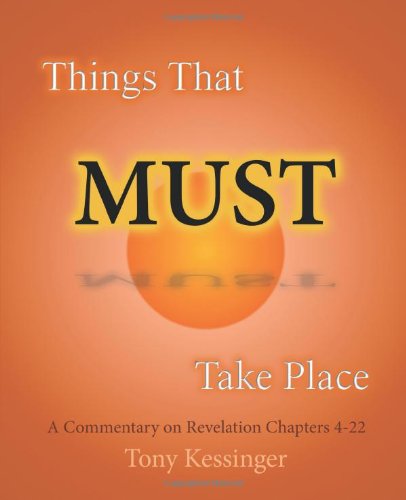
Book Review : Things That Must Take Place; A Commentary on Revelation 4-22

thingsthatmustOf all the books in the Bible, the book of Revelation is arguably the most exciting book to study and the least understood. The language, imagery, and future events make it interesting, yet complicated. While at points invoking a sense of fear and angst, there is a greater sense of peace and comfort to be found in the fact that Jesus Christ will deal with this world in a way that honors the Father. There is no shortage of books, commentaries, and movies that deal with how the events of Revelation will unfold. Recently, I finished reading one such commentary. Pastor Tony Kessinger has written a commentary entitled, “Things That Must Take Place; a Commentary on Revelation Chapter 4-22”.

Kessinger, in his introduction, front loads a great deal of information that will help the reader as the book moves along. Kessinger begins with chapter four of Revelation which marks, as Kessinger states, “a break in the narrative” moving from the things that have been to the “things that must take place after these things.” It is also in chapter four that we find the church having been raptured out of the world. Kessinger speaks of methods of interpretation. He suggests that many scholars interpret the Bible literally until they get to Revelation and then shift to symbolic interpretation. He gives fifteen reasons why Revelation should be interpreted literally. Kessinger also describes the different millennial views of the Second Coming of Christ. The author holds to, and writes from, the premillennial viewpoint. Also, Kessinger explains the significance of certain numbers used throughout the book that cast a helpful light in many places.

The remainder of the book flows like most commentaries. Each chapter of Kessinger’s book deals with one chapter of Revelation. In these chapters, Kessinger offers a verse-by-verse exposition and giving appropriate attention to the weightier portions. He brings other prophetic scriptures (Daniel, Ezekiel) into this commentary for a balanced biblical exposition of end-times prophecy. What is unique and very helpful about this commentary is that Kessinger offers background information (word studies, historical people/places, etc.) that seem to pull everything together. For example, in the chapter covering Revelation 15, Kessinger offers what he calls a “Comparison of the Plagues of Egypt and the Revelation Judgments”. At the end of a majority of the chapters are two helpful features. There is a Sequence of Events that quickly gives a recap of the order of the previously described events. There is also an Application section. It is here that Kessinger answers the question, “What does this mean for me today?” This is a great book. I really enjoyed the work and will use it without a doubt.

Disclosure of Material Connection: I received this book free from Worthy Publishers as part of their Blogger Review Program. I was not required to write a positive review. The opinions I have expressed are my own. I am disclosing this in accordance with the Federal Trade Commission’s 16 CFR, Part 255: “Guides Concerning the Use of Endorsements and Testimonials in Advertising.”

Book Review : Blood Moon Rising

4bloodmoonsProphecy and end-time discussion is big business today. We constantly see new books, studies, and movies that deal with various interpretations of end-time events. People are curious. People are scared. People today want to know if the failing economy and ongoing wars are a precursor to some apocalyptic event. The Bible is very clear in two things: the world as we know it will come to an end and there will be signs that point toward that end. Pastor and attorney Mark Hitchcock has written a book that addresses one of these believed signs pointing to the Lord’s coming. His book is called “Four Blood Moons; Bible Prophecy, Israel, and the Four Blood Moons”. The theory that a series of four blood moons are linked to the return of the Lord Jesus Christ was first brought to mainstream media by Mark Blitz and then picked up by John Hagee.

Hitchcock, speaking of signs says, “Simply stated, prophetic signs of the times are current events that foreshadow future events predicted in the Bible. Signs of the times are like signs on the highway: they point toward or herald what’s ahead. They indicate what’s coming. Signs of the times are not fulfillment of prophecy per se but are events that indicate future fulfillment of prophecy.” One such supposed “sign” that is gaining traction today is called the Blood Moon Prophecy. This prophecy is wrapped up in an astronomical event known as a tetrad. A tetrad is the appearance of four blood moons (lunar eclipses) falling on two Jewish feast days (Passover and Feast of Tabernacles) in successive years. Adding to the interest of this prophecy is the reality that significant events have happened in the nation of Israel in conjunction with the occurrence of these blood moons. There have been three previous tetrads (1493-1494, 1949-1950, and 1967-1968) with the next predicted for 2014-2015. This will be the final tetrad of this century. Hitchcock begins his book with an introduction as to what spiritual signs are how one should approach and respond to them. In order to present the proper framework and context for this later discussion regarding blood moons, Hitchcock gives ten signs that he believes are the “biblical framework or mirror for events today that serve as true signs of the times”. Chapters five, seven, and eight offer the much needed background and context.

Hitchcock’s book takes on a critique feel toward the latter half. He deals a lot with John Hagee’s book, “Four Blood Moons; Something is About to Change”. Hitchcock is not convinced that the blood moon prophecy, as an actual signpost to the Lord’s coming, holds water as many proponents do. Beginning in chapter seven, Hitchcock lays down his own groundwork as to why the blood moon prophecy is full of holes and is not reliable. The major premise of the blood moon prophecy is that the four blood moons serve as signs of major events in Israel’s history. Hitchcock examines the five passages of scripture that blood moon proponents base their theories upon. He concludes that blood moon theorists have two main problems. First, the major events that took place in the nation of Israel occurred before the actual tetrad. So, in the author’s conclusion, they cannot serve as a sign pointing forward. Second, the blood moon theorists are guilty of faulty methods of interpretation. When they look at the scriptures dealing with blood moons, they neglect the other signs that go along with it. Having read John Hagee’s “Four Blood Moons” prior to this one, I am convinced that blood moon theorists are guilty of proof-texting and sensationalism.

Mark Hitchcock has written a great book. It is well researched, balanced, and fair to the other books on the same subject. As this subject gains attention in the future, it is important to have a work that deals with the Blood Moons Prophecy in a way that highlights its flaws and shortcomings. I would highly recommend this book to any Christian who is interested in the signs that are pointing to the coming of the Lord.

Disclosure of Material Connection: I received this book free from Tyndale House Publishers as part of their Blogger Review Program. I was not required to write a positive review. The opinions I have expressed are my own. I am disclosing this in accordance with the Federal Trade Commission’s 16 CFR, Part 255: “Guides Concerning the Use of Endorsements and Testimonials in Advertising.”
Book Review : The People Factor

peoplefactorIn life, you cannot get around relationships. Regardless of where we go or what we do, there will be people involved. Whether it is school, work, church, or family, it is important that we know how to involve ourselves in healthy, functioning, and beneficial relationships. This is the premise of Pastor Van Moody’s new book “The People Factor; How Building Great Relationships and Ending Bad Ones Unlocks Your God-Given Purpose”. On this subject, Moody writes, “You have some kind of relationship with everyone you encounter. Some relationships are extremely personal and some are strictly professional. Some are casual and on-the-surface relationships, and some are intimate and deep. But every relationship you have influences your life. There are no neutral relationships. Each one lifts you up or weighs your down. It moves your forward or holds you back. It helps you or it hurts you.”

Moods begins the first section of his book by giving the reader ten relationship laws that govern all relationships regardless of the nature. These include the Laws of Being Real, Mutual Benefit, Agreement, Letting Go, Selectivity, Sacrifice, Against Secrets, True Value, Loyalty, and Constructive Transition. In each chapter, Moody goes into detail about how each law is fleshed out in our daily lives. Also, each chapter also has a Relationship Reminder section at the end that are simply bullet points that summarize the chapter. In addition, there are questions designed to dig deeper into the covered material in each chapter. In Section Two, Moody covers how to deal with unhealthy relationships by explaining what they look like and how to get out of them if necessary. In Section Three, Moody talks healthy relationships. He introduces the reader to what he calls the Vertical Factor. Speaking of God’s love, Moody writes, “This is the vertical aspect of relationship; it goes up and down, between God in heaven and us on earth.” Moody has a good book here. It is in-depth without being too much like a textbook. I highly recommend.

Disclosure of Material Connection: I received this book free from Thomas Nelson Publishers as part of their Blogger Review Program. I was not required to write a positive review. The opinions I have expressed are my own. I am disclosing this in accordance with the Federal Trade Commission’s 16 CFR, Part 255: “Guides Concerning the Use of Endorsements and Testimonials in Advertising.”
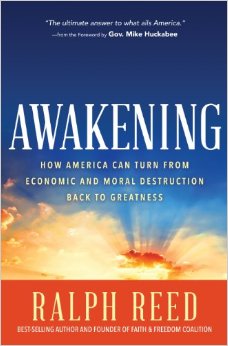
Book Review : Awakening; How America Can Turn From Economic and Moral Destruction to Greatness

awakeningI would dare say that little argument can be found over the notion that the United States has lost/is gaining ground as a leader among other nations. Signs pointing to this reality are clear and increasing. It seems every day that another block is removed from the conservative foundation that this great nation was built upon. It has been argued that Rome fell, not because of an outside military threat, but fell because of inward corruption. Ralph Reed, founder of the Faith and Freedom Coalition, in his new book, “Awakening; How America Can Turn From Economic and Moral Destruction Back to Greatness”, seems to agree as he writes, “Similarly in America, the most lethal threat to freedom today comes not from a foreign military opponent. It comes from within.” The faces of this internal corrosion include, but are not limited to tax-payer funded abortion, bi-partisan conflict in Congress, weakened foreign policy, economic slowdown bordering on depression, an overstretched and burdened military, exponential growth in the national debt, government sanctioned persecution of the Christian faith as seen in IRS harassment, assaults on the institution of marriage, rises in pornography, gambling, human trafficking, and many other moral issues.

Reed sets the stage for a comeback with a sobering picture of what a prosperous and conservative America looks like. He begins by describing what is a called spiritual cycles. This refers to the course that a country runs from prosperity to want. He uses the nation of Israel as an example. The Bible gives us an up close picture of a nation that went from good to bad to good. Spiritual cycles, as Reed writes, move through a series of six stages, “Faith leading to obedience to God’s laws, obedience creating abundance, abundance leading to pride, pride leading to apostasy, apostasy leading to defeat and judgment, and repentance leading back to faith.” Reed shows how America was on the front side of this cycle as a nation built upon Judeo-Christian values. He also shows how America prospered under the leadership of President Ronal Reagan. This is section entitled “In Motion”, or what America looked like before the wheels starting coming off the cart.

In the second section, entitled “Off Course”, Reed demonstrates how America, now under the leadership of a President Barrack Obama, who is the polar opposite of Ronald Reagan, is languishing in the fourth and fifth part of the spiritual cycle. Reed cites matters such as a disregard for sanctity of the US Constitution, his spoken support of same-sex marriage, failure to act decisively in foreign policy matters, and increasing the dependency of the poor on government services as the signs of a dangerous drifting from conservative roots. In Section Three, “Awakening”, Reed gives the steps that we can take to bring America back to greatness. His steps are: The Reenergizing of Lincoln’s Party, A Bold Pro-Family Plan, and A Call to Christian Citizenship.

Reed has written a great book. I really enjoyed Reed’s background on the forming of America as a conservative nation. This is very helpful. I also liked how Reed set the presidencies of Reagan and Obama alongside each other using the words and press reports from each presidency. The book becomes a summary of the failures of the current administration. I have no problem with this, but I am sure Democrats will take issue here. All in all, Awakening is a well-researched, passionately written clarion call to return to the moorings that made America great.

Disclosure of Material Connection: I received this book free from Worthy Publishers as part of their Blogger Review Program. I was not required to write a positive review. The opinions I have expressed are my own. I am disclosing this in accordance with the Federal Trade Commission’s 16 CFR, Part 255: “Guides Concerning the Use of Endorsements and Testimonials in Advertising.”

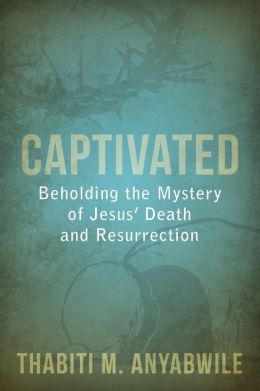
Book Review : Captivated

captivatedIt is possible to be exposed to something for so long it loses its significance and value. I believe this has happened as it relates to Jesus Christ. So many books, so many moves, so many sermons have been dedicated toward the life and ministry of Jesus Christ. Sadly, He is becoming common-place, with all of the wonder and reverence quietly diminishing. Thabiti Anyabwile, pastor of First Baptist Church Grand Cayman has written a new book entitled, “Captivated; Beholding the Mystery of Jesus’ Death and Resurrection”. In this relatively short work, ninety-four pages, Anyabwile makes a passionate plea to return our attention and amazement back to the person of Jesus Christ. With the Easter holiday season fast approaching, the timing for this book is perfect.

Captivated takes an honest and probing look at five questions surrounding the death and resurrection of Jesus Christ. These events stretch from Jesus before Pilate to the resurrection itself. Captivated began as a series of sermons Anyabwile shared with his congregation. I enjoyed the subject matter very much. A challenge to refocus and reexamine the teachings we have heard for years is always a good thing. There are a few things I did not like about the book. Due to the weightiness of the subject matter, the brevity of the book is a hindrance. I believe there is a lot more that could and should have been said in order to fully develop some points. Books that begin as sermons often struggle to capture what the original listeners heard. The flow seemed to clearly be one of “preaching points”. Although scripturally sound and passionately written, Anyabwile’s work is good, but not great.

Disclosure of Material Connection: I received this book free from CrossFocused Reviews Publishers as part of their Blogger Review Program. I was not required to write a positive review. The opinions I have expressed are my own. I am disclosing this in accordance with the Federal Trade Commission’s 16 CFR, Part 255: “Guides Concerning the Use of Endorsements and Testimonials in Advertising.”

Book Review : Heaven and Hell

heavenhellWhen it comes to controversial topics in the church today, the question of the existence of a literal Heaven and Hell is sure to generate heated discussion and debate. Most people readily embrace the thought of a Heaven and believe they will go there someday. On the other hand, there are many who do not personally believe in a Hell and simply can’t embrace the thought that God would allow such a place. In his new book, “Heaven and Hell; Are They Real?” author Christopher Hudson investigates the existence and nature of these places that he believes are “thrown around flippantly these days.” A quick breakdown of the book’s structure is necessary. Hudson’s book has two main parts, obviously. Part One, Heaven, is made up of five subsections and contains thirty-one questions. Part Two, Hell, is made up of six subsections and contains thirty questions. Hudson’s approach to the writing of this book appears to be an attempt to answer what he believes are the most commonly asked questions about Heaven and Hell.

What I Liked.

I liked the fact that Hudson wrote a book on Heaven and Hell. In my pastoral experiences, there is a great deal of uncertainty and confusion about these two eternal destinies. I applaud Hudson’s approach to simply let the Bible speak on these subjects. The flow and structure of the book reflect my preferred learning style (main points, sub-points, short chapters, etc.) I liked that. This book is an easy ready. Heaven and Hell moves from one sub-section to the next dealing with the related questions

What I Did Not Like.

I’m afraid there is more that I didn’t like than what I did like. I believe the book is too broad. With sixty-one questions ranging from “Does Everyone Go to Heaven Eventually?” to “Is Heaven a Real Place?” to “Does God Banish People to Hell or Do They Choose That Destruction Themselves?”, adequate time and attention to each are not afforded. Included are what I would consider just plain silly questions such as “Will There Be Animals in Heaven?”, “Will There Be Sex in Heaven?”, and “Will I Be Smarter in Heaven?” Time taken for these sorts of questions could have been given to the weightier and more important questions. In almost every case, once Hudson poses the question, he allows someone else to answer the question for him. Hudson simply makes a few comments after each. There are lengthy quotes throughout the book as supplemental voices work to answer Hudson’s questions. This is somewhat problematic to me because Hudson rarely states his position. The reader is left to conclude that Hudson agrees with the position of his quoted source. Also, some of the questions are repetitive and could have been absorbed with other like-themed questions.

Heaven and Hell is good primer work. In my opinion, it serves as a conversation starter and may leave the reader with unanswered questions. However, if you are looking for a deep, scholarly, theological work, this is not the book for you. I would have mixed emotions about recommending it to others because of its width and lack of depth.

Disclosure of Material Connection: I received this book free from Thomas Nelson Publishers as part of their Blogger Review Program. I was not required to write a positive review. The opinions I have expressed are my own. I am disclosing this in accordance with the Federal Trade Commission’s 16 CFR, Part 255: “Guides Concerning the Use of Endorsements and Testimonials in Advertising.”

Book Review : Futureville

futurevilleIt has been said that our belief about the future will have a positive or negative effect upon our life in the present. In his new book, “Futureville; Discover Your Purpose for Today by Reimagining Tomorrow”, author Skye Jethani writes about two different tension-filled times: today and tomorrow. He sets these times against each other by using the 1939 World’s Fair as an example of this tension. The World’s Fair came at a time when Americans were still reeling from the effects of the Great Depression. Into this period of poverty and hopelessness, the World’s Fair offered a look into a future that was brighter, overtly optimistic, and nothing like current reality. This glimpse of hope and “what might be” enabled Americans to better handle “what currently is”. Jethani writes, “How we interpret our present suffering, our work, our purposes, even our relationships is defined by how we think about what lies ahead.”

Futureville appears to have two main sections. The first section deals with the ways in which people generally approach the future. Jethani offers three viewpoints. Evolution offers the world hope that the human race can make the world a better place. Evacuation speaks of the desire of being pulled out of this world before it crashes in around us. Jethani writes of Resurrection, “Still, the incarnation of Christ among us and his cultivation of order, beauty, and abundance is not all there is to this third pathway to Futureville. Jesus came to give us more than mere glimpses of hope. He came to unleash a power that would make all things new.” In the second section, Jethani describes those things that will be made new: vocation, order, beauty, abundance, and hope.

Futureville is an okay book. There is nothing earth-shattering within the covers. I had high hopes for this book. After reading the introduction and diagnostic questions Jethani asked, coupled with the brilliant World’s Fair analogy, I was disappointed that he never connected dots. I found this book to be repetitive and disjointed, making it hard to follow. I would not recommend this book.

Disclosure of Material Connection: I received this book free from Thomas Nelson Publishers as part of their Blogger Review Program. I was not required to write a positive review. The opinions I have expressed are my own. I am disclosing this in accordance with the Federal Trade Commission’s 16 CFR, Part 255: “Guides Concerning the Use of Endorsements and Testimonials in Advertising.”
Book Review : Life in Christ

lifeinchristThere are millions upon millions of people in this world today who are without Christ. They do not know the freedom of forgiveness. They do not know what true joy is. They do not know what it is like to have a heavenly advocate. They do not know the blessing of an abundant life. On the other hand, there are millions upon millions who are in Christ (belonging to Him through a personal relationship). Their life is much different. They understand and appreciate forgiveness. Joy marks their lives. They lean on their heavenly advocate and enjoy an abundant and full life here made possible through God’s gift of salvation. In his new book, “Life in Christ; Becoming and Being a Disciple of the Lord Jesus Christ”, pastor and author Jeremy Walker explores the natural progression of the Christian life; moving from knowing Christ personally, following Christ intentionally, and becoming like Christ ultimately. The Bible speaks of the “unsearchable riches of Christ” that belong to the Christian as a result of being “in” Him. Walker explains how or understanding and appreciation or these “riches” will enable the believer to be a true disciple of Christ.

Life in Christ delves into the areas of a believer’s relationship with Christ that do not often receive a great deal of attention. walker explores six critical areas which make up the great majority of the book. In chapter one, Walker deal with the believer’s call to salvation and the promise of God to save. In chapter two, the believer’s position of being “in” Christ is more fully developed. In chapter three, Walker brings to the forefront what the “unsearchable riches” of Christ are: joy, grace, power, to name a few. Chapter four deals with the believer’s adoption as sons and daughters of God. The author gives chapter five to the positive and negative sides of a believer’s assurance of salvation. Finally, speaking again positively and negatively, the marks of a true believer are explained.

Life in Christ is a much-needed work. Walker invites his readers on a journey into a deeper walk with Christ by reminding them of all that is theirs because of their personal relationship with Jesus Christ. Written from a pastor’s heart and a scholar’s mind, Life in Christ is an encouraging and challenging work. I highly recommend.

Disclosure of Material Connection: I received this book free from CrossFoucsed Reviews as part of their Blogger Review Program. I was not required to write a positive review. The opinions I have expressed are my own. I am disclosing this in accordance with the Federal Trade Commission’s 16 CFR, Part 255: “Guides Concerning the Use of Endorsements and Testimonials in Advertising.”

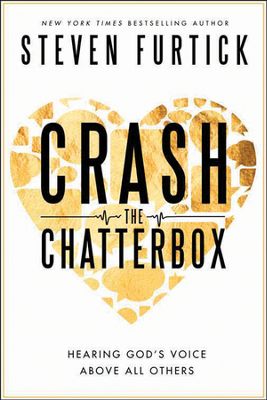
Book Review : Crash the Chatterbox

crashVoices. Many, many voices. Voices of praise. Voices of discouragement. Thoughts of worthlessness. Voices of sorrow. Thoughts of inferiority. Voices of criticism. Our lives are filled with the voices and thoughts that are competing for the prime real estate that is our mind. Every day we must decide which thoughts and voices we will give attention to and which ones we won’t. The choices we make here may determine how effective and productive we become in life. In his new book, “Crash the Chatterbox; Hearing God’s Voice Above All Others”, pastor and author Steven Furtick exposes the reader to the enemy’s continual and strategic barrage of negative and harassing thoughts whose purpose is to cripple the believer’s confidence and effectiveness. Furtick refers to these thoughts as a “chatterbox”. The chatterbox is the collection of lies that that keep us from reaching out full potential. Furtick writes, “But let’s think together about the possibility that 80 percent of our thoughts are not only devoid of any power to help us but actually work against us. When we allow thoughts to go unchecked, a steady drip of lies cements the wrong patterns within our minds, building a Berlin Wall of bad beliefs.”

The scaffolding for “Crash the Chatterbox” is four confessions that are, in the author’s words, “meant to function like noise-canceling headphones for your mind, heart, and soul. These are truths about God and truths about you that come straight from God’s Word.” These confessions, which also make up the book’s four sections, are:

Confession #1: God Says I Am – Overpowering the lies of the enemy in your insecurities.

Confession #2: God Says He Will – Overpowering the lies of the enemy in your fears.

Confession #2: God Says He Has – Overpowering the lies of the enemy in your condemnation.

Confession #4: God Says I Can – Overpowering the lies of the enemy in your discouragement.

These four confessions are meant to revolutionize the way we think and to help us respond to the thoughts and voices that mimic an irritating Facebook feed. Each of the four sections is built around a particular category of chatter and the confession relating to God’s dealings with it. In each section, Furtick uses personal experiences powerfully and God’s Word ultimately to show how each believer can possess the victory over the enemy’s crippling chatter. Each section has its own strengths and highlights. However, Chapter Nine, Counterfeit Conviction, is the most powerful one and is worth the book’s price itself. Furtick sums up the purpose of these confessions with this statement, “The change the confessions will make n out lives are revolutionary. Not because the confessions are fancy or brilliant, but simply because they are powerful. And they are God’s truths.”

Cleverly titled and simply written, “Crash the Chatterbox” is a great work. Furtick’s writing style is unique. It is a mixture of flamboyance and passion tempered with heart-felt transparency. Of his previous works, Sun Stand Still and Greater, Crash the Chatterbox is by far the best. It is obvious that Furtick’s writing comes from the overflow of what God is doing in his life. Read it.

Disclosure of Material Connection: I received this book free from Waterbrook Multnomah Publishers as part of their Blogger Review Program. I was not required to write a positive review. The opinions I have expressed are my own. I am disclosing this in accordance with the Federal Trade Commission’s 16 CFR, Part 255: “Guides Concerning the Use of Endorsements and Testimonials in Advertising.”

FIFS : Genesis 39:2

The LORD was with Joseph, and he was a successful man; and he was in the house of his master the Egyptian.’

Knowing the position Joseph was in, this verse, on the surface, does not make a whole lot of sense. The Lord was with Josesph when he was sold by his brothers into slavery? The Lord was with Joseph and he is now in Egypt removed from his homeland, his family, and the familiar surroundings of his Hebrew faith? The Lord was with Joseph in prison for refusing to sin against God with Potiphar’s wife? Yes, to all three. This verse causes us to think, “How can that be?” or “I don’t see that at all”. All of the events that unfolded in Joseph’s life were part of a larger plan God had for him. A plan that led to the rescue of his family during a severe famine. The events that happen  in our lives, even those seemingly unexplainable ones (you know the kind), are part of a larger plan.

The Lord was with Joseph and placed him in a country where resources were plenty. The Lord was with Joseph in prison and choreographed the meeting with Pharaoh’s imprisoned officials. This meeting in turn led to Joseph finding favor with Pharaoh and becoming the superintendent over all the land of Egypt. God is constantly at work in our lives. He moves us along and orders the events that will bring His plans to pass. We may not like these events. These events may not be comfortable. These events may call for a reorder of our lives. However, they are always right. It is the uncomfortable events of life that stretch our faith. I believe the lesson we learn from Joseph is worth remembering. The lesson is this, my uncertain circumstances do not negate the certainty of God’s presence.