Book Review : How to Pick Up a Stripper

stripperWhen it comes to ministry carried out by the local church, the most important element is the people outside of it. While churches are careful and intentional in ministering to those who are in the local body, there must be an equal concern in reaching those not in the body of Christ. The key to reaching those outside the body is to communicate to them that they are loved and they matter. In their new book, “How to Pick Up a Stripper and Other Acts of Kindness” Todd and Erin Stevens have written about the importance of showing people the love of God instead of only telling them of God’s love.

Todd Stevens is the pastor of Friendship Community Church in Nashville, TN. His wife Erin is the founder of Nashville Strip Church, a ministry that reaches out to the employees of strip clubs (hence the name of the book). The premise of this book can be summed up in two words: be kind. Using the ministry of Friendship Community and their own personal generosity as a backdrop in kindness, the Stevens give numerous examples of how serving people with no expectation of return best demonstrate the love of God. Examples of lives changed are given throughout the book. Woven throughout the book is the ministry that Erin started after being led to reach out to the women in the local strip clubs. The Stevens not only highlight the importance of a servant lifestyle, they also deal with topics such as having a good reputation in the community, sacrificial service, being a generous giver, and praying for those you are attempting to reach.

“How to Pick Up a Stripper” is a good book. It is written in an easy-flowing conversational tone and is a very easy read. The Stevens do a good job of mixing personal stories and biblical admonition. The major problem with the book is that we have heard this before. As a pastor, I see nothing new in the overall message of the book. We know that we should be serving people. We know that we have been commanded to do so. The examples of service projects and ideas for outreach the authors gave include, but are not limited to gas buy-downs, block parties, easter egg hunts, and moms night outs are ideas already being employed, although maybe not as successfully as Friendship Community , by many other churches. “How to Pick Up a Stripper” gets lost in the crowd of other “serve your community” books.

Disclosure of Material Connection: I received this book free from Thomas Nelson Publishers as part of their Blogger Review Program. I was not required to write a positive review. The opinions I have expressed are my own. I am disclosing this in accordance with the Federal Trade Commission’s 16 CFR, Part 255: “Guides Concerning the Use of Endorsements and Testimonials in Advertising.”

Book Review : China’s Reforming Churches

Chinas-Reforming-Churches“China’s Reforming Churches” is a collection of essays edited by Bruce Baugus, associate professor of Philosophy and Theology at Reformed Theological Seminary. The book sets out to examine and survey the congregational system of rule known as Presbyterianism in the context of the Christian China. This book has four main sections: The History of Presbyterianism in China, Presbyterianism is China today, Challenges and Opportunities for Presbyterianism in China, and Appropriating a Tradition. Within each of these main sections are several subsections that deal with issues such as the history of the Chinese church, challenges facing Christians in China, social conditions and cultural nuances related to the gospel/church, Christina publishing and theological education in China, and why China needs Presbyterian churches.

This book falls apart from the beginning. I was expecting to find a clear definition/explanation of what he wanted the reader to understand Presbyterianism. This did not happen. He gives this vague definition, “By Presbyterianism we refer only to ‘the general rules of the Word, which are always to be observed’ as they relate to the proper order of Christ’s church, and thus church development in China (WCF 1.6).” The editor always draws a distinction between Presbyterianism with a capital “P” and lowercase “p”. However, as the book goes on, these are used interchangeably which makes the narrative of the book murky and disjointed. Baugus also writes, “We do not mean anything more specific, such as a particular denomination of Reformed or Presbyterian churches”. I wish this had been true. On occasion, the editor alludes to Reformed Theology proper.

This work is typical of Reformed Theology proponents. Written in what I view as an arrogant overtone, Baugus advocated that the true biblical church must be a Presbyterian one. He writes, “I am mildly tempted to describe a triumphant future when China will become a global center of Reformed theology, church life, and mission. That kind of future seems quite possible today and would be very welcome.” This book does not live up to its billing. Don’t waste your time with this one.

Disclosure of Material Connection: I received this book free from CrossFocused Reviews as part of their Blogger Review Program. I was not required to write a positive review. The opinions I have expressed are my own. I am disclosing this in accordance with the Federal Trade Commission’s 16 CFR, Part 255: “Guides Concerning the Use of Endorsements and Testimonials in Advertising.”

Book Review : The NIV Integrated Study Bible

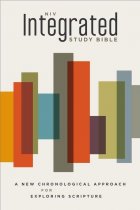
nivIt seems that almost daily there is a new study Bible on the market. Each one offers something special and significant that the others do not. At times, many fail to deliver on the promise of something fresh and new. The NIV Integrated Study Bible edited by John R. Kohlenberger III is one such new study Bible. Kohlenberger has made major contributions in the area biblical reference/study, editing over four dozen reference works. The cover says that the NIVISB is “a new chronological approach for exploring scripture”. Is it really? This is certainly not the first chronological Bible ever produced. What makes it different?

Our modern English Bibles are arranged by content (their substance and message) rather than chronologically (as it relates to a historical timeline). We have become accustomed to opening our Bibles and having the same format, divisions, and structure. For example, our English Bibles break the Old Testament down into the Books of Law, History, Wisdom and Poetry, and the Prophets. The NIVISB gives a different approach; offering a running text the biblical narrative. For example, in the NIVISB you will find Genesis, Job, and then Exodus. There are seven major historical sections in the NIVISB. They are:

1. Creation Through the Patriarchs

2. Exodus to Conquest

3. Conquest Through United Kingdom

4. Divided Kingdom and Exile

5. Return to the Land

6. The Life of Jesus

7. The Early Church

A unique feature to the NIVISB is the parallel passages found throughout the book. The editor, desiring to maintain continuity of the overall biblical account, inserts passages that chronicle the same story or account. For example, when you arrive at Deuteronomy 16:1-8 (The Passover), you also have Exodus 12:14-20, Leviticus 23:48, and Numbers 28:16-25 alongside in grayed-out headings that let you know they correspond to the primary passage. Another interesting and helpful feature is the timeline at the bottom of every page. This timeline allows the reader to know where the biblical narrative falls on the timeline of history.

Although I am not a fan of the NIV version, I really like the NIVISB. This study Bible will appeal to a narrow audience. If you want to know how everything “fits in”, this chronological approach is for you. The NIVISB is not a Bible that you will use during a small group study or to follow along during a Sunday morning worship service. At times integration is a little tricky. The reader has to get comfortable with, while reading one passage, seeing the same passage in the book to come on the same page. Likewise, the reader will need to get comfortable with seeing the books that they have already read from on the same page. This is not the typical study Bible with exhaustive editorial notes at the bottom. There are however helpful charts along the way. Overall the NIVISB is a great study resource for those wanting more than a casual reading.

Disclosure of Material Connection: I received this book free from Thomas Nelson Publishers as part of their Blogger Review Program (with Zondervan). I was not required to write a positive review. The opinions I have expressed are my own. I am disclosing this in accordance with the Federal Trade Commission’s 16 CFR, Part 255: “Guides Concerning the Use of Endorsements and Testimonials in Advertising.”

Book Review : HRC

hrcSince the early 1990’s, there has been a Clinton in the news. It all began with Bill being elected as POTUS is 1992 and 1996. This was followed by Hillary’s election to the Senate. This was followed by a failed attempt by Hillary to defeat Barrack Obama for the presidency in 2008. Her defeat was followed by confirmation as Secretary of State, a cabinet office which she held well into 2012. Suffice to say that Americans have come to know the Clinton family very well through both scandal and service. In their new book, “HRC; State Secrets and the Rebirth of Hillary Rodham Clinton” veteran Washington journalists Jonathan Allen and Amie Parnes have put together a snapshot of a very specific 4-5 year period of Hillary’s life. They chronicle her rise from the ashes of a failed presidential bid and subsequent work as Secretary of State in the Obama administration.

The opening of the books is reminiscent of a funeral service which lay to rest a failed political campaign. The authors reveal the thought process of Hillary’s camp, referred to as “Hillarylanders” as they attempt to determine what happened and who they need to blame. Allen and Parnes trace the steps and connect the dots as to how Hillary goes from defeated candidate and Obama’s most visible rival to Obama’s most trusted and influential cabinet member. The great majority of the book details the highs and lows of Hillary’s tenure as Secretary of State. The high points include the tracking and death of Osama bin Laden and the facilitation of the democratic efforts among nations involved in the Arab Spring. The lowest point of her tenure include the mishandling and leadership failure in protecting US personnel and American interests during the attacks in Benghazi, Libya where four American died. The authors dedicate an entire chapter to this tragedy, tragedy that will likely haunt Hillary the rest of her political life. The final part of this book deals with the possibility of Hillary’s presidential run in 2016.

There are two words that describe the Clinton political machine that comes through in HRC so very clear: loyalty and revenge. You need to look no further than the opening chapter, “Hillary’s Hit List”. One of the things that get in the way of the effectiveness of this book is the consistent muddying of the storyline through name-dropping. The authors seem to want the reader to know all of the people that personally know. This book is as much about Bill as it is Hillary. Although this book is intended to chronicle rebirth to the political landscape, the authors tell what Bill was to doing all along the way to facilitate that rebirth. This book proves a point that may have been unintended, but is still crystal clear. The point is that if it had not been for Barrack Obama and Bill Clinton, Hillary would likely have enjoyed a much smaller public stage.

Disclosure of Material Connection: I received this book free from Waterbrook Multnomah Publishers as part of their Blogger Review Program. I was not required to write a positive review. The opinions I have expressed are my own. I am disclosing this in accordance with the Federal Trade Commission’s 16 CFR, Part 255: “Guides Concerning the Use of Endorsements and Testimonials in Advertising.”
FIFS : Hosea 3:1-3

1 Then the Lord said to me, “Go again, love a woman who is loved by a lover and is committing adultery, just like the love of the Lord for the children of Israel, who look to other gods and love the raisin cakes of the pagans. ” 2 So I bought her for myself for fifteen shekels of silver, and one and one-half homers of barley. 3 And I said to her, “You shall stay with me many days; you shall not play the harlot, nor shall you have a man—so, too, will I be toward you.”

Often you will find powerful and challenging stories of God’s dealings with His people in the more obscure and skimmed-over books of the Bible. Such is the case with the book of Hosea. It is one of those books that rarely sees the light of day. It is one of those books where there are likely few, if any, hand-written notes in the margin. It is one of those books that you need the table of contents to find. That being said, the book of Hosea contains, in my opinion, one of the clearest portraits of God’s love to be found anywhere in the Bible. It is the story of God’s man Hosea and his prostitute wife Gomer. God directs Hosea to marry this woman with knowledge of her past and, what she will do in the future. Gomer continues in her ways and finds herself the property of another man who is not her husband. In the beginning of chapter three we find Hosea, again following the voice of God, off to take back his wife. Hosea finds his wife this time on an auction block, for sale, available to anyone with enough money. Imagine the shame in Hosea’s eyes and on his face as he sees his adulterous wife for sale. Imagine the anger swelling up inside of him as he looks upon her and sees what her sins have done. Imagine the whispers and finger pointing of those present at the auction that day. Imagine God demanding this much obedience. So, Hosea pays the price and buys back his wife. Most definitely a story of crazy love.

Hosea’s relationship with Gomer is a symbol of God’s love for the nation of Israel. Time and time again they left the faithful love of God and played the harlot to other gods. However, God remained true. This story is also about us. Hosea bought his wife off the auction block. The word for “bought” in verse three is the word ‘redeem’, which literally means “to purchase with a price”. There was a time in our lives what we were in a similar position to Gomer; enslaved, imprisoned, and held hostage to the power and control of sin. The death of Jesus Christ on the cross for the sins of mankind was the ransom price that it took to free us. He has bought us back. He redeemed us. His blood was the purchase price. How do we respond? Do we seek constant communion with Him in prayer, or do we seek Him only when we can’t handle things ourselves. Do we share His wonderful love with others, or do we hope and count on someone else to do it? Do we follow his direction and guidance in our daily lives, regardless of where he leads, or do we just tell God that we know better?

Monday is for Missions : What Will You Do This Summer?

mmMy favorite time of the year – summer, has arrived. Summers here are the best. Sure it’s hot, but we have the beautiful beaches. Sure it’s hot, but we have the soothing sea breeze. Summers are certainly a time for vacations and sun, for rest and relaxation. Summers are certainly not a time for taking a break from the ministry work of your church. In fact, there are many opportunities for service throughout the summer for the Port Royal Baptist Church family. I encourage you to find a place of service and give it everything you have. To volunteer for any of these opportunities, look for the sign-up sheets at the church or you can go to www.portroyalbaptist.org and click on the “volunteer” tab to sign up. As you find ways to cool off this summer, don’t allow your missional spirit to cool off. Here’s what’s available.

June 7th and 21st : Port Royal Farmers Market

What could be better than cold water on a hot day? How about free cold water? Please join us as we set up at the Port Royal Farmers Market (directly across the street from the church) and give away free cold water to our community as they visit and shop at the market. Times of ministry will be 8:00am-12:00pm. You may sign up for a little as an hour or you may spend as much time as you like.

June 16th : Migrant VBS at St. Helena Baptist Church

Each year, St. Helena Baptist Church and Baptist Church of Beaufort come together to provide a Vacation Bible School for the migrant workers / families on St Helena Island. Each night, churches volunteer to cook the evening meal. We will be cooking on Monday, June 16th beginning at 4:00pm.

June 21st : Vacation Bible School Kick-Off

Please join us on the front lawn of the church from 11:00am – 1:00pm as we host a community outreach event that kicks off our Vacation Bible School. There will be food, bouncers, popcorn, sno-cones, and other fun and games.

June 22nd – 26th : Vacation Bible School

The theme for this year’s VBS is “Agency D3 : Discover, Decide, Defend”. Kids will move through rotation sites such Bible Study, Crafts, Missions, and Music all the while discovering who Jesus Christ is. Times will be 6:00pm – 8:30pm nightly. Supper will be served at 5:15pm each night. Please join us and invite someone to come with you.

July 6th : Independence Day Celebration

Independence Day is a major family holiday. Please join us on Sunday afternoon for a time of fun and fellowship. Activities will begin at 3:00pm with a horseshoe tournament. There will also be games for the children. We will then have a cookout with hamburgers and hot dogs at 5:00pm.

July 10th : Cookout at Hunting Island State Park

Each summer, in conjuction with the Savannah River Baptist Association, we choose a day and cook lunch for the all the staff at Hunting Island State Park. This is a simple way for us to simply say thank you for their service to the community. At 11:00am, we will be cooking hamburgers and hot dogs, along with all the trimmings for a noon lunch.

July 12th and 26th : Port Royal Farmers Market

What could be better than cold water on a hot day? How about free cold water? Please join us as we set up at the Port Royal Farmers Market (directly across the street from the church) and give away free cold water to our community as they visit and shop at the market. Times of ministry will be 8:00am-12:00pm. You may sign up for a little as an hour or you may spend as much time as you like.

August 5th : National Night Out at Stuart Towne Apartments

This is a relatively new ministry opportunity for us, only out third year. We are partnering with the national crime prevention program called National Night Out. Our church will be hosting a block party for the residents of our partner multi-housing unit, Stuart Towne. Along with the food, games, and bounce houses, we will have personal and family safety messages from local police and fire departments. Activities will begin at 6:00pm and conclude at 8:00pm.

August 16th and 30th : Port Royal Farmers Market

What could be better than cold water on a hot day? How about free cold water? Please join us as we set up at the Port Royal Farmers Market (directly across the street from the church) and give away free cold water to our community as they visit and shop at the market. Times of ministry will be 8:00am-12:00pm. You may sign up for a little as an hour or you may spend as much time as you like.

Book Review : Redefining Leadership

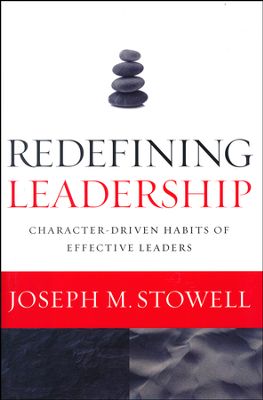
redefineleadershipThere is certainly no shortage of books written on the subject of leadership. Everything from principles for dealing with people, strategies to better manage time and goals, and guidelines for developing new leaders has been covered, at least once. In his new book, “Redefining Leadership; Character-Driven Habits of Effective Leaders”, pastor or Cornerstone University president Joseph Stowell brings an altogether different approach and viewpoint to the leadership conversation. Instead of asking questions centering on success markers and who should and should not lead, Stowell deals with the heart of a leader and what motivates him/her toward their goals.

Stowell puts forward two different kinds of leaders: outcome-driven leaders and character-driven leaders. The primary focus of outcome-driven leaders, as Stowell writes is “on motivating others to achieve great organizational outcomes” and “the power of their leadership is leveraged by the authority of their position instead of the credibility of their lives.” The primary focus on character-driven leadership, as Stowell writes, is to “empower those within the sphere of their authority to achieve great outcomes personally, spiritually, communally, and organizationally” and whose power is “leveraged by their moral authority that comes from the credibility of their lives.” The remainder of Part One, “A Redefined Priority”, is given to fleshing out the dynamics of these two leadership styles. Stowell highlights certain delusions that character-driven leaders should avoid.

In Part Two, “A Redefined Identity”, which is the best in the book in my opinion, Stowell introduces the term “followership”. As he describes the importance of following well before leading well, the author writes, “This is the deal-breaker moment in this book. The question is, ‘Are you ready to accept the identity of a follower…to fully surrender to Jesus as the final authority on life and leading?’” Stowell gives the three markers of followership. He says that Follower-leaders count it an honor to follow Jesus, actively pursue Christ, and are found in the “Way” with Him. In Part Three, “A Redefined Leader”, Stowell redefines the two types of leaders in light of the kingdom of God. Outcome-driven leaders are referred to as “instinctive” leaders and character-driven leaders are referred to as “kingdom” leaders. It is in this section that Stowell examines Christ’s sermons and teaching on kingdom and highlights the core competencies of the leader in light of following Christ as their primary example. Such competencies include humility, mercy, and meekness.

Redefining Leadership is an absolute treasure. With other leadership voices such as Al Mohler, John Maxwell, and Stephen Covey regularly instructing on the merits of effective leadership, Joseph Stowell must be included in these conversations. Although covering a deep subject, the book flows easily and never becomes “professional”. Stowell’s use of personal stories of victory and defeat, as well as the Scriptures themselves give this book a solid footing. Humbly and passionately written, Stowell has a winner here and should be required reading for all who occupy leadership positions whether secular or spiritual.

Disclosure of Material Connection: I received this book free from Thomas Nelson Publishers and BookLook Bloggers as part of their Blogger Review Program. I was not required to write a positive review. The opinions I have expressed are my own. I am disclosing this in accordance with the Federal Trade Commission’s 16 CFR, Part 255: “Guides Concerning the Use of Endorsements and Testimonials in Advertising.”
No Place to Hide

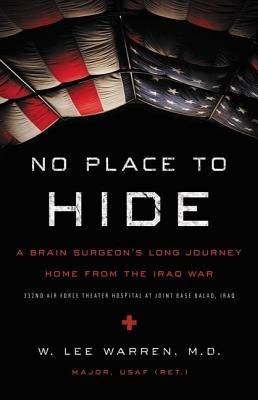
noplacetohideOur country has been locked into a war in Iraq and Afghanistan for going almost thirteen years. During this time, on a regular basis, we have been exposed to the reality of extended troop deployments, suicide bombers, and unspeakable acts of violence against innocent civilians on behalf of our enemies. At the same time, we have also been introduced to incredible acts of heroism, sacrifice, and love for our fellow man, regardless of the uniform. There has been one area that has had little to no exposure: combat hospitals. In “No Place to Hide; A Brain Surgeon’s Long Journey Home From the Iraq War”, neurosurgeon and US Air Force Major Lee Warren shares the stories of his four month deployment to Iraq in 2004. Warren chronicles his time at the largest American hospital in the region in gripping fashion. His book brings to light the horror and tragedy of war, as well as the psychological, physical, and emotional toll that war can take on the human body and mind.

No Place to Hide is actually a story of two wars. On one hand, there is the Iraq War with all the tragedy and death that comes with war. The other war is a personal one, with ties to the home front. As Warren arrives in theater, his marriage is falling apart and his personal faith is unstable at best. Warren, in vivid detail, tells the personal and professional stories of his fellow doctors, nurses, American soldiers, Iraqi civilians, and the terrorists that he comes into contact with. Warren’s book is a beautiful juxtaposition. Good and evil, compassion and anger, joy and misery are smartly laid beside each other in order to tell an engrossing and addictive story. Be prepared for an in-your-face and brutally honest look at life in the midst of war.

Disclosure of Material Connection: I received this book free from Thomas Nelson Publishers as part of their Blogger Review Program. I was not required to write a positive review. The opinions I have expressed are my own. I am disclosing this in accordance with the Federal Trade Commission’s 16 CFR, Part 255: “Guides Concerning the Use of Endorsements and Testimonials in Advertising.”
Book Review : The Israeli Solution

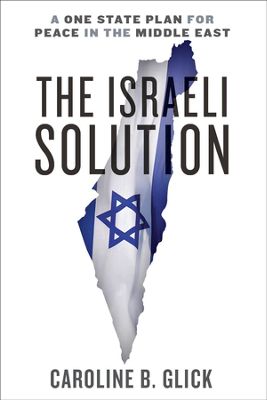
israeliAn almost ever-present segment in newspapers, twenty-four hour news channels, and news magazines is the crisis in the Middle East. Regularly we hear of a terrorist bombing in Jerusalem, new rounds of peace talks between Israelis and Palestinians, and calls from nations for Israel’s destruction. At the heart of all the hated, discussion, and confusion is one simple matter: Israel’s right to exist as legitimate sovereign nation. Caroline Glick, senior contributing editor to the Jerusalem Post and former member of Israel’s negotiations team with the Palestinians has weighed in on this matter in her new book, “The Israeli Solution; A One-State Plan for Peace in the Middle East”. It is here that she takes an “in the trenches” look at the often-touted two-state solution for Middle Eastern peace. She presents the fallacy of this plan and the shallow-thinking behind it when she writes, “Establishing a Palestinian state, so the thinking goes, would be a panacea for all the region’s ills. It would end the Arab world’s conflict with Israel, because the reason the Arab world is anti-Israel is that there is no Palestinian state. It would also nearly erase the Arab world’s anti-Americanism, because the reason the Arabs – and the larger Muslim world – are anti-American is that the United States supports Israel even though there is no Palestinian state. Based on this thought chain, most American policy makers across the ideological spectrum share the view that the establishment of a Palestinian state west of the Jordan River would remove the principal cause of the violent extremism that afflicts the Arab and the larger Islamic world.”

In the first part of her book, “The Middle-East’s Beloved Chimera”, Glick gives attention to a favored two-state plan by leaders of the western world and how that vision is only a pipe dream. We also see in this section the surprising and disappointing stance of the United States in favor of a two-state plan for the Middle East and the increasing hostility of the United States toward Israel. Case in point, President George W. Bush, “It is untenable for Israeli citizens to live in terror. It is untenable for Palestinians to live in squalor and occupation.” Former Secretary of State Condoleezza Rice said there “could be ‘no greater legacy for America’ than to establish a Palestinian state. The U.S. goal was to lead ‘serious negotiations’ that would establish a Palestinian state ‘as soon as possible.’” Finally, President Barrack Obama, “A lasting peace will involve two states for two peoples: Israel as a Jewish state and the homeland for the Jewish people, and the state of Palestine as the homeland for the Palestinian people, each state enjoying self-determination, mutual recognition, and peace.” Glick also gives an entire chapter to President Bill Clinton’s failed attempts to secure a two-state plan, highlighting his uneasy closeness with PLO leader Yassir Arafat.

In part two, “The Israeli One-State Plan”, Glick discusses what a one-state plan would look like. She writes, “In essence, then, the main thing that the Israeli one-state plan – that is, the application of Israeli law over Judea and Samaria – requires of both Israel and its closest ally is that they embrace reality, with all its opportunities and threats, and stop chasing fantasies of perfect solutions. The mechanics of the policy are fairly straightforward. Israel will apply its laws to Judea and Samaria and govern the areas as normal parts of Israel. The military government will be dissolved, as it was in the Golan Heights in 1981, when Israel applied Israeli law to that area.” In this section, she defends her plan by refuting the claims that the demographic changes will result in an Arab majority in relation to the Jews. Glick calls attention to the historical claims of Israel’s legitimacy and how international law and principles of self-defense allow only for a one-state plan in the Middle East. In the third section, “Probable Fallout”, Glick shares what would be the likely repercussions of from the point of view of Palestinians, Europe, the United States, and other Arab nations in the region if Israel actually put forward this one-state plan. Although there will be some fallout, the plan would see the welfare of the region increase.

Glick has written a powerful and passionate book. “The Israeli Solution” is meticulously researched and developed. Her background allows her to write with authority, clarity, and passion. This is a book that national leaders need to pick up, read, and give serious consideration to. Glick concludes with these words, “The Israeli one-state plan provides an equitable, democratic means of resolving the conflict, and by safeguarding Israel’s national and legal rights, it secures Israel’s strategic posture. It neutralizes the Palestinians’ capacity to destabilize Israel domestically and delegitimize it internationally, and it strengthens Israel militarily, both from foreign invasion and from terror assaults.”

Disclosure of Material Connection: I received this book free from Waterbrook Multnomah Publishers as part of their Blogger Review Program. I was not required to write a positive review. The opinions I have expressed are my own. I am disclosing this in accordance with the Federal Trade Commission’s 16 CFR, Part 255: “Guides Concerning the Use of Endorsements and Testimonials in Advertising.”

What Happens When Leaders Abuse Their People?

Every organization has a leader. Every organization, whether secular or spiritual, has an individual who gives guidance, sets vision and tempo, and looks out for the best interests of their people. I believe there are two main types of leadership: given and assumed. Given leadership means that an individual was is hired to lead. In this sense, power and authority to lead are given. Assumed leadership means that in the absence of a clear leader, or in light of a poor leader, steps forward to lead out of concern for the well-being of the organization.

With leadership comes entrusted authority. With leadership comes entrusted power. With leadership comes grave responsibility. The leader of any organization must resist the temptation to allow the authority and power entrusted to them to corrupt. They must constantly guard against what British historian Lord Acton believed when he said, “power tends to corrupt, and absolute power corrupts absolutely.” From time to time, a strange thing occurs when an individual is given an opportunity to lead. Instead of respecting the organization and the people of that organization, they begin to abuse their people and hold that entrusted power over the heads of the people. Why would a leader allow themselves to become an abuser? I would say pride, arrogance, and self-promotion lead to such narcissistic behavior. This is tragic. What happens when leaders abuse their people?

1. When leaders abuse their people, credibility is weakened.

John Maxwell once said, “People buy into the leader before they buy into the vision.” Leaders must give the people a reason to follow. The organization has to see a reason to give their loyalty and trust to their leader. Credibility is built when leaders demonstrate, through word and deed that the people of the organization matter most. However, when leaders worry more about themselves and push personal agendas, the organization doesn’t have reason to trust and follow. Abusive leaders never get the “buy in”.

2. When leaders abuse their people, participation is discouraged.

A common trait with leaders who abuse their people is that they would rather “be right” than “do right”. When a leader wants to have the last word, have everything done their way, and criticize and belittle any opinions not their own, people within the organization begin to feel unappreciated and unwanted. If the abuse goes on long enough, those within the organization stop trying and stop participating and ask themselves, “why bother?” When any leader demands the final word and operates under the “my way or the highway” rule, they are silently saying, “you are not needed, nor wanted”. At this point, the only cure is a different leader.