Let’s Be Fair About This

The season of state convention annual meetings is upon us. Our annual meeting in South Carolina is scheduled for November 16th-17th in Columbia. All across the SBC, states are gathering for times of worship, encouragement, inspiration, and difficult decisions during business sessions. Many of the state conventions are in the beginning phases of making adjustments after the passing of the Great Commission Resurgence Task Force recommendations this past June during the SBC annual meeting in Orlando. The task force asked for SBC churches to shine the light upon how we as Southern Baptists can do better in fulfilling the Great Commission. So, state conventions, wrestling with struggling economies and fulfilling the desire of its messengers, are beginning to adjust their budgets accordingly.

Part of the budget decisions facing many state conventions is not just whether or not to increase or decrease their budget based on projected income from the member churches over last year. Another decision that states face is what to do with their percentages as it related to the Cooperative Program. The bare-bones question is this: “How much do we keep in state and how much do we forward to SBC causes?” Messengers from member churches make this decision. Historically, the percentage goal for allocation of CP dollars has been 50/50. At the beginning, Southern Baptists saw this as the ideal. In 1934, the SBC approved a distribution of receipts which called for “50% for Southwide (SBC) purposes and 50% for statewide purposes” 1

The 50/50 goal has not yet been embraced consistently across the SBC. Since that time, states have taken on their own buildings, agencies, schools, staff, and ministries. As a result, the distribution percentages have slowly but steadily shifted in favor of the state conventions. Since 1930, the division of CP funds between state conventions and the SBC has averaged 63.55% to the state and 36.45% to SBC causes.

Each state is autonomous. They can set their own budgets, choose which ministries to pursue, what and how much staff to employ, and decide what percentage of CP fund to retain. Currently, our South Carolina Baptist Convention retains 59.6% and forwards 40.4% to the SBC. Messengers to the SCBC annual meeting this year will see a proposal of (59% retain and 41% forward). I believe that our state convention is retaining too much of the CP dollar. Over the past years, and especially now with states being called upon to put more CP dollars to work on the mission field outside North America, the thought and necessity of a 50/50 split is being heard again. The state conventions of Kentucky, Florida, Nevada, and Tennessee will be at least considering  recommendations to move toward a 50/50 division of CP funds.

I am in favor of such an allocation. To my knowledge there has been no mention if South Carolina Baptists will hear a proposal to move toward a 50/50 split. I hope we do. I hope the messengers get a chance to speak to such a recommendation in the future. Here is why I feel this way. Even if our messengers approve a 59/41 split, proportionally it seems out of balance. Here in North America, the barriers to the advancement of the gospel are fewer. Think about it for a moment. Physically reaching the lost across North America is easier. Days of difficult travel to reach people groups do not exist in North America. Technology has made a variety of delivery methods available. It has also made communication between workers quicker and more efficient. Networks of church planters and those who provide resources and training to them are already in place. For the most part, the language barrier is not as great a battle here as it is in other parts of the world.

The barriers to the advancement of the gospel are greater overseas. Travel to and from remote cities and villages s difficult, time-consuming, and potentially hazardous. Limited technology in many parts of the world makes it more difficult for missionaries to communicate with each other and with those whom they serve. In turn, this limits the ways in which the gospel can be delivered. We have the luxury here in North America to be able to use social networking (Facebook, Twitter, blogs, etc), video, unnumbered styles and varieties of gospel tracts, different Bible versions, and advertising to get the gospel message out. At times, our missionaries are the only “professional” in a particular area. I worked on several work and witness teams with an IMB missionary who was responsible for the Miskito people group. His area of responsibility covered the coastal and inland sections of both Honduras and Nicaragua. Contrast this with North America where we seemingly have churches on every corner with pastors and planters having each other to give encouragement, support, and resources in order to better reach people.  The language barrier hinders any kind of work. Although our missionaries spend time in language school before arriving on their field, it still takes time to effectively communicate the gospel, especially when some of our words don’t even exist in native tongue.

 Despite the contrast, we are sending more money and resources to North America, and more especially our state, and less to the foreign mission field. If we have clearly been given a mandate to reach all the nations with the gospel, and I believe that we have, then our funding should reflect the priority. Lostness is lostness, here and abroad. Should we not be funding our missions efforts equally? I believe there are a number of our state convention agencies that have the ability to gain funding outside of the CP channel. I firmly believe that the missions agencies of the SBC whose sole support is CP monies should have what they need in order to active in pushing back darkness around the world.

Would our state convention in South Carolina have to make adjustments in order to get to a 50/50 split in Cooperative Program giving? Without a doubt. Would a 50/50 split challenge the state convention and its leadership to make hard decisions and sharpen their focus on the lost beyond state lines? Absolutely. Would this be the right thing to do? I believe so.


1 – SBC Annual 1934 (pp. 38-49)

A Month of Ministry

I love the community I which I live. I love the community in which our church has been planted. I believe with all of my heart that the best years are before us and that we are going to make a difference in our Jerusalem. God is giving us at Port Royal Baptist Church some new and creative opportunities to minister to the people of Port Royal. For this, I am thankful. Two such opportunities come our way in the month of October: the Festival of the Sea community festival in Port Royal and our annual Fall Festival and Trunk-or-Treat.

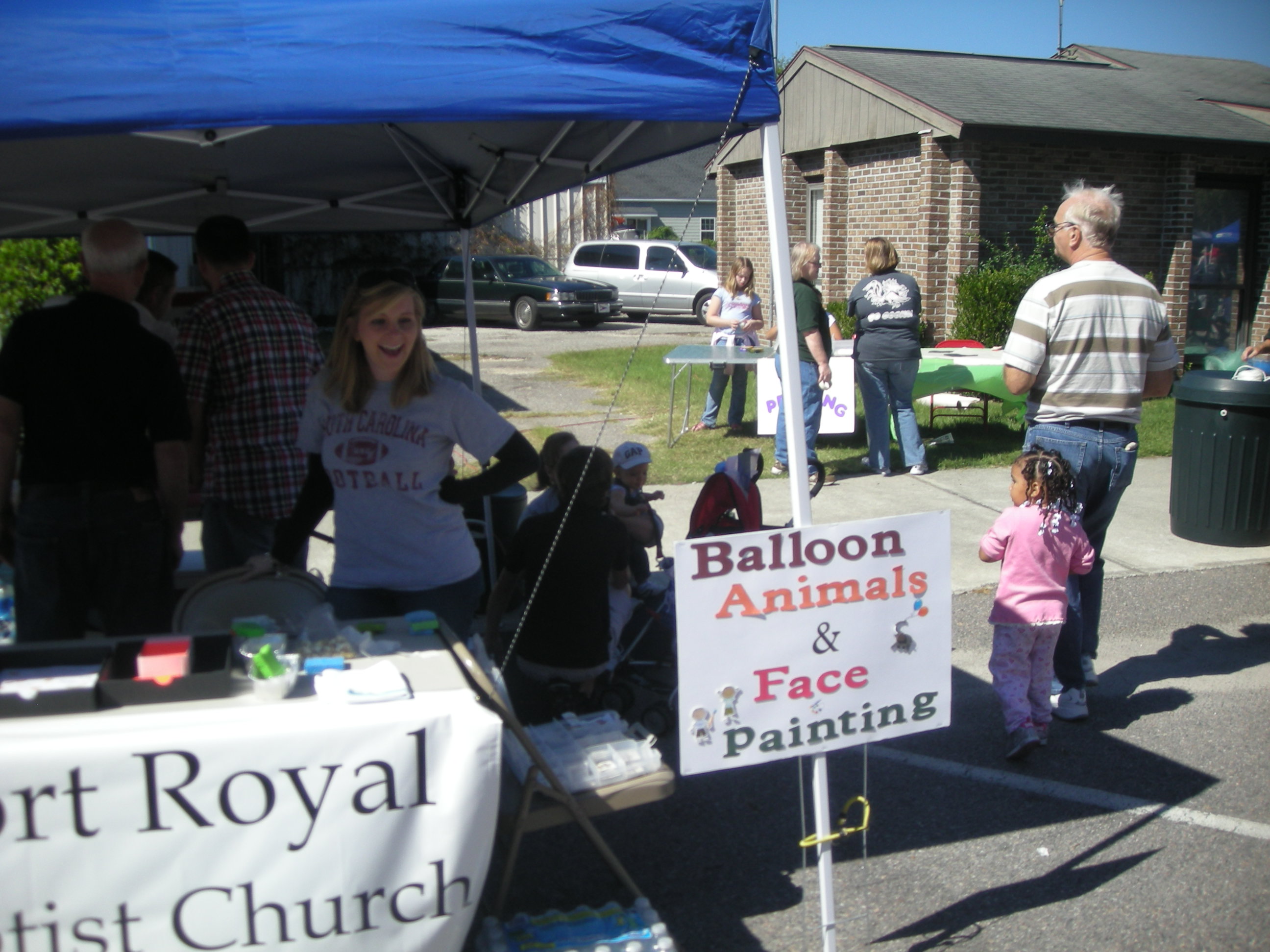
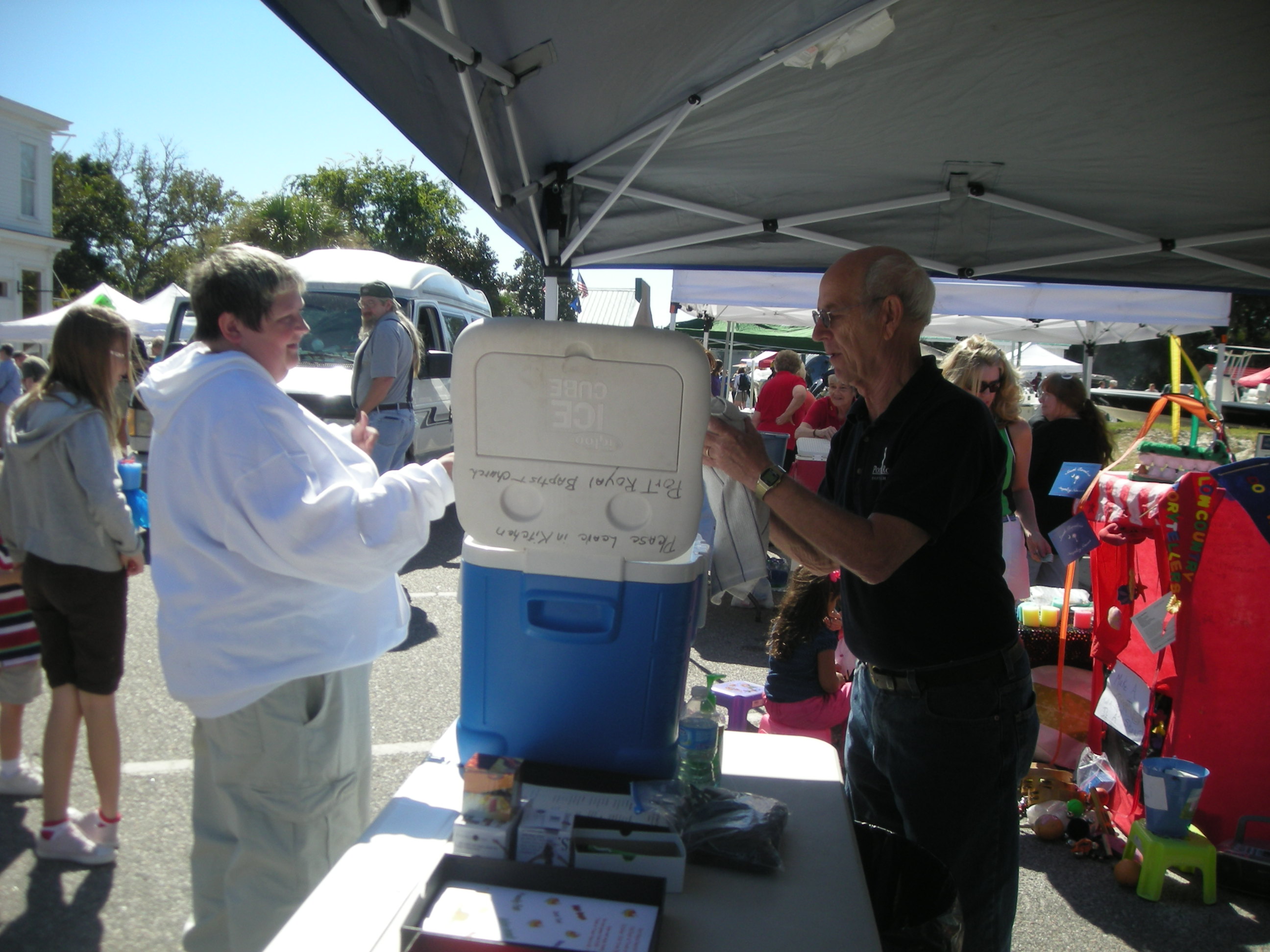
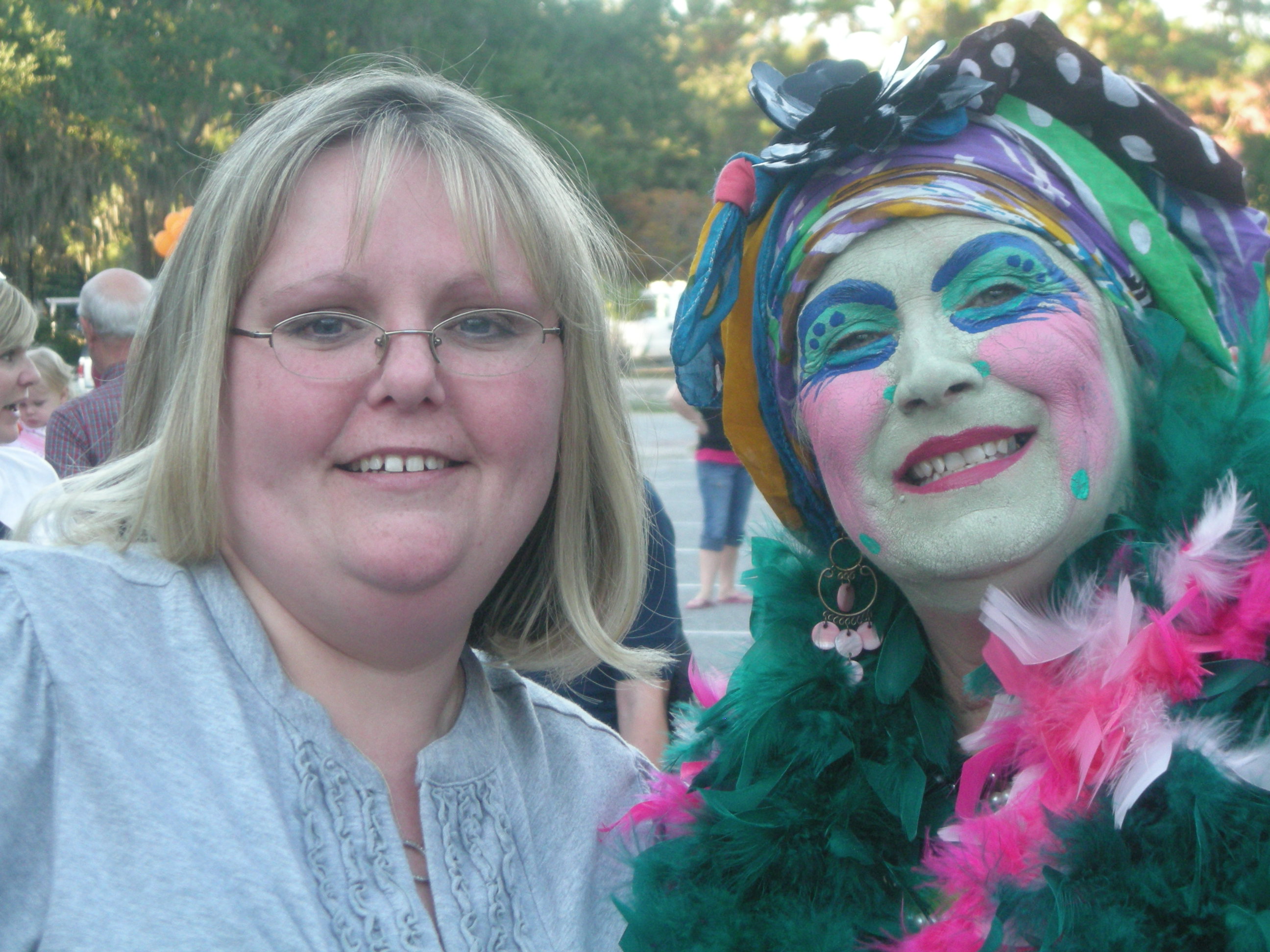
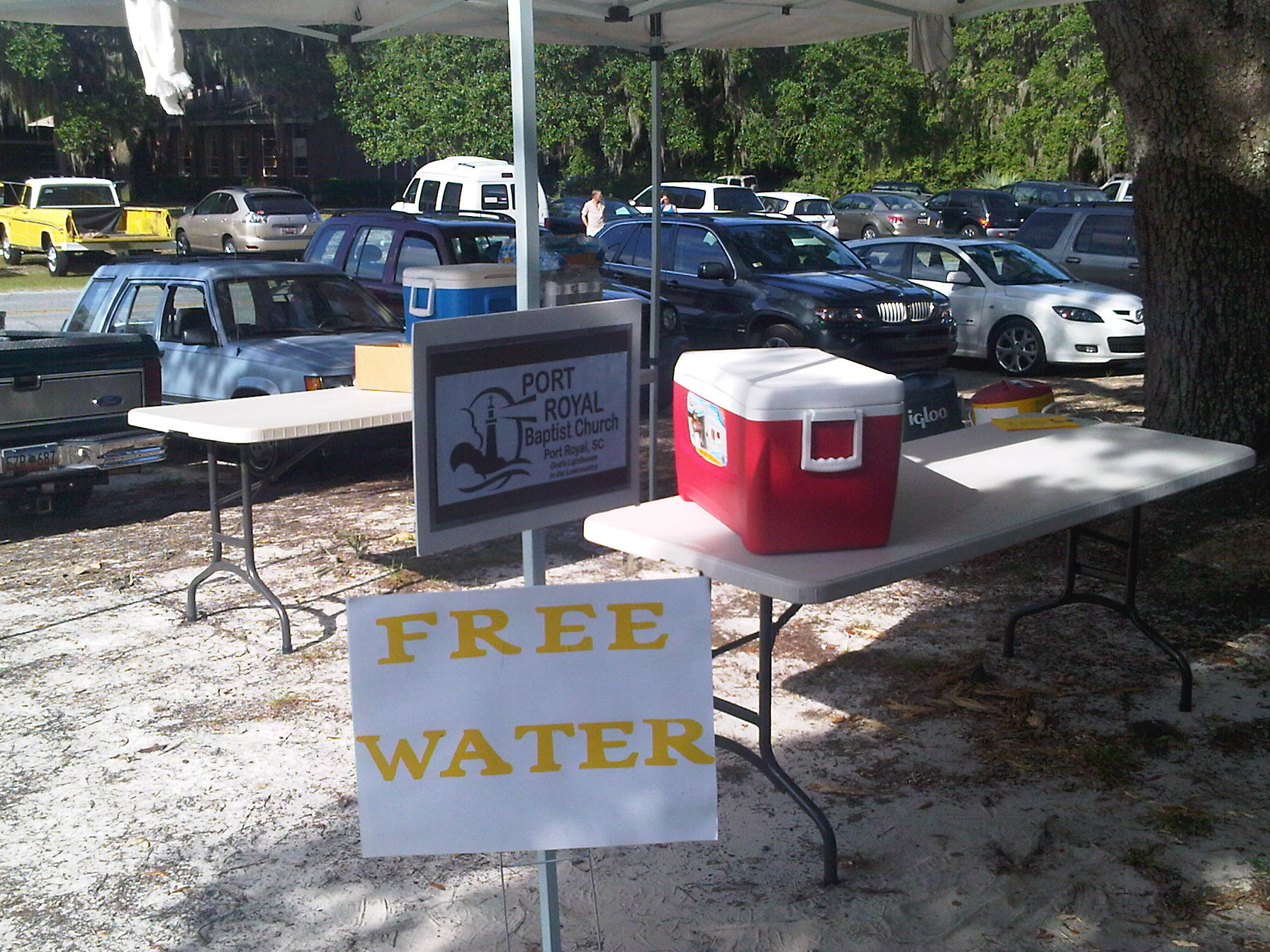
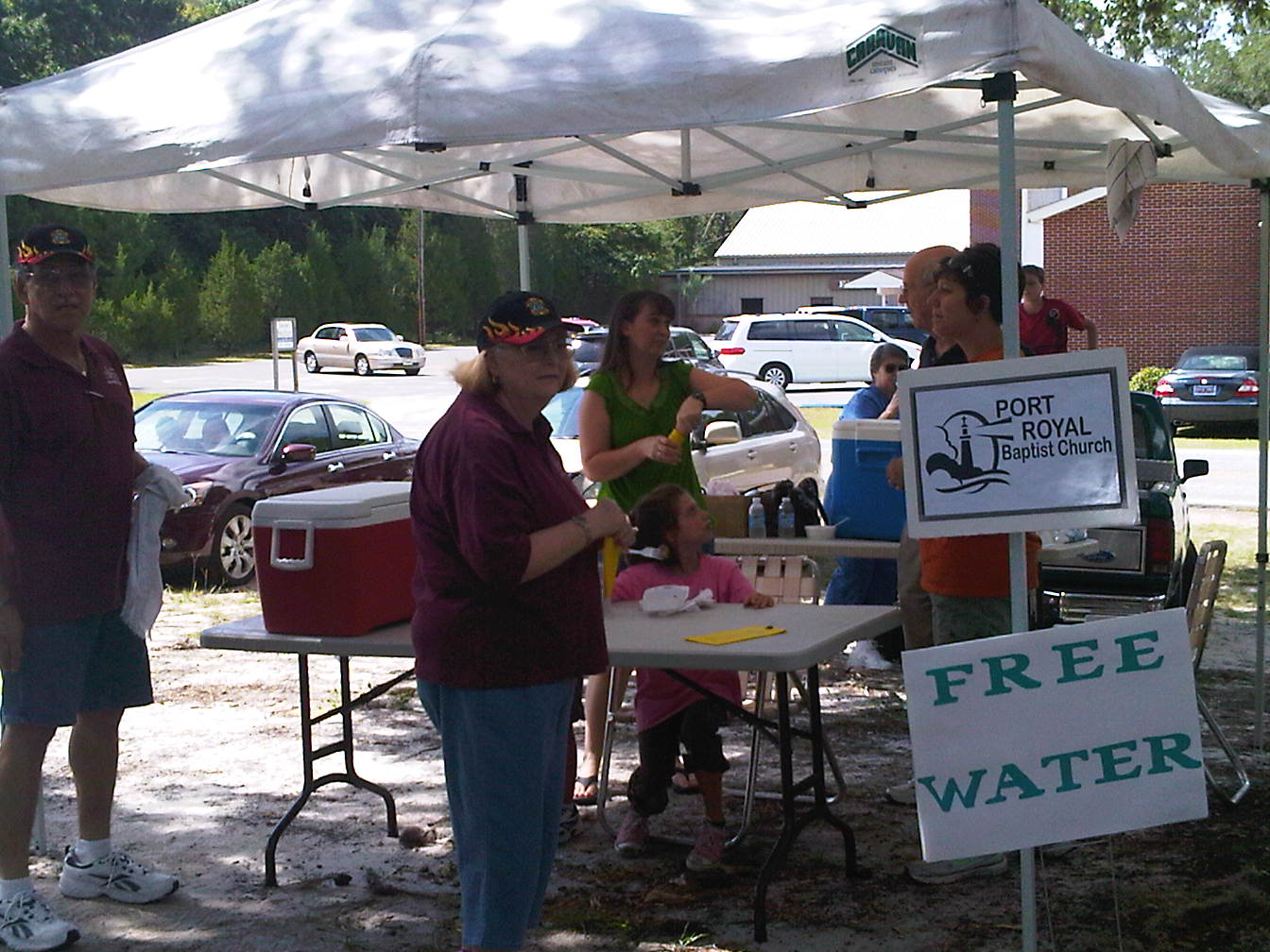
October 16th brought the Festival of the Sea in Port Royal. The purpose of this festival was to highlight and bring attention to the businesses located in the old village section of Port Royal. There was food, music, a car show, and local business vendors lining Paris Avenue. We had the opportunity to set up a booth and introduce our church to the people who stopped by. We gave away cold water and popcorn, along with information about our church and its ministries. Face painting and balloon animals were a big hit with the children. I am proud of the 27 volunteers from PRBC who gave their time during the five hours we were there. I want to also thank Larry Leming, Missions Ministries Director from the Savannah River Baptist Association, for spending the day ministering with us. It was a great day of meeting people, building relationships with people and businesses, and sharing the gospel as allowed. Below are a few pictures from the day.


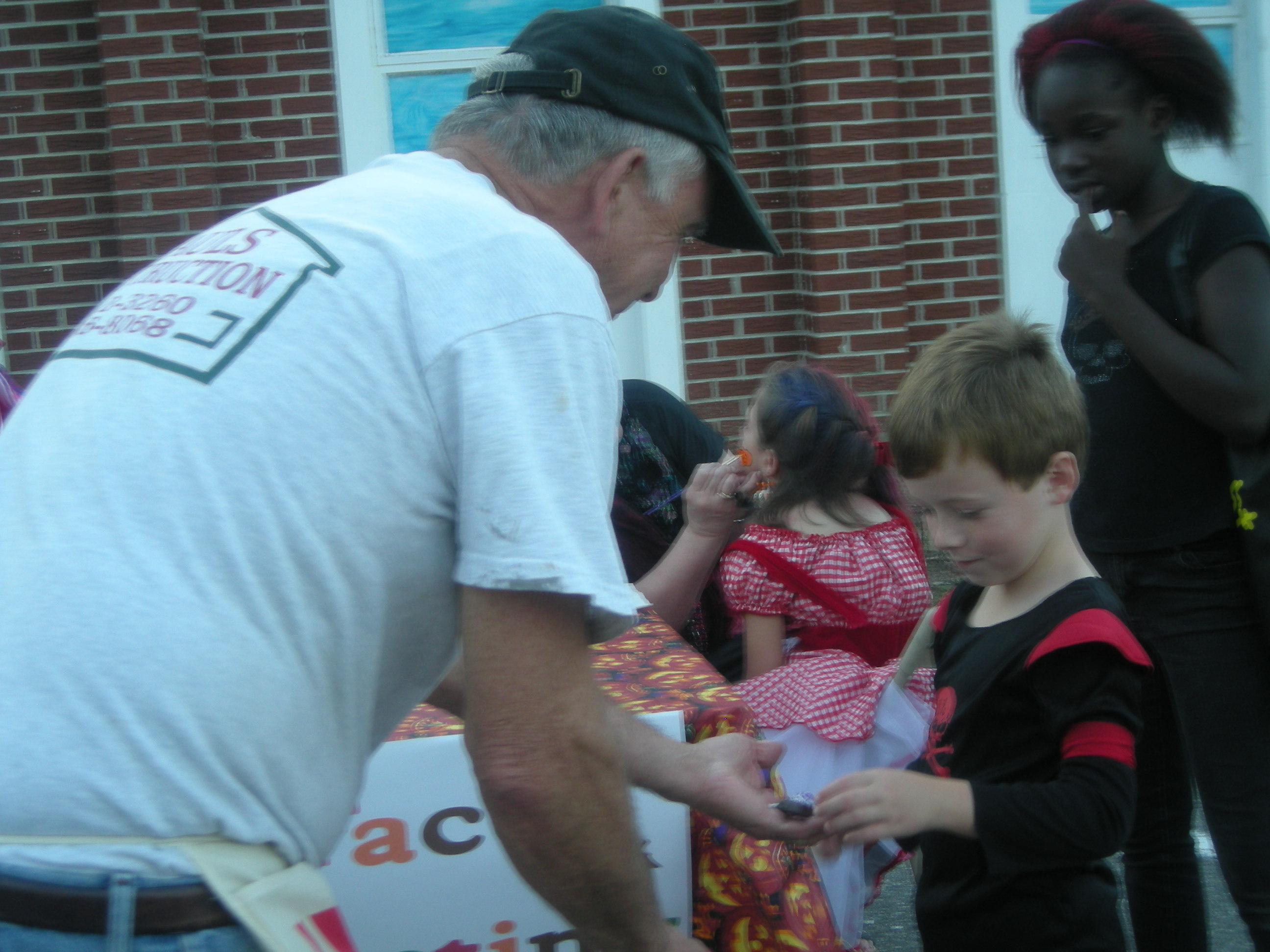
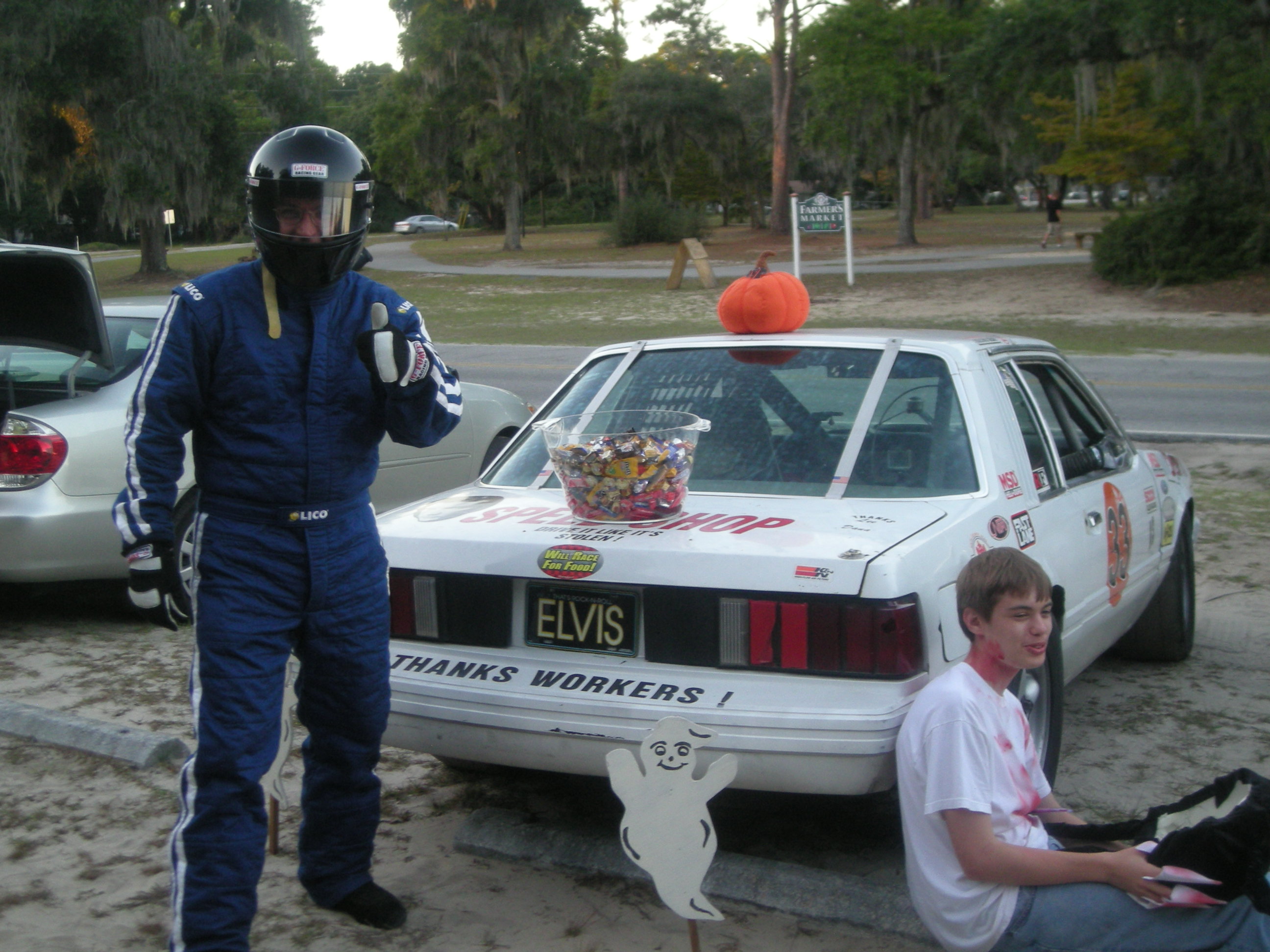
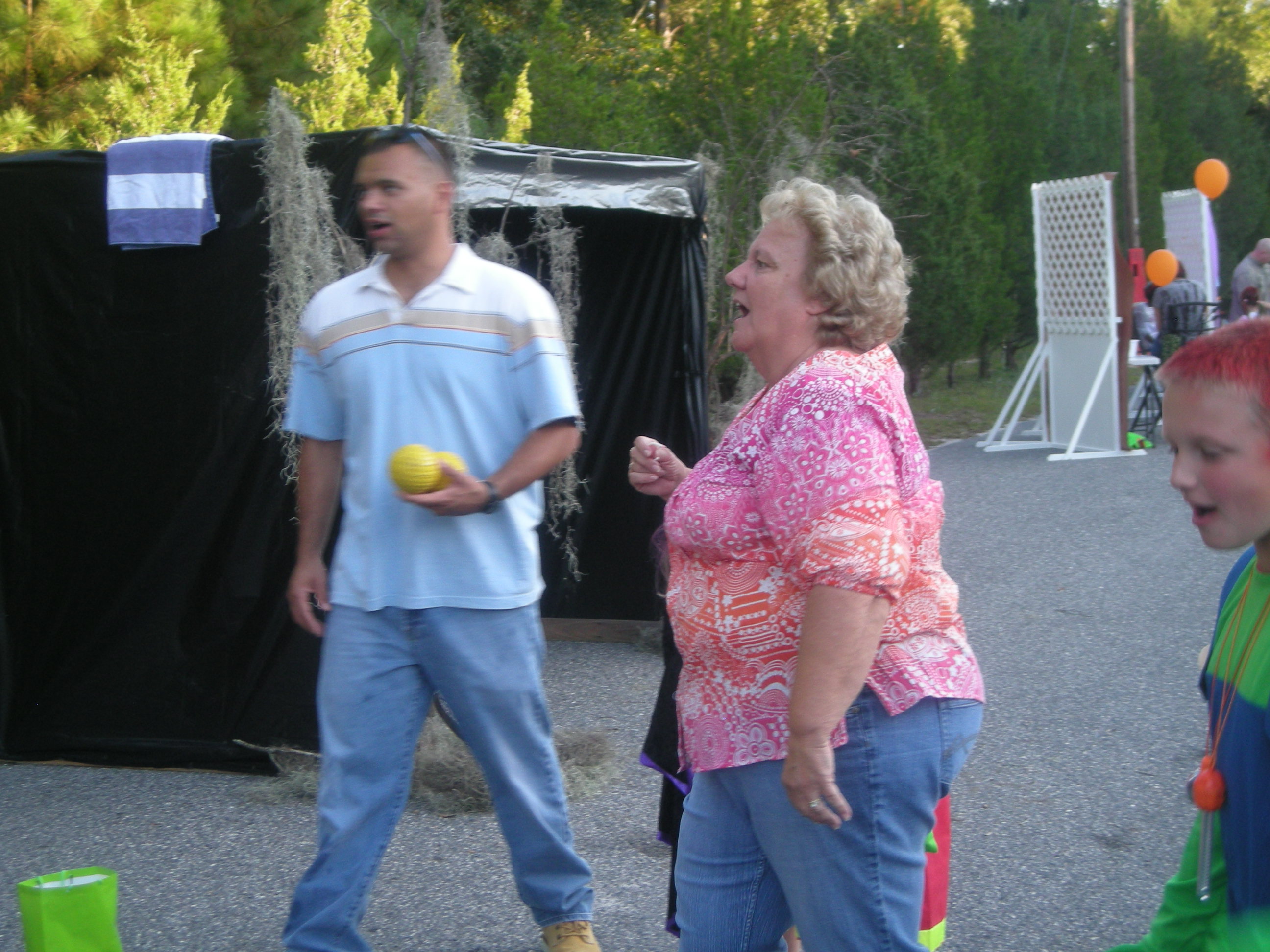
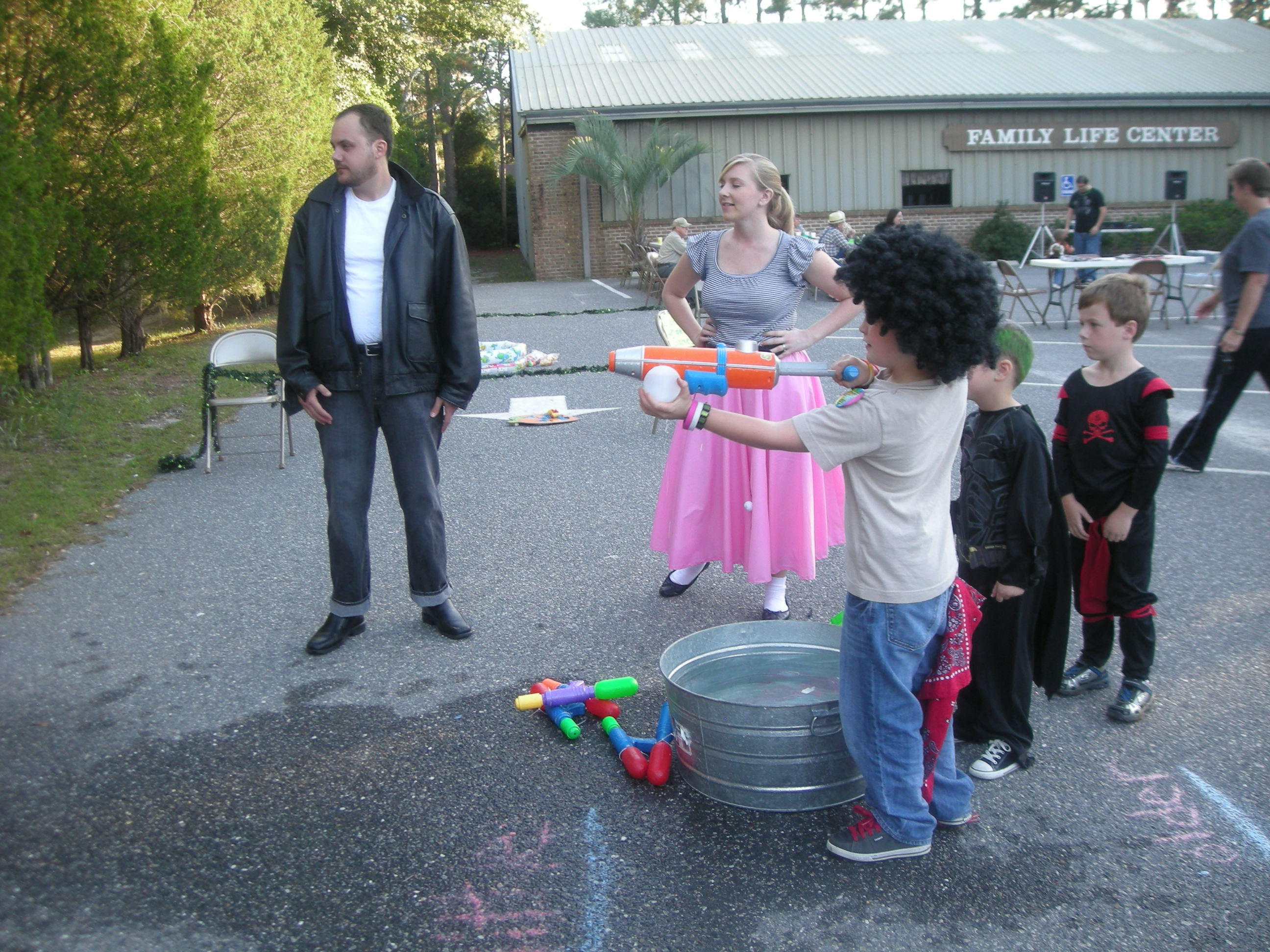
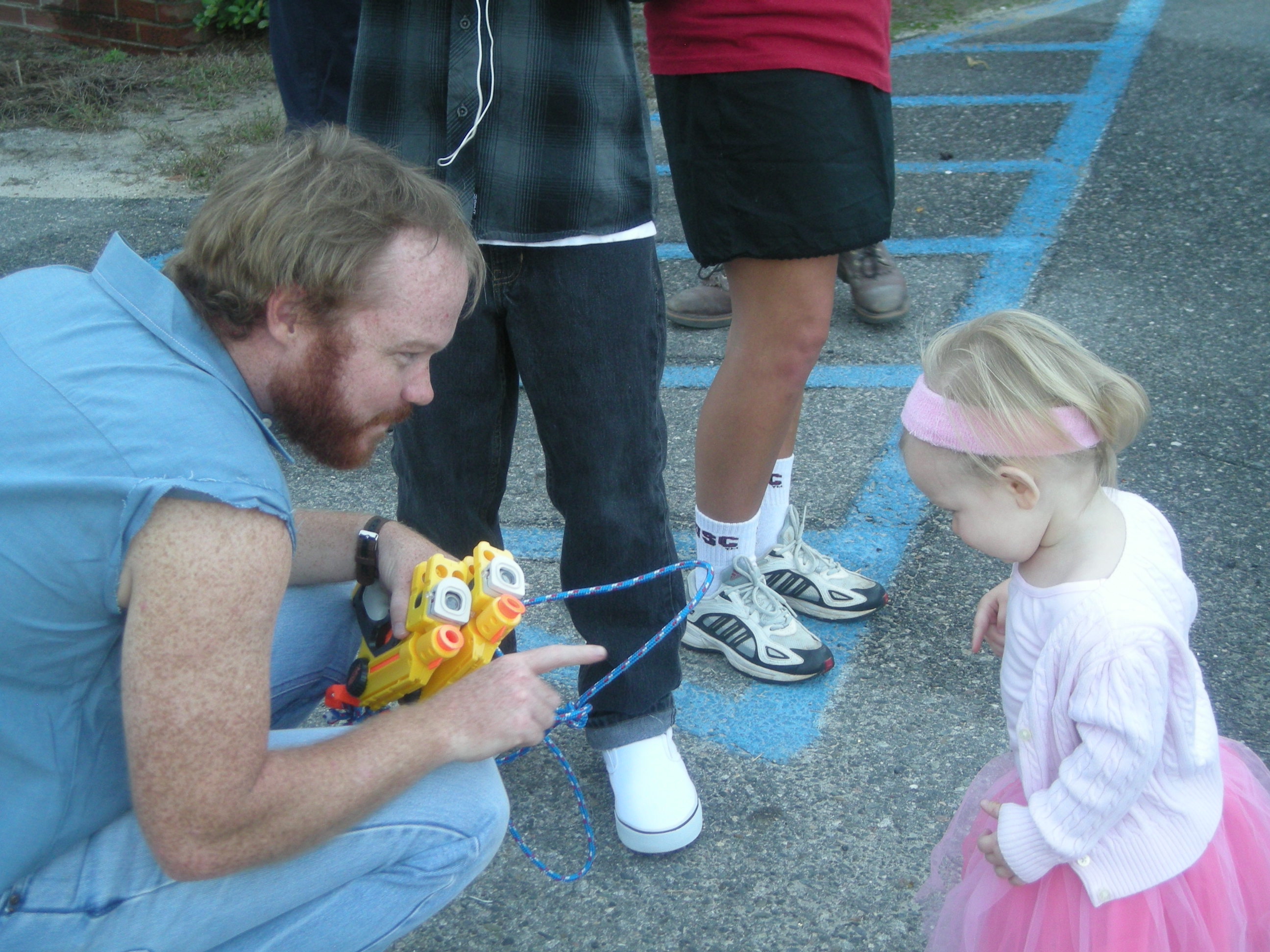
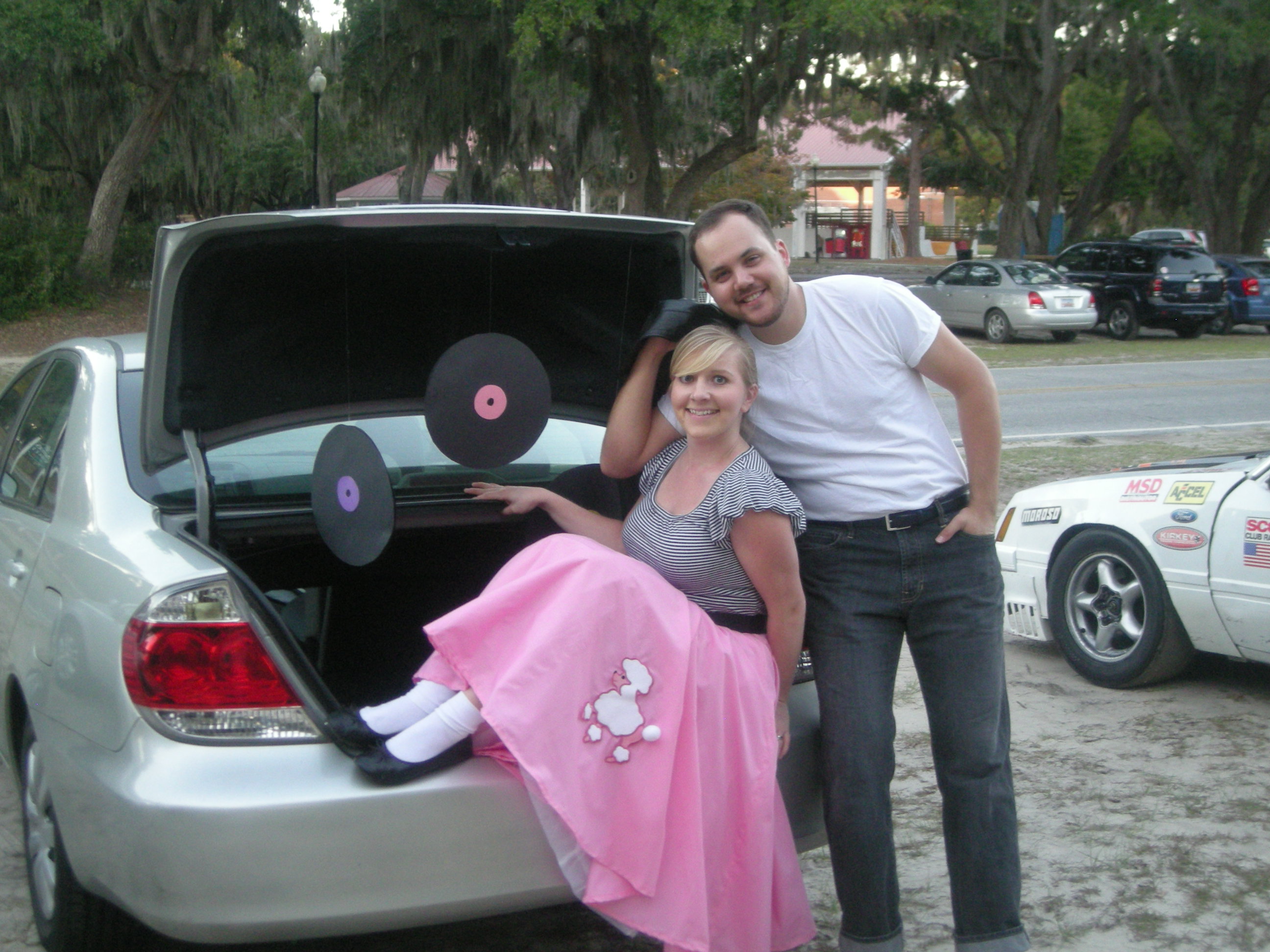
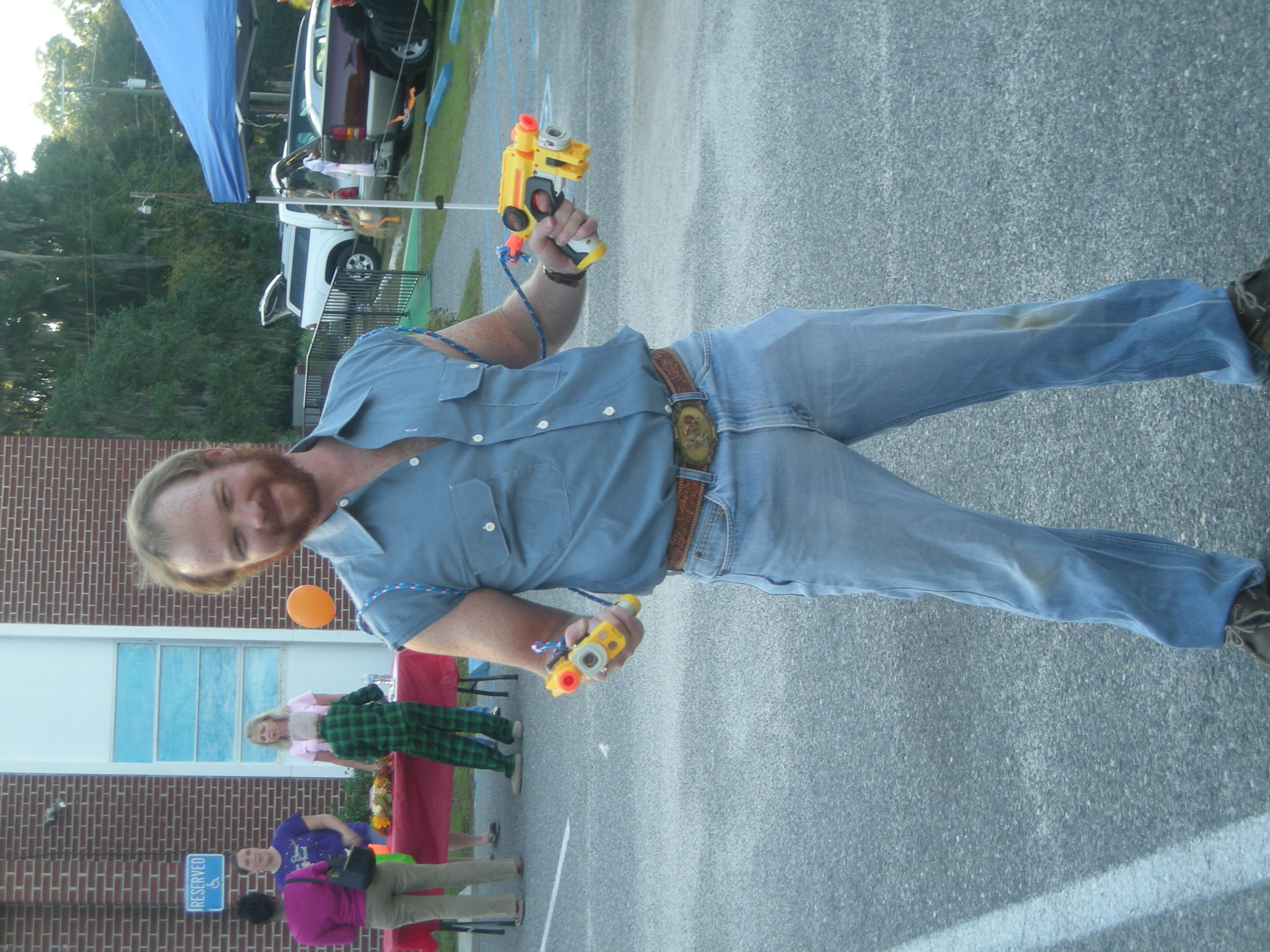
October 31st brought our annual Fall Festival and Trunk-or-Treat. Halloween brings with it the carnival-type atmosphere of fall festivals and similar events. We wanted to take advantage of this opportunity to provide a safe alternative to trick-or-treating. With food, games, prizes, fellowship, and conversation, we were able to bridge the gap between entertainment and outreach. It was a real privilege to spend some time with the people of Port Royal. We had approximately 150 people on campus Sunday night. I want to thank all who made this year’s fall festival a success. You are appreciated and you labor was not in vain. Below are a few pictures from the night’s activities.


Worth Repeating

“Before anything that is truly of God can be born, your own preferences have to die. Your desire to lead a contemporary / emerging / casual / formal / whatever church has to be laid on the altar and sacrificed in order to receive Christ’s call and mission to this community. That is what Jesus meant when he said to his disciples in Luke 9:23, ‘If anyone would come after me, he must deny himself and take up his cross and follow me.’ Are you willing to die to your preferences so the people in your community can be reached with the gospel? Is your church willing to move out of its Christian subculture and relate to its community? Is it possible that you and your church are missing out on some of the blessings of the gospel because you have been unwilling to die to yourself and your preferences?”

Ed Stetzer, from his book Breaking the Missional Code

Worth Repeating

“It’s important to understand why churches are so strategically important to carrying out the mission that Jesus described in Luke 4, of bringing the good news of the kingdom of God to the whole world. As individuals, we all have an important role to play in demonstrating the gospel through our lives. We can pray, give, volunteer, and become effective personal ambassadors for the gospel. However, our greatest power to change the world is released when we come together in collective action to organize and focus the resources of the whole body of Christ. A church of one thousand members can have a much more powerful impact by harnessing the power of the whole than its individual members can have by acting alone. God established the institution of the Church as a key strategy for building His kingdom and for leading the social revolution required by the gospel – ‘on earth as it is in heaven’ (Matt 6:10). Said another way, without the collective and organizing power of churches, the ability of Christians to impact the world is greatly compromised.”

Richard Stearns, President of World Vision, from his book, “The Hole in our Gospel”

A Little Water Goes a Long Way

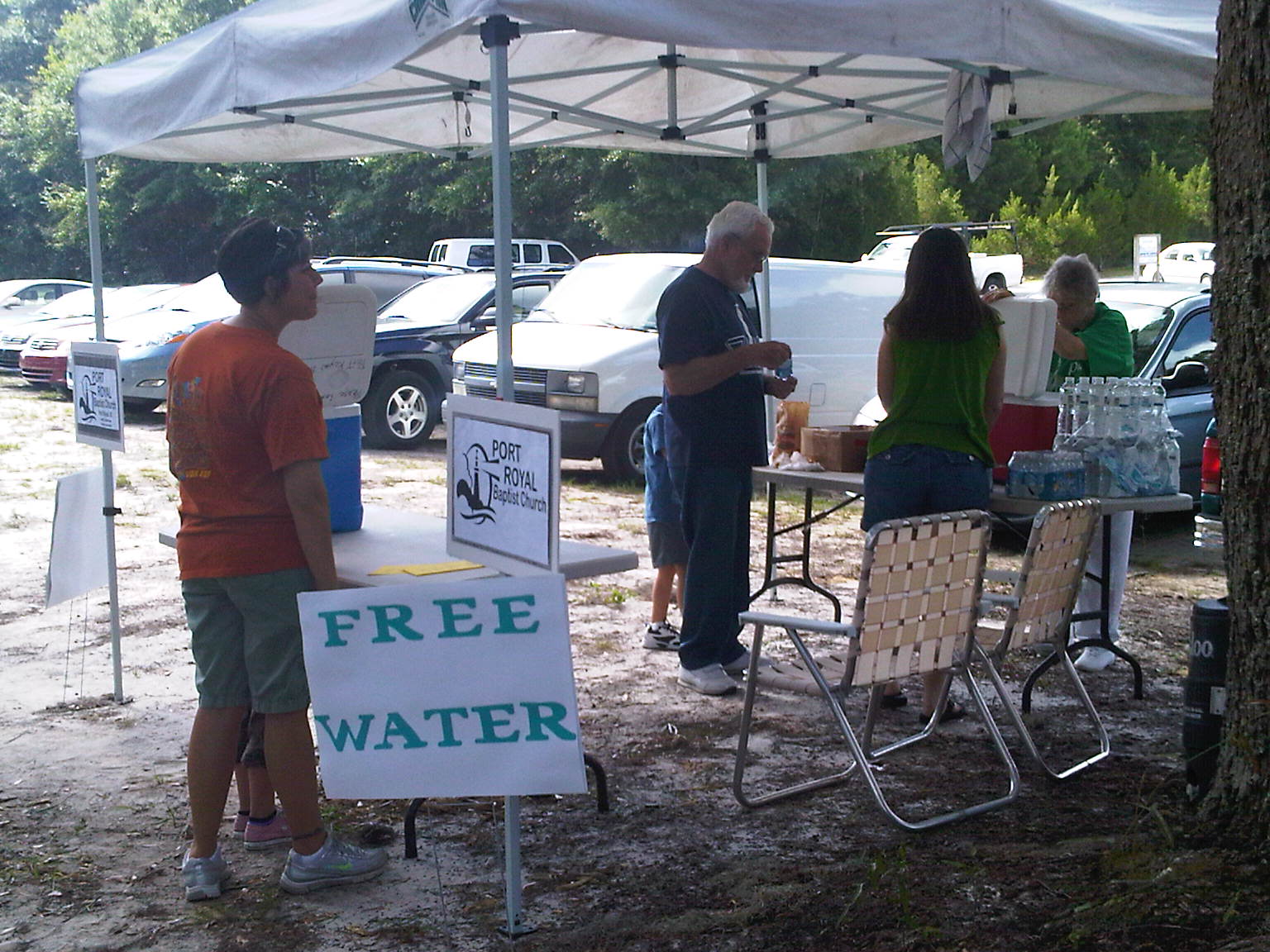
Today, Port Royal Baptist Church had the opportunity to minister to the people of Port Royal and Beaufort at the Farmer’s Market across the street from our church. This is the third time this summer that we have ministered there. Our goal in this project is simple: introduce ourselves to our community through servant ministry. We have chosen to give away free water. Through this approach, we as a church have been able to satisfy a need (thirst, who doesn’t like cold water on a hot day), while at the same time showing the love of Christ in a real and tangible way.

Opportunities have presented themselves to not only invite the community to our worship services, but also to just talk, and listen to them. I am thankful for the chances that we have had to hear their questions and their prayer concerns. It is true that a little water goes a long way. A little effort on our part has gone a long way toward building bridges of trust and friendship. As a pastor, I am extremely proud of our people and their willingness to move beyond the comfort of the church walls and meet the people where they are.


Days like  today excite and encourage me. Although it was a hot and tiring day, I believe God was honored by our efforts. I am excited to see the Lord work in the lives of our people. I am further encouraged that when future doors of ministry open, our people will ready to walk through them. Thank you Port Royal Baptist Church.

Worth Repeating

“It is not uncommon for dedicated Christians to be conscientious about serving God and seeking His will. However, even our prayers often reflect an egotistical perspective as we pray, ‘Lord, what is Your will for my life?’ We should be praying, ‘Lord, what is Your will?’ – period! And once we come to understand God’s will, then we can begin to get an understanding about what His will for us personally will be. God’s will for each of His children is in the context of His mission, that universal plan and purpose to be known and worshipped among every people, tribe, language, and nation. For some it will be mean to go. For others it is to be senders, mobilizers, and supporters. For all, it is to witness to those from the nations that He is bringing into our cities and communities. But no one is exempt! To say, ‘I’ll serve God where I live and ignore the need of the nations to know Jesus,’ is a deceptive scheme of Satan to divert believers from God’s mission.”

Dr. Jerry Rankin, from his book Spiritual Warfare and Missions

Worth Repeating

“Here is the message – ‘repentance and forgiveness of sins to be preached in his name to all nations.’ When it becomes something other than forgiveness and repentance, then the gospel itself is lost in the process. When we forget that the job of the church is to proclaim the message of repentance and forgiveness, the future of any church is bleak. We need to be reminded every day through God’s Word, ‘As the Father has sent me, I am sending you… to every people group… with a message.’ The only question is – Will we be faithful to respond? We are sent as missionaries, the only question is – Are we good ones?”

Ed Stetzer, Breaking the Missional Code

My Thoughts on the Final Report of the Great Commission Resurgence Task Force

One week ago, the Great Commission Resurgence Task Force released their final report, including recommendations to be made to the messengers in June at the SBC Annual Meeting. I had written previously on the initial report that was released back in February. This final report was greatly anticipated across SBC life. There was a belief that that final report would contain recommendations that were not listed in the initial report. That did not happen. There was however a new wording of the previous recommendations with some additional explanation of the task force’s thoughts on their work. Also, one of the original components was divided into two separate recommendations. New to this report is a series of challenges set forth by the task force. There are challenges issued to the individual Christian, individual families, local churches and pastors, local associations, state conventions, Lifeway, our seminaries, the Ethics and Religious Liberties Commission, Guidestone, and all Southern Baptist leaders. These challenges reflect how each group can do their part in carrying out the Great Commission.

The final report includes seven recommendations written out in the form that each will be presented to messengers in June. As parliamentary rule goes, this report, including all seven recommendations will be voted on as a whole, unless a motion is made to divide and vote on each one individually, which is 99.9999% likely. I hope this is the case. I believe that an up/down vote on the entire report would not be in the best interest of the convention. However, I am just one pastor. Listed below are the recommendations exactly how the messengers will receive them. If presented as a whole, I would still have to vote no.

Recommendation #1:

“That the messengers to the Southern Baptist Convention, meeting in Orlando, Florida, June 15-16, 2010, adopt the following as the mission statement of the Southern Baptist Convention:”

As a convention of churches, our missional vision is to present the Gospel of Jesus Christ to every person in the world and to make disciples of all the nations.

I plan on voting yes on this recommendation. I feel this is a good solid vision for the convention as a whole while allowing the church to keep their individual visions.

Recommendation #2:

“That the messengers to the Southern Baptist Convention, meeting in Orlando, Florida,  June 15-16, 2010, adopt the following as Core Values for our work together:”

CHRIST-LIKENESS

We depend on the transforming power of the Holy Spirit and prayer to make us more like Jesus Christ.

TRUTH

We stand together in the truth of God’s inerrant Word, celebrating the faith once for all delivered to the saints.

UNITY

We work together in love for the sake of the Gospel.

RELATIONSHIPS

We consider others more important than ourselves.

TRUST

We tell each other the truth in love and do what we say we will do.

FUTURE

We value Southern Baptists of all generations and embrace our responsibility to pass this charge to a rising generation in every age, faithful until Jesus comes.

LOCAL CHURCH

We believe the local church is given the authority, power, and responsibility to present the Gospel of Jesus Christ to every person in the world.

KINGDOM

We join other Christ-followers for the Gospel, the Kingdom of Christ, and the glory of God.

I plan on voting yes on this recommendation. These are solid value to pursue.

Recommendation #3:

 “That the messengers to the Southern Baptist Convention, meeting in Orlando, Florida, June  15-16, 2010, request the Executive Committee of the Southern Baptist Convention to consider recommending to the Southern Baptist Convention the adoption of the language  and structure of Great Commission Giving as described in this report in order to enhance and  celebrate the Cooperative Program and the generous support of Southern Baptists channeled through their churches. We further request that the boards of trustees of the International Mission Board and North American Mission Board consider the adoption of the Lottie Moon and Annie Armstrong offering goals as outlined in this report.”

I plan on voting no on this recommendation. I personally believe that creating another description of giving in order to recognize and celebrate churches that choose designated giving over CP giving will only lessen the emphasis on Cooperative Program giving.

Recommendation #4:

” That the messengers to the Southern Baptist Convention, meeting June 15-16, 2010, request  the Executive Committee of the Southern Baptist Convention to consider any revision to the  ministry assignment of the North American Mission Board that may be necessary in order to  accomplish the redirection of NAMB as outlined in this report; and that the Board of  Trustees of the North American Mission Board be asked to consider the encouragements  found within this report in all matters under their purview.”

I plan on voting yes on this recommendation. I share the concern for a re-emphasis of the North American Mission Board.

 Recommendation #5:

“That the messengers to the Southern Baptist Convention, meeting June 15-16, 2010, request  that the Executive Committee of the Southern Baptist Convention and the International Mission Board of the Southern Baptist Convention consider a revised ministry assignment  for the International Mission Board that would remove any geographical limitation on its mission to reach unreached and underserved people groups wherever they are found.”

I plan on voting no on this recommendation. On the surface this recommendation makes sense. With the recent funding issues of IMB missionaries, it seems appropriate to me to keep their focus, time, and resources committed to people groups around the world.

Recommendation #6:

 “That the messengers to the Southern Baptist Convention, meeting June 15-16, 2010, request the Executive Committee of the Southern Baptist Convention to consider working with the leadership of the state conventions in developing a comprehensive program of        Cooperative Program promotion and stewardship education in alignment with this report.”

I plan on voting yes on this recommendation. I feel that the state conventions are in the best position to promote and educate the local churches regarding the Cooperative Program.

Recommendation #7:

” That the messengers to the Southern Baptist Convention, meeting June 15-16, 2010 in  Orlando, Florida, request the Executive Committee of the Southern Baptist Convention to consider recommending an SBC Cooperative Program Allocation Budget that will increase the percentage allocated to the International Mission Board to 51 percent by decreasing the  Executive Committee’s percentage of the SBC Allocation Budget by 1 percent.”

I plan on voting yes on this recommendation. More funding to the IMB is vital to the effectiveness of missionaries around the world in pushing back lostness. With the task of CP promotion and education taken from the Executive Committee and placed in the hands of the state conventions, it is a good idea to reallocate what the EC used for CP promotion and education and forward that to the IMB.

As a pastor I feel this is an important time in the life of the Southern Baptist Convention. The passing of and rejection of these recommendations can and will have far-reaching effects upon Southern Baptist life as we know, effecting conventions, associations, and local churches. None of these recommendations will be implemented immediately. These proposed changes to the structure of the SBC may be years in the making. What we must do as a local is make an individual commitment to carrying out the Great Commission where we have been planted by God. I believe in the Southern Baptist Convention, but I believe in the local church more.

Real Church Happens Outside The Church

I have done quite a bit of looking around lately. I have made it a point to intentionally notice the people and places around our church. I have noticed that we have both the traditional family structure and single-parent families in our area of influence. I have noticed that we have different races, nationalities, and religious beliefs in our area of influence. I have noticed that we have both ends of the economic spectrum in our area of influence, often living close together. I have noticed that we have people that share similar interests or are linked by some common bond. Some of these in our area of influence are skateboarders, multi-housing, and the military.

There is a reality that I believe I have always known to be true. That reality: there are people who will not connect with the body of Christ through the old “they know we’re here” mentality. Because everyone does not look, act, or respond in the same ways, our ministry approach must fit them. It is up to the church to go to the people. In the Parable of the Great Supper, Jesus tells the story of a man who prepared a banquet and when time come for the guests to arrive, excuses were made as to why they could not. The master of the banquet then went intentionally looking for those who would come. In Luke 14:23 we have the words of Jesus, ‘Go out into the highways and hedges, and compel them to come in, that my house may be full’. I believe there is a principle that we can carry over to the church today. We have made ready. We have prepared places and ministries. We have sat back and waited. We are to go out to where the people are.

Last night, I met with our Church Council, which is made of staff and department leaders. I appreciate this group of people for their passion in their area of service. I am thankful for their desire to see the lives of people changed. As we discussed upcoming community ministry, I posed a question to our leaders and challenged them to some “outside of the box” thinking. Here is the question I posed: ‘What meaningful services can we provide for our community that would be unavailable to them or cost them to obtain?’ I asked them to join me in considering this question and come up with areas of need that we meet “outside” the church walls. I am excited about what I am going to hear. I am looking forward to our church increasing its area of influence in our community.

Reflections on the Great Commission Resurgence Task Force Initial Report : Part #5

This is the final post in a series on my personal reflections of the initial report from the Great Commission Resurgence Task Force.

Component #6: We believe in order for us to work together more faithfully and effectively towards the fulfillment of the Great Commission, that a greater percentage of total Cooperative Program funds should be directed to the work of the International Mission Board. Therefore, we will ask Southern Baptists to support this goal by affirming an intention to raise the International Mission Board allocation for the 2011-2012 budget year to 51%, a move that is both symbolic and substantial. At the same time, we will ask Southern Baptists to reduce the percentage allocated to Facilitating Ministries by 1% as part of our initial effort to send a greater percentage of total Southern Baptist Convention mission funds to the nations.

This component is closely linked to Component #4. The fourth component of the report recommended moving the responsibility of Cooperative Program education and promotion from the SBC Executive Committee and placing it in the hands of the state convention. The task force believes the International Mission Board deserves a bigger piece of the CP pie. Currently, the IMB receives 50% of all CP dollars forwarded by the state conventions. The task force recommend increasing the amount given to the IMB from 50% to 51%. The additional 1% would come from the Facilitating Ministries budget.

In simple terms, the task force is asking for a budget adjustment, a reallocation of funds. The 1% will likely come from the Executive Committee’s budget once CP promotion is no longer an SBC responsibility and is taken on by the state convention. I am in favor this component. I believe the IMB needs more of our CP dollars. They have a huge task before, taking the gospel to all the nations. I applaud the task force for recommending an increase in the IMB budget. This recommendation speaks volumes to the importance of, and the need for, more dollars to the mission field.

Overall, this is a good solid report with the capacity to bring about a needed change across the SBC as it relates the carrying out the Great Commission. I am not sure how these recommendations will be out to a vote in Orlando, if they even get to a vote. There are two options: vote on all six recommendations as one, or vote on each component individually. What would I do? If the report is offered as a whole for consideration, I would have to vote no. If these recommendations are offered individually, right now, I would vote this way:

Component #1: Yes

Component #2: No

Component #3: No

Component #4: Yes

Component #5: No

Component #6: Yes

If you like, you can read the entire initial report here.