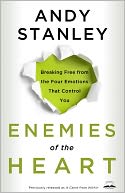
Book Review : Enemies of the Heart

I really enjoy the communication style of Andy Stanley. I have read many of his books and listen to his podcasts from Northpoint on a regular basis. I have his ability to communicate complex and difficult themes in a simple and practical way to be refreshing and useful. His new book, “Enemies of the Heart; Breaking Free From the Four Emotions That Control You” is no different. This book is a re-publish of Stanley’s earlier work “It Came From Within”. Stanley deals with what can be referred to as spiritual heart disease. He defines the heart not as the necessary organ that pumps blood to the rest of the body. Instead, he defines the heart as “that mysterious, wonderful, confusing part of you that enables you to love, laugh, fear, and experience life. It’s the sphere in which relationships happen.” Through the analogy of a heart patient going through the process of diagnosis and treatment, Stanley focuses on what are the four main enemies of the heart, of which the bulk of human problem can be traced back to. Stanley asserts that each of these conditions create a debt/debtor relationship in which both parties are negatively affected. The enemies as Stanley describes them are:  Guilt – “I owe you”, Anger – “You Owe Me”, Greed – “I Owe Me”, and Jealousy – “God Owes Me”.

Stanley details each of these conditions by looking at their cause and affect upon the heart of the believer. He then gives ways to practically confront each danger by what he calls “habits of the heart”, which he describes as “habits that exercise the heart and allow it to maintain the rhythm for which it was designed.” Enemies of the Heart is a quick and easy read. This being said, the truths that Stanley reveals will cause you to do some deep introspection. The discussion guide included at the end is beneficial and could be used for future small group study. Great resource. This book is well worth your time. I highly recommend.

Disclosure of Material Connection: I received this book free from Waterbrook Multnomah publishers as part of their Blogger Review Program. I was not required to write a positive review. The opinions I have expressed are my own. I am disclosing this in accordance with the Federal Trade Commission’s 16 CFR, Part 255: “Guides Concerning the Use of Endorsements and Testimonials in Advertising.”
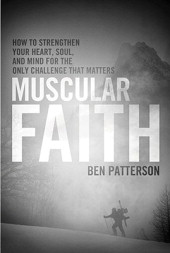
Book Review : Muscular Faith

The concept of faith is a difficult one for many to grab hold of today. The practice of actually living by faith is even harder to understand. In his latest book, “Muscular Faith, How to Strengthen Your Heart, Soul, and Mind for the Only Challenge That Matters”, Ben Patterson builds the case that it is a strong, active, and vigorous faith in Jesus Christ that pleases the Father and enables the believer to fulfill what the Hebrews writer declared by saying, “without faith it is impossible to please Him”. Patterson submits that our faith is not be passive for we serve a Go who is not passive or inactive. On the contrary, our God is a “warrior” as Patterson describes. He consistently calls for us to battle the forces that would derail our spiritual walk. God’s Word itself call the believer to “fight the good fight of faith.”

“Muscular Faith” has an easy-to-follow and common sense flow to it. Patterson begins by showing the reader that we have been called to live a life of faith and how important and active that faith should be. He then takes the reader down the road of what is at stake in our pursuit of an active and vigorous faith. I enjoyed the part of this book where Patterson describes the obstacles (such as nominal Christianity and refusing to give God permission to change us) that get in the way of a muscular faith. He concludes with tools and disciplines that help to overcome obstacles and helps to pursue a God-honoring and life-changing faith.

“Muscular Faith” is a good work. Patterson does a great job of combining scripture, quotes, and personal experiences to make his point. I found nothing in this book to the earth-shaking. Everything I read I had read before in some manner or another. All in all, a good work. I believe this book would be a good first read for new believers as they start their faith journey.

Disclosure of Material Connection: I received this book free from NavPress Publishers as part of their Blogger Review Program. I was not required to write a positive review. The opinions I have expressed are my own. I am disclosing this in accordance with the Federal Trade Commission’s 16 CFR, Part 255: “Guides Concerning the Use of Endorsements and Testimonials in Advertising.”
Book Review : Why God Won’t Go Away; Is the New Atheism Running on Empty?

I have just finished Alister McGrath’s new book, “Why God Won’t Go Away; Is The New Atheism Running on Empty?” In this book, scholar, historian, and theologian McGrath introduces the reader to a group of anti-theists known as “New Atheists”. New Atheism is defined as “an enthusiastic advocation of atheism and a scathing criticism of both religious belief and cultural respect for religion.” McGrath identifies two kinds of atheism. The first is Apathetic Atheism. This group takes the position that says “I don’t believe in God”. They feel no real need to defend their beliefs and have no serious heartburn with organized religion and faith. The second group is known as Committed Atheists. This group takes the position that says “God does not exist”. They have reasons for their beliefs and possess a desire to make those reasons known to all. New Atheism falls in this second category, but goes farther. They do not tolerate religion and believe that apathetic and committed atheists are “cowards”. New Atheism is aggressive and, as McGrath says, “militant” in nature. He says, “The New Atheists make rationality one of its core defining characteristics and emphatically and aggressively denies that any alternative view can be regarded as rational.”

Why God Won’t Go Away is divided into three sections. In the first section, he introduces the reader to the four leading voices of the New Atheism: Sam Harris, Richard Dawkins, Daniel Dennett, and Christopher Hitchens. He also lists their recent works and how they have contributed to this movement. In the second part, McGrath focuses on and unpacks the core themes of violence, reason, and science. It is here that he exposes the flaws in the New Atheism movement. Thirdly, McGrath explores the question, “Where does the New Atheism go from here?” It is here that he chronicles the decent of New Atheism from the mainstream and how it is losing traction with its original and sympathetic audience.

I really appreciate McGrath’s method of writing in this book. He was kind and fair while giving a solid rebuttal to New Atheism. He has chosen to take the high road in his explanation and handling of this movement. This makes the book work. “Why God Won’t Go Away” is well written, researched, and presented. He has succeeded in pointing out the internal problems of New Atheism and their reluctance to have an open mind. McGrath’s subtitle asks the question, “Is New Atheism Running on Empty?” I believe he has answered that in the positive. I highly recommend this book.

Disclosure of Material Connection: I received this book free from NavPress Publishers as part of their Blogger Review Program. I was not required to write a positive review. The opinions I have expressed are my own. I am disclosing this in accordance with the Federal Trade Commission’s 16 CFR, Part 255: “Guides Concerning the Use of Endorsements and Testimonials in Advertising.”

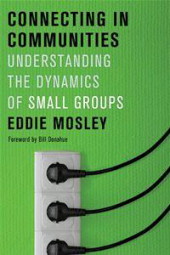
Book Review : Connecting in Communities: Understanding the Dynamics of Small Groups

Connecting in Communities: Understanding the Dynamics of Small Groups is the latest book by Eddie Mosley who is the executive director of GroupLife at LifePoint Church in Smyrna, TN. It is very evident from the tone and direction of this book that connecting people to small groups is a passion of Mosley’s. He writes from the perspective of experience. I believe what makes this book really work is that organizing and encouraging small groups and small group leaders is what Mosley does every day. This book is not about abstract thoughts and untested principles. Rather, it is about proven methods fleshed-out through years of “on the field” experience. Mosley has consulted with and learned from the top minds in small group ministry from across the nation including Saddleback and Willow Creek.

Connecting in Communities was written to help churches and church leaders who were looking to implement small group ministry. Throughout the book, Mosley stresses the benefits of small group ministry from the point of accountability, discipleship, assimilation to the overall church ministry, and the development of a community mindset. Mosley asserts that individuals connect better in their community when they spend time together, eat together, minister to one another, share each other’s lives, and personally take an interest in their neighbors. He uses the term “refrigerator rights” to describe this kind of personal involvement. This terms refers to the comfort level that small groups share with each other. Refrigerator rights describes the feeling of walking into someone’s home, opening the refrigerator, and helping yourself.

This book serves as  road map for leaders who want to plan, organize, and maintain small groups. Mosley uses personal experiences from the small groups he has been a part of. I like the fact that he cautions the reader that small groups are not right for every church. He cautions the reader small groups are not a band-aid for struggling ministries. He cautions the reader that small group ministry are not easy and require a great deal of effort and care. I liked the fact that Mosley gave what he calls “5 Practical Steps” and the conclusion of every chapter that helps the reader to connect and think. Years of ministry shine through in this book. A great book in which I recommend.

Disclosure of Material Connection: I received this book free from NavPress Publishers as part of their Blogger Review Program. I was not required to write a positive review. The opinions I have expressed are my own. I am disclosing this in accordance with the Federal Trade Commission’s 16 CFR, Part 255: “Guides Concerning the Use of Endorsements and Testimonials in Advertising.”

Book Review : Primal; A Quest for the Lost Soul of Christianity

I am a fan of Mark Batterson. His previous works, SoulPrint, Wild Goose Chase and In a Pit With a Lion on a Snowy Day area few of the book I love the most. I recently finished Batterson’s new book, “Primal: A Quest for the Lost Soul of Christianity”. A recent trip to Rome and an exploration of the catacombs brought Batterson face-to-face with one of the earliest Christian communities. This “rediscovery” as he calls it, of the primal beginnings of the faith changed the way he viewed Christianity. He begins by putting forth what he believes is the central problem facing the church today. His assessment is that the church is failing at the Great Commandment found in Mark 12:30, “And you shall love the Lord your God with all your heart, with all your soul, with all your mind, and with all your strength.’ This is the first commandment.” In his words, “We can’t afford to be merely good at the Great Commandment, we must be great at the Great Commandment”. What follows is an unpacking of the Great Commandment where he breaks the book, and the Great Commandment, down into four central elements. Those elements are: the heart of Christianity is primal compassion, the soul of Christianity is primal wonder, the mind of Christianity is primal curiosity, and the strength of Christianity is primal energy.

“Primal” is a challenge to rediscover the basic and driving forces behind the Christian faith. That most basic desire is to love Christ with all you have. This book is vintage Mark Batterson. It is written with an easy to follow style that is both addicting and challenging. I believe this book is Batterson’s most practical book to date. “Primal” is both convicting and encouraging, passionate and practical. Two chapters each are given to unpack these four elements. Batterson uses a brilliant mixture of scripture, illustration, personal experience, and outside quotations to drive his point home. If your faith has become common place and academic, this book is for you.

Book Review : Surviving Your Serengeti

I tend to shy away from books that are written and labeled as fables. I took a chance on Stefan Swanepoel’s latest book, “Surviving Your Serengeti; 7 Skills to Master Business and Life”, and am glad that I did. The book’s subtitle reads “A Fable of Self-Discovery”. In this work, Swanepoel takes the reader down a path of self-examination that seeks to cultivate the most innate skills that will enable us to live our lives to the fullest.

Swanepoel grew up in Africa and the Serengeti is part of his life. I believe this is what makes the book successful. He uses the images, pictures, and the spirit of this wildlife habitat as the backdrop of this book. The story unfolds with three couples finding themselves on safari together. One couple in particular engrossed with the life and work of one of the locals. He turns out to be an old college roommate thirty years prior.

This local, Zachariah, shows the how seven of the most familiar and prevalent animals on the Serengeti plain can teach us great lessons. He focuses on the seven skill that these animals use to survive and how, if properly cultivated within us will make a difference in our personal, family, and business lives. The seven animals and skills are: the wildebeest (endurance), the lion (strategy), the crocodile (enterprising), the cheetah (efficiency), the giraffe (grace), the elephant (communication), and the mongoose (risk-taking).

I enjoyed this book. It is an easy read with just over 150 pages and an easy to follow story line. The author’s background, having seen and experiences these animals in the wild, makes the correlation between the animal and human world believable. ‘Surviving Your Serengeti’ causes the reader to examine and determine if adjustments are necessary to utilize our God-given abilities.

Book Review : The God I Never Knew

In his most recent work, “The God I Never Knew; How Real Friendship with the Holy Spirit Can Change Your Life”, Robert Morris sets out to help the reader understand the Holy Spirit. It is the Holy Spirit that he feels has been seen by many as “mysterious, confounding, and even controversial.” When I saw the title and subject of this book, I was immediately interested. I believe the person of the Holy Spirit is vitally important in the life of a believer. An opportunity to know more about His nature would be welcome. The beginning of the book was the best part. Morris starts out by re-stating commonly known attributes of the Holy Spirit and His function: to convict, to comfort, to guide, and to enable. The book went downhill from there.

The section of his book dealing with the three baptisms I found to be convoluted and confusing. A great deal of scripture reference was given in dealing with the three baptisms. He leads the reader to believe that there is a need to receive Holy Spirit sometime after conversion and that you must pray to receive Him. In his attempt to make the work and ministry of the Holy Spirit simple to understand, he buries the reader in examples and analogies that do anything but simplify. Morris spends a great deal of time discussing the Holy Spirit’s role in speaking in tongues, private prayer language, and healing. This section seemed to be a teaching on charismatic gifts rather than a teaching on the Hoy Spirit. I believe this book did not go far enough in answering the more difficult questions related to the ministry of the Holy Spirit. I was very disappointed in this book and cannot recommend it.

Book Review : Be The People


Whether everyone acknowledges it or not, our country was founded upon the morals and principles of the Judeo-Christian faith. This clear conviction is obvious in the attitudes an writings of our founding fathers. Over time however, there has been a foundational shift to the left. In her new book, “Be The People; A Call to Reclaim America’s Faith and Promise”, political science professor and conservative Christian Carol Swain paints a vivid, realistic, and at times frightening portrait of the current moral climate in the United States.

Dr. Swain begins her book by showing the reader what the foundations of this country were (truth, justice, value of life, pursuit of freedom). She then systematically shows how our government and modern culture have been eroding the Christian values of the founding fathers through choices that moved us away from God. Swain tackles many of the hotbed issues in politics today (family values, feminism, racism, abortion, and immigration). In doing so, she shows how a loss of our moral compass has influenced public policy.

“Be The People” is a tough read. The writing style is not tough. Swain has written with an engaging and inspirational style. The tough part is the content. This book is well-researched and the author has brilliantly made her case that America needs a redirection. The material that she has included evokes feelings of sadness and anger (at least it did in me).  I like many things about this book. The perspective of the author is real. Swain writes from the perspective of an African-American Christian female growing up in poverty, twice divorced, now a college graduate teaching in one of the country’s most prestigious universities. All of this together gives her credibility. This book is not a “list of complaints”. Rather, it is a truthful and accurate at the steps that have been taken leading us away from our founding. At the end of each chapter, there are actions steps for the reader as to how we can get back to where we once were. Swain also provided, as reference and background to the reader, our founding documents (Ten Commandments, The Bill of Rights, The Declaration of Independence, and the US Constitution (1787). Very educational. “Be The People” is a phenomenal work and is well worth your time.


Book Review : FutureCast

It has been said that they only constant in life is change. Regardless of how much we like, or dislike the present way of life, the future will look nothing like it. In George Barna’s latest book “FutureCast; What Today’s Trends Mean For Tomorrow’s World”, he shows us how current trends in areas such as lifestyle, family, media, religion, faith, and economy will affect our future. Barna, founder of the Barna Research Group, has compiled extensive research on factors and trends in today’s society and organized them in an effective and easy-to-understand manner.

Barna says that there are three kinds of people when it comes to the future: those who will watch what happens, those who will make it happen, and those who will wonder what happened. I appreciated the breakdown of this book. In each chapter, Barna gives the research that reflects today’s trends. At the conclusion of each chapter, there is a section which forecasts what is likely to happen in the future. I was surprised by a lot in this book. I was also discourage by a lot of what I read. Between the facts and figures and the future forecasts in areas such as marriage and institutional religion, it is clear the evangelical community has many challenges ahead. As a pastor, I found the chapters on faith and religion the most insightful and helpful.

It has also been said that those who do not learn from the past are doomed to repeat it. FutureCast helps to make sense of why things are the way they are and how to prepare for the years to come. I recommend this book for all church leaders in order to better prepare for future ministry.

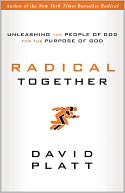
Book Review : Radical Together; Unleashing The People of God For The Purpose of God

David Platt, who pastors the Church at Brook Hills in Birmingham, Alabama is fast becoming the voice of the modern evangelical community. He is articulate, passionate, and deeply committed to the gospel of Jesus Christ and His church. In his first book, Radical: Taking Back Your Faith From the America Dream, Platt shared with readers how the so called American dream was incompatible with the radical claims of the gospel. In his follow up book, Radical Together: Unleashing the People of God for the Purpose of God, he shifts the emphasis from a personal embrace of the gospel to a corporate one. He writes “In my first book, Radical, I explored how the biblical gospel affects individual Christian lives. Simply put, in a world of urgent spiritual and physical need, gospel-believing, God-exalting men and women do not have time to waste their lives pursuing a Christian spin on the American dream…In Radical Together, I want to consider what happens – or can happen – when we apply revolutionary claims and commands of Christ to our communities of faith.”

This book is about the church. This book is about the church pursuing its mission that Jesus left for it to pursue. Platt calls for the church to awake and diligently go after Christ and His mission. His point is clear: get back to the teaching of the scripture.

Radical Together breaks down into six sections.

1.Tyranny of the Good:  the worst enemy of Christians is good things in the church
2.The Gospel Misunderstood:  the gospel that saves us from work save us to work
3.God is saying something:  the Word does the work
4.The Genius of Wrong:  building the right church depends on using all the wrong people
5.Our Unmistakable Task:  we are living and longing  for the end of the world
6.The God who exalts God:  we are selfless followers of a self-centered God

This book is short (about 120 pages) and is an easy read. However, that does not mean it is not shallow or void of meaningful content. Just the opposite. It is engaging, thought-provoking, and challenging. Platt uses scripture taken in proper context as well as real-life example to prove his point of gospel transformation. I particularly like that the study guide that is found in the back of the book. I believe this is an asset since this is a book written to the church. Great book.