Book Review : Wild Goose Chase

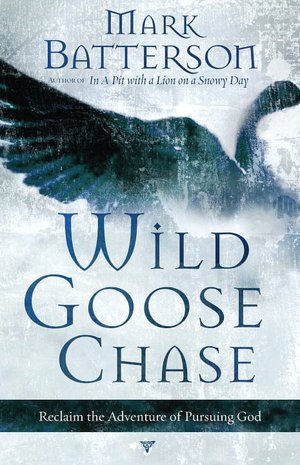
Wild Goose Chase by Mark Batterson is the prequel to his other great work In a Pit With a Lion on a Snowy Day. This book is about adventure. It is about excitement. It is about passion. It is about pursuit. All of which Batterson says is lacking in the life of institutional Christianity. The title of this book was borrowed from the Celtic Christians. They had a word for the Holy Spirit, “An Geadh-Glas”, or “The Wild Goose”. Their word hints at the untrackable and untamable nature of a wild goose, which is also true of the Holy Spirit. Batterson declares that the Christian life should not be boring because we don’t serve a boring God.

As he begins his book, he speaks of cages that we find ourselves in. He says Christians were not meant to live cages lives. Batterson writes, “Sure, you can choose the safety and predictability of the cage, forfeiting the adventure God has destined for you. But you won’t be the only one missing out or losing out. When you lack the courage to chase the Wild Goose, the opportunity costs are staggering.” The bulk of the book (six chapters) centers around six cages that, as Batterson says, “keep us from roaming free with the Wild Goose and living the spiritual adventure God destined us to.” He also introduces us to six “goose-chasers” from the scriptures.

Cage One is the cage of responsibility – the story of Nehemiah. We learn here that our main responsibility as Christians is to pursue what God is passionate about. Cage Two is the cage of routine – the story of Moses. Routines lead to rut and ritual and quench the adventurous spirit. Cage Three is the cage of assumption – the story of Abraham. Excuses and assumptions abound. God can use anyone, anywhere, anytime. Cage Four is the cage of guilt – the story of Peter. If you allow your past ways to chart your future course, it will always be safe. Cage Five is the cage of failure – the story of Paul. Failure is often the beginning of our pursuit of the unknown. Cage Six is the cage of fear – the story of Jonathan. No guts, no glory.

Batterson has a great book here. His style of writing is unique and entertaining. He has the ability to communicate a difficult truth in a practical way, much like Andy Stanley. You will enjoy this book and find it challenging and capable of rekindling lost dreams.

Disclosure of Material Connection: I received this book free from Waterbrook Multnomah Publishers as part of their Blogger Review Program. I was not required to write a positive review. The opinions I have expressed are my own. I am disclosing this in accordance with the Federal Trade Commission’s 16 CFR, Part 255: “Guides Concerning the Use of Endorsements and Testimonials in Advertising
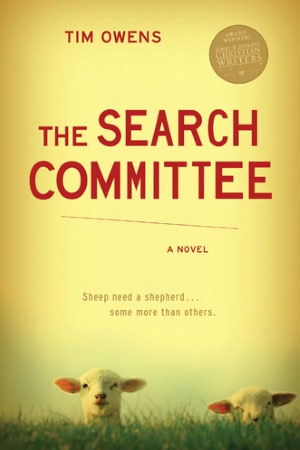
Book Review : The Search Committee

The Search Committee by Tim Owens is a story of a colorful and identifiable collection of members from a small southern Presbyterian church who have been entrusted with the task of locating the next pastor for their church. Owens introduces us to Bill, the oldest of the group and designated bus driver. Joyce, the resident northerner brand new to the south also rides along. Susie and Dot are the single mother and town gossip, respectively. Travis is the young married man struggling with his wife’s desire to start a family. Matt is the single, professional PhD type living at home with his father and Frankie is the pleasant and unassuming woman carrying a heavy burden.

Owens’ book is about a parallel journey. On one rail of the track he chronicles the committee’s travels to and from churches across North and South Carolina. He does so by providing details on such things as the condition and smell of the old church van to the people they meet during their church visits. He frequently discusses their “system” of entering churches so as not to be identified by the churches as the group coming to “steal the pastor”. As a pastor, this method of search is one that I am familiar with. Owens recounts their travels, experiences, troubles, mishaps, and portions of their life stories. On the other rail of the track, he chronicles the journey that each of the seven members are on personally. As the members listen to the sermons of each prospective pastor, we learn how each one is impacted.

I really enjoyed this book. Owens does a great job of pulling the covers back on the lives of the committee so the reader may see their vulnerable human side. As he does, Owens reminds us that although we may look as though we have it together on the outside, you never know what happening inside. The Search Committee is a great read; easy and quietly challenging. I found myself laughing out loud at the actions of the committee. In other places, I was deeply moved by their life experiences. Owens includes a study guide at the end that would allow this to be a helpful small group resource on the subtle ways in which God works in our lives. I highly recommend.

Disclosure of Material Connection: I received this book free from Tyndale House Publishers as part of their Blogger Review Program. I was not required to write a positive review. The opinions I have expressed are my own. I am disclosing this in accordance with the Federal Trade Commission’s 16 CFR, Part 255: “Guides Concerning the Use of Endorsements and Testimonials in Advertising.”

Book Review : No, We Can’t; Radical Islam, Militant Secularism, and the Myth of Coexistence

Tolerance. Acceptance. Coexistence. Compromise. Words like these, and many just like them, are being heard more and more around our world these days. Robert Stearns, in his latest book “No, We Can’t; Radical Islam, Militant Secularism, and the Myth of Coexistence” does an excellent job of demonstrating that tolerance, acceptance, and coexistence are all one-way streets. Stearns builds his argument around the premise that that everyone possesses a worldview, and this worldview is lens from which a person views and reacts to life. According to Stearns, not all lenses are the same. Several of these lenses are dangerous and misleading. In fact, the very definition of tolerance is being re-written today. Stearns writes, “they [tolerance police] have changed the definition of tolerance from agreeing to disagree to meaning that no one is allowed to disagree with them.”

Stearns has an easy free-flowing feel to his book. He begins by giving an accurate and no-holds-barred assessment  of the world situation. Stearns writes to give the reader an up-to-date road map and a better understanding of our current world situation. He follows this up by introducing the reader to the “Three Houses” which he describes as “the primary ideological power structures responsible for fueling global affairs.” They are Radical Islam, Militant Secularism, and Judeo-Christianity. Stearns spends an entire chapter on what he calls the myth of coexistence. He writes that there are three reasons why coexistence is not possible. The next three chapters are spent carefully and methodically explaining these three “houses”, dedicating an entire chapter to each. He also writes that there is a spiritual element to each that is vital to their understanding. The remaining chapters are dedicated to the manner in which the battle for prominence is being fought and the church’s role in this pursuit for global influence.

“No, We Can’t” is not an easy read. There is a great deal of explanation given to the ideology of these three cultural kingdoms. I particularly like the way in which Stearns was able to clearly lay out the battle of ideas that rages around us. One particular quote shows the power of these three houses. Stearns writes, “These worldviews (or “houses”) are rapidly becoming the new scaffolding upon which the sociopolitical world is built.” Prophetic. Gripping. Frightening. A great work.

Disclosure of Material Connection: I received this book free from Bethany House Publishers as part of their Blogger Review Program. I was not required to write a positive review. The opinions I have expressed are my own. I am disclosing this in accordance with the Federal Trade Commission’s 16 CFR, Part 255: “Guides Concerning the Use of Endorsements and Testimonials in Advertising.”

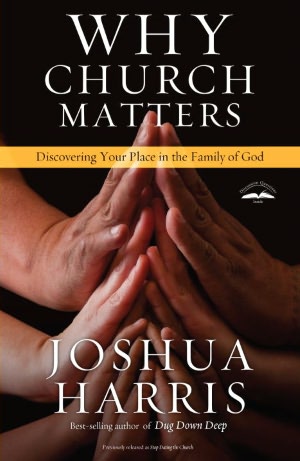
Book Review : Why Church Matters

Joshua Harris’ new book is entitled “Why Church Matters; Discovering Your Place in the Family of God” and is a re-print of his 2004 work “Stop Dating the Church”. “Why Church Matters” takes on the subject of the importance of and the need for commitment to the local church on behalf of each Christ-follower. As a pastor, I can appreciate the passion and enthusiasm for the local church with which Harris writes. He begins by stating that belonging to a local church does not save you. Instead, a person who has been saved by Christ should attach themselves to a local body of believers for encouragement, care, and service. Harris also writes that when a believer does not commit to a church, everyone is cheated. He says that “you cheat yourself, you cheat a church community, and you cheat your world.”

Two chapters stood out to me. In chapter three, Harris writes about the reasons why we need the church. He says on p.44, “This is why gathering to worship with other believers in a local church is so irreplaceable. It can’t be substituted with a great devotional time, a lively Bible study with friends, a meditative nature hike, or a live TV church service. When the church is together to worship and to hear God’s Word preached, nourishment and encouragement occur that can’t happen quite the same anywhere else. Our corporate worship edifies and strengthens us and glorifies God in ways nothing else can.” He also makes note of, in his opinion, three reasons why people stay away from church. He cites Self-Centeredness (what’s in it for me?), Prideful Independence (I can grow as a believer on my own), and a Critical Spirit (the church is broken). I believe chapter 5 is the most meaningful and beneficial chapter of the entire 120 page book. Entitled “Choosing Your Church”, Harris of ten important questions to consider before joining a church. Several include “Is this a church where God’s Word is faithfully taught?”, “Is this a church committed to reaching non-Christians with the gospel?”, and “Is this a church where members are challenged to serve?” These questions possess great potential. I believe them to be a great framework by which one can make a informed and meaningful decision about a church home. These are the questions I hope a potential member would ask before joining the church I pastor.

” Why Church Matters” is a good book. It is light, engaging, smartly-written, easy to read, and scriptural. If you are looking for an in-depth study of ecclesiology, go somewhere else. The only negative for me is that I would like to have seen certain areas and topics further expanded. Included is a study guide covering each chapter which lends this book to be a great small-group resource. This would be a great book for the church-skeptic or the believer who has been hurt by the church and may be considering giving up on the body of Christ.

Disclosure of Material Connection: I received this book free from Waterbrook Multnomah Publishers as part of their Blogger Review Program. I was not required to write a positive review. The opinions I have expressed are my own. I am disclosing this in accordance with the Federal Trade Commission’s 16 CFR, Part 255: “Guides Concerning the Use of Endorsements and Testimonials in Advertising.”

Book Review : The Jesus Mission

I recently finished Steven Scott’s new book, “The Jesus Mission: Christ Completed 27 Missions While on Earth. Take up the 4 He Assigned to You”. As a Christian, I am always looking for guidance and motivation to help me be more on mission for the things that matter to Jesus Christ. “The Jesus Mission” does just that. Scott take nearly half the book explaining the necessity of an intimate relationship with Jesus Christ and how everything flows from that. This book is not the casual reader. Scott deals heavily in scripture and extends the call to be intimate with and to whole-heartedly follow Christ and forsake the temptation to be a “passive-participant” on the journey of faith.

 I was initially skeptical that these 27 missions could be covered and sufficiently expounded in a single volume. I was correct. The reader has to be willing to stay with Scott as he makes his way toward the 27 missions that don’t come along until chapters 16 and 17. And then, they are treated in a cursory, survey-type method. I did however like he way in which he dealt with the 4 missions Christ asked us to take on. He provided sub-sections with actions and activities to help embrace and understand the missions. All in all, a great book. It is well-written and thoroughly researched. I found it to be smart, challenging, and convicting. I would recommend this book to anyone who is seeking to further develop their spiritual walk with the Lord Jesus Christ.

Disclosure of Material Connection: I received this book free from Waterbrook Multnomah Publishers as part of their Blogger Review Program. I was not required to write a positive review. The opinions I have expressed are my own. I am disclosing this in accordance with the Federal Trade Commission’s 16 CFR, Part 255: “Guides Concerning the Use of Endorsements and Testimonials in Advertising.”

Book Review : Culture Shift; The Battle for the Moral Heart of America

In every generation of evangelical Christianity, there is one who stands in the gap between the marketplace and the church house in order to communicate how biblical Christianity impacts and influences every part of our lives. I believe that Dr. Al Mohler is that man for this generation. Dr. Mohler is the president of Southern Baptist Theological Seminary in Louisville, KY. He has become the voice of conservative Christianity. He continues to be a consistent voice through television, radio, and print. In his new book and first solo effort, “Culture Shift; The Battle for the Moral Heart of America” demonstrates how America is losing its biblical center.

Dr. Mohler begins by stating the positions that most Christians take toward culture: extreme involvement or non-involvement. He sets up his work by using Augustine’s “City of God” as a model and guide. Augustine said that humanity is confronted by to cities: The city of God, eternal and seeking to honor God; The City of Man, passing and self-serving, characterized by disobedience, moral autonomy, and a spirit of rebellion. By way of introduction and a desire to provide necessary groundwork, Dr. Mohler introduces the reader to the voices for and positions of those who would seek a purely secular society void of any reference to God. With intellectual sharpness and respect, Dr. Mohler denounces these concepts and shows the futility of the arguments.

The bulk of his book is spent introducing the reader to the areas of culture in which our lives and society are experiencing shifts. Dr. Mohler discusses numerous topics including the perceived right to never be offended, the role of the Supreme Court and religion, terrorism, biomedicine, public school, parenting, abortion, natural disasters, New Atheism, and the “digital deluge” of modern technology. Mohler, in a very fair but firm manner, deals with each issue and the proponents of these issues in a way that honors God and elevates the Scriptures. These chapters are not an in-depth analysis, nor are they exhaustive. Instead, they serve as a primer for further study and discussion.

I found “Culture Shift” to be engaging, useful, enlightening, challenging, and a stern warning. As a Christian, the ideas and agendas that serve to diminish my worldview are exposed. As a pastor, I was able to see deeper into the competing worldviews that my congregation deals with every day. If there is one negative to say, it would be this. Not enough. The essay blog-post form of the chapters left me wanting much more. I believe the material and topics covered in “Culture Shift” could make up two books giving more attention to each. To say that Dr. Mohler has exposed the slippery slope of liberalism and the cravings of humanist thought would be a gross understatement. I highly recommend this book all who claim the name of Christ who desire to know the forces and agenda coming against your belief system. Well written, researched, and presented. Just what I expected.

Disclosure of Material Connection: I received this book free from Waterbrook Multnomah Publishers as part of their Blogger Review Program. I was not required to write a positive review. The opinions I have expressed are my own. I am disclosing this in accordance with the Federal Trade Commission’s 16 CFR, Part 255: “Guides Concerning the Use of Endorsements and Testimonials in Advertising.”

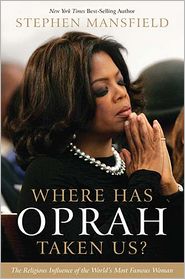
Book Review : Where Has Oprah Taken Us?

I believe that most everyone has heard of Oprah Winfrey. Over the past twenty-five years, her daytime talk show has been wildly successful, while at the same time a roller coaster ride at best. In the beginning it was one of negativity, trash, filth, and the very worst of societal topics, thus earning her the name, as Stephen Mansfield writes, “Slime Queen of daytime television.” At the end of its run her show had become positive. Her daytime talk show had become a launcher of careers, an influencer of people, and an encouragement for good around the world. What happened? Oprah started dealing in religion.

In “Where Has Oprah Taken Us? The Religious Influence of the World’s Most Famous Woman”, author Stephen Mansfield takes an honest and in-depth look at the events, people, tragedies, and successes that have made Oprah Winfrey the cultural icon that she is today. Although she has influenced many in many areas, Mansfield chooses to write about her religious influence upon Americans and those around the world. Mansfield begins by looking at Oprah’s early years growing up in the Baptist church. He shows what was the basis for her conservative evangelical faith and then what forces began to challenge that faith.  As Oprah become more successful in her broadcasting and television career, she began to open herself up to and eventually embrace eastern religions. Mansfield explores her shift from a biblical faith rooted in the worship of God to an eastern type, meditation-driven spirituality rooted in the worship of self. Mansfield writes, “It is not going too far to say that spiritually she is the composite of all that her gurus have taught her and that to know her one must first know them.”  He then lists who those influential gurus are. They include Marianne Williamson, Eckhart Tolle, Gary Zukav, Depak Chopra, Rev. Ed Bacon, and Iyanla Vanzant.

Where Has Oprah Taken Us?” is well written, thoroughly researched, and intentionally balanced, allowing Oprah’s words to speak for her. I found this book very informative and intriguing. I believe that with great influence comes greater responsibility. I believe Mansfield is right when he says that Oprah doesn’t know who she is. Mansfield describes Oprah’s faith system this way, “She found no tension in blending a Hindu version of reality with ancestor worship with chanting Hindu mantras with The Secret’s Law of Attraction with yoga with an animistic honoring of the spirits in nature with a belief in self-divinity with channeling with astrology with karma with the Bible with the certainty that right spirituality is rewarded with wealth and well-being with prayer to whatever force is god with the confidence we create the evil we experience with the unwavering assurance that a super-natural destiny rules human affairs. This was the buffet of beliefs she had chosen for herself and that she urged others to embrace as well.” I believe this book will be especially helpful to Christians. Anytime someone has the stage to influence millions of people, especially in the area of religion, to understand their beliefs is vital to defending a true biblical faith. If you place your convictions and standards on the altar of pride and self, you allow everyone else to define who you are. I recommend this book to all.

Disclosure of Material Connection: I received this book free from Thomas Nelson Publishers as part of their Blogger Review Program. I was not required to write a positive review. The opinions I have expressed are my own. I am disclosing this in accordance with the Federal Trade Commission’s 16 CFR, Part 255: “Guides Concerning the Use of Endorsements and Testimonials in Advertising.”

Book Review : Our Last Great Hope

For Evangelical Christianity, the Great Commission represents the very heartbeat of our Savior Jesus Christ. For in its’ words and commands we find, with absolute clarity, the mission that we are to devote our lives to. In his new book, “Our Last Great Hope; Awakening the Great Commission”, Dr. Ronnie Floyd examines the Great Commission in a way that I have not seen or heard before. As a Southern Baptist, I am familiar with Dr. Floyd and his ministry as the senior pastor of Cross Church, a multi-site church in Northwest Arkansas. When I read that he had written a book of the Great Commission, I was immediately interested. Dr. Floyd recently chaired the Great Commission Resurgence Task Force that took an intentional and exhaustive look at how we as Southern Baptists could do better at fulfilling  the Great Commission. He shares in his book how his service on this task force gave him a renewed passion for and a heightened sense of urgency in joining Christ in the work of taking the gospel to the nations.

Our Last Great Hope is not so much an academic work that dissects the Great Commission verses and explores all its’ nuances. That being said, this work is well researched and sits on a firm biblical foundation. Instead, Our Last Great Hope demonstrates how to move the Great Commission from the classroom to the driving force in every believers heart, family, and life.

Dr. Floyd walks the reader through the ways in which the Great Commission can become a personal reality. He begins with the individual. He builds his case that the Great Commission must first be personal before it can be public. He then goes on show how a commitment to the Great Commission will affect their families, businesses, local communities, and then the nations. He also says that a commitment to the Great Commission will affect our prayer lives, plans, and our giving.

Dr. Floyd has written a very challenging work. As a pastor, I am familiar with the Great Commission, however, I have been challenged to think about it differently. If it were possible, Our Last Great Hope should be required reading for all staff members and lay leaders. This is a book that I will read again. His balance of scripture and personal experience makes this book a joy to read. I highly recommended this book.

Disclosure of Material Connection: I received this book free from Thomas Nelson Publishers as part of their Blogger Review Program. I was not required to write a positive review. The opinions I have expressed are my own. I am disclosing this in accordance with the Federal Trade Commission’s 16 CFR, Part 255: “Guides Concerning the Use of Endorsements and Testimonials in Advertising.”


Book Review : Dug Down Deep

Joshua Harris, in his new book, “Dug Down Deep; Building Your Life on Truths That Last” tells a personal growth story through the lens of a familiar parable told by Jesus Christ. He uses the story of two builders. One builder built his house upon the sand. The storm come against it and it fell. The other builder built his house upon a rock. The storm come against it and it stood. Dug Down Deep is a call for every believer to dig down and understand what God wants them to know that will lead them into a deeper and richer relationship  with Him. Harris maintains hat superficial understanding of the Bible will not hold when tried and tested by the storms of life.

The opening statement of the book sets the stage for the rest. Harris writes, “ We’re all theologians. The question is whether what we know about God is true.” Harris writes that doctrine, the proper understanding of God and what He is like, coupled with orthodoxy, the proper practice of what we know to be true about God, will make or break a believers walk with Christ. Harris deals with doctrinal matters in a way that takes them out of the classroom and places them into real-life practice. In each of his chapters, he deals with a different doctrinal discipline and makes it easy to understand. A few of those doctrines are: God, Jesus Christ, Salvation, the Bible, Sanctification, the Holy Spirit, and the Church.

I appreciate the path in which Harris took in writing this book. He has built the case for every believer becoming a student of God’s Word and not being afraid of digging deep. This book is well written, it is deep, but not overly academic. His personal story woven throughout the book is what makes the book believable. The study guide that is included in the book is a great tool for small group study. I highly recommend this book.

Disclosure of Material Connection: I received this book free from Waterbrook Multnomah Publishers as part of their Blogger Review Program. I was not required to write a positive review. The opinions I have expressed are my own. I am disclosing this in accordance with the Federal Trade Commission’s 16 CFR, Part 255: “Guides Concerning the Use of Endorsements and Testimonials in Advertising.”

Book Review : Has God Spoken? Proof of the Bible’s Divine Inspiration

In our day, critics continually and consistently launch assaults on the validity, accuracy, reliability, and sufficiency of the Bible. Their thought seems to be that if the Bible can be reduced to just simply a collection of fables and stories, then there is no need for faith, repentance, Christianity, or even Christ Himself. In his latest book, “Has God Spoken? Proof of the Bible’s Divine Inspiration”, Hank Hanegraaff has written a powerful work that leaves no room for debate that God has truly spoken through His word. His proofs enable us to not only trust the Bible, but allow it change and guide our lives.

“Has God Spoken?” is separated into four major parts. The parts are presented by using the acrostic M-A-P-S; Manuscript Copies, Archaeological Spade, Prophetic Stars, and Scripture Lights. The first part of his book utilizes the subacronym (Hanegraaff’s term) C-O-P-I-E-S.  In this section, Hanegraaff tackles the object that errors, intended and unintended, were made in the copying of the original manuscripts which lead critics to sat the Bible is in no way accurate. The second part of his book utilizes the subacronym S-P-A-D-E. Hanegraaff demonstrates how archaeological discoveries prove the existence of, and are consistent with, places described in the Bible. The third part of his book utilizes the subacronym S-T-A-R-S. In this section, Hanegraaff shows how the truthfulness and validity of biblical prophecy only further prove the Bible’s accuracy. He also demonstrates how biblical prophecy is inconsistent with divination and predictors of the future. In his final part of the book, he uses the subacronym L-I-G-H-T-S. Here the author gives the reader tools to better understand biblical interpretation.

I enjoyed this book a great deal. Although this book is written by an apologist and serves as a defense for the validity of the Bible, it is not overly scholarly. This allows it to be used by Christians in every stage of their faith walk to better understand and be prepared to give a defense of the Bible’s accuracy. One thing I noticed seemed to get in the way. Within the subacronyms there were other acronyms that Hanegraaff likely intended to be helpful in further understanding his point. At times I found these distracting. That being said, “Has god Spoken?” is a great resource and a well-written and researched work. I highly recommend.

Disclosure of Material Connection: I received this book free from Thomas Nelson Publishers as part of their Blogger Review Program. I was not required to write a positive review. The opinions I have expressed are my own. I am disclosing this in accordance with the Federal Trade Commission’s 16 CFR, Part 255: “Guides Concerning the Use of Endorsements and Testimonials in Advertising.”