Book Review : History, Law, and Christianity

historylawandchristianity-1Apologetic resources abound. No shortage of books that defend the validity of the Christian faith exists. Many of these resources often set Christianity alongside other belief systems and use the Bible to demonstrate the truthfulness and validity of Christianity. I have no problem with this. For I believe as Herschel Hobbs did when he wrote that the Bible is “truth without any mixture of error”. I am comfortable with using the Bible as the beginning of any apologetic discussion. However, there are many who are not willing and able to begin with the Bible itself as a starting point. Fewer apologetic resources begin the defense of the Christian message at somewhere other than the Bible. In his new book, “History, Law, and Christianity; How Does the Historic Evidence for the Christian Message Hold Up Against Cross-Examination”, Dr. John Warwick Montgomery approaches the defense of the Christian message from a strictly historical and legal perspective.

Montgomery’s book breaks into two major parts: Historical Evidence and Legal Evidence. In the first section, the author builds a case for the Christian message from a historian’s standpoint. He began by asking the question, “Are the New Testament documents historically trustworthy?” He answers by offering four tests. Test One, the Biographical Test, answers the question, “Can we arrive at a stable, reliable textual foundation for the claims of Jesus as set out in these records? Test Two, the Internal Evidence, deals with antiquity’s standard that the benefit of the doubt goes to the document itself unless under discussion the author disqualifies himself through fraud or contradiction. Test Three, External Evidence, answers the question, “Do other historical materials confirm or deny the internal testimony provided by the documents themselves?” Test Four, Form Criticism, which seeks to determine a literary work’s original form and the historical context of the literary tradition.

In the second section, Montgomery gives the reason for reasoning the Christian message from a legal perspective. He writes, “Here we shall use legal reasoning and the laws of evidence. The advantage of a jurisprudential approach lies in the difficulty of jettisoning it: legal standards of evidence develop as essential means of resolving the most intractable disputes in society. Thus one cannot very well throw out legal reasoning merely because its application to Christianity results in a verdict for the Christian faith”. Montgomery sets forth to answer the question, “What are the pertinent questions about faith?” He does so by asking and answering four key questions from the jurisprudential standpoint. Those questions are:

1. Are the historical records of Jesus solid enough to rely upon?

2. Is the testimony in these records concerning his life and ministry sufficiently reliable to know what he claimed about himself?

3. Do the accounts of his resurrection from the dead, offered as proof of his divine claims, in fact establish those claims?

4. If Jesus’ deity is established in the foregoing manner, does he place a divine stamp of approval on the Bible so as to render its pronouncements apodictically certain?

In the course of answering these legal questions, Montgomery puts the witnesses to Jesus’ ministry, death, burial, and the resurrected Christ “on trial” by utilizing the legal means of deeming a witness truthful and their testimony reliable. Montgomery writes, “In a court of law, admissible testimony is considered truthful unless impeached or otherwise rendered doubtful. The burden, then, is on those who would show that the New Testament testimony to Jesus is not worthy of belief.” It is here that Montgomery excels. He applies the criteria for credible testimony in the legal arena to the New Testament witnesses. He looks internal defects with the witnesses, external motives to falsify their testimony, internal defects in their testimony, and the external defects in their testimony. He then goes to share his conclusions that evidence for the Christian message in valid, reliable, and trustworthy. A tremendous work.

Disclosure of Material Connection: I received this book free from CrossFocused Reviews as part of their Blogger Review Program. I was not required to write a positive review. The opinions I have expressed are my own. I am disclosing this in accordance with the Federal Trade Commission’s 16 CFR, Part 255: “Guides Concerning the Use of Endorsements and Testimonials in Advertising.”

A Special Mother’s Day

TrJrI believe, without any reservation at all, mothers deserve their own day. To be perfectly honest, a single day given to the sacrifice and ministry of motherhood is not sufficient. Today is a special day for a certain mother in my life: my wife, and Jordan’s mom, Terri. Today is special because it is the last Mother’s Day that Jordan will be at home with us. Jordan has joined the United States Marine Corps and will be leaving home on May 31st. He made his decision known to us back in late January and the ramifications of that decision have altered all of our lives in different ways. We had prepared for a future that had Jordan living at home and going to college. We now are preparing to be empty-nesters.

Not only is today a special day for my wife, it is certain to be an emotional one as well. Looking back over the years I am so thankful for the love, care, and attention that she has lavished upon Jordan. I want to take this opportunity to say a few things to Terri on this special Mother’s Day.

1. Thank you for showing up for work each day. Early on you decided that being at home was the best fit given our unique family dynamic. We found this true each time the opportunity surfaced for you to work outside the home. Thank you for being there every day after school to listen to his problems, share in the joys of the day, and help mend the heartbreak. Your days consisted being a chef, tutor, manager, bookkeeper, chauffer, counselor, event planner, and nurse. Thank you for your willingness to put our family’s well-being first.

2. Thank you for always putting Jordan’s needs, plans, hopes, and dreams before your own. I know for a fact that time and time again throughout the years you have had to give up your personal preferences and plans so that Jordan could do something or go somewhere.

3. Thank you for staying on top of Jordan’s school work even though he didn’t see a need to stay on top of it. I have watched you check Jordan’s grades, talk with his teachers, and ensure that his homework was completed; every day. I know how tiring it was. We have both joked about walking with him at graduation. You deserve your own cap and gown.

4. Thank you for embracing and supporting Jordan’s decision to become a Marine. I know this was not easy. I know the reservations you had. I know your deepest fears. In light of all that, you have thrown your support and love behind him as he sets out on this chapter of his life. Having walked the road he is about to walk, you’ll never know what it truly means to him that you are cheering him on.

It has been said that, “A boy’s view of the world is affected by what the mother has demonstrated.” All these years you have painted for him the picture of a compassionate mother, a loving and devoted wife, and a strong Christian woman. You have shaped the young man he has turned into today. Your gift request this year was a day at the beach. I wish I could buy you a beach. Happy Mother’s Day. I love you most.

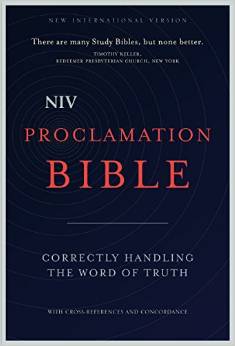
Book Review : The NIV Proclamation Bible

NIVPBAs strange as it may sound, Bibles are difficult to review. Since the reader has no authority to argue or critique the content, the features of a particular Bible are all that are left to critique. Recently I received the NIV Proclamation Bible for review. I would have to say that the first thing that caught my attention was a quote on the front cover from Tim Keller saying, “”There are many Study Bibles, but none better.” Keller missed the boat there. The NIVPB is certainly not a study Bible. The publisher doesn’t even call it a study Bible. Within a study Bible you would expect to find commentary notes throughout giving further clarification and explanation to the text itself. The NIVPB has none at all. Also, a study Bible would be expected to give a thorough introduction to each book. The NIVPB doesn’t do that either. The best way to review the NIVPB is to simply give the good and the bad.

THE GOOD.

I am not sure if this good, but there is a feature that is unique to the NIVPB. Included within is an approximately 60 page section of articles on subjects ranging from the study, interpretation, and preaching of the Bible. The NIVPB does contain the standard fare of most every other Bible; concordance, weights and measures table, maps, double ribbons, cross referenced text, dual-column design, and hardcover.

THE BAD

I have already mentioned that the billing of this Bible by a well-known theologian as a study Bible fell miserably short. Although introductory articles are present, you will find something of the like in most “real” study Bibles. These articles are so common to most Bibles I don’t feel obliged to include them here. The book introductions were terribly out of balance. The introduction of Philemon (a 25 verse book with one primary theme) and Genesis (a 50 chapter book with multiple foundational and critical themes necessary for understanding the entire Bible) were given the same treatment. Several of the book summaries seemed to me “God has saved us and, as we travel through the wilderness of this world, we need to go on exercising faith to enter the inheritance Christ has secured for us.”) I am not sure if the editors support an ongoing, works-based, or reformed approach to soteriology.

In conclusion, if you desire a Bible for simply the purpose of reading, the NIVPB will suit the need. However, if you are looking for a “real” study Bible that will aid in your teaching, preaching, and in-depth study of God’s Word, you will need to go elsewhere.

Disclosure of Material Connection: I received this book free from Thomas Nelson Publishers as part of their Blogger Review Program. I was not required to write a positive review. The opinions I have expressed are my own. I am disclosing this in accordance with the Federal Trade Commission’s 16 CFR, Part 255: “Guides Concerning the Use of Endorsements and Testimonials in Advertising.”

Book Review : The Leadership Handbook–26 Critical Lessons Every Leader Needs

26lessonsArguably, John Maxwell is the most prolific writer on the subject of leadership in our world today. With over thirty years of leadership in religious and secular circles, he has helped countless leaders sharpen and hone their leadership skills and styles. I for one have benefited greatly from his books and conferences. Recently I finished this latest book, “The Leadership Handbook: 26 Critical Lessons Every Leader Needs”. I have often found that authors don’t deliver on the promises of the book’s title. “The Leadership Handbook” is not one of those books. Without a doubt this book is a collection of his previous works that been put together concisely in handbook format. As the title suggests, there are twenty-six chapters which each leadership lesson given an entire chapter for explanation and application. Leadership lessons such as The Best Leaders Are Listeners, Keep Learning to keep Leading, Don’t Manage Your Time – Manage Your Life, The Choices You Make, Make You, among others, are included. Maxwell has included two helpful resources at the end of every chapter. First, each lesson has Application Exercises which are questions for internal reflection that challenge the reader on the subject covered. Also included is a Mentoring Moment. This resource helps the reader share the lesson with other he/she may be mentoring at the moment. Both of these resources are valuable.

There are a few drawbacks to this book. If you have read extensively behind Maxwell in the past, there is nothing new here. I was hoping for something I had not been read before. Instead I was reminded of what I already knew. The major drawback to this book is that it’s a re-print of Maxwell’s 2008 book Leadership Gold. If you have read Leadership Gold you should skip this book. This fact is contained in the fine print on the opening pages. I don’t mind revisions, but I would like to know beforehand if an old book was given a new name and published as new. This seems to be misleading on behalf of the publisher. With that being said, I would still recommend this book due to its timeless content which is challenging, encouraging, and applicable to daily life.

Disclosure of Material Connection: I received this book free from Thomas Nelson Publishers as part of their Blogger Review Program. I was not required to write a positive review. The opinions I have expressed are my own. I am disclosing this in accordance with the Federal Trade Commission’s 16 CFR, Part 255: “Guides Concerning the Use of Endorsements and Testimonials in Advertising.”
Suicide Pact

suicideI believe it would be safe to say that most everyone knows about the principle of erosion. It is the wearing away of a surface by outside forces such as wind, water, or waves. Whether it’s rivers that have cut their way through the landscape or beaches that have washed away from the consistent pounding of the waves, the visible effects of erosion are easy to see. There is a different type of erosion taking place in our country today. Today, we are seeing an erosion of personal freedoms and liberties in the name of national security. We often hear government officials telling us that in order for us to be safe, we must be willing to sacrifice. In his new book, “Suicide Pact: The Radical Expansion of Presidential Powers and the Lethal Threat to American Liberty”, Judge Andrew Napolitano shows how the American people have allowed this country’s founding principles of

limited government, individual autonomy, respect for privacy, and the rule of law to be traded away for an assurance that the government will do right by the citizens of this country. Napolitano calls this exchange of personal freedoms for governmental protection a suicide pact. He defines the term this way, “a Constitution which permits the government to violate it and the president to do so secretly and with impunity is a suicide pact with the states that formed it and the American people whose freedoms it was intended to secure because it will result in such a loss of liberty that it will bring about the self-immolation of our formerly free society – its suicide, if you will” .

Napolitano’s book has three main parts. Part One (1770-1880) deals with the struggles of this country in its infancy to secure, establish, and protect newly found liberties and freedom, as well as the quick erosion of these same liberties through presidents George Washington and John Adams and their courts. Part Two (1900-1946) introduces the reader to those presidents Woodrow Wilson and Franklin D. Roosevelt who through “noble lies” sought to convince the American people that their government had their best interests at heart. Part Three (1947-Present) show the further erosion of liberties through the leadership of the presidents from Harry Truman to Barack Obama. Napolitano shows that not even a decade after the Constitution became the law of the land, the Alien and Sedition Acts began to curtail civil liberties where those critical to the president and Congress could be fined or imprisoned. Other presidential overreaches include Lincoln’s suspension of habeas corpus and the use of military courts while civilian courts were still in use. Woodrow Wilson sanctioned free speech and imprisoned people for giving speeches. His Committee on Public Information made sure that Americans heard what he wanted them to hear. Other presidential low points include Roosevelt’s placement of Japanese Americans in secure camps, Truman’s seizing of private industry, Bush’s enhanced interrogation techniques and warrantless wiretappings, and Obama’s drone policies and questionable NSA procedures.

Suicide Pact is a great work. Napolitano does a fantastic job of making his book feel like an introductory law class. He analyzes major case law such as the Alien and Sedition Acts of 1798, the Posse Comitatus Act of 1878, the Espionage Act of 1917, the Sedition Act of 1918, Ex parte Merryman, Ex parte Vallandigham, Ex parte Milligan, the War Powers Resolution of 1973, and the Patriot Act to name a few. With that being said, the book doesn’t read like a law class textbook. Suicide Pact is well researched and documented. He allows the words and actions of presidents and the Supreme Court to speak for themselves. I found the chapters dealing with George W. Bush’s post 9/11 presidency and the Global War on Terror to be the most shocking. If you are fan of governmental studies or you simply want to know how we have arrived at where we are today, this book is for you.

Disclosure of Material Connection: I received this book free from Thomas Nelson Publishers as part of their Blogger Review Program. I was not required to write a positive review. The opinions I have expressed are my own. I am disclosing this in accordance with the Federal Trade Commission’s 16 CFR, Part 255: “Guides Concerning the Use of Endorsements and Testimonials in Advertising.”

Commitments for 2015

2015_5Today is the day. The first day of a brand new year is here. It is a day that many look forward to. Some view today as the best day for watching college football. Some view today as simply a day off from work. Others view today as a chance for a new beginning. The millions who view New Year’s Day as a new beginning with make resolutions to either stop or start something. Resolutions offered today will include such things as losing weight, spending more time with family, saving money, and starting a new hobby, to name a few. Personally, I don’t make resolutions. I do however look back over and evaluate the year that we just left and make some personal commitments going forward. I would like to share these commitments with my readers here.

1. I plan to read smarter in order to write better. If you are at least a sporadic read of my blog then you know that I enjoy reading and writing. The two are joined at the hip. I regularly review books for five publishing companies. In 2014, I read and reviewed a total of 44 books. These books covered a very broad spectrum of subjects. This year, my plan is to focus and confine my reading to the areas of ministry and leadership. In 2015 I will choose quality over quantity. For me, this is smarter reading that will positively impact my writing.

2. I plan to say “no” this year more than I have before. I have a real problem when it comes to saying “yes”. I say it too often and that has caused me to become overloaded. There are some things that I won’t be able to say no to. However, I plan to say “no” to the things that I am able to which take already limited away from my family and my duties as the pastor of Port Royal Baptist Church.

3. I plan to spend more time with Jordan this year. For those of you who don’t know, Jordan is my seventeen year old son; our only child. I am ashamed to admit it but over the past few years I have not spent time enough time with him. I allowed “church stuff” to take priority over my time and I know that he has suffered. Jordan is a senior in high school this year and is playing his final year of baseball for Battery Creek High School. It is my intention to be a fierce guardian of my calendar so that I may be with him as much as possible. He deserves that.

4. I plan to be more focused in my preaching and teaching. Having taken a look back at my preaching and teaching this past year, I realize that at times it seemed scattered. I am asking the Lord make me increasingly more aware of the needs of our congregation and the struggles/issues plaguing our city, state, and nations and speak to them strategically.

5. I plan to spend more time with my ministerial staff this year. I am fortunate to serve alongside two bright, passionate, and energetic leaders who oversee our youth and music ministries: Kiel Seley and Gale Parker, respectively. Both are bi-vocational but you would never know it. My desire is to move from “I’m here if you need me” to “Let’s spend time together doing life and ministry”.

Why would I share these commitments publicly? Some are personal, so why tell everyone? That’s simple: accountability. I hope that throughout 2015 those who read my blog will ask me, “How are you doing in these five areas?” What commitments have you made?

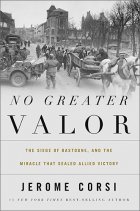
Book Review : No Greater Valor

nogreatervalorOne of my favorite genres of book is military history. I enjoy reading the accounts of actual battles that occurred at specific points and places in time and helped to shape history as we know it today. Of this entire genre, books that tell the true-to-life stories of the Civil War, World War II, and the Vietnam War are the most intriguing to me. I recently finished a book that falls into this category. “No Greater Valor, The Siege of Bastogne and the Miracle that Sealed Allied Victory,” by Jerome Corsi tells the story of the battle for the small, yet strategically important city of Bastogne in eastern Belgium. This battle, which lasted from December 20th –27th, 1944, was part of the larger Battle of the Bulge involving Allied and Nazi forces. Corsi tells how the 101st Airborne Division found themselves surrounded by German forces in an attempt to keep the Nazis from gaining control of the crossroads in Bastogne which led to their intended goal, the harbor at Antwerp. For their determination, toughness, and fierceness in battle, soldiers of the 101st Airborne at Bastogne earned the nickname the “Battered Bastards of Bastogne. “

No Greater Valor is more than a military narrative that simply explains people, places, missions, and tactics; although it does that very well. What makes this book an interesting read is the way in which Corsi explored the faith backgrounds of a number of the commanders and other key leaders in the battle. He provided a look into the loves of those such as Major General Troy Middleton, Major General James Gavin, Father Francis Sampson, General George S. Patton, and General Dwight D. Eisenhower. In doing so, Corsi proposes that the faith of the individuals allowed God’s providential care to be experienced by everyone. At points, the book felt like a textbook or military tactics manual. Regardless, Corsi’s book is a good work. If you enjoy military history, you will enjoy this book. It is well worth your time.

Disclosure of Material Connection: I received this book free from Thomas Nelson Publishers as part of their Blogger Review Program. I was not required to write a positive review. The opinions I have expressed are my own. I am disclosing this in accordance with the Federal Trade Commission’s 16 CFR, Part 255: “Guides Concerning the Use of Endorsements and Testimonials in Advertising.”

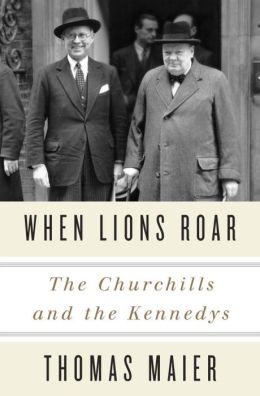
Book Review : When Lions Roar

lionsroarArguably the two most famous families of the twentieth century were the Churchills and the Kennedys. Winston Churchill was the Prime Minister of Great Britain during World War II and was a fierce ally of the United States. His assertive and sometimes flamboyant persona made him a figure of constant attention. Few would argue the impact that the Kennedy’s had on this nation. With John F. Kennedy’s election to the presidency in 1960 came the public image of many referred to as “Camelot”. His brother, Robert served as U.S. Attorney General during JFK’s presidency. The Kennedy family owes their political start and passions to their father Joe. These two families come together in Thomas Maier’s new book, “When Lions Roar; The Churchills and the Kennedys”.

Maier begins with the initial meeting of Joe Kennedy and Winston Churchill as Kennedy was appointed as ambassador to Great Britain under the presidency of Franklin D. Roosevelt. It is from this point that Maier sets out to tell the story how these two families became close friends and political allies. However, that is about the best part of the book. Maier, in an attempt to tell the side of the story that many may not know, he reduces the end product to that of a Hollywood tabloid. Some may enjoy reading of extra-marital affairs and the like, but it didn’t work for me. If you are looking of a serious rendering of the careers and contributions of these two families, you may want to look somewhere else.

Disclosure of Material Connection: I received this book free from Waterbrook Multnomah Publishers as part of their Blogger Review Program. I was not required to write a positive review. The opinions I have expressed are my own. I am disclosing this in accordance with the Federal Trade Commission’s 16 CFR, Part 255: “Guides Concerning the Use of Endorsements and Testimonials in Advertising.”
Book Review : Churchless

churchlessI have been in the pastoral ministry for sixteen years. I have seen a lot of things in those years; some good and some not so good. One of the disturbing trends that I have seen is the lack of church attendance by professing Christians. For whatever reason, people are choosing to not attend organized religious services. The reasons are many. There are some who would say that attending church is not worth their time. There are some who would say that they can worship God apart from organized religion. There are some who would say that they will attend a church service if they can fit it into their already busy schedule. David Kinnaman and George Barna tackle this phenomenon in their latest book, “Churchless; Understanding Today’s Unchurched and How to Connect With Them.”

The content of this book is the compilation of a five year study which surveyed 20,000 unchurched and churched adults. As a result of this study, Kinnaman and Barna demonstrate that Americans fall into one of four categories as it relates to their relationship to the church.

1. The Actively Churched are those who attend church on a regular basis, meaning one a month or more.

2. The Minimally Churched are those who attend church services several times a year and whose attendance patterns are unpredictable.

3. The de-Churched are those who have been “churched” in the past but are now taking a break from the church. The authors discovered that this group is the fastest growing segment.

4. The Purely Unchurched are those who never attend a Christian worship service.

Kinnaman and Barna utilize eleven chapters to give their readers an in-depth look at those who made up their survey. They include topics such as demographics and self-descriptions of churchless people, what the unchurched think about religion, religious behaviors of churchless people, religious beliefs that define unchurched people’s faith, the paradox of trusting Christ but not the local church, understanding why people leave the church, family life among unchurched people, and goals, morals, and values of churchless adults.

Churchless has more positive notes than negative. The book does a great job of highlighting a sobering reality that the church is facing today. The authors also link to their website where their readers can gain access to color slides for further presentation. The greatest negative I would say is that the book left me asking “What do I do with this information?” It’s kind of like a doctor telling you that you are sick but not offering any medication to make you well. All in all Churchless is a great work. Church leaders would benefit greatly from reading this work.

Disclosure of Material Connection: I received this book free from Tyndale House Publishers as part of their Blogger Review Program. I was not required to write a positive review. The opinions I have expressed are my own. I am disclosing this in accordance with the Federal Trade Commission’s 16 CFR, Part 255: “Guides Concerning the Use of Endorsements and Testimonials in Advertising.”