 I am going to be “out of the office” here at The Road Less Traveled until January 31st, 2013. My desire is to spend this first month of the year collecting my thoughts and focusing on the ministry that is before us at Port Royal Baptist Church in 2013. I also have some convention-related travel coming up this month as well. With the exception of an occasional book review that I am required to write, I’ll begin posting again regularly in February.
Month: December 2012
Will We Sleep Through Christmas?
Today is Christmas. Much will happen today. Children will open gifts from under the tree that have taunted them for weeks. Families will gather today with those they have not seen in a very long time. Many will gather in houses of worship to celebrate the reason for the season. For the most part, the thoughts and focus of today will be on cultural traditions and not on the true meaning of why there is Christmas in the first place. We would not be the first ones to miss out on the reason for Christmas. In the Casting Crowns song, “While You Were Sleeping”, they write:
Oh little town of Bethlehem
Looks like another silent night
Above your deep and dreamless sleep
A giant star lights up the sky
And while you’re lying in the dark
There shines an everlasting light
For the King has left His throne
And is sleeping in a manger tonight
Oh Bethlehem, what you have missed while you were sleeping
For God became a man
And stepped into your world today
Oh Bethlehem, you will go down in history
As a city with no room for its King
While you were sleeping
While you were sleeping
Bethlehem was physically sleeping. While the residents of Bethlehem slept, the Son of God was born into the world among them. While the residents of Bethlehem slept, the Savior of the world was born in a lowly stable with no fan fare, no attention, and no honor due a King. While the residents of Bethlehem slept, the landscape of the known world, and those to come, changed forever. The residents of Bethlehem secured a place for themselves in history as “a city with no room for its King.” They go on to write:
Oh little town of Jerusalem
Looks like another silent night
The Father gave His only Son
The Way, the Truth, the Life had come
But there was no room for Him in the world He came to save
Jerusalem, what you have missed while you were sleeping
The Savior of the world is dying on your cross today
Jerusalem, you will go down in history
As a city with no room for its King
While you were sleeping
While you were sleeping
Jerusalem was spiritually sleeping. Thirty-plus years later, people were sleeping. This time, the residents of Jerusalem slept while the Son of God hung on a cross. The residents of Jerusalem slept while Jesus died for their sin. The residents of Jerusalem slept while the Messiah, the One the religious leaders were looking for and ought to have recognized, gave His life for the people who cried “Crucify Him.” He came as their writings and witnesses said He would. He had walked among them. He performed miracles. He taught. He loved. He testified of an for the Father. He yielded. He died. All for this while no one seemed to care. The residents of Jerusalem secured a place for themselves in history as “a city with no room for its King.”
Before we take the residents of Bethlehem and Jerusalem to task on their failure to understand the mission and person of Jesus Christ, notice again the words of Casting Crowns.
United States of America
Looks like another silent night
As we’re sung to sleep by philosophies
That save the trees and kill the children
And while we’re lying in the dark
There’s a shout heard ‘cross the eastern sky
For the Bridegroom has returned
And has carried His bride away in the night
America, what will we miss while we are sleeping
Will Jesus come again
And leave us slumbering where we lay
America, will we go down in history
As a nation with no room for its King
Will we be sleeping
Will we be sleeping
As a nation we are sleeping today. In the middle of the day, we’re sleeping. With the sun shining bright and eyes wide open, we’re sleeping. With the complete thoughts and mind God written for us that reveals our sin, points us to the cross, and calls us to die to self, we’re sleeping. Lullabies of tolerance, coexistence, and compromise rock a nation to sleep every night. Lullabies of “many paths to God”, “man is his own god”, and “feed what makes you feel good” enable a nation to peacefully sleep. Violence, hate, and greed are the most newsworthy items of our day. Most troubling is the fact that America seems to be sleeping well. What will it take to stir this nation from its sleep? What will happen to our nation if we continue to sleep? How long before God Himself says “that’s enough” and the Bridegroom splits the sky to receive His own? Will the residents America secure for themselves a place in history as “a city with no room for its King”?
Today is Christmas. We are reminded of the Luke’s words regarding this day. “Then the angel said to them, Do not be afraid, for behold, I bring you good tidings of great joy which will be to all people. For there is born to you this day in the city of David a Savior, who is Christ the Lord”.
Leadership Lessons from Nehemiah : Lesson #10
This post completes the 10 part series on Leadership Lessons from the book Nehemiah.
Leaders do not argue with their opponents.
Proponents and opponents: those for and against something. Every leader has both in the circle of influence. Nehemiah was no different. He had received word of the condition of Jerusalem’s walls and his heart was broken. He had prayed, sensing a God-given mission, and approached the king for assistance. He made the long trip to Jerusalem, surveyed the situation first-hand, and gave a reasonable and attainable goal to the people. When Sanballat and Tobiah approached Nehemiah, sounding like children on the playground, a choice had to be made. Does he move forward with his plans or does he come down off the wall and argue with them about the legitimacy of his work? Does he make wise use of his time and strength by carrying out the work or does he waste time, energy, and strength arguing whether it could or could not be accomplished? Nehemiah chose in that pivotal and critical moment to not argue. As the work continued and his opponent’s displeasure became louder, he later made his decision known, loud and clear. He said, “So I sent messengers to them, saying, “I am doing a great work, so that I cannot come down. Why should the work cease while I leave it and go down to you?” [Nehemiah 6:3]
There is a difference between casting and defending a vision before those you lead and arguing with them about the legitimacy of that vision. There is a difference between answering legitimate questions from the organization and arguing with them about it. The difference : the opponent’s spirit. Nehemiah opponents were not genuinely concerned with his vision. They were not there to understand better the work at hand. They were not there to investigate how they might be involved. Instead, their spirit was one that simply wanted to see the work stopped and the Israelites embarrassed. Period. Leaders must decide where they will spend their precious time, strength, and energy. Will they spend it helping their opponents who genuinely want to better understand their vision and decision? Or, will they spend it arguing with an opponent who only wishes to see the work stop or fail? Nehemiah answers this question for us. Leaders lead confidently and choose not to argue, instead, inform and encourage. Ed Stetzer sums this matter up perfectly. He said, “You do not have to show up to every argument you are invited to.”
Leadership Lessons from Nehemiah : Lesson #9
Leaders display self-confidence when facing opposition.
As Nehemiah begins his work on rebuilding the walls of Jerusalem, there was opposition to the work. This opposition came in the form of two individuals who belonged to a people who had been enemies of Israel for generations. As these two stood by snickering and laughing at Nehemiah’s people, he confidently reminds them, “The God of heaven Himself will prosper us; therefore we His servants will arise and build, but you have no heritage or right or memorial in Jerusalem.” Nehemiah knew deep down in his heart that the commission he had been given by God was not up for vote. He knew that committee approval was not needed. He knew, as the late Dr. Adrian Rogers had said, “You never lead by caravan”. His self-confidence in the face of opposition was the direct result of his confidence in God.
Leaders today, whether in spiritual or secular circles, must understand that opposition is eventual. That being true, what matters then is how the leader deals with it. Nehemiah confidently stood and declared He was following the plan God had laid out for him. No doubt. A leader must display a high level of self-confidence. If not, all of his/her decisions will be questioned, whether by those who don’t agree, and even the leader himself. People within an organization will appreciate and respect a leader who displays confidence in a decision made. For them, there is a sense of confidence and ease when their leadership confidently hold to their convictions, regardless of opposition.
Book Giveaway : Transformational Church
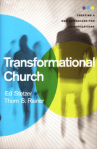 It is time for me to give away another book from my bookshelf. I am giving away a copy of Thom Rainer and Ed Stetzer’s “Transformational Church” Rainer and Stetzer discuss the necessary changes churches must make in order to become more effective disciple makers.
To be entered to win, you must do (2) things.
1. Follow my blog by clicking on the button at the bottom of the page.
2. Answer the following question by leaving your answer in the comment stream.
If you could change one thing about the local church in order to make it more effective, what would it be? Be specific.
Good luck. Deadline to enter is January 3rd, 2013.
Leadership Lessons from Nehemiah : Lesson #8
Leaders are not discouraged by opposition.
God gives leaders burdens and visions for what He would have them to do. The leaders in turn communicate to the people how the burden and vision are to be carried out in the form of clear goals. Detractors will be there to argue, disapprove, and challenge the burden, vision, and goal. Nehemiah watched this scenario play itself out before his very eyes. Just as soon as he and the people began to build, Sanballat and Tobiah, enemies of the people of Israel, came on the scene ridicule and make fun of the Israelites with the hope of discouraging them. In the face of their laughter, Nehemiah stands firm and, in essence says that “You have no voice here, God has given this task to us and He will reward us. Leave us alone”.
Leaders today will always face a certain amount of opposition. It is not possible to lead an organization that has people with different opinions, desires, tastes, and expectations and expect everyone to be happy with the direction of that organization. This is true whether the organization is secular or spiritual. Leaders must be clear on the mission that God has given them and lead appropriately. It is certainty of the God-given mission that enables the leader to handle the opposition that comes their way.
Book Review : Dirty God
 I am intrigued by the titles of books given by authors today. Some let you know exactly what you are getting. Others are less clear, but draw you in closer to discover what the author has tucked inside the covers. Such is the case with Johnnie Moore’s new book, “Dirty God; Jesus in the Trenches”. I was initially skeptical of this book. I had never seen that title before attempting to describe God. I must say that my initial thoughts were off point. Moore has written a book that gives fresh, tough, and honest look at a side of Jesus Christ that we may often overlook. Moore uses the term “dirty”, not in a negative sense as if to say that Jesus is bad, naughty, filthy, or someone to be shunned. Instead, he uses the term “dirty” in a positive to point out that Jesus was willing to involve Himself in the lives of people and that His earthy ministry was full of the “dirty” of the world (lepers, sinners, the lame, prostitutes, and the outcast of Jewish society).
This book is about Jesus getting his hands dirty so that all may know what grace looks like. Moore writes, “This book is about grace. And how grace split time in half and made a broken world a playground again for the goodness and kindness of God.” Grace, as explained by Moore, is mercy and kindness extended to us by God simply because He desires us to have and not because we have earned or deserve it. As he writes about his personal experiences and examples from scripture, Moore demonstrates how grace is a gift, not cheap or easy, and always cost something.
Dirty God is broken into two parts: Getting Grace and Giving Grace. Moore demonstrates the true requirement for getting God’s grace. He writes, “He [Jesus] is the kind of savior who ushers in history’s greatest moment from a feed trough with shepherds on the front row. He’s the odd kind of king who chooses to live his early life among the regular people in a tiny, poor, and insignificant place like Nazareth, rather than the ritzy glamour of Rome or Athens. When he could have sat at tables eating fine food with princes, he chose to ear fish cooked over an open fire, eating with people who used to have leprosy, or beggars, or tax collectors who had been seduced by money – just as the religious leaders had been seduced by their self-righteousness, pride, and lust for power. Jesus is the kind of teacher who loved to throw his pearls of wisdom to the people others thought neither deserved it nor knew what to do with it. Jesus, instead, seemed to think that only people who knew how much they needed the grace of God would truly appreciate receiving it.”
Naturally, once we have been given and received the grace of God, we give it away to others. We do this by acts of compassion, forgiveness, and by understand that all Christians are not at the same place on their spiritual journey. He cites an example of an Amish community extending grace and forgiveness to a man’s family who had murdered members of that same community. Moore writes, “Grace is generous, but it isn’t free. It will always cost you something when you decide to give – whether or not you receive anything in return.”
Moore has written a great book on grace. Much can be learned here. The book is a fairly simple read. He challenges us to contemplate and appreciate the radical and scandalous grace that Jesus extends to us. Moore offers a powerful challenge in closing. He writes, “In a world of a billion Christians, there should never be a moment on the planet when hurting people feel orphaned by God. Jesus is asking us to join him in the trenches.” Dirty God is well worth your time and will cause you to see Jesus Christ in a different and powerful light. A must read.
Disclosure of Material Connection: I received this book free from Thomas Nelson Publishers as part of their Blogger Review Program. I was not required to write a positive review. The opinions I have expressed are my own. I am disclosing this in accordance with the Federal Trade Commission’s 16 CFR, Part 255: “Guides Concerning the Use of Endorsements and Testimonials in Advertising.”
Book Review : Bold as Love
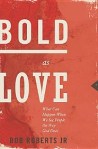 In his new book “Bold as Love; What Can Happen When We See People the Way God Does”, Texas megachurch pastor Bob Roberts, Jr. writes about diversity of religions and the possibility of seeing our neighbors in the same light God does. For Christians, the word ‘diversity’ has long been considered a four-letter word, a bit unnerving, and difficult to achieve at best. Roberts believes diversity it is possible for different religions to come together under the umbrella of God’s bold love. The genesis for this book was a challenge by Roberts’s friend, a Saudi prince and a Muslim to discuss the ways to bring about a greater understanding between Christians and Muslims. From there, Roberts organized an event at his church for the purpose of demonstrating God’s love between Christian, Jewish, and Muslims communities. After some initial pushback, his congregation his vision and the event was a great success.
Roberts spends a great deal of time, in different places throughout the book, talking about the differences between “multifaith” and “interfaith”. His goal in hosting these meetings is multifaith: people coming together who passionately believe in their own faith and want to know more about what their neighbors believe. Interfaith, he describes, is simply trying to melt all faiths into one. Roberts has found through these multifaith meetings, three questions are often asked. First, “Why do you believe in God?” Second, “Why do you believe in only one God?” Third, “Why are you a Christian?” He believes there must be solid answers from Christians to these questions if we are going to positively influence other religions. Roberts takes time to describe certain fears in the multifaith journey. He describes them as fear of physical harm, hostility from “enemies”, hostility from “friends”, losing your faith, and fear itself.
I am not sure where I land on this book. One of the chapters I had the most difficulty with was the chapter that dealt with multifaith worship. Maybe it is the pastor in me. Maybe I missed the something in the book. I don’t know. I like to believe I understand where Roberts is going when he talks about not bowing to other gods in his heart regardless of who he stands beside. I understand the need for bridge-building and the importance of relationships for the purpose of gospel presentation. I really do. Personally, there is one fundamental problem I have with what Roberts is proposing. I believe the foundational differences in Christianity and Islam’s viewpoint of Jesus Christ, God, and salvation are enough to make a multifaith worship hollow and void of any real meaning. Again, this is my observation and opinion. Otherwise, Roberts has written a good book filled with personal experiences that the majority of us would have never thought of. He writes with clarity, passion, and conviction. I appreciate that about the book.
Disclosure of Material Connection: I received this book free from Handlebar Publishers as part of their Blogger Review Program. I was not required to write a positive review. The opinions I have expressed are my own. I am disclosing this in accordance with the Federal Trade Commission’s 16 CFR, Part 255: “Guides Concerning the Use of Endorsements and Testimonials in Advertising.”
Book Review : The Conviction to Lead; 25 Principles For Leadership That Matter
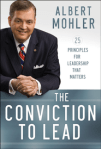 We are not at a loss for books on the subject of leadership today. It seems that that books are published daily on this subject offering some new insight into this age-old institution. What has been missing from the others has been found in Dr. Al Mohler’s new book, “The Conviction to Lead; 25 Principles for Leadership That Matter.” Dr. Mohler, president of Southern Baptist Theological Seminary in Louisville, KY writes with heart, honesty, insight, experience, and conviction that is both refreshing and challenging. From the beginning he says, “Let me warn you right up front – my goal is to change the way you think about leadership. I do not aim to merely add one more voice to the conversation; I want to fundamentally change the way leadership is understood and practiced.” As a Southern Baptist pastor, I am familiar with Dr. Mohler’s engaging style of writing. Having read behind him before, I he would offer a much-needed voice in the arena of leadership principle and practice. He did not disappoint.
As he begins the book, Dr. Mohler sets up a contrast of leaders. Calling on his years of experience, he sees most leaders falling into two specific categories; Believers and Leaders. The Believers seek knowledge and are ready to defend what they believe. They often define themselves in terms of what they believe. On the other hand, they lack the skills and abilities to manage and lead an organization effectively. The Leaders are passionate about and consumed with leadership. They know they language, have read all the books, and attended all the seminars. They are eager to see things changed for the better. On the other hand, at their core being, they do not know what they believe fundamentally. As a result, they are easily swayed. Again, Dr. Mohler writes, “My goal is to knock the blocks out from under the current models of leadership and forge a new way. I stake my life on the priority of right beliefs and convictions, and at the same time I want to lead so that those very beliefs are perpetuated in others. If our leaders are not passionately driven by the right beliefs, we are headed for disaster. At the same time, if believers cannot lead, we are headed nowhere.”
From there, Dr. Mohler covers a wide array of topics. In his treatment of leadership, he is sure to cover issues that all leaders face today. Each chapter is relatively short and easy to move through. However, that does mean the chapters are light and void of content. Just the opposite. Dr. Mohler communicates a great deal of information very simply while sufficiently challenging the reader. He envisions leaders as communicators, managers, speakers, stewards, writers, readers, thinkers, and teachers. I personally found many of these chapters to be meaningful and challenging. Chapter Fourteen, Leaders are Managers, was especially helpful to me as a pastor. This chapter enabled me to better see how these are two separate and distinct roles requiring certain skills to be successful at both.
Dr. Mohler has written an excellent book. His heart and passion burst through. “The Conviction to Lead” is not a book you will read once and discard. Instead, it will become one of “those” books that you read over and over. I really enjoyed the fact that this book was not written from a sterile, academic, laboratory setting. Instead, Dr. Mohler writes from the trenches and shares battle-tested principles that have obviously first resonated with him and are now for our benefit. Certainly a book that will remain in the circles of leadership discussion for years to come. Go get this book.
Disclosure of Material Connection: I received this book free from Bethany House Publishers as part of their Blogger Review Program. I was not required to write a positive review. The opinions I have expressed are my own. I am disclosing this in accordance with the Federal Trade Commission’s 16 CFR, Part 255: “Guides Concerning the Use of Endorsements and Testimonials in Advertising.”
Book Review : Missional Moves
 There is a great deal of discussion today about the health, effectiveness, passion, and future of the local church. It seems at every turn someone is offering a better, more effective, and smarter way to carry out the ministry given to the church. If you listen hard and long enough you can hear anything you want to as it relates to what church leaders should and should not be doing. Thoughts ranging from mega churches are on their way out, to satellite campuses are the way to go to, to make the children happy and the parents will stay have been expressed in many different formats and venues. Rob Wegner and Jack Magruder, senior leaders at Granger Community Church in South Bend, Indiana have collaborated on a new book entitled, “Missional Moves; 15 Tectonic Shifts That Transform Churches, Communities, and the World” that address and speak the issues facing the local church today.
Wegner and Magruder offer for consideration the point of view that the church today is very pragmatic, desiring the nuts and bolts of how to do effective ministry. This desire, and thus the sought after results, will be viewed through a certain paradigm that each church has established. They use the following working explanation of paradigm to make their case. “Our paradigm is our repeated life story that determines how an organization feels, thinks, and thus acts. This system story determines the way an organization behaves no matter how the organizational chart is drawn. The paradigm explains and then it guides behavior, and because of this it is the primary template that shapes all other things. Restructure the organization but leave the original paradigm in place and nothing changes within the organization.” In order for churches to be more effective, the authors propose and support certain paradigm shifts. They offer three which comprise the three main sections of the book: Section One – Paradigm Shift (Missional Imagination). Here the church is challenged to find its way into the bigger story. Section Two – Centralized Shift (Local Churches on Mission). Here churches are given a map of how to be empowered and unleashed for local and global mission. Section Three – Decentralized Shift (The People of God on Mission). Here the church is shown how to equip and then release people to accomplish the mission God has given to them.
The authors use earthquake language throughout this book. Citing the shifting of tectonic plates and resulting tsunami that struck the coast of India in 2004, they suggest certain “shifts” must take place in the local church today. Within the three main sections are fifteen “shifts”. These shifts are “from” something the church is presently doing or pursuing “to” something the should pursue or reevaluate. Each one breaks down the main section into bite-size digestible pieces. I found these shifts to be especially insightful, especially “From My Tribe to Every Tribe”, “From Professionals to Full Participation”, and “From ‘We Can Do It; You Can Help to You Can Do It; We Can Help’”.
Wegner and Magruder have written a smart book. I found it to be thought-provoking and interesting. Missional Moves is written in an easy to follow and logical format. Without a doubt the passion of the authors comes through. Most definitely worth your time. Engaging and timely, Missional Moves is one of those books that will remain in the church-health conversation for years to come.
Disclosure of Material Connection: I received this book free from Cross Focused Reviews as part of their Blogger Review Program. I was not required to write a positive review. The opinions I have expressed are my own. I am disclosing this in accordance with the Federal Trade Commission’s 16 CFR, Part 255: “Guides Concerning the Use of Endorsements and Testimonials in Advertising.”
 The Road Less Traveled