Today will be a day of travel for the Lynch Team. Departing at 7:00am, our 11 member team makes the 7 hour journey to Lynch, KY. Please pray for the safe travel of the team. Upon arrival, the team will unload, unpack, and make plans for the week. Please pray for strength, unity of heart and mind, and a restful night for the team.
What’s So “Good” About Good Friday?
 Today, the Christian church will be celebrating Good Friday. The Friday preceeding Easter Sunday is the day that Christianity takes time to remember the crucifixion of Jesus Christ. What was so “good” about Good Friday?
The Apostle Paul wrote in his letter to the Romans, “But God demonstrated His love toward us, in that while we were yet sinners, Christ died for us” Romans 5:8. Paul’s words in verse eight sound so simple, “Christ died for us”. This verse is pregnant with truth, love, and forgiveness. It is not until we understand the manner in which Christ died that we can even begin to appreciate what He did for us. For six hours that Friday, Christ’s body hung on the cross, nails in His feet and hands, bleeding. His blood spilled that we might be saved.
I don’t believe anyone would consider Roman crucifixion to be “good”. At the time of Christ’s death, crucifixion was considered to be the most brutal and painful manners in which a person could die. The Roman soldiers were good at death; they ate it, they breathed it, they slept it; they even seemed to enjoy it. They seemed to think nothing of it. The Jewish religious leaders, on one hand claimed to be the spokesmen for God and knew what it took to please Him. They were “good”people. On the other hand they hated and reviled Jesus, missing the very presence of God before them. A presence they were supposed to recognize. The actions of both groups seem unimaginable.
What happened to Jesus was not “good”, however, good came out of it. Left alone and to ourselves, we are lost. Left alone and to ourselves there is a relationship that is broken. Left alone and to ourselves, there is a purpose in life we will never recognize. On the Friday Jesus died, the way for the sinner to know forgiveness and redemption was made straight; straight from the veins of Christ to the very throne of God. In our lost state, God still loved us. Paul said it so right back in verse eight, “God demonstrated His love toward us”. The good that happened on Friday was salvation, a rescue.
Jesus left us a command to remember Him. The purpose of the Lord’s Supper is for such a remembrance. We take to time remember His broken body and His shed blood. Isn’t it sad that we need to be reminded to remember the One who gave His life for us? The actions of that Friday were certainly not “good”. However, the results of that day are priceless. As a wise preacher once said, “It’s Friday, but Sunday’s coming.”
Book Review : A Rabbi Looks At The Last Days
 The topic of biblical eschatology is very hot today. There are as may different opinions to the last days events as there are people writing about it. Rabbi Jonathan Bernis has written a new book entitled, “A Rabbi Looks At The Last Days; Surprising Insights on Israel, the End Times and Popular Misconceptions”. Bernis is a Messianic Jew who come to know Christ over thirty years ago and is now president of Jewish Voices Ministries International. Bernis writes on this subject from the Jewish perspective. He explains the parallels between the Old and New Testaments and the inclusion of a large number of Jews who will have known Christ when He returns.
Bernis’ book is broken into two parts. The first, citing six particular signs, Bernis shows how the end times are drawing near. Those signs are: Increasing attacks upon Jews throughout the world, Jews returning to Israel from all parts of the earth as prophesied, thousands of Jews accepting Jesus Savior, the Gospel is being preached to all the nations, the rise of Messianic expectation in Israel, and the fulfillment of the times of the Gentiles. The second part is entitled “Your Role in Ushering in God’s Kingdom”. This portion of the book explains various ways for ways for Christians today to help Jewish people accept Jesus as their Savior and Lord. Bernis advocates that Jews today have not, as many believe, have not rejected Jesus. Instead, they have never been taught in a way they can understand. He stresses the importance of the role of the Jewish people in the ushering in Christ’s kingdom and their role in end time prophecy. Bernis provides great insight on how to share the Gospel with those of the Jewish faith in a way that is valid and sensitive.
I had a few problems with this book. Bernis makes two statements about gospel proclamation that I believe are false. He states, “I sometimes hear excited Christians say that Jesus can come back at any time, at any moment. I am afraid this is not correct. Yes, He is coming soon. But He is simply cannot come back until He is invited back by His Jewish brethren.” He also writes, “But before Jesus can return to Jerusalem, the Gospel must be preached to every people group within every nation of the world, and it must be preached to the Jew first and then to the Gentile. We must follow Paul’s model.” There are serious interpretive mistakes here.
All of this aside, there is good historical information to be gained from this book. Bernis does a great job of showing why Judaism is important to Christianity and why Christians should be concerned about those of the Jewish faith today. However, if you are looking for discussions on end time topics such as pre- post- mid- tribulation rapture or any millennial discussions, you will need to look elsewhere.
Disclosure of Material Connection: I received this book free from Chosen Publishers as part of their Blogger Review Program. I was not required to write a positive review. The opinions I have expressed are my own. I am disclosing this in accordance with the Federal Trade Commission’s 16 CFR, Part 255: “Guides Concerning the Use of Endorsements and Testimonials in Advertising.”
Book Review : Persecuted – The Global Assault on Christians
 Western Christians enjoy many freedoms when it comes to their freedom. They are free to assemble in the houses of worship unhindered and free from the threat of physical harm. Christian radio, television, and publications stand beside mainstream secular media and is enjoying success and influence. Christians outwardly wear visible symbols of their faith in their clothing and jewelry without fear of reprisal. They are able to carry a Bible anywhere and engage people with the message of Jesus Christ. However, Christians around the world do not enjoy such freedom and luxury. In their new book, “Persecuted; The Global Assault of Christianity”, authors Paul Marshall, Lela Gilbert, and Nina Shea bring to bear on the minds of the reader what the Pew Research Center, Newsweek, and other research authorities have found to be true through extensive research. In their words, “Christians are the single most widely persecuted religious group in the world today.” They show us that the persecutions Christians around the world face are not the western picture of persecution. Western Christians feel persecuted if they cannot pray in school, display their Bible in the office, or are rejected when they present the gospel to a lost person. Again, in the author’s words, “what we mean by persecution in this book is that there are Christians in the countries of focus who are tortured, raped, imprisoned, or killed for their faith.”
“Persecuted” takes a sobering look at the conditions that Christians are living in around the world. They acknowledge that all religions experience types of suffering (natural disasters, disease, famine, etc.). When it comes to persecution, their focus is “solely on the suffering inflicted on people at least in part because they are Christians – suffering they would not have had to endure if they were not believers in Jesus.” Before the authors share stories and examples of worldwide persecution, they give the causes of such persecution. They write, “Most persecution of Christians springs from one of three causes. First is the hunger for total political control, exhibited by the Communist and post-Communist regimes. The second is the desire by some to preserve Hindu or Buddhist privilege, as is evident in South Asia. The third is radical Islam’s urge for religious dominance, which at present is generating expanding global crisis. The chosen layout of the book is most helpful and interesting. Forms and types of persecution are specific to countries and individual customs. Basically the five primary subsets of the world’s population are highlighted.
The first subset, seen in chapter two: Caesar and God, highlights countries such as China, Vietnam, and North Korea. Christianity is a threat here due to the absolute rule of government leaders. The second subset, seen in chapter three: Post-Community Countries, highlights such countries such as Russia, Azerbaijan, and Belarus. The freedom of Christianity is a threat here due to the practices of rule consistent with communism. The third subset, seen in chapter four: South Asia’s Christian Outcastes, highlights countries such as India, Nepal, and Sri Lanka. The evangelical nature of Christianity is a threat to the intense belief of Hindus and Buddhists that the people and land are ties to a specific faith. The fourth subset, seen in chapters five through eight: The Muslim World, highlight countries such as Turkey, Saudi Arabia, Iran, Egypt, Pakistan, Sudan, Iraq, Somalia, and Indonesia. Christianity is at odds with the fastest-growing religion in the world today: Islam. The fifth subset, seen in chapter nine: Cruel and Usual Abuse, highlight such countries as Burma, Ethiopia, and Eritrea. In these regions that have a heavy militarized government, Christianity’s desire for an independent church is directly opposed to the wishes of self-serving governments.
“Persecuted” gives dozens and dozens of cases of persecution. There are too many to list them all. Here is a summary of the types of persecution that Christians are enduring simply because they are Christians: torture, rape, false imprisonment, seizure of personal property, homes burned, oppressing registration requirements, church raids, harassment, separate laws for Christians, no benefit of legal systems, church bombings, anti-conversion laws, and public execution. At the conclusion of the book, the authors offer a Call to Action: a list of activities everyone can be involved in to support the persecuted church worldwide. Such activities as prayer, reporting, legal action, and financial support to organizations working to stamp out persecution are offered. “Persecuted” is a marvelous work. It is informative, humbling, well-researched, and convicting. I believe it is a must read for all Christians. By doing so, the reader will be reminded of how blessed the Western Christian church is and how genuine sacrifice and surrender to the will of Christ is being lived out through the persecuted church. Too good to miss.
Disclosure of Material Connection: I received this book free from Thomas Nelson Publishers as part of their Blogger Review Program. I was not required to write a positive review. The opinions I have expressed are my own. I am disclosing this in accordance with the Federal Trade Commission’s 16 CFR, Part 255: “Guides Concerning the Use of Endorsements and Testimonials in Advertising.”
Worth Repeating : Ken Wytsma
“Every day, people witness preventable crimes or tragedies and do nothing. A bystander may be willing to call 911, yet often allows that single action to be the extent of his or her responsibility. There are at least two assumptions present in the bystander effect. The first is that if there are many people who could do something, I don’t have to. The second is that if I am not the one committing the crime, I don’t carry any guilt for the crime’s occurrence. If we do the minimum we think is required of us, we can believe we have done enough. If we avoid doing something bad, we can believe we are good people. If the ‘moral arc of the universe bends toward justice’, as Martin Luther King, Jr. so eloquently expressed, then why does our moral arc bend toward apathy?”
Ken Wytsma, Pursuing Justice; The Call to Live and Die For Bigger Things
Book Review : The Connecting Church 2.0
 The world in which we live is becoming more and more isolated. Homes are built in neighborhoods with gates in order to keep people out. Inside that neighborhood, homes have large privacy fences to keep people out. At home doors are closed and locked. Everywhere you go you see people with headphones in order to block out the rest of the world. In public places such as cafes and coffee houses, which are intended to places of interaction and conversation, people have their heads down in front of their phones or computers. Modern conveniences have made it possible to run errands and perform other activities without ever having to speak to another human. It is into this conversation and environment that Randy Frazee, Senior Minister of Oak Hills Church in San Antonio, TX, has introduced his new book, “The Connecting Church 2.0; Beyond Small Groups to Authentic Community”. This book is a revision and update of Frazee’s original work, “The Connecting Church”.
Frazee begins by telling the story of fictional characters Bob and Karen Johnson (although fictional, they can represent a certain demographic today). Frazee describes their structured, isolated, and unfulfilled lives. He smartly chronicles their change throughout the book as he develops hos call for biblical community. Frazee sets up his book by exploring the three main obstacles to authentic biblical community. He then lists three solutions to these obstacles by giving a total of fifteen characteristics that are absolutely necessary for us to experience community. Frazee see the three main obstacles as being Individualism, Isolation, and Consumerism. He explains the motive of each (chapters 3,6,and 9), characterizes their biblical opposite (chapters 4,7, and 10), and gives the reader avenues to rediscover the biblical concept of each (chapters 5,8, and a11).
The subtitle of this book deals with authentic community. Woven delicately yet forcefully, is the vital role the church plays in enabling and assisting people to become part of a community in which they can be cared for and care for others. Frazee’s words states this intent the best. He writes, “My purpose in this book is not to make you feel guilty for neglecting church. Nor is to add one more world to your already unmanageable and disconnected sets of relationships. Instead, I want to provide a vision for community, a promise of relationships with others in your church that will meet your need to belong. The Bible clearly teaches that God intend to accomplish his primary purposes in this world through his church. The first Christians understood that a decision to follow Christ also included a decision to make the church the hub of their world, even when it required the abandonment of existing social structures.”
“The Connecting Church 2.0” is a much needed work. It is clarion call to abandon the isolated and individualistic view of life and see the benefit and blessing of belonging to a community of people who share the same purposes in life. This is a book that church leaders need to read. The book is written in a logical and thoughtful way with a flow that makes sense. The final part of the books gives some lesson that the author learned along the way. He also gives example of community models for the church today. Frazee has not written a “how to”, but “why not” when it comes to embracing biblical community. I highly recommend.
Disclosure of Material Connection: I received this book free from Cross Focused Reviews as part of their Blogger Review Program. I was not required to write a positive review. The opinions I have expressed are my own. I am disclosing this in accordance with the Federal Trade Commission’s 16 CFR, Part 255: “Guides Concerning the Use of Endorsements and Testimonials in Advertising.”
Book Review : Fearless
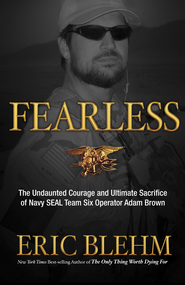 Beginning with, and as a result of the events of September 11, 2001, Americans have become more familiar with an altogether different type of war: the war on terror. Through the years since, mainstream media has covered this war in excruciating detail. We have become familiar with the layout of Afghanistan and Iraq, the basic practices and tactics of the Taliban and other insurgent groups, and more familiar the military commands responsible for fighting this war on the ground and in the air. What has been lacking through the years of war reporting are the personal stories of courage, heroism, valor, and sacrifice. One such story has been written by New York Times best-selling author Eric Blehm. He has written a phenomenal book entitled, “Fearless: The Undaunted Courage and Ultimate Sacrifice of Navy SEAL Operator Adam Brown”. Blehm describes the life Adam Brown beginning with his childhood days in Arkansas and ending with his military service as a SEAL operating in Afghanistan. The years in between tell the story of the human side of Adam Brown.
The first part of the book deals with his early years growing up in Arkansas. Adam grew up as a carefree and competitive youth. Whether playing football or jumping from a bridge, he always had to do it first and better. In his early college days, while searching for some direction in his life, Adam tried and became addicted to drugs. Blehm does a great job of sharing his struggles with drugs and the effects it had on the entire family. At his lowest, his parents allowed him to remain in jail after being arrested. While in jail, Adam accepted Jesus Christ as his personal Savior and his life took on a new focus and meaning. He joined Teen Challenge and began the process of kicking his drug habit. It was also during this time that he met his wife Kelly who would become the rock and support Adam would need in the years to come. Shortly after, a friend mentioned joining the Navy. Adam did. He was not satisfied with just being in the Navy, he wanted to be the best in the Navy. Adam wanted to be a Navy SEAL. The story moves along as Adam graduates from boot camp, finishes A-school, and eventually finishes BUD/S, which is the Navy SEAL’s training school. My words cannot describe the pain, discomfort, stress, and pressure that Adam endured while in SEAL training. Blehm tells the story beautifully. I especially like how the author tells the story of Adam and his wife Kelly growing closer and of their “normal” life in the midst of chaos.
Adam earned his Trident and become a SEAL. It is during this part of the story that Adam’s “no-quit” and “never give up” mentality is fully brought to light. During training accidents, Adam severed four fingers on his right hand, his shooting hand. After surgery, Adam learned to shoot with his non-dominant hand. Adam also injured his right eye, his dominant shooting eye and although having extensive surgeries, he lost his right eye. During this time, Adam was not satisfied with just being a SEAL, he wanted more. With seemingly insurmountable odds against him, Adam trained for and became a member of DEVGRU, also known as Seal Team Six. With SEALs being the top 1% of all Special Forces operators, Seal Team Six is the top 1% of that 1%.
The last few chapters are extremely emotional. Blehm continues to show Adam’s human side by describing Adam’s relationship with his wife and children. I am not going to write about the events of Adam’s death in Afghanistan. It is a story you must read for yourself. In these last chapters, there is a twist in the story that you will not see coming.
“Fearless” is an excellent book. Eric Blehm has written an honest, gripping, inspirational, and smart book. What makes this book so successful is that the author has done his homework. Through extensive research and interviews with Adam’s fellow operators, Blehm sought to be true to every step of SEAL life. The author expertly weaves Adam’s faith, family, and devotion to duty into a beautiful story. As a former Marine and now a Christian pastor, I identified with this story on many levels. I cried. I laughed. “Fearless” is a book that demonstrates what is right with our military today. Go get this book today.
Disclosure of Material Connection: I received this book free from Waterbrook Multnomah Publishers as part of their Blogger Review Program. I was not required to write a positive review. The opinions I have expressed are my own. I am disclosing this in accordance with the Federal Trade Commission’s 16 CFR, Part 255: “Guides Concerning the Use of Endorsements and Testimonials in Advertising.”
Book Review : Pursuing Justice
 We hear the word justice thrown around in our world today. Often it is simply presented as a settlement of an offense or crime. It is often seen as a person getting what is coming to them. We have entire state and government agencies that are devoted to justice and making sure that victims find satisfaction and restitution and those guilty of offense answer appropriately for their wrong doing. In his new book, “Pursuing Justice; The Call to Live and Die for Bigger Things”, pastor and founder of The Justice Conference Ken Wytsma draws and straight and loud line to the very heart of what matters to God: justice. He writes, “justice – a right and equitable relationship with God and with people – is truly a word worth redeeming.” Wytsma’s purpose for writing this book, in his own words, “is about recovering the full-orbed biblical concept of justice and inviting it back into our lives. When we understand that justice is rooted in the character of God and flows from the heart of God, we can begin to see that it permeates all areas of life. The heart of this book is an encounter with the heart of God, and God’s heart beats with justice.”
This is not a mind-numbing lecture on doing good, nor is it an essay in how to treat people better. Wytsma writes with passion, candor, and knowledge of what it means to actively pursue justice from a biblical perspective. He does not exhaustively list the crimes and atrocities going on around the world. Instead, he makes reference to some examples in order to paint a picture of modern day injustice; the Holocaust, slavery, modern day sex-trafficking, and the ethnic cleansing and genocide carried out in Rwanda and the Congo. Wytsma covers a great deal of ground and subject matter. He does so through scripture, theology, the arts, historical evidence, and personal experience while never speaking over the reader’s head. One of the key questions he ask and answers is why we should seek justice. Wytsma gives three reasons for this: ethical, religious, and personal. Ethically, justice is the “right thing to do”; religiously God has extended us the call to “join Him in doing justice”. Personally, justice brings “peace and joy”.
Although Wytsma’s chapters deal with a myriad of justice-related topics, some that don’t seem to fit (worship, happiness, God’s love). The best chapter, The Anatomy of Apathy, is chapter twelve. Here, he dives into the reasons why justice is so difficult for Christians today. He contrasts the idea of “not doing wrong” vs. “doing right” as a basis for our inactivity. Wytsma challenges the reader to give their life away and be willing to die for bigger things. If you are looking for a challenge to be involved in something later than yourself, look no further. An excellent work.
Disclosure of Material Connection: I received this book free from Thomas Nelson Publishers as part of their Blogger Review Program. I was not required to write a positive review. The opinions I have expressed are my own. I am disclosing this in accordance with the Federal Trade Commission’s 16 CFR, Part 255: “Guides Concerning the Use of Endorsements and Testimonials in Advertising.”
Book Review : The Briarpatch Gospel
 Life is messy. Nothing is perfect. People live in the gray areas of life. As a result of man’s disobedience in the garden and the entrance of sin and death into the world, our lives naturally lack harmony, are bent toward actions that don’t honor the Creator, and pass judgment on others who we feel struggle more with sin. This has created an interesting dynamic for the church today. How does the church hold to biblical truth while relating to those who don’t share that same truth? How does the church translate the written commands of Christ to love into visible demonstrations of that love? A question facing the church today is one much like this one: Is the New Testament church willing to venture into the sticky, dangerous, dirty, and messy areas of life in order to show Christ-like compassion and love to the those not like us?
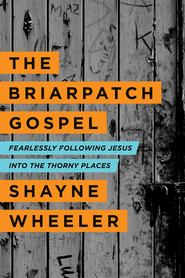
Shayne Wheeler, pastor of All Saints Fellowship in Decatur, Georgia has written an insightful and timely book entitled, “The Briarpatch Gospel; Fearlessly Following Jesus into the Thorny Places” in which he addresses this very issue. Using the imagery of a briar patch, full of thorns, thistles, and barbs, Wheeler relates that many people are living in this type of environment. The briar patch of life includes those who have been pushed to the margins of society, excluded, been the victims of self-righteous Christians, misunderstood, the addict and the homeless, and others who just don’t fit neatly inside the “act right and do right” box of modern Christianity. Wheeler sees those who find their home in the briar patch as a mission field for the church. It is not a place to retreat from but a place to run towards. After all, as Wheeler deduces, this is the place and environment that Christ willingly entered.
This is not a “how to” or fix it book. Instead, Wheeler places before the reader the challenges facing the church in ministering to those living among the briars. He speaks of thorny areas such as divorce, grief, lust, sickness, envy, homosexuality, addictions, suffering, and unbelief. Wheeler has written a fantastic book. It is a call to set aside comfort and safety and dirty our hands in ministry to those who are being ignored because it is just too hard. You will be challenged, encouraged, and left with a fresh perspective on the lives of those living outside the safety of the church walls.
Disclosure of Material Connection: I received this book free from Tyndale House Publishers as part of their Blogger Review Program. I was not required to write a positive review. The opinions I have expressed are my own. I am disclosing this in accordance with the Federal Trade Commission’s 16 CFR, Part 255: “Guides Concerning the Use of Endorsements and Testimonials in Advertising.”
The Road Less Traveled : 2012 Year in Review
The WordPress.com stats helper monkeys prepared a 2012 annual report for this blog.

Here’s an excerpt:
600 people reached the top of Mt. Everest in 2012. This blog got about 6,700 views in 2012. If every person who reached the top of Mt. Everest viewed this blog, it would have taken 11 years to get that many views.
 The Road Less Traveled