Father’s Day Without My Dad

My dad, Carol Ruff, died on December 25, 2012 after being diagnosed with Stage 4 Lung Cancer in the summer of 2012. The remainder of the year was filled with doctors appointments, hospital stays, and tough decisions. I had the great privilege of preaching my dad’s funeral. I can’t say how many funerals I have officiated over the past 15 years. I can say however this one was the most difficult. This is my first Father’s Day without my dad. I have been thinking a lot about him lately. For some reason I don’t believe I have grieved his death. I want to share with you the words that I shared at his funeral service on December 29, 2012.

Growing up, we had a rather difficult life. We moved around a great deal. Dad was a dairy-farmer and this migrant, nomadic lifestyle caused us to live wherever there was housing. By the time I had entered the 7th grade, we had moved a total of thirteen times; from south Florida to the mountains of North Carolina. My dad battled many personal demons. He lived in two different rescue missions (Tifton, GA and Paducah, KY) for approximately eight years after his divorce from my mother. This was a rough time for him. During his stay at the mission in Tifton, he enrolled in a faith-based alcohol rehabilitation program. During this three month program, my dad gave his heart and life to Jesus Christ. I remember the day he called me to share the news. He was so excited. Needless to say, I was extremely excited and proud of him. Jesus made a difference in my dad’s life. The change was evident and real. Allow me to share that change with you. My scripture:

1 Therefore, having been justified by faith, we have peace with God through our Lord Jesus Christ, 2 through whom also we have access by faith into this grace in which we stand, and rejoice in hope of the glory of God. 3 And not only that, but we also glory in tribulations, knowing that tribulation produces perseverance; 4 and perseverance, character; and character, hope. 5 Now hope does not disappoint, because the love of God has been poured out in our hearts by the Holy Spirit who was given to us. 6 For when we were still without strength, in due time Christ died for the ungodly. 7 For scarcely for a righteous man will one die; yet perhaps for a good man someone would even dare to die. 8 But God demonstrates His own love toward us, in that while we were still sinners, Christ died for us. (Romans 5:1-8)

The apostle Paul speaks of a change in natures. My dad’s nature changed as well.

1. MY DAD DEVELOPED A GIVING NATURE:

My dad moved from serving himself to serving others. Up until that point, his life was all about him. If my dad had a bad day at work, he would quit. I can’t say how many times we moved simply because my dad got mad at his boss over something silly. In his new nature, after Jesus saved him, he began to think of others. He served and worked at the mission where he was a resident. He volunteered with activities at the church he attended.

2. MY DAD DEVELOPED A FORGIVING NATURE:

My dad could stay mad at someone and hold a grudge better than anyone I knew. If you offended him there was a pretty good chance he would not forgive you. After Christ came into his life, he understood the need for and necessity in extending forgiveness. Why? He had experienced forgiveness through the blood of Christ. Dad had a desire to mend broken relationships. My dad and my brother Jason had not spoken to each other in a long time. He set out to make things right with him and with my mother. Forgiveness from above leads to forgiveness among others.

3. MY DAD DEVELOPED A LOVING NATURE:

Let me qualify this statement. My dad loved us before he was saved. However, he could not properly love us until Christ took hold of his heart. He understood love finally and as a result relationships meant more to him. Again, the apostle Paul wrote about our new bodies and our new natures.

1 For we know that if our earthly house, this tent, is destroyed, we have a building from God, a house not made with hands, eternal in the heavens. 2 For in this we groan, earnestly desiring to be clothed with our habitation which is from heaven, 3 if indeed, having been clothed, we shall not be found naked. 4 For we who are in this tent groan, being burdened, not because we want to be unclothed, but further clothed, that mortality may be swallowed up by life. 5 Now He who has prepared us for this very thing is God, who also has given us the Spirit as a guarantee. (2 Cor. 5:1-5)

Paul’s words are most comforting. While we wait for our new heavenly bodies, while we wait to see Jesus face to face, we have a guarantee, or a deposit, of what is to come. That guarantee is the person of the Holy Spirit living inside every believer. I miss my dad today. I really wish I could talk with him. This is the first time that I have written about him since his death. Maybe this is the beginning of my season of grief. I hope so.
Book Review : Insourcing

insourceOne of the most talked about subjects in the local church today is that of discipleship. Questions such as “What model should we use?” or “How do we know what a disciple looks like?” or “Doesn’t discipleship happen naturally?” are common today. Conferences are held, workshops are offered, and books have been written to meet the growing desire of churches to be effectively engaged in the discipleship process. In his new book “Insourcing; Bringing Discipleship Back to the Local Church”, Randy Pope, lead pastor of Perimeter Church in Atlanta, Georgia lends his thoughts and convictions to this ongoing conversation.

Pope begins his book by introducing the principle of models. He writes, “models marry dream to function.” They are a means to an end. Pope begins by giving some background on commonly embraced discipleship models today. First, the Pastoral Model. He writes, “It is a model of ministry whose basic building blocks are a small, stable flock and a loving, multitalented, maintenance-oriented shepherd.” Second, the Attractional Model. Pope writes, “A new breed of Christians flocked to churches where the message, the music, and the method suited their tastes.” Third, the Influential Model. Again, he writes, “As we strengthened the hand of our ministry, we joined with other churches in our community who desired the same kind of change.” Reading that Jesus spent nearly all of His time in small group communication, Pope speaks of a model that revolves around people. In place of these three oft-accepted models, Pope and his congregation embraced a fourth model: Life on Life Missional Discipleship. This new model falls in between the pastoral and attractional models and, as Pope writes, asks the question, “Were our people becoming the right people?”

In his LOLMD model, there are five main emphases that Pope gives to the reader. They follow the acronym TEAMS. Truth: Members of the small group learn how to study the Bible on their own and bring questions back to the entire group. Equipping: Members are given specific plans to follow which are modeled before them in group with assignments given for follow-up. Accountability: Hard questions are asked of the members and behavior is challenged in a grace-filled environment. Mission: Members are challenged to take the mission of Christ into their homes and workplace. Supplication: An atmosphere of prayer is always present among the members of the group. Scattered throughout the chapters is a mock small group meeting. Pope uses these fictional characters to illustrate how the model is fleshed out in men’s and women’s groups.

All in all, Pope has written a good book that lends an interesting twist to the discipleship conversation. “Insourcing” is well-written and informative. However, there is nothing ground-breaking here. Leaders who have been following the ever-changing pursuit of discipleship through courses, conferences, and books will recognize the content here.

Disclosure of Material Connection: I received this book free from Thomas Nelson Publishers as part of their Blogger Review Program. I was not required to write a positive review. The opinions I have expressed are my own. I am disclosing this in accordance with the Federal Trade Commission’s 16 CFR, Part 255: “Guides Concerning the Use of Endorsements and Testimonials in Advertising.”

Free Book Friday

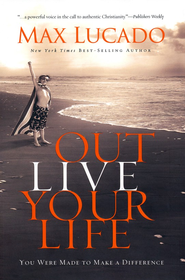
outliveIt is time for me to take down and give away another book off of my bookshelf.  I am giving away a copy of Max Lucado’s “Out Live Your Life”. In this book, Lucado challenges the reader to make a difference that will last beyond your time on earth.

To be entered to win, you must do (2) things.

1. Follow my blog by clicking on the button at the bottom of the page.

2. Answer the following question by leaving your answer in the comment stream.

If time and resources were of no concern, what is the one thing you would you do in order to make a difference in this world? Be specific.

I will select a winner from all the entries and announce the winner here.

Good luck. Entry deadline is June 13th.

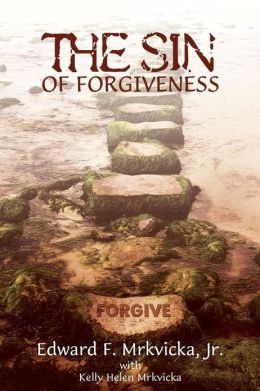
Book Review : The Sin of Forgiveness

forgiveOne of the issues today that many people struggle with is the concept and practice of forgiveness. It is natural once someone has offended us that we hold a grudge against them and try to exact some type of payment from them. Unforgiveness has the capacity to keep both parties (offender and offended) locked up in a very personal prison. The Bible clearly teaches forgiveness and gives directives for both the offender and the offended. I recently finished lay minister and Christian counselor Edward Mrkvicka’s new book, “The Sin of Forgiveness”. I must say that I was drawn to the somewhat oxymoronic title. I have to say that with a title such as this, I was afraid of what I would find inside. What I found inside was an unclear, and at times, inconsistent treatment of the subject matter.

From the beginning, Mrkvicka speaks of a wrong and right kind of forgiveness. He speaks of secular forgiveness and divine forgiveness. If I understand it correctly, the author believes the necessary element, the pivotal point between secular and divine forgiveness, is the matter of repentance on behalf of the offender. He writes, “The secular world calls for forgiveness no matter the circumstances, or, at best, in response to the offender saying, ‘I’m sorry.’ Christian forgiveness is given in response to repentance.” I don’t know where to begin with this book. At every turn, and at the moment the author is building toward a good point, he introduces an unrelated thought that muddies the waters.

 Mrkvicka further confused me by constantly going back and forth between two examples of forgiveness that should have been stand-alone discussions: forgiveness between two people and forgiveness that results in salvation. While one is an example and picture of the other, it does not keep with the flow of the book. At times the book seems more of a treatise on the decline of American morals than a treatment of biblical forgiveness. Doctrinally, the book is hit and miss for me. As a pastor, I understand where the author is going with the concept of divine forgiveness and the necessity of forgiveness therein. That’s a hit for me. The author’s example of the consequences of unconditional forgiveness as it relates to remarriage and his views of salvation are a miss for me because they took away from the flow and purpose of the book.

I was asked to write an honest review of this book. You may not agree and that’s okay. You don’t have to. The thoughts and reflections offered in this review are my personal opinion. “The Sin of Forgiveness” is relatively short, approximately 150 pages. I enjoyed how Mrkvicka used extensive amounts of scripture to make his points. That is always a plus. However, his introduction of so peripheral information takes away from the main point. I personally believe “The Sin of Forgiveness” is a book that is best left alone.

Disclosure of Material Connection: I received this book free from Cross Focused Reviews as part of their Blogger Review Program. I was not required to write a positive review. The opinions I have expressed are my own. I am disclosing this in accordance with the Federal Trade Commission’s 16 CFR, Part 255: “Guides Concerning the Use of Endorsements and Testimonials in Advertising.”

Mother’s Day With Anita

We can all think back to the various warnings and advice that our mothers have given to us through the years. Sit up straight, clean your plate, brush your teeth are just a few. Anita Renfroe has been involved in women’s ministry for years and speaks on the Women of Faith tour. She talks about practical matters of family and life from a Christian standpoint and has a wonderful sense of humor. I have posted a video below of an original song she wrote about the life of a mother , set to the William Tell Overture. If you are mother, you will be able to relate. If you have seen this before, I’m sure you will enjoy it again. Happy Mother’s Day.

And The Winner Is…

The winner of Chip and Dan Heath’s, “Decisive” from Waterbrook Press is Sean Johnson. He will be receiving his book in the very near future. Sean please get me your address and I will get your book out to you. Thank you to everyone who stopped by to take a look and share.

FIFS : Philemon 10-13

10. I appeal to you for my son Onesimus, whom I have begotten while in my chains, 11 who once was unprofitable to you, but now is profitable to you and to me. 12. I am sending him back. You therefore receive him, that is, my own heart, 13. whom I wished to keep with me, that on your behalf he might minister to me in my chains for the gospel.

The book of Philemon is a very interesting one. In a single chapter we find a book pregnant with spiritual truth. It is a book of grace, love, forgiveness, restoration, and relationship. This book, more than any other, zeroes in on the lives of specific people and explores their relationship. Onesimus was a slave who stole from his master Philemon and fled to Rome where he come into contact with Paul. Onesimus was won to Christ under Paul’s ministry in Rome. This letter is Paul’s request for Philemon to receive Onesimus back to himself. The word Onesimus means “profitable”. Paul states that at one time, in his lost condition, Onesimus was not profitable. But now, in Christ, he is profitable. He can be, and was, useful to the kingdom. Finally, he could live up to his name.

The elements in the book of Philemon; grace, love, forgiveness, restoration, relationship mirror the elements the believer enjoys in Christ. Prior to Christ, we were unprofitable. We were not of any use to the kingdom. We were incapable in making a difference in the world for Christ. After our new birth, we become profitable. We are useful to the kingdom. We are now capable of making a difference in this sin-stained world. Philemon forgave Onesimus. Jesus has forgiven us. Onesimus was restored in the eyes of his master Philemon. Through the blood of Christ we have been restored to a right relationship with God.

What do you think our churches would look like if we stood up for other believers and affirmed the Lord’s working in their lives the way Paul did with Onesimus? What do you think our churches would look like if we were as eager and ready to forgive each other as Philemon was to forgive Onesimus? What do you think our churches would look like if we were able to be as open with each other as Paul was with Philemon?  Something to think about.

Free Book Friday

decisiveIt is time once again for me to take another book from my bookshelf and give it away.  This week, I am giving away a copy of Chip and Dan Heath’s new book, “Decisive; How to Make Better Choices in Life and Work”. In their new book, The Heath brothers present a new and intriguing process for everyday decision-making. You can read my review of the book here. To be entered to win, you must do (2) things.

1. Follow my blog by clicking on the button at the bottom of the page. Don’t forget this step.

2. Answer the following question by leaving your answer in the comment stream.

In 20 words or less, apart from seeking guidance from the Lord, what or who influences your decisions most often? 

Good luck. Deadline to enter is May  9th,  2013. I will announce the winner here on May 10th.

FIFS : Acts 20:22-24

22 And see, now I go bound in the spirit to Jerusalem, not knowing the things that will happen to me there,
23 
except that the Holy Spirit testifies in every city, saying that chains and tribulations await me.
24 
But none of these things move me; nor do I count my life dear to myself, so that I may finish my race with joy, and the ministry which I received from the Lord Jesus, to testify to the gospel of the grace of God.

There are times when the Christian will ask, “What is my job as a believer?” There are a multitude of possible answers for this age old question. One answer may be that we are to become students of the Bible in order to show ourselves as approved workmen unto God. While this is important, I don’t believe this is our most important job. Another answer may be that we are to sing praises of thanks to Lord for all that He has done for us. While this is important, I don’t believe this is our most important job. Still another answer could be that we are to pursue a Christ-like character. Again, while this is important, I don’t believe this is our most important job.

As Paul prepared to leave Ephesus for Rome, he addressed the Ephesian leaders and poured his heart out to them. He told them that he had no idea what was ahead of him. The only thing he knew was that the Holy Spirit was leading and the same Holy Spirit would go before him. As a believer, there is comfort here. There is comfort in knowing that when the Lord wants us to go somewhere or do something, His guidance and provision goes ahead of you.

This is what Paul knew. Even though Paul knew that prison awaited him, he set his heading and his mind toward that of Rome, believing the Lord wanted and needed him there. In Acts 20:24, Paul answers the question, “What is my job as a believer?” v.24, ‘But none of these things move me; nor do I count my life dear to myself, so that I may finish my race with joy, and the ministry which I received from the Lord Jesus, to testify to the gospel of the grace of God.‘     Our primary job is to testify to the gospel of the grace of God. We are to tell others how great, how wonderful, and how merciful our Savior has been to us. Paul said this was more important to him than his own life. Is it more important than our own lives?