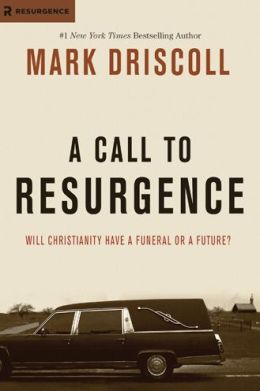
Book Review : A Call to Resurgence – Will Christianity Have a Funeral or a Future?

acalltoresurgenceAccording to Mark Driscoll, pastor of Mars Hill Church in Seattle, WA and author of the new book, “A Call to Resurgence; Will Christianity Have a Funeral or a Future?”, Christendom is dead. Christendom, a culture of religious influence and acceptance, found its beginning in America through the Christian faith of the founding fathers who governed by those same Christian values. As a result, Judeo-Christian values have influenced legal systems, social ministries, educational systems, and even the vocabulary of today. In short, Driscoll argues that the world in which we live no longer is influenced by the Christian faith. Throughout chapter one of this book, Driscoll’s plea to churches, pastors, and Christians today is to be more concerned with authentic Christianity and the advancement of the gospel than simply a religious culture that doesn’t clearly point the individual to Jesus Christ. It is a call, as Driscoll writes, “not of retreat but of resurgence”.

In chapter two, Driscoll asserts that the Christian church today is suffering from a standing knockout. This is a boxing term in which a boxer is literally unconscious after multiple blows but is still standing. Driscoll names the series of blows that have left the church dazed and confused. As he sees it, New Paganism, Homosexuality, Pornography, Intolerant Tolerance, bad Dads, and Cheap Christians are hindering Christianity’s witness today. Chapter three speaks of an identity shift among Christians from denominations to tribes. Driscoll quotes Seth Godin here, “A tribe is a group of people connected to one another, connected to a leader, and connected to an idea. For millions of years, human beings have been part of one tribe or another. A group needs only two things to be a tribe: a shared interest and way to communicate”. Consider this example to tribalism today. A Baptist pastor who is reformed in his theology and is influenced by the teachings of John Piper and J.I. Packer may choose to relate to and network with other like-minded pastors whether they are Methodist, Church of God, or Presbyterian, rather than his national denomination. Tribes today, as Driscoll suggests, are centered on key issues such as Reformed vs. Armenianism (the sovereignty of God and salvation), Complementarian vs. Egalitarianism (roles of women and men in the church), Continuationist vs. Cessationist (spiritual gifts), and Fundamentalist vs. Missional (the purpose of the church today).

In chapter four, Driscoll introduces the concept of understanding borders. He writes, “Primary border issues are points of division between Christians and non-Christians. Secondary border issues are points of distinction among Christians. These issues merit discussion, debate, and distinction among tribes, but they should not be a point of division of we are to see a resurgence of real Christianity.” He then lists thirteen primary border issues with a description of each, as well a few of the second-tier issues. Driscoll gives chapter five to the Holy Spirit. He offers a theology on the person and ministry of the Holy Spirit in the church today. He also gives attention to the Holy Spirit‘s role in the gift of tongues, which is a prominent tribal division. Chapter six, which Driscoll has entitled, “Repentance”, brings back the six blows from chapter two that Christianity has taken in the recent decades and lays out the need to repent of these in order to make a lasting change going forward. Finally in chapter seven, Driscoll proposes seven principles for resurgence that he believes will help the church go forward in the future. The principles are:

1. Preach the Word. Churches must make the preaching of God’s Word the central activity of the church.

2. Love the Church. The local New Testament church is at the heart of God’s plan.

3. Contend and Contextualize. Without compromising the truth of God’s Word, we must be willing to change its delivery.

4. Be Attractional and Missional. Balance is needed throughout church ministry.

5. Receive, Reject, and Redeem. Keep what is profitable and let go of what is not.

6. Consider the Common Good. Everything the church does is for the good of others.

7. Evangelize Through Suffering. The church is to be prepared to suffer as the gospel message is shared.

This is the first book that I have read that was written by Mark Driscoll. Contrary to the “shock-jock pastor” label he is often given, I found “A Call to Resurgence” to be well-written, passionate, and true to God’s Word. Although we are not part of the same tribe, his love and concern for the church and the gospel is something that I as a pastor can relate to and get behind. I believe chapters 1-2 and 5-7 are the strongest. Driscoll presents the problems facing the church today and offers solid suggestions on how to recover from our standing knockout. If I had to say anything negative, it would be that chapters 3- are 4 are just a little too broad. I appreciate his tribal vs. denominational discussion and enjoyed it very much. I simply believe his tribal lines could have been a bit more definitive. That being said, this is a book that Christian leaders need to read. His effective use of Scripture, personal experiences (family and church) and outside quotes and data make this book work very well.

Disclosure of Material Connection: I received this book free from Tyndale House Publishers as part of their Blogger Review Program. I was not required to write a positive review. The opinions I have expressed are my own. I am disclosing this in accordance with the Federal Trade Commission’s 16 CFR, Part 255: “Guides Concerning the Use of Endorsements and Testimonials in Advertising.”
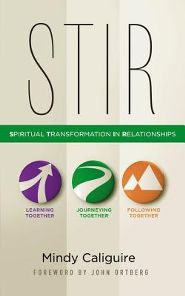
Book Review : STIR

STIRIn the Christian church today, the ministry area that is often neglected and problematic is that of discipleship. For the most part, our churches understand evangelism and its importance in the growth of the church. For the most part, our churches understand worship and offer a variety of styles and formats. However, churches are struggling with how to effectively move believers along a pathway from spiritual infancy to maturity. Churches are beginning to ask questions such as “What is a disciple?” “What is the best way to grow a believer?” “Is there a program that will help me?” For the longest time, the church’s answer to “how will growth take place in a believer’s life?” has been “it just will”. In her new book, “STIR: Spiritual Transformation in Relationships”, Mindy Caliguire who is the executive director of Engage International of the Willow Creek Association, has written a book that she believes will help chart an effective course that will move believers toward maturity.

Caliguire writes “relational isolation just doesn’t fit with the way the church as a God-infused, God-centered community was designed to exist.” She argues that each believer, depending where they are in their growth process, will need certain types of relationships, guidance, and areas of study. In her opinion, one size does not fit all. Caliguire asserts that there are three stages in spiritual transformation. The stages are Learning Together, Journeying Together, and Following Together. These three stages and their individual elements and nuances make up the lion’s share of the book. In each of the three sections, Caliguire shares two critical relational elements: direction (levels of structure) and discernment (individual decision making based on guidance from God and others).

Stage one is Learning Together. The given objective here is that of settling on core beliefs and biblical literacy. Certain “signs of life” should be present in stage one. Caliguire believes that God-awareness, personal encouragement, openness to God’s wisdom, and new behavior will be present as believers begin to live their faith. Stage Two is Journeying Together. The given objective here is for the believer to develop a familiarity with one’s own story, allow brokenness, and develop a deeper dependence upon God. The signs of life here include a steady faith, freedom from the past, a growing dependence upon God, obedience, and growth in humility. Stage Three is Following Together. The given objective here is for the believer to discern God’s will based on solid biblical foundation and a dependence upon God. Again, the signs of life in this stage include openness to seek help, a desire to engage the world in service, name strengths and weaknesses, and enjoying a sense of fulfillment in service and sacrifice. In each stage, Caliguire discusses the types of relationships and the preferred type of leader that will provide the greatest possibility of success. As the believer moves from stage one to three, the level of direct supervision decreases and the lever of individual discernment increases.

STIR is a needed book in an area of church ministry that really needs the help. Caliguire writes with passion and conviction. Her offering of a fluid process is much better than a simple list of “dos and don’ts” This book makes a great deal of sense. I will be applying portions of Caliguire’s processes. I recommend this book to church leaders who are searching for help in growing believers in their faith.

Disclosure of Material Connection: I received this book free from Thomas Nelson Publishers as part of their Blogger Review Program. I was not required to write a positive review. The opinions I have expressed are my own. I am disclosing this in accordance with the Federal Trade Commission’s 16 CFR, Part 255: “Guides Concerning the Use of Endorsements and Testimonials in Advertising.”
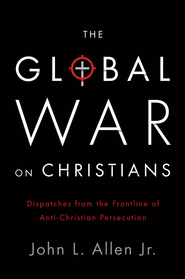
Book Review : The Global War on Christians

global warWestern Christianity enjoys a safe existence. We do not see churches burned and bombed simply because Christians meet in them like we do in other parts of the world. We do not see Christians imprisoned for simply possessing a Bible like we do in other parts of the world. We do not see outlandish laws passed to intimidate Christians like we do in other parts of the world. We do not see court proceedings deliberately punish Christians like we do in other parts of the world. Christians in Asia, Africa, and Europe deal with the above issues and many more every day for only one reason: they choose to believe in and worship Jesus Christ. In his new book, “The Global War on Christians; Dispatches from the Frontline of Anti-Christian Persecution”, senior correspondent for the National Catholic Reporter and senior Vatican analyst for CNN John L. Allen, Jr writes of the challenges, atrocities, and persecution that the greater majority of Christians are facing in the world today.

Allen’s book is divided into three sections. In section one, Anti-Christian Persecution Around the World, Allen begins with an in-depth introduction that gives the book a firm footing. Allen takes a moment to define the word “persecution” ad introduces the various forms that it takes on. These forms include discrimination (societal, institutional, employment, legal), suppression of Christian missionary activity, suppression of conversion to Christianity, suppression of corporate worship, forced conversion from Christianity, violence against individuals, and community oppression. Allen them gives specific, heart-breaking, and eye-opening of Christians who have been persecuted throughout Africa, Asia, Latin America, The Middle East, and Eastern Europe. He highlights individual countries within these regions of the world. Within each region, Allen profiles a single individual who suffered as a result of faith in Jesus Christ. In section two, Myths About the Global War on Christians, Allen gives the reader the common myths that surround the persecution of Christians. These myths include:

1. Christians are at risk only where they’re a majority.

2. No one saw it coming.

3. It’s all about Islam.

4. It’s only persecution if the motive is religious.

5. Anti-Christian persecution is political issue.

This is arguably the best section in the book. Dealing with each myth individually, Allen brings real-life experiences to bear on his arguments that these myths have been hindering proper communication of just how prevalent this persecution is. For each myth, Allen explains why each myth is “toxic”. In section three, Fallout, Consequences, and Response, Allen introduces what could be called the “domino effect” of persecution in the societal and political arenas. He also deals with the consequences anti-Christian persecution. Because Christians are being persecuted, there are real and measurable side-effects. So that the reader does not believe that nothing can be done in this war, Allen concludes by giving areas if involvement which includes prayer, thinking globally about the church, institutional humanitarian relief, and several others.

“The Global War on Christians” is a timely, well-researched, and concise work. Allen’s telling of the stories of fellow Christians enduring torture and hatred for their faith is encouraging, but also sobering. Because of his association and travels with news media outlets, Allen has been able to witness this war first hand. Allen’s book is not just another “Foxe’s Book of Martyrs”. Although Allen recounts the lives of these martyrs, it is also a call to action to become more aware of the assault upon Christians today. Saddening. Inspirational. Convicting. I would highly recommend this book to all Christians who want to better understand the struggles and challenges that other Christ-followers have to endure in all of the not-so-safe places in the world.

Disclosure of Material Connection: I received this book free from Waterbrook Multnomah Publishers as part of their Blogger Review Program. I was not required to write a positive review. The opinions I have expressed are my own. I am disclosing this in accordance with the Federal Trade Commission’s 16 CFR, Part 255: “Guides Concerning the Use of Endorsements and Testimonials in Advertising.”

Book Review : Secrets of Dynamic Communication

secretPublic speaking. The very mention strikes fear into the hearts of millions. To be asked to stand in front of a group of strangers and speak to them for any period of time could be classified as worst-case scenario for many. As a pastor, public speaking is my life. I regularly stand before groups of people of all sizes and deliver a prepared sermon. As a result, my public speaking class in college was waived due to “life experience” (thankfully). The fear of public speaking is often made up of smaller uncertainties and concerns. Questions such as “Will they like me?” “Do I know enough to be speaking on this subject?” and “How do I manage my time?” fuel the fear. Author, conference speaker, and founder of Dynamic Communications International Ken Davis has written a new book entitled, “Secrets of Dynamic Communication”. In his book, Davis reveals his tried-and-true methods for becoming a better public speaker.

Davis’ book is split into three parts; The Preparation: The SCORRE Process, The Presentation: The SCORRE Delivery, and The Application: The SCORRE Advantage. These three sections also provide the framework of an effective speech, sermon, or talk. In section one; Davis introduces the reader to the SCORRE acronym. SCORRE, as Davis refers to it is “acronym that describes the basic process for developing any talk.” Davis begins with the Subject of the talk and then moves down the narrowing path to the Central Theme. Next is the Objective which is simply a sentence that forces the speaker to clearly state what the talk will be about. From there, Davis begins to build strong foundation with the Rationale. This is the logical content of the talk that should “lead the listener to your objective.” Resources are the stories, illustrations, and data that bring life to the talk. Finally, Evaluation is the ongoing process of self-examination. Chapters two through five provide further in-depth detail on each SCORRE element.

In section two, Davis deals with the delivery of the talk, message, or sermon. It is here that he reveals the importance of involving the audience, body language (voice, appearance, eye contact), and setting up an environment conducive to better communication (lighting, sound, etc.). In section three, Davis deals with application. It is here that he deals with matters such as time management and humor. Davis concludes with the characteristics of an effective communicator. He uses Aristotle’s thought that “every communicator must have the qualities of logos, ethos, and pathos.” Logos is associated with logical order and reasoning. Ethos refers to moral character and passion. Finally, pathos refers to the ability of a communicator to get in touch with the audience’s feelings and emotions.

“Secrets of Dynamic Communications” is a good book. It is easy to read yet still requires serious thought. I really enjoyed the style and flow of the book. The charts, outlines, ad samples were especially helpful. This is a book that I will greatly benefit from as a pastor. If you have a fear of public speaking, and that is a part of your profession, I highly recommend this book to you.

Disclosure of Material Connection: I received this book free from Thomas Nelson Publishers as part of their Blogger Review Program. I was not required to write a positive review. The opinions I have expressed are my own. I am disclosing this in accordance with the Federal Trade Commission’s 16 CFR, Part 255: “Guides Concerning the Use of Endorsements and Testimonials in Advertising.”

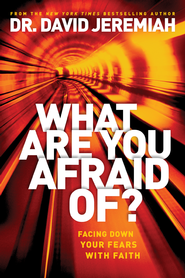
Free Book Friday : What Are You Afraid Of?

afraidofIt is time once again to take a book off my bookshelf and give it away. I am giving away a copy of Dr. David Jeremiah’s newest book, “What Are You Afraid Of? Facing Down Your Fears With Faith”. Dr. Jeremiah introduces the ten areas where we are most likely to experience fear in this life. He also provides the scriptural help to overcome them.

To be entered to win, you must do (2) things.

1. Follow my blog by clicking on the button at the bottom of the page.

2. Answer the following question by leaving your answer in the comment stream.

What event or activity brought the most fear into your life?

Good luck. Deadline to enter is October 25th, 2013. Winner will be announced on October 25th.

Book Review : Dangerous

dangerousAmerica Christianity is relatively safe. We worship in comfortable buildings with people who believe as we do. Our churches operate within more than adequate budgets with tried and true programs for every age of person. We are free to share our faith publicly. We are free to distribute and read God’s Word without reprise. Wrapped up in all of this institutionalized safety is the individual Christian taking fewer and fewer risks for, and in advance of their faith. We choose safety over danger, average over extreme, comfort over chaos, and the known over the risky.

I recently finished Caleb Bislow’s new book “Dangerous; Engaging the People and Places No One Else Will”. Bislow is a former youth pastor who left behind his job with the church, which he considered to safe, to pursue a call to go to places no one else has. Bislow is now part of Kingdom Building Ministries where he oversees a program called Stranded. This program is a missionary training program for Christians who want to be, as Bislow says, “radical”. This training is meant to be a week-long simulation of ministering to the lesser-known and less-safe places in the world; all from a pasture in Nebraska.

The book chronicles Bislow’s personal journey(s). It is the story of his personal journey from safe and comfortable to the “dark, despised, and dangerous” people and places of the world. Bislow recalls how the vision of an African boy standing in front of an airplane holding a staff served as the genesis of his calling to, and burden for, the people of Africa. A significant portion of the book (sections one and two) covers the events of Bislow eventually preaching to the Maasai people of Africa; quitting his job, fundraising, securing travel and guides, and the difficult journey the Maasai. Section Three, treacherous Territory, is the best of the book. Here, he draws attention to the people around the world who are rarely helped and most often forgotten. There people are the Unreached, Uncontacted, Restricted, Hunted, Convicted, Infected, Marginalized, Discriminated Against, and the Enslaved. Bislow shares his trips to these people groups (lepers, gypsies, prisoners, refuges, and prostitutes). I appreciated this section greatly as it highlighted many of the desperate people whom the civilized world has forgotten. In sections four and five, Bislow demonstrates the ways in which these people can be reached and calls for more Christians to leave what is safe and live dangerously.

As much as I would not like to, I can’t help but describe “Dangerous” as oversimplified, unbalanced, prideful, self-glorifying, and corny. As Bislow travels the world and reaches out to these isolated people groups, he rarely mentions the difficulty of the travel. I have traveled overseas on mission trips and nothing goes as smoothly as the author describes it. It seems to me that from his writing all went well all the time. He doesn’t mention the negative responses to the gospel invitation from those he spoke with. This leaves the book unbalanced. In my opinion, this book feels like a “been there, done that” type of work from the author. I would like to have read more about the challenges he faced on the ground and how they were overcome. Instead, the reader is given simply get on a plane to Africa with what one chapter calls a “backpack, burden, and a Bible”. I’m afraid that Bislow’s thrill-seeking expeditions do not recognize the missional framework that is necessary to sustain long-term disciple-making processes among these people groups.

Disclosure of Material Connection: I received this book free from Bethany House Publishers as part of their Blogger Review Program. I was not required to write a positive review. The opinions I have expressed are my own. I am disclosing this in accordance with the Federal Trade Commission’s 16 CFR, Part 255: “Guides Concerning the Use of Endorsements and Testimonials in Advertising.”
Book Review : Why Still Care About Israel?

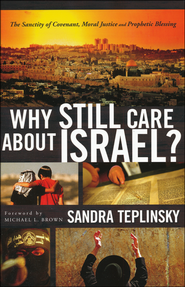
careabout israelDaily our news reports are filled with headlines which are connected to the nation of Israel. Whether it is another terrorist bombing in Jerusalem, a national leader calling for the extermination of the Jewish people, or the on-again off-again talks of peace between Israel and her neighbors, we are not allowed to forget about the significance and fragility of the nation of Israel. At the same time, the very mention of the name ‘Israel’ invokes images and feelings of compassion, anger, love, pity, confusion, and hatred; depending upon which lens you choose to view Israel through. In her latest book, “Why Still Care About Israel? The Sanctity of Covenant, Moral Justice, and Prophetic Blessing”, a revision of her 2003 book, author and former lawyer Sandra Teplinsky tackles a loaded and oft-misunderstood subject. From the perspective of a Messianic Jewish believer of Christ, Teplinsky has written a thought-provoking and heart-stirring work that introduces the reader to the history, people, religion, and political pressures of the tiny sovereign state of Israel.

The title is the premise of and scaffolding for the entire book. Teplinsky asks the reader if there is any reason to still care about what happens to Israel. Emphatically and without reservation, Teplinsky answers own question. She writes, “The Creator does not play favorites with Israel. He chose her so that people like you and me in every nation and period of history would know – through her Scriptures, her Savior and her soul – His loving mercy and grace. Perhaps to the surprise of some, He is not finished with the Jewish nation – or with how He wants to bless us through her”. She begins by introducing the reader to the depth of God’s love for Israel, His chosen people. Again, she writes, “God ties His love for the Jewish people to the oath He swore to them. He unconditionally binds Himself by His word to Abraham, Isaac, and Jacob.” It is here that we are introduced to the covenants, or the binding promises of God has made to Israel.

Teplinsky weaves together the threads of God’s love unconditional love for Israel, covenant promises, prophetic signposts, and Israel’s religion to create the fabric of a past, present, and future significance of the Jewish people. The first six chapters deal with God’s relationship with His chosen people (His love, His election) and their relationship with Him (their worship, their salvation). The remaining chapters deal with the relationship between other nations/religions and Israel. Teplinsky highlights such topics as the continual persecution of Messianic Judaism, examples of modern day anti-Semitism, the rise of Islam and its threat to Israel, the continuing battle for their God-promised land, Israel’s enemies (PLO, Palestinian Authority), and the future of Israel in light of prophecy.

Why Still Care About Israel? is a well-written and thoroughly-researched work. Teplinsky’s inside perspective; a Messianic Jewish believer of Christ and part-time resident of Israel has given her insight that many do not have. It is clear that her legal investigative and research skills have paid off. I enjoyed the historical side of this book. Teplinsky helps the reader who may be unfamiliar with the Middle East conflict to better understand it all. She gives the reason why there is a battle over al piece of land that is, as she says, “1/500th the size of the U.S.” You might expect that the aforementioned perspective would demonstrate a bias in favor of Israel. Not the case. She admits that Israel has her own struggles and is by no means perfect or without fault. She also is very sympathetic to the Palestinian viewpoint. There is one statement that I had a hard time with. Teplinsky quotes a team of Bible scholars who say “Ultimately, how a person treats the Jews will reveal whether or not he is saved”. This statement is a little far-reaching for me from a theological standpoint. Overall this is a powerful book. Insightful. Honest. Timely. I would recommend this book to anyone who wants to better understand why the simple mention of the name ‘Israel’ brings about such strong emotions today.

Disclosure of Material Connection: I received this book free from Baker Publishing as part of their Blogger Review Program. I was not required to write a positive review. The opinions I have expressed are my own. I am disclosing this in accordance with the Federal Trade Commission’s 16 CFR, Part 255: “Guides Concerning the Use of Endorsements and Testimonials in Advertising.”

Book Review : Dateline Jerusalem

datelineI would assume that many Christians struggle with a clear understanding what happens daily in the Middle East. We hear the names of locations such as the Gaza Strip, the West Bank, Jerusalem, Palestine, and the Golan Heights mentioned regularly in the news. This leads us to ask questions such as “Are these places important?” “Are these places the same?” “Why do I need to know all of this?” “Why are these people fighting?” The truth of the matter is that what takes place in the Middle East does have a profound effect upon the rest of the world. Each of these locations has a rich, deep, and spiritual heritage that goes all the way back to the days of Abraham. In his new book, “Dateline Jerusalem; An Eyewitness Account of Prophecies Unfolding in the Middle East”, CBN News Jerusalem Bureau Chief Chris Mitchell shares his first-hand knowledge of the unrest in Jerusalem and subsequent turmoil and fighting throughout the Middle East.

As a news correspondent, Mitchell has been witness to many events, both good and bad, that has shaped, and is shaping, world events today. This “on the ground” insight is what this book work so well. The author weaves several different elements into his book. He brings out the historical significance of Jerusalem and surrounding areas. He also summarizes the current political climate of the region and shares how various world leaders associate with Israel. Mitchell gives his readers a basic, but effective history of the land of Israel which helps to frame his book’s purpose. Mitchell describes such events as 2011’s Arab Spring uprising in Cairo, the recent migration of Jews back to the nation of Israel, and the rise of Islamic influence and the desire for the reestablishment of the caliphate. He also writes of the conversion of Muslims through dreams and visions and the rise of a worldwide emphasis of prayer on behalf of the Jewish people. The high points of the book are Mitchell’s connection of modern day events to biblical prophecy. Dateline Jerusalem is well written. Mitchell gives a lot of information to the reader without drowning them. Mitchell has put together a powerful and concise summary of why Jerusalem matters to the rest of the world. A great work.

Disclosure of Material Connection: I received this book free from Thomas Nelson Publishers as part of their Blogger Review Program. I was not required to write a positive review. The opinions I have expressed are my own. I am disclosing this in accordance with the Federal Trade Commission’s 16 CFR, Part 255: “Guides Concerning the Use of Endorsements and Testimonials in Advertising.”
Book Review : Where Are The Christians?

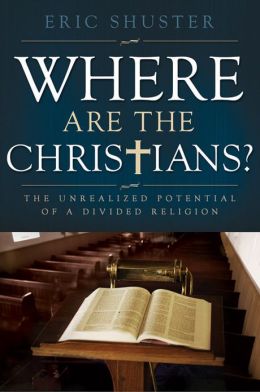
whereAs a pastor, I enjoy reading behind authors who write on topics such as faith, religion, Christianity, the church, and missions. I also enjoy reading behind those authors who delve into the deeper areas such as; the reluctance of the Christian to share their faith with others, the widespread persecution against the church, the decline of the church in America, and the seemingly growing trend of Christians divorcing themselves from the church. It was for the reasons above that I was intrigued by Eric Shuster’s new book, “Where Are the Christians? The Unrealized Potential of a Divided Religion”. Shuster is the director of the Foundation for Biblical Studies and regularly studies the faith of Christians today. Shuster sets out to solve the mystery as to where the Christians are today.

Shuster divides his book into four sections. In Section One, Who Are The Christians? A History, Shuster looks at the rise of the Christian faith through four time periods beginning with Jesus Christ’s earthly ministry. In Section Two, What Is a Christian? A Definition, an attempt is made to generate a concise and exact definition for a Christian. In Section Three, Where Are The Christians? A Categorization, Shuster offers a his perspective as to the location of Christians today. He says they are leaving, hiding, vacillating, and endeavoring. In Section Four, How is Christianity to Unite? A Vision, he recommends four areas that can be strengthened to bring the Christian faith together (individual, family, church, and community).

I did not like this book at all. Section one was by far the best one. His summary of the Christian faith and the growth of the church through evangelism, corruption, and conflict were very well written and insightful. However, Shuster could have stopped after the first section and he would have had a much better book. Shuster’s attempt to define “Christian” is confusing, convoluted, and all-encompassing. As a result, there is no clear definition for the subject of his book. In sections three and four, Shuster inclusion of  graphs, lists, surveys, and charts serve no other purpose than to further muddy the waters. The number one issue I have with “Where Are the Christians?” is the erroneous theology. For example, Shuster writes, “How important is baptism? Jesus told Nicodemus, ‘verily I say unto you thee, Except a man be born of water and of the Spirit, he cannot enter into the kingdom of God. (John 3:5) The phrase ‘kingdom of God’ is interpreted in various ways with a common interpretation being ‘the Lord’s Church’. Using this interpretation, baptism is therefore not only a saving ordinance taught by Jesus Christ, but it is also a means of entering into a covenant as a member of the Lord’s Church”. It is my prayer that an individual who is seeking the Lord and has questions about personal salvation does not pick up this book. I cannot in good faith recommend this book.

Disclosure of Material Connection: I received this book free from Cedar Fort Publishing and Media as part of their Blogger Review Program. I was not required to write a positive review. The opinions I have expressed are my own. I am disclosing this in accordance with the Federal Trade Commission’s 16 CFR, Part 255: “Guides Concerning the Use of Endorsements and Testimonials in Advertising.”