 The Winner of John Maxwell’s Everyone Communicate’s, Few Connect from Thomas Nelson is Lynda Buss. She will be receiving her book in the very near future. Thank you to everyone who stopped by The Road Less Traveled. There were some very good responses given. Stay tuned for the next giveaway.
Leadership
Leadership Lessons from Nehemiah : Lesson #5
Leaders are well prepared and think of needs in advance
Nehemiah 2 gives us a fresh perspective on Benjamin Franklin’s famous quote, “If you fail to plan, you are planning to fail.” The simple lesson in this quote is that planning is critical to success in any endeavor. Nehemiah had his heart broken over the condition of the city and people of Jerusalem. He prayed and God burdened his heart with a desire and goal to rebuild the city walls of Jerusalem. So consumed with his goal, he took leave of his duties at the king’s side to see it through. A great deal happened in between the time God spoke to Nehemiah and Nehemiah speaking to the king. Verses seven and eight are the portrait of a key leadership trait. “ Furthermore I said to the king, “If it pleases the king, let letters be given to me for the governors of the region beyond the River, that they must permit me to pass through till I come to Judah, and a letter to Asaph the keeper of the king’s forest, that he must give me timber to make beams for the gates of the citadel which pertains to the temple, for the city wall, and for the house that I will occupy.” And the king granted them to me according to the good hand of my God upon me.” Nehemiah thought in advance what it would take to accomplish his God-given goal. He then presented this list of supplies and needs to the king when he asked for leave to Jerusalem. His request was honored. Imagine the scene conversely. Nehemiah arrives in Jerusalem, looks around and says, “Okay, who has the timber for the wall gates?” Imagine the awkwardness. Imagine the delay in the work. Imagine the disappointment of those who were trusting his leadership.
It is crucial for leaders to be prepared. They owe such preparation to God. They owe such preparation to those who are trusting their guidance. They owe such preparation to themselves for the sake of credibility. Whether leading in the spiritual or secular arena, those who would consider themselves “leaders” must think in advance so they might confront the fears, calm the anxieties, and elevate the confidence of those was are trusting them. A leader must be prepared to answer questions such as “What is involved in this endeavor?” “What will be the benefit?” “What are the challenges and potential obstacles ahead?” “What can we do to support this?” As a result of Nehemiah’s forethought, God was honored and the people encouraged. His leadership style flies in the face of what I would call “off-the-cuff” leadership. This style of leadership is rarely effective and is almost always frustrating and discouraging.
Leadership Lessons from Nehemiah: Lesson #4
Leaders rearrange their priorities in order to accomplish their goals.
In Nehemiah 1:11, we are given a simple, yet telling description of this leader, “and I was the king’s cupbearer”. Nehemiah had specific duties as the king’s cupbearer. He was a trusted servant, a confidant, personal advisor, and of course he was the front line defense in the prevention of the king being poisoned either accidentally or as part of an assassination plot. The “cupbearer” was his priority. The “cupbearer” was his professional identification. The “cupbearer” was his every-day job. In the midst of performing his daily duties, word comes to him of the condition of the people and the city wall back in Jerusalem. Chapter One chronicles his reaction to the news. God placed a great burden and a clear goal before Nehemiah through the news of his homeland. Verse five shows us what happens when a God-sized goal interferes with everyday life. “ And I said to the king, “If it pleases the king, and if your servant has found favor in your sight, I ask that you send me to Judah, to the city of my fathers’ tombs, that I may rebuild it.” The goal must be pursued.
Leaders, whether spiritual or corporate, set priorities. At times, priorities are set for them. Whether it is church growth or increased profit, what drives a leader rises to the top. The question that must be answered is this, “Am I as a leader willing to let the priorities I have set for myself be shuffled in order to accomplish a God-given goal?” Leaders are willing to allow their “to do” list that is generated by personal desires and wishes to become a “for Him” list that takes into account God’s plan and goal for them. From his prominent position, Nehemiah took leave in order to carry out the burden given to him. A leader must also take leave of the temporary focuses of life in order to pursue the eternal blessings of obedience.
Leadership Lessons from Nehemiah: Lesson #3
Leaders wait patiently on God’s timing.
A great deal of biblical history is framed around years in which kings reigned. This gives us a point of reference in real time and validates the accuracy of the biblical record. Nehemiah 2:1 reads, “And it came to pass in the month of Nisan, in the twentieth year of King Artaxerxes, when wine was before him, that I took the wine and gave it to the king. Now I had never been sad in his presence before.” Don’t pass by that first part too quickly, “in the month of Nisan, in the twentieth year of King Artaxerxes”. Why does this matter? What is the big deal? Here is why. Between the close of chapter one, and the opening of chapter two, approximately nine month has passed. From the time Nehemiah received news of the tragedy unfolding in Jerusalem, until the time he approached the king requesting to take action, almost an entire year had gone by.
It is important to not get ahead of what God is doing in our lives. It is natural for us to see a need and meet it. It is natural for us to simply make a decision when faced with one. It is natural for us to do what we want to do when we want to do it, whatever “it” is. Leaders know that timing is everything. Business leaders know that the success or failure of a new product is directly linked to the timing of its launch into the market. Military leaders know that the success or failure of any mission is directly linked to the timing of the attack. Spiritual leaders know that success or failure of any endeavor in the Lord’s name is directly linked to the perfect timing of God. I am sure that Nehemiah had a desire to get to Jerusalem as fast as he could. I am sure that Nehemiah crafted his owns plans for rebuilding his beloved city. Instead of pushing forward, he waited for God to give him the “go ahead”. Spiritual leaders must wait on God’s timing. In God’s timing, provision for the task will always be there. In God’s timing, the people God has prepared will always be there. In God’s timing, the peace of God will always be there.
Leadership Lessons from Nehemiah : Lesson #2
A leader is willing to get involved.
Nehemiah 2:5 reads, “And I said to the king, “If it pleases the king, and if your servant has found favor in your sight, I ask that you send me to Judah, to the city of my fathers’ tombs, that I may rebuild it.” Leaders involve themselves in the work and task at hand. Nehemiah was not stand-offish about the work to be done. He did not ignore it. It is interesting to note what Nehemiah did not say. He did not say to the king, “Let me have someone else rebuild.” He did not say “I’ll find someone who can rebuild.” He did not say to the king “I don’t want to get involved. I don’t live there and what happens in Jerusalem does not involve me.” Instead, Nehemiah’s request of the king is littered with words like “me”, “my”, and “I”.
Leaders cannot separate the mission God has given to them and their personal involvement in that mission. Nehemiah had a reason to get involved. Jerusalem was the land of origin for his people. Jerusalem was the holy city and the center of worship for the Jewish nation. Jerusalem, often referred to as “the City of God”, served as a witness to the power, worth, and majesty of God Himself. His mission was to rebuild, restore, and reclaim the splendor of God among the Jews and the watching pagan nations. How could he not be personally involved? Leaders must be willing to invest their resources. Leaders must be willing to invest their time. Leaders must be willing to invest everything they are and have to fulfill the mission and mandate God Himself has placed on them. There is no such thing as leadership by proxy.
Leadership Lessons from Nehemiah : Lesson #1
Leaders must possess a sense of mission.
Nehemiah 2:5 reads, ‘And I said to the king, “If it pleases the king, and if your servant has found favor in your sight, I ask that you send me to Judah, to the city of my fathers’ tombs, that I may rebuild it.’ Those who occupy leadership positions must have a reason and a passion for doing what they do. Something must drive them. Something must serve as their sense of motivation, their fuel is you will. For the spiritual leader, that driving force is the fame of God. It is seeing God’s will come to pass. Nehemiah had a clear directive from God. That directive was, in his own words, upon hearing news of the condition of Jerusalem, to return “to Judah, to the city of my fathers’ tombs, that I may rebuild it.” Nehemiah had received his “marching orders”. Nehemiah had been given a clear picture of what God wanted him to accomplish. It was so clear that he could clearly communicate it to the king. As a result, everything Nehemiah did and said was working toward that end.
Leaders must have a clear vision of what they are doing and want to accomplish. It must be their mission. There can’t be competing visions, divided loyalties, or a blurring of focus in their life. The mission for a spiritual leader must be what motivates them; not fame, fortune, or praise of man. Regardless of the possible difficulties facing Nehemiah, he was determined to be “on mission” and see to it that God’s people in Jerusalem were no longer a reproach to the other nations. Nothing else would have been acceptable. If spiritual leaders today do not have a sense that God has given them something to do for Him, that leader will drift aimlessly. As a result of this aimless drifting, those who are following will themselves drift, aimlessly.
Leadership Lesson from Nehemiah : An Introduction
Leadership is a “buzz” word today. We hear a great deal about its importance and necessity. Books have been written on the subject. Conferences are regularly offered on the principles of leadership and how to become a better leader. Most everyone has their own ideas of what makes a good leader. Most everyone has their own idea of what makes a bad leader. Perhaps through your own personal experiences you have worked alongside effective and ineffective leadership.
I believe John Maxwell, author of ‘The 21 Indispensable Qualities of a Leader’, said it best and right when he said, ‘Everything rises and falls on leadership’. Manuals on leadership abound, both secular and spiritual. Henry Blackaby has written a must-read leadership book entitled ‘Spiritual Leadership’ that describes the process of spiritual leaders moving people to God’s agenda. Perhaps the best leadership manual I have found was not written by any best-selling author. It was not written by a leadership-model company looking to make a profit. Instead, it was written by God Himself. The manual I speak of is the Old Testament book of Nehemiah.
In recent study connected to a lesson I was preparing from this book, I come across a simple list of leadership principles from Nehemiah chapter two discovered by Donald Campbell, author and theologian. Over this series of posts, I want to take what I feel are the ten most important principles that Campbell discovered and develop them further to discover how God works through those whom He elevates to leadership roles, both inside and outside the church. Hope you enjoy.
Book Review : Nearing Home
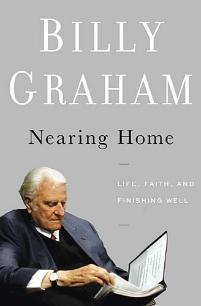 I recently finished Billy Graham’s new book, “Nearing Home; Life, Faith, and Finishing Well”. Billy Graham has been one of my favorite preachers, authors, and examples for many, many years. “Nearing Home”, in my opinion, was primarily written for, and directed toward, older adults. This is not a book of theology. In it you will not find the major doctrines of the Bible discussed and debated. Instead, it is a book of wisdom, advice, and encouragement written by a man who is staring the effects of old age squarely in the face. He writes with grace. It is this same grace that has marked his life as a servant of God, and it is the same grace that enables him to deal with poor health and other life-changing decisions. “Nearing Home” deals with the subject of aging, while practically dealing with subjects such as wills, retirement, and finances. Graham reminds the reader that our God-given purpose is not over until life itself is over.
“Nearing Home” helps the reader learn how to take hold of God’s will for your life, lean on God when loved ones are lost, navigate life-changing transitions, and biblically deal with fear. The book falls into ten chapters. It does not have the standard feel and structure. Instead, this book takes on a conversational format; mingled with scripture and personal stories. This is a simple read written by a man who has given his life to the single purpose of honoring God and leading others to do the same. He encourages and inspires the reader to face the uncertain future with the certainly of Jesus Christ. A quote that inspired me is this one: “The most eloquent prayer is the prayer through hands that heal and bless. The highest form of worship is the worship of unselfish Christian service. The greatest form of praise is the sound of consecrated feet seeking out the lost and helpless.” “Nearing Home” is well worth your time.
Disclosure of Material Connection: I received this book free from Thomas Nelson Publishers as part of their Blogger Review Program. I was not required to write a positive review. The opinions I have expressed are my own. I am disclosing this in accordance with the Federal Trade Commission’s 16 CFR, Part 255: “Guides Concerning the Use of Endorsements and Testimonials in Advertising.”
Book Review : Lead Like Ike, Ten Business Strategies from the CEO of D-Day
 I enjoy reading books dealing with military history. When I read the background for this book would be the D-Day invasion at Normandy, I was intrigued. Lead Like Ike: Ten Business Strategies from the CEO of D-Day by Geoff Loftus gives a detailed look at the leadership methods of Dwight D. Eisenhower. Eisenhower, or “Ike” was given the monumental task of coordinating and commanding the D-Day invasion at Normandy. Loftus sets up his book by giving the military operation of D-Day a company name, D-Day Inc. and treats Ike as the CEO of that company. Loftus then goes on to look at the D-Day invasion as a business project. He draws a parallel between the military world and the secular business world, showing that Eisenhower had a board of directors (the president and other Allied leaders), C-level staff (commanders and generals on the ground), affiliated organizations, and stakeholders (military personnel, US citizens, and the victims of Hitler’s crimes).
The strategies learned from Eisenhower’s methods of leadership are valuable and relevant. A few of the strategies that emerge are Determine Your Mission, Stay Focused, Motivate Your People, and Be Honest. The lessons themselves are generic, but adaptable beyond corporate America. As a pastor, the strategies that were utilized and found successful on the battlefield can be applied to leading people to be on mission for God. For anyone who is in a leadership position, this book will be beneficial to you. Lead Like Ike is not your typical “do-this” and “don’t-do-that” leadership type book. Rather, it is an honest look a leader who led people in a real-life situation and the principles and insight we gain have been tried and tested. I recommend this book to you.
Book Review: Everyone Communicates, Few Connect
How many times have you connected with the person to whom you were listening? Perhaps it was a teacher who made a difficult subject interesting and fun. Maybe it was a conference speaker who provided the motivation you needed to keep going in a less-than-glamorous job. What was it that moved them from simply talking to connecting? It was their ability to understand the listener and care more for their listener than for themselves. John Maxwell, in his new book Everyone Communicates, Few Connect, offers solid guidance and real-life tools to help leaders and other communicators move from simply talking to an audience to making real connections by making every word count. Maxwell defines connecting as “the ability to identify with people and relate to them in a way that increases your influence with them”.
I am a fan of Maxwell and a past-reader of his work. As usual his simplistic yet insightful style of writing makes this book an easy read. He does a great job of mixing his content with real-life experiences which add to the credibility of his writing. Maxwell offers five connecting principles and five connecting practices. He helps the reader to understand why connecting with the listener is important. He then goes on to give the reader the nuts and bolts of how to better connect. The highlight of the book, in my opinion, is chapter six where Maxwell talks about how crucial it is to find common ground with the listener. On the other hand, the book does have a low point that I struggled with. In chapter five, Maxwell gives way to his writer, Charlie Wetzel, in order that he might tell how good of a communicator Maxwell is. To me, this section seemed out of place and unnecessary. I wish this portion had been left out.
I was challenged by this book. As a pastor, I speak to many people in many different settings. This book made me aware of the fact that speaking is not enough. As a communicator, I can’t assume that my words and messages are received by my listeners just because I share them. This book has led me to understand that I need to be more intentional in my speaking. Whether you are a communicator in the business sector, the educational field, or the pastoral ministry, I highly recommend this book to you as an aid to making every word count.
 The Road Less Traveled