Book Review : How to Pick Up a Stripper

stripperWhen it comes to ministry carried out by the local church, the most important element is the people outside of it. While churches are careful and intentional in ministering to those who are in the local body, there must be an equal concern in reaching those not in the body of Christ. The key to reaching those outside the body is to communicate to them that they are loved and they matter. In their new book, “How to Pick Up a Stripper and Other Acts of Kindness” Todd and Erin Stevens have written about the importance of showing people the love of God instead of only telling them of God’s love.

Todd Stevens is the pastor of Friendship Community Church in Nashville, TN. His wife Erin is the founder of Nashville Strip Church, a ministry that reaches out to the employees of strip clubs (hence the name of the book). The premise of this book can be summed up in two words: be kind. Using the ministry of Friendship Community and their own personal generosity as a backdrop in kindness, the Stevens give numerous examples of how serving people with no expectation of return best demonstrate the love of God. Examples of lives changed are given throughout the book. Woven throughout the book is the ministry that Erin started after being led to reach out to the women in the local strip clubs. The Stevens not only highlight the importance of a servant lifestyle, they also deal with topics such as having a good reputation in the community, sacrificial service, being a generous giver, and praying for those you are attempting to reach.

“How to Pick Up a Stripper” is a good book. It is written in an easy-flowing conversational tone and is a very easy read. The Stevens do a good job of mixing personal stories and biblical admonition. The major problem with the book is that we have heard this before. As a pastor, I see nothing new in the overall message of the book. We know that we should be serving people. We know that we have been commanded to do so. The examples of service projects and ideas for outreach the authors gave include, but are not limited to gas buy-downs, block parties, easter egg hunts, and moms night outs are ideas already being employed, although maybe not as successfully as Friendship Community , by many other churches. “How to Pick Up a Stripper” gets lost in the crowd of other “serve your community” books.

Disclosure of Material Connection: I received this book free from Thomas Nelson Publishers as part of their Blogger Review Program. I was not required to write a positive review. The opinions I have expressed are my own. I am disclosing this in accordance with the Federal Trade Commission’s 16 CFR, Part 255: “Guides Concerning the Use of Endorsements and Testimonials in Advertising.”

Book Review : China’s Reforming Churches

Chinas-Reforming-Churches“China’s Reforming Churches” is a collection of essays edited by Bruce Baugus, associate professor of Philosophy and Theology at Reformed Theological Seminary. The book sets out to examine and survey the congregational system of rule known as Presbyterianism in the context of the Christian China. This book has four main sections: The History of Presbyterianism in China, Presbyterianism is China today, Challenges and Opportunities for Presbyterianism in China, and Appropriating a Tradition. Within each of these main sections are several subsections that deal with issues such as the history of the Chinese church, challenges facing Christians in China, social conditions and cultural nuances related to the gospel/church, Christina publishing and theological education in China, and why China needs Presbyterian churches.

This book falls apart from the beginning. I was expecting to find a clear definition/explanation of what he wanted the reader to understand Presbyterianism. This did not happen. He gives this vague definition, “By Presbyterianism we refer only to ‘the general rules of the Word, which are always to be observed’ as they relate to the proper order of Christ’s church, and thus church development in China (WCF 1.6).” The editor always draws a distinction between Presbyterianism with a capital “P” and lowercase “p”. However, as the book goes on, these are used interchangeably which makes the narrative of the book murky and disjointed. Baugus also writes, “We do not mean anything more specific, such as a particular denomination of Reformed or Presbyterian churches”. I wish this had been true. On occasion, the editor alludes to Reformed Theology proper.

This work is typical of Reformed Theology proponents. Written in what I view as an arrogant overtone, Baugus advocated that the true biblical church must be a Presbyterian one. He writes, “I am mildly tempted to describe a triumphant future when China will become a global center of Reformed theology, church life, and mission. That kind of future seems quite possible today and would be very welcome.” This book does not live up to its billing. Don’t waste your time with this one.

Disclosure of Material Connection: I received this book free from CrossFocused Reviews as part of their Blogger Review Program. I was not required to write a positive review. The opinions I have expressed are my own. I am disclosing this in accordance with the Federal Trade Commission’s 16 CFR, Part 255: “Guides Concerning the Use of Endorsements and Testimonials in Advertising.”

Book Review : Exploring Christian Theology

exploreWhen it comes to the word theology, images of dusty books, seminary classes, and Greek/Hebrew translation come to mind. Volumes upon volumes have been written in an attempt to explain and understand the nature of God. Dallas Theological Seminary professors Nathan Holsteen and Michael Svigel has offered a contribution with their joint effort, “Exploring Christian Theology; The Church, Spiritual Growth, and the End Times”. The goal of their book is to make the very basic tenets of theology available to everyone. Their choice of doctrine to explore includes the church, sanctification, and end times study.

Exploring Christian Theology is written in two parts: Spiritual Growth and the Church (Holsteen) and End Times (Svigel). Each part is subdivided the same way containing the following elements: High Altitude Survey, Passages to Master, Retrospect, Facts to Never Forget, Dangers to Avoid, Principles to Put into Practice, Voices from the Past, and Shelf Space. What I enjoyed most were the Retrospect, High Altitude Survey, and Passages to Master sections in each part. The authors did a nice job of laying the proper historical groundwork so that a modern application could be made. Holsteen and Svigel’s commentary on the most prominent and familiar scripture passages within the section of writing was very helpful. Although this is a theology book, the authors chose not to use difficult language which makes the books very readable. This is a plus.

I had some minor issues with the book. The format of the book is counterproductive. It appears the authors desired to include as much information on their material as possible. The inclusion of unnecessary peripheral material takes away from what they set out to do. For example, there are 31 pages of quotes from authors, scholars, and church leaders from the time periods of their writing. The section on recommended and further reading could have been left out as well.

My greatest issue with this book is the simply the choice of subjects to be covered. Their goal was to cover the basic tenets of theology. For the time, space, and length of work the authors chose, I believe the three that were chosen are not the most basic of tenets. Doctrines such as Theology Proper (God), Christology (Jesus Christ), Harmatology (Sin), Soteriology (Salvation), and Pneumatology (Holy Spirit) would have been preferable if the goal was to provide the basics. As a pastor, if I were asked to recommend a theology book, it would not be this one.

Disclosure of Material Connection: I received this book free from Baker Publishing as part of their Blogger Review Program. I was not required to write a positive review. The opinions I have expressed are my own. I am disclosing this in accordance with the Federal Trade Commission’s 16 CFR, Part 255: “Guides Concerning the Use of Endorsements and Testimonials in Advertising.”

Book Review : Strange Fire; The Danger of Offending The Holy Spirit With Counterfeit Worship

strangefireAs a pastor, I am often asked a question similar to this one, “Why are there different denominations of churches today?” Most simply put, the interpretation of Scripture often draws denominational and tribal lines. For a person to say they are Baptist, Methodist, or Presbyterian means they subscribe to a particular interpretation of the Bible. Denominational lines are drawn around topics such as Bible translations, infant baptism, loss of salvation, election, priesthood of the believer, and the ministry of the Holy Spirit. It is this last area that John MacArthur deals with in his newest book, “Strange Fire; The Danger of Offending the Holy Spirit With Counterfeit Worship”. Strange Fire serves as a theology proper study of Pneumatology, or study of the work and ministry of the Holy Spirit. Although MacArthur’s book has three parts, there are two major divisions within. First, MacArthur demonstrates how the Holy Spirit is falsely presented and maligned in the church today through fake healings, speaking in tongues, and false prophecy. Secondly, he sets out to give the reader an accurate picture of the work and ministry of the Holy Spirit according to the Bible itself. A setting of the record straight, if you will.

In Section One, Confronting a Counterfeit Revival, MacArthur places before the reader what he believes “the heart of the problem is”. MacArthur leans on John Ankerberg and John Weldon here “Pentecostals and charismatics elevate religious experience over biblical truth. Though many of them pay lip service to the authority of God’s Word, in practice they deny it.” It is here that we are introduced to the father of modern Pentecostalism, Charles Parham. Mac Arthur gives an in-depth history of the modern Pentecostal/Charismatic movement, providing the place and personalities in which the movement was founded. Due to the rise in popularity and growth of the Pentecostal/Charismatic movement, designations such as New Reformation, the Third Great Awakening, and New Pentecost have been assigned. MacArthur deals with and exposes the Word of Faith movement which is deeply embedded within the Pentecostal/Charismatic movement. It is also in this section that MacArthur deals with testing the spirits, an admonition from 1 John 4:1-8. In this passage, an outline is given for “assessing the true nature of any teaching”. Jonathan Edwards, eighteenth century preacher and theologian, placed this outline against revivals in his day. Edwards formed five questions related to the testing of spirits. MacArthur uses these five questions to test the legitimacy and truthfulness of the Pentecostal/Charismatic movement today. The five questions are: 1) Does the work exalt the true Christ? 2) Does it oppose worldliness? 3) Does it point people to the Scripture? 4) Does it elevate the truth? 5) Does it produce love for God and others? To put it lightly, the Pentecostal/Charismatic movement fails the test miserably.

In Section Two, Exposing the Counterfeit Gifts, MacArthur devotes individual chapters to each of the sign gifts of the early church (tongues, healing, miracles, prophecy, and the apostolic office). MacArthur writes from a cessationist viewpoint, believing these gifts have ceased. In his chapter on apostles, he argues that there can be no modern day apostles because the biblical criteria cannot be met. The criteria: an apostle had to be a physical eyewitness of the resurrection of Christ, an apostle had to be personally appointed by Christ, and an apostle had to be able to authenticate his apostolic appointment with miraculous signs. His chapter on tongues is especially strong and helpful. Many of the Pentecostal/Charismatic movement use the speaking in tongues as an evidence of salvation. MacArthur exposes this teaching for the lie that it is. He provides a thorough teaching of the tongue gift of Acts 2. He shows that the disciples were speaking in known languages that they did not know for the purpose of gospel advancement. He writes, “In short, the glossolalia practiced by today’s charismatics is a counterfeit that by every measure falls short of the gift of tongues described in the New Testament. Today’s tongue-speakers claim to have received the biblical gift, but ultimately they have no acknowledgement that the gibberish they are speaking has none of the characteristics of real language.” Finally, MacArthur deals with “healings”. He introduces the reader to the modern-day father of faith-healing, Oral Roberts and his protégé’ Benny Hinn. As MacArthur deals with Hinn’s “healing ministry”, he concludes these “healings” are not biblical. In his section, “Benny Hinn Versus the Bible”, MacArthur places Hinn’s “healings” alongside the six differences between New Testament healing and the counterfeit “healings” of the Pentecostal/Charismatic movement.

In Section Three, rediscovering the Spirit’s True Work, MacArthur, after dealing with the false and counterfeit views put forward by Pentecostals and Charismatics, gives a solid biblical teaching on the role of the Holy Spirit in salvation, sanctification, and the Scriptures. He deals solidly with subjects such as regeneration, fellowship, conviction, repentance, illumination, and inspiration. MacArthur concludes with an open letter to his Continuationist friends who believe the sign gifts of the early church must still be present today. He shares, in his own words, eight “dangerous manifestations of the continuationist position. MacArthur then challenges the New Testament church to guard against the strange fire of the Pentecostal/Charismatic movement.

“Strange Fire” is a hard-hitting; no holds barred, honest, not for the weak of heart, “call it for what it is” type of book. He pulls no punches. I am glad that he didn’t. In his own words, he describes the Pentecostal/Charismatic movement with such terms such “fraud”, “hoax”, “counterfeit”, “sham”, and “con-artists”. Although this may sound harsh, unfair, bigoted, and cruel, MacArthur takes a balanced approach to his writing. He utilizes some of the leading voices, authorities, and historians of the Pentecostal/Charismatic movement in order to be fair to both sides. This book will encourage some and anger others. It will strike a chord of truthfulness with some and strike a nerve of disapproval with others. This is a much-needed work on the subject on the danger of offending the Holy Spirit with counterfeit worship.

Disclosure of Material Connection: I received this book free from Thomas Nelson Publishers as part of their Blogger Review Program. I was not required to write a positive review. The opinions I have expressed are my own. I am disclosing this in accordance with the Federal Trade Commission’s 16 CFR, Part 255: “Guides Concerning the Use of Endorsements and Testimonials in Advertising.”

Worth Repeating : Martin Luther King, Jr.

“There was a time when the church was very powerful–in the time when the early Christians rejoiced at being deemed worthy to suffer for what they believed. In those days the church was not merely a thermometer that recorded the ideas and principles of popular opinion; it was a thermostat that transformed the mores of society. Whenever the early Christians entered a town, the people in power became disturbed and immediately sought to convict the Christians for being “disturbers of the peace” and “outside agitators.”‘ But the Christians pressed on, in the conviction that they were “a colony of heaven,” called to obey God rather than man. Small in number, they were big in commitment. They were too God-intoxicated to be “astronomically intimidated.” By their effort and example they brought an end to such ancient evils as infanticide and gladiatorial contests. Things are different now. So often the contemporary church is a weak, ineffectual voice with an uncertain sound. So often it is an archdefender of the status quo. Far from being disturbed by the presence of the church, the power structure of the average community is consoled by the church’s silent–and often even vocal–sanction of things as they are.

But the judgment of God is upon the church as never before. If today’s church does not recapture the sacrificial spirit of the early church, it will lose its authenticity, forfeit the loyalty of millions, and be dismissed as an irrelevant social club with no meaning for the twentieth century. Every day I meet young people whose disappointment with the church has turned into outright disgust.”

Martin Luther King, Jr. Letter from a Birmingham Jail, April 16th, 1963

Missional Monday : National Night Out

nno2013Last August, Port Royal Baptist Church had the privilege to participate in a community event known as National Night Out. National Night Out is an initiative to develop and promote crime-prevention programs in neighborhoods involving watch groups, law enforcement agencies, churches, non-profit organizations, businesses, and individuals working toward one simple goal: safer and stronger communities. Our church had been seeking a way to gain entry into the multi-housing community that adjoins our property. We approached the property manager with this initiative and were welcomed with open arms.

This is how it works. A church, business, or non-profit organization identifies a neighborhood to “adopt”. Local law enforcement and fire departments are brought in to share the anti-crime and safety message. Through this initiative, foundational partnerships are formed that lead to future opportunities of ministry and involvement. Port Royal Baptist will host a block party (bounce house, popcorn, sno-cones, etc.) including a cookout. The property manager will provide the space, power, and internal promotion to more than 100 family units. Port Royal Police Department, Beaufort County Sheriff’s Department, and Beaufort County Fire Department will provide staff and resources from their departments to communicate their anti-crime message, while showing a side of their work that most of the communities never get to see. On August 6th, 2013, we will all come together again to do our individual part in collectively making sure our community knows that we care about them.

Earlier I mentioned foundations for future involvement. From the church standpoint, we have had the privilege to minister in other ways. Because of a “non-church” event, we have been allowed to come back to host “church” events including those related to Easter and Vacation Bible School. I believe we were able to carry out the purpose of the church because we built trust and earned the right to minister. How did we do this? How can you do the same thing?

1. We took advantage of a secular event in order to lay the groundwork for ministry. Check your community calendars and involve your church in those events. I wrote about the importance of merging church and community calendars. You can read that post here.

2. We earnestly believe that our community is our responsibility, not someone else’s. Remember, missional is not about doing. It is all about being. Don’t allow someone else to be the missionary to your community.

3. We were not afraid to be told “no”. You should not be either. Pray, identify, and ask. We were told “no” in this particular multi-housing unit once before.

Missional Monday : MissionsFEST Atlanta

atlanta-skylineIn October of this year I, along with two other member of Port Royal Baptist Church (Joyce Bunton, Judy Greenlee), will take part in MissionsFEST Atlanta. This trip is the result of a partnership between South Carolina Baptist Convention Missions Mobilization, National WMU (Women’s Missionary Union), Georgia WMU, and the UACP (Urban Atlanta Church Planter’s) Network. The UACP is a cooperative effort to engage lostness through the planting of intentionally reproducing churches with the I-285 perimeter of Atlanta. Individuals and churches who participate in MissionsFEST work alongside church planters who active in reaching neighborhoods with the I-285 loop where over 100 different languages are spoken. Events and projects are designed to demonstrate the love of Christ in real and tangible ways that allow bridges to be built for future gospel conversations. Some of the week’s projects include block parties, service ministries, prayer walking, and light construction work.

We are looking at this trip as more than just an opportunity to help church planters with the enormous task of reaching their community. We are viewing this time in Atlanta as a vision trip for Port Royal Baptist Church. Every spring we sponsor a state-side mission trip for our congregation. As we seek the Lord’s guidance as to the coming year’s destination, we are praying He uses this week to open doors for future ministry. As in any trip, meeting, or conference I attend, certain hopes are always present. My hopes for this trip are as follows.

1. It is my hope that we will create partnerships for future service. As I mentioned above, we hope to be able to discern the needs of the church planters and determine if our congregation would be a fit in Atlanta.

2. It is my hope that I will be personally challenged. I believe that many of us minister within a bubble of safety. That is not always our fault, just a result of where we are. I hope to be stretched and challenged to do ministry that I never have and among people I never have.

3. It is my hope that we will learn new methods and practices for our own local ministry. Our church is very active and present in our community. I am hoping that some of what we experience in Atlanta will give us fresh ideas for reaching Port Royal.

Free Book Friday : Transformational Church

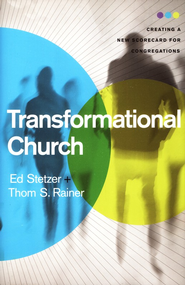
transformchurchIt is time for me to give away another book from my bookshelf.  I am giving away a copy of Thom Rainer and Ed Stetzer’s “Transformational Church”. In their new book, Rainer and Stetzer discuss the necessary changes  churches must make in order to become more effective disciple makers.

To be entered to win, you must do (2) things.

1. Follow my blog by clicking on the button at the bottom of the page.

2. Answer the following question by leaving your answer in the comment stream.

If you could change or restructure one thing about the local church in order to make it more effective in reaching the lost and making disciples, what would it be? Be specific.

Good luck. Deadline to enter is July 12th, 2013.

A Pastor’s Take on Vacation Bible School 2013

ccwColossal Coaster World Vacation Bible School has pulled into the station for the final time this year. Our theme park inspired adventure is complete. The screams and shouts of kids running through down the hallways and in the sanctuary are now a distant, but treasured memory. Decorations have come down and the once vibrant and colorful rooms, hallways, sanctuary, and common areas have now been returned to their traditional look. Sadly, it looks as if Vacation Bible School never happened. Vacation Bible School makes for a very long week around the church. If you take into account the weeks leading up to the actual teaching week, many long, long hours have been logged over the past three weeks. I am a huge fan of Vacation Bible School and am sold on its ministry value. As a pastor, I fully understand how important this week is in the life of the church. Now that Vacation Bible School 2013 is over, I have a few observations that I would like to offer here.

1. Attendance: For better or worse, this is often the criteria by which Vacation Bible School is judged as a success or a failure. I am not completely sold on this marker of success. Our average attendance for the week was approximately 115. As far as the numbers go, our attendance was down slightly from last year. I was encouraged by our attendance this summer. My reason for being encouraged is not so much about how many, but who was here. It is obvious that our people were active in inviting others this week. We did something different this year with our teenagers. Instead of Youth Vacation Bible School occurring the weeks before the children’s, our youth met the same week as everyone else. This was a success and we averaged 8 teenagers nightly. This does not count the high school students who were assisting in other areas. We had the expected students who were members of other churches. That is perfectly fine. We are happy to have them for a week. We also had students who were unchurched and not affiliated with a local church. This is one of the markers by which I judge success. We averaged 53 elementary aged children this year. I was further encouraged by our Adult Vacation Bible School class. We had an average this week of 30 adults. Our adult class was not only made up of our own church members. One of goals in Adult Vacation Bible School is to give parents who are not involved in a local church a place to go instead of dropping their children off and going home. We accomplished our goal here. Parents had the opportunity to interact and meet other people in a non-threatening manner and be exposed to the gospel message. I believe this was a success.

2. Volunteers: I am thankful to all of the volunteers who worked this week. As I mentioned earlier, it was a long week. It was also very hot. I am especially thankful and grateful to all of our teachers who worked full-time jobs who left work and came straight to church for five straight days. I want to especially mention and thank those who worked in the kitchen all week. During our Vacation Bible School, we skip the Snack Rotation. Instead, we choose to provide a meal for parents, children, and workers every night. Our kitchen workers came out early, set everything up, served the kids, and stayed until all was cleaned up. Thank you. I also want to thank the summer student missionaries who are a part of the Savannah River Baptist Association Low Country Ministries who came out and helped with our big kick-off event. To all those who worked so hard, your pastor wants you to know that you are appreciated.

3. Ministry: Any time you have kids on campus you have an opportunity to be engaged in real, one-on-one, life-changing ministry. I believe with all of my heart that is what happened this week. During our Worship Rally, our students take up an offering each night. There is anticipated and spirit-filled battle between boys and girls to see who can raise the most money for our designate ministry cause. This gives us an opportunity to further educate our students on the importance of missions. I am excited to report that this year we raised $510.00 for the Connie Maxwell Children’s Home. Vacation Bible School is intentionally evangelistic. We are diligent to make sure that we communicate the gospel message all week long, not just on the night of the “evangelistic” lesson. With that being said, we did not have any public professions of faith (to my knowledge) this week. I can’t explain it in human reasoning. For many who read this, the assumption will be that we failed as a church in Vacation Bible School. Nothing could be further from the truth. We are here to share a message and plant a seed, understanding that it is God who gives the increase. We trust God’s Word knowing that it will not return unto Him void. Real ministry takes place when you take time to listen, talk to, and show love toward a child in the name of Christ. This is what we did this week. If down the road a year or two or five, in God’s timing, a gospel presentation is given and a child responds because of something that was planted in their heart this week, then we were faithful to have done our part.

4. Sharing: Once again this year we had the opportunity to share and pass on the decorations and other resources we used to another church that was in need of them. The bulk of our props, supplies, and decorations will be utilized by at least two additional churches before the summer is over. I believe this is a stewardship issue. Lifeway Vacation Bible School material is not inexpensive. It does not make sense to spend all of that money and then store everything in a closet. I am pleased that we were able to help others in this way.

Overall, we had a great week and look forward to what comes out of the efforts of this week. Again I want to thank every teacher, worker, and parent who allowed their child to be a part of our Vacation Bible School. We are eagerly looking forward to Lifeway’s VBS 2014; “Agency D3: Discover. Decide. Defend.” After all, it is only 11 months away.