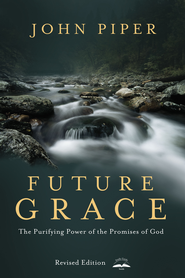
Book Review : Future Grace

futuregraceChristians today understand the concept of grace. It is the basis of our salvation in Jesus Christ. Paul wrote, “for it is by grace you have been saved by faith and that not of yourselves” (Ephesians 2:8). It is sustenance and sufficiency for the believer. In an answer to Paul’s prayer, the Lord responds, “My grace is sufficient for you, My strength is made perfect in weakness” (2 Corinthians 12:9). Grace is defined, in religious circles, as God’s unmerited favor towards an individual. Grace is not something that we can earn, purchase, or deserve. It is truly, as Paul states, a gift. In a rework of his 1995 book, John Piper, in “Future Grace; The Purifying Power of the Promises of God”, explores a specific aspect of grace which he has termed “future grace”. In defining the term, Piper writes, “All that God promises to be for us in Jesus stands over against what sin promises for us without Him. This great prospect of the glory of God is what I call future grace”. Piper deals with some of the issues that surface in the believer’s daily walk with God. Because he has linked future grace to the sure promises of God, Piper shows how future grace allows the believer to trust and rest in the promises God has made. He writes about many links in this future grace chain. Included are the enemies and cost of grace, the relationship that works have to grace, and the battle to believe in light of past and present grace just to name a few.

The wheels come of the cart very early in this book. In chapters one and two, Piper discusses gratitude and introduces a term that he has coined as “debtor’s ethic”. There is a friction, Piper believes, between a believer’s desire to show gratitude for what Jesus has done for them and the felt need to pay God back. He writes, “If gratitude is twisted into a sense of debt, it gives birth to the debtor’s ethic – and the effect is to nullify grace.” I don’t believe this to be true. Piper’s writing is confusing and messy in these chapters. He seems, in my opinion, to simultaneously support and reject the relationship between gratitude and debt. He seems to suggest that a believer’s desire to show gratitude for the grace extended to them will in fact nullify that grace. What follows are chapters upon chapters of lessons and discussion related to grace that are independent of the given thesis. In an attempt to adequately define and defend, ‘future grace’, Piper drowns the reader in unnecessary wording that make it a laborious read. To me, it is simply not a clear presentation of the subject matter.

Disclosure of Material Connection: I received this book free from WaterBrook Press as part of their Blogger Review Program. I was not required to write a positive review. The opinions I have expressed are my own. I am disclosing this in accordance with the Federal Trade Commission’s 16 CFR, Part 255: “Guides Concerning the Use of Endorsements and Testimonials in Advertising.”

Book Review : Saving Eutychus

savingI am a pastor. I am a preacher. I know what it is like to stand before a congregation every week and deliver a message that is timely, biblical, and interesting. I understand what it is like to struggle with a text all week wondering how it will all come together. I know what it is like to go through the post-sermon ritual of the preaching version of 20 Questions. “How did it sound?” “Was I faithful to the text?” “Was it too long?” “Did I talk too fast?” “Did I give an avenue for application?” I just finished a book entitled, “Saving Eutychus; How to Preach God’s Word and Keep People Awake” by pastors Gary Millar and Phil Campbell. This very clever title comes from the biblical account of Acts 20 as a young man names Eutychus fell asleep while Paul was preaching and fell out of a window. The premise of Millar and Campbell’s book is the prevention of such an episode in the modern church today.

Calling on their years of preaching experience, the authors set out to reveal the traps, pitfalls, and errors that lead to boring and dull preaching. Millar and Campbell write about the importance of prayer’s role in effective and stimulating preaching. The authors also do a great job of stressing the need to preach to the heart of people for real change instead of merely preaching a form of holy manipulation. Chapter three, four, and five are the best in the book. Here the authors deal with the importance of being clear in your presentation and taking into account the attention span of the listener. Millar and Campbell offer a very helpful top ten list of steps to becoming clearer in your presentation. They also stress the importance of allowing the sermon to be wrapped around a main “big” idea. They write, “It’s easier for your listener to catch a baseball than a handful of sand.” The chapter dealing with preaching the gospel from the Old Testament is well written and enlightening. The authors provide methods to better understand Old Testament contexts, audiences, and nuances so that a clear picture of Jesus Christ can be painted. Millar and Campbell wrap up with the importance of and real need for feedback and critique of the sermon. They provide sample critiques of each other’s sermons as a teaching point.

Saving Eutychus is a great work. It is simple, yet profound. It is deep without reading like a seminary textbook. It is honest, humorous, refreshing, and convicting all at the same time. I know as a pastor/preacher I am always searching for that which will help me fulfill my calling. I am taking away a great deal from this book. Their points dealing with preparation, tone, pitch, and length were what I needed. I would recommend this book to all of my pastor/preacher friends. Saving Eutychus brings a great awareness and insight to our calling.

Disclosure of Material Connection: I received this book free from Cross Focused Reviews as part of their Blogger Review Program. I was not required to write a positive review. The opinions I have expressed are my own. I am disclosing this in accordance with the Federal Trade Commission’s 16 CFR, Part 255: “Guides Concerning the Use of Endorsements and Testimonials in Advertising.”
Some Needed Structure

I enjoy writing. I enjoy sharing my experiences with others. Sharing what God is doing in my life as a pastor, husband, father, and student is the reason why I started The Road Less Traveled. Personally, I need structure. I need a schedule. I need something to keep me on track and focused. I guess that you could say that I need routine in my life. I don’t function well in its absence. Ask my wife. I order to be more disciplined in the craft that I love; writing, I am putting a sense of structure in place here. I hope to follow this “schedule”.

Monday. I will begin a new blog series entitled Missional Mondays. Each week I will share a story, church missions project, an article, a resource, or highlight some missions organization that is making a kingdom difference.

Tuesday. I am dedicating Tuesdays to book reviews. I enjoy reading immensely. I review books for several publishing companies (Thomas Nelson, Tyndale, Waterbrook Press, and Bethany House to name a few). To keep a sense of order and expectation, I’ll post my reviews on Tuesday unless the review calls for a certain date.

Wednesday. Throughout the course of my reading, both recreational and in sermon preparation, I come across words that are “worth repeating”. Wednesdays will be dedicated to this discovery.

Thursday. Random thoughts. Maybe.

Friday. I enjoy giving away books that I have been given to me. As I have the opportunity, I will continue Free Book Fridays. I will also continue my devotional thoughts as a part of Friday is for Scripture.

Saturday and Sunday. Random thoughts. Maybe.

It is my prayer that you will be encouraged, blessed, challenged, enlightened, or inspired by something you read here at The Road Less Traveled. Thanks for stopping by.

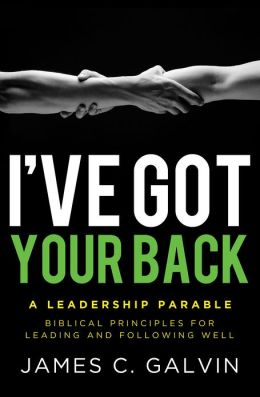
Book Review : I’ve Got Your Back

ivegotI am certain that all of have experienced some kind of “bad” leadership in our lives. Perhaps it was an elected official who displayed questionable behavior ethically. Perhaps it was an employer who was more concerned with profits and results than the well-being of their employees. Perhaps your “bad” leadership happened in a church setting as a pastor/ministry leader abused their position for self-gain. In his new book “I’ve Got Your Back; a Leadership Parable – biblical Principles for Leading and Following Well”, strategy consultant James Galvin takes on the matter of leadership in a unique and interesting way. Galvin believes that if Jesus were to write a book dealing with leadership today, He would communicate this message in story form.

Galvin’s book is in parable form which takes up the first two-thirds of the book. He chronicles the fictional journey of four college friends learning how to deal with various leadership problems at work and within the church. As these four gather together for Bible study, they realize they need guidance in the area of leadership. They are referred to a mentor who is a retired missionary for help. Through a series of weekly meetings, Jack (the mentor) gives the group assignments to work through while introducing them to good leadership principles. It is in this section that the reader is introduced to an aspect of leadership that is often overlooked and deserving of attention. Galvin describes this aspect as “followership”. He says, “the essence of leadership is helping people follow well.” Galvin says there are our kinds of leadership abusers and four ways to respond to them. The abusers are incompetent, disempowering, manipulative, and toxic. These are the issues that the mentees are dealing with in their own lives. Jack helps them to work through their difficulty by giving the four responses to “bad” leadership. The options are avoid leadership roles, perpetuate the cycle of abuse, hide behind servant leadership, and develop your unique potential. The reader here is introduced to the three types of follower scenarios: Type 1 (following God), Type 2 (following inherited leaders – family and government), and Type 3 (following human beings with or without organizational authority).

The last third of the book is a “Concise Theology of Leadership and Followership”. It is here that Galvin outlines the principles that are woven throughout the parable. Galvin uses extensive amounts of scripture to show the reader how following well in biblical. I enjoyed this book. I appreciate the emphasis on being a good follower as an integral part of leadership. “I’ve Got Your Back” reminds me a great deal of Patrick Lencioni’s “Death by Meeting”. A very practical and challenging work.

Disclosure of Material Connection: I received this book free from Handlebar Publishers as part of their Blogger Review Program. I was not required to write a positive review. The opinions I have expressed are my own. I am disclosing this in accordance with the Federal Trade Commission’s 16 CFR, Part 255: “Guides Concerning the Use of Endorsements and Testimonials in Advertising.”

Book Review : Godonomics

godonomIt is difficult to turn on the television today and not hear someone’s take on the sad state of the American economy. Words such as debt, recession, bailout, investments, capitalism, and economic bubble are part of the everyday discussion. There is a mad rush today between our major political parties to see who will rescue the nation from an anemic, failing, and ever-shrinking economy. In his new book, “Godonomics; How to Save Our Country and Protect Your Wallet Through Biblical Principles for Finance” pastor Chad Hovind asserts that neither the economic policies of the elephant and donkey will correct the present economic tailspin. Instead, it will be the Lamb’s policies and principles that offer the best chance of recovery. Hovind defines Godonomics as “God’s teaching and wisdom in the realm of finances and economics”. The structure of the book is unique. Hovind poses hypothetical questions that God would ask past and current economic thinkers and political leaders who have negatively impacted the nation’s economy. Such people include john Maynard Keynes, Franklin Delano Roosevelt, Alan Greenspan, Karl Marx, and the Internal Revenue Service.

Through his book, Hovind keeps the difference between capitalism; the free exchange of privately owned good and services and socialism; state control and state ownership of industry ad property before the reader’s eye. He begins with the Pilgrims and what would become the Massachusetts Bay Colony. Their earliest form of governance was, at its heart, a form of socialism where the goods and services of the individual are pooled together and redistributed to the entire colony. This system failed quickly and William Bradford searched the Bible for answers. He found the foundational principles that would become the blueprint for a new economic system, then and now. He understood that property rights, incentive, and freedom were critical to economic success. Throughout the book, Hovind demonstrates the erosion of these three. Hovind states, “a strong economy is fueled by production, and producing leads to profit. Profit covers our expenses and builds savings. Out of savings we spend, invest, and give to others”. The questions that Hovind believes that God would ask deal with the areas that work against his idea of a strong economy. The areas of concern involve work, profit, spending, budgeting, unintended consequences, liberty, money supply, greed, rule of law, and voluntary giving. The author does an excellent job of placing the beliefs of these leaders alongside the Bible to demonstrate the wisdom and prudence of considering God’s position on financial matters.

I really enjoyed this book. The most profound and relevant chapter in my opinion is the questions that God would ask President Franklin Delano Roosevelt. By breaking down the reasons for and the method of payment for FDR’s New Deal, Hovind draws a striking and ominous resemblance to President Barack Obama’s Troubled Asset Relief Program (stimulus packages). This chapter is worth the price of the book. Hovind’s treatment of the subject is biblical, objective, and thought-provoking. Godonomics is well-researched and timely. Godonomics is a true clarion call to consider the biblical vantage point of financial matters. An outstanding work. I highly recommend it.

Disclosure of Material Connection: I received this book free from Waterbrook Multnomah Publishers as part of their Blogger Review Program. I was not required to write a positive review. The opinions I have expressed are my own. I am disclosing this in accordance with the Federal Trade Commission’s 16 CFR, Part 255: “Guides Concerning the Use of Endorsements and Testimonials in Advertising.”

Book Review : Is College Worth It?

iscollegeMy son Jordan is an inbound high school junior. Conversations as of late have dealt with the importance of grades, potential college majors, and which, if any, colleges to attend. At the beginning of his freshman year, he was required, as every high school student is, to fill out an individual graduation plan. This is an ongoing process where parents, students, and guidance counselors meet and select future high school courses based on what the student anticipates majoring on in college. There is an assumption that every student will be attending college of some sort. Whether this turns out to be true or not, it is, at present, the across-the-board expectation. In his new book “Is College Worth It?, former US Secretary of Education William Bennett shares his perspectives on higher education in America and what the future of such education may look like. The premise and purpose of this book is found in his own words. He writes, “It’s time for parents and students to look at the entire enterprise of higher education and ask how, when, where, for whom, in what studies, and at what cost is a college education appropriate? And if it is not appropriate, what are the alternatives?” Bennett deals with the expectation I shared above.

“Is College Worth It?” breaks down into five chapters. In Chapter One: The Borrowing Binge, Bennett examines the costs of higher education. He deals with issues such as methods of paying for college, why tuition costs continue to rise at all schools, and the danger of amassing student loan debt. In Chapter Two: Creating a Financial Monster, Bennett deals in greater detail the national student debt crisis and the policies, both government and institutional, that have contributed to the growth of this “monster”. In Chapter Three: So Is It Worth It?, Bennett dives into the tangible and intangible factors that help to determine whether a college degree is worth the time and money. Here, Bennett deals with career choices and gives several lists of schools and universities to be considered based on student priorities. In Chapter Four: The Lower Side of Higher Ed, Bennett brings to light the reality that despite the high price tag of a college education, students are exposed to professors pushing their personal political and societal agendas, classroom instruction being farmed out to adjunct professors and graduate students, and ever-lowering expectation of students. He also deals with the party atmosphere of colleges and what students are exposed to. In Chapter Five: With Eyes Wide Open, Bennett shares suggestions, recommendations, and possible solutions to problems that are plaguing the higher education system today. A few of the options include online learning, hybrid models, and non-traditional approaches to obtaining a quality education including religious and military institutions.

“Is College Worth It?” is, in my opinion, a monumental work. Well-written, smart, honest, thoroughly researched, and extremely relevant, this book brings into plain view the challenges and obstacles facing students preparing for college. I will certainly use the information and wisdom here as we as a family deal with our upcoming college decisions. Every parent would benefit greatly by reading. I highly recommend.

Disclosure of Material Connection: I received this book free from Thomas Nelson Publishers as part of their Blogger Review Program. I was not required to write a positive review. The opinions I have expressed are my own. I am disclosing this in accordance with the Federal Trade Commission’s 16 CFR, Part 255: “Guides Concerning the Use of Endorsements and Testimonials in Advertising.”

Book Review : The Spiritual Warrior’s Guide to Defeating Jezebel

jezebelJezebel. Not a name mothers give to their daughters. The very name invokes an image. Biblically, it is an image of false worship, idolatry, pride, and manipulation. Culturally, it is an image of seduction, immorality, control, and power. in her new book, “The Spiritual Warrior’s Guide to Defeating Jezebel; How to Overcome the Spirit of Control, Idolatry, and Immorality” author and pastor Jennifer LeClaire introduces the reader to the “spirit of Jezebel” that is present in the world today. We know of the woman Jezebel from the biblical accounts from First and Second Kings. She was the wife of Israel’s King Ahab. A few of her sinister activities included having the prophets of God killed, the propagation of  false worship across the nation of Israel, and the scheme to defraud Naboth of a vineyard for her husband. LeClaire states that the spirit of Jezebel existed long before the woman Jezebel ever come along.

Although many descriptions have been given through the years, LeClaire succinctly proclaims “Jezebel is essentially the spirit of seduction. Jezebel works to seduce us into immorality and idolatry.” LeClaire uses Easton Bible Dictionary to show how evil this spirit is. “Jezebel has stamped her name on history as the representative of all that is designing, crafty, malicious, revengeful, and cruel. She is the first great instigator of persecution against the saints of God.” Matthew Henry call Jezebel “a zealous idolater, extremely imperious and malicious in her natural temper, addicted to witchcrafts and whoredoms, and every way vicious.”  LeClaire goes into great detail to show how this spirit is at work today. She demonstrates what this spirit looks like in the church today, the avenues by which the spirit of Jezebel operates, and the desired outcomes. She also gives the spiritual tools and weapons to defeat this spirit.

Overall, this is an okay book. I had a difficult time in a few places due to LeClaire’s theology (i.e. her belief that the office of the apostle still exists and the female pastorate). In her attempt to cover every possible manner in which this spirit could manifest itself, she has left this book a mile wide and an inch deep. This detracts from the overall effectiveness of the book.

Disclosure of Material Connection: I received this book free from Bethany House Publishers as part of their Blogger Review Program. I was not required to write a positive review. The opinions I have expressed are my own. I am disclosing this in accordance with the Federal Trade Commission’s 16 CFR, Part 255: “Guides Concerning the Use of Endorsements and Testimonials in Advertising.”

Book Review : Prepared for Grace, by Grace

preparedDepending on one’s theological point of view, the terms salvation, election, and grace have different connotations. For example, of an individual leans toward reformed theology, most commonly known as Calvinism, there is a belief that God’s sovereignty crowds out man’s God-given free will. As a result, He chooses who will be saved and they have no choice either way because God’s grace is irresistible. One of the functions of grace that reformers hold to is the Puritan belief in “preparatory grace”. This is the focus of Joel Beeke and Paul Smalley’s new book, “Prepared by Grace, for Grace; The Puritans on God’s Ordinary Way of Leading Sinners to Christ”. The authors point out that the Puritans believed and taught that God was working grace in the lives of individuals before they accepted the call of salvation. Simply put, the Puritans believed that the grace that was necessary for their salvation is applied to the believer even before the moment they are saved.

The authors state that this doctrine preparation addresses the question as to the manner in which God “ordinarily” brings a person to a saving knowledge of Christ. Not all questions are answered. In their own words, “Specifically, is conversion an event or a process? If a process, how does the work of conversion begin? There may be exceptional cases, but in general, is there a pattern to conversion? They take the position that it is a process. They write, “Many Puritans of England and New England answered these questions with the doctrine of preparation. People must be prepared to believe in Christ before they exercise such faith. Such preparation of the heart may be viewed as a part of the process that leads to conversion.” Even here, questions remain. The remainder of the book is dedicated to explaining this pre-working of God’s grace.

This book is full of quotes from Puritan authors and modern day reformed scholars. This book is well researched and has the feel of a collection of essays that don’t quite fit together. It also has a textbook feel to it. There are so many quotes and footnotes that is becomes distracting. The authors, in an attempt to elaborate their point, bring in too much peripheral work. For example, while saying what preparatory grace is, many times they give extensive examples of what it is not. Thus muddying the water. There is too much inclusion of unnecessary thought. Far too much time is given to trying to figure out God’s mind in terms of a human process.

I have to be honest here. I do not embrace Reformed Theology. I have a difficult time with the subject, not intellectually but practically. I am quickly offended by the pride and arrogance with which a number of reformed authors write. That being said, “Prepared by Grace, for Grace” has some excellent content with the covers and there is much to be gleaned here. I took away some great things from this book. It is however not a book that I can recommend.

Disclosure of Material Connection: I received this book free from Cross Focused Reviews as part of their Blogger Review Program. I was not required to write a positive review. The opinions I have expressed are my own. I am disclosing this in accordance with the Federal Trade Commission’s 16 CFR, Part 255: “Guides Concerning the Use of Endorsements and Testimonials in Advertising.”
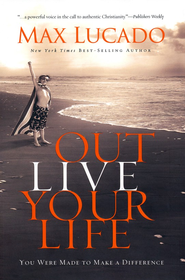
Free Book Friday

outliveIt is time for me to take down and give away another book off of my bookshelf.  I am giving away a copy of Max Lucado’s “Out Live Your Life”. In this book, Lucado challenges the reader to make a difference that will last beyond your time on earth.

To be entered to win, you must do (2) things.

1. Follow my blog by clicking on the button at the bottom of the page.

2. Answer the following question by leaving your answer in the comment stream.

If time and resources were of no concern, what is the one thing you would you do in order to make a difference in this world? Be specific.

I will select a winner from all the entries and announce the winner here.

Good luck. Entry deadline is June 13th.