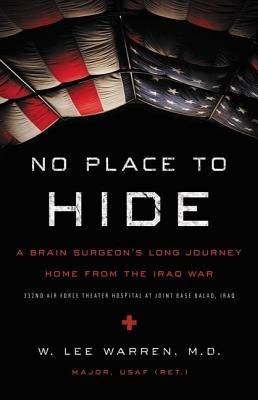
No Place to Hide

noplacetohideOur country has been locked into a war in Iraq and Afghanistan for going almost thirteen years. During this time, on a regular basis, we have been exposed to the reality of extended troop deployments, suicide bombers, and unspeakable acts of violence against innocent civilians on behalf of our enemies. At the same time, we have also been introduced to incredible acts of heroism, sacrifice, and love for our fellow man, regardless of the uniform. There has been one area that has had little to no exposure: combat hospitals. In “No Place to Hide; A Brain Surgeon’s Long Journey Home From the Iraq War”, neurosurgeon and US Air Force Major Lee Warren shares the stories of his four month deployment to Iraq in 2004. Warren chronicles his time at the largest American hospital in the region in gripping fashion. His book brings to light the horror and tragedy of war, as well as the psychological, physical, and emotional toll that war can take on the human body and mind.

No Place to Hide is actually a story of two wars. On one hand, there is the Iraq War with all the tragedy and death that comes with war. The other war is a personal one, with ties to the home front. As Warren arrives in theater, his marriage is falling apart and his personal faith is unstable at best. Warren, in vivid detail, tells the personal and professional stories of his fellow doctors, nurses, American soldiers, Iraqi civilians, and the terrorists that he comes into contact with. Warren’s book is a beautiful juxtaposition. Good and evil, compassion and anger, joy and misery are smartly laid beside each other in order to tell an engrossing and addictive story. Be prepared for an in-your-face and brutally honest look at life in the midst of war.

Disclosure of Material Connection: I received this book free from Thomas Nelson Publishers as part of their Blogger Review Program. I was not required to write a positive review. The opinions I have expressed are my own. I am disclosing this in accordance with the Federal Trade Commission’s 16 CFR, Part 255: “Guides Concerning the Use of Endorsements and Testimonials in Advertising.”
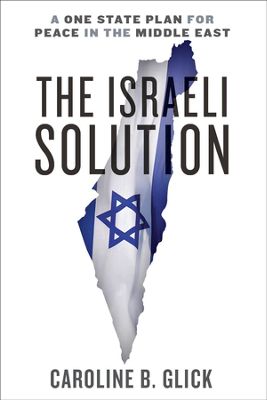
Book Review : The Israeli Solution

israeliAn almost ever-present segment in newspapers, twenty-four hour news channels, and news magazines is the crisis in the Middle East. Regularly we hear of a terrorist bombing in Jerusalem, new rounds of peace talks between Israelis and Palestinians, and calls from nations for Israel’s destruction. At the heart of all the hated, discussion, and confusion is one simple matter: Israel’s right to exist as legitimate sovereign nation. Caroline Glick, senior contributing editor to the Jerusalem Post and former member of Israel’s negotiations team with the Palestinians has weighed in on this matter in her new book, “The Israeli Solution; A One-State Plan for Peace in the Middle East”. It is here that she takes an “in the trenches” look at the often-touted two-state solution for Middle Eastern peace. She presents the fallacy of this plan and the shallow-thinking behind it when she writes, “Establishing a Palestinian state, so the thinking goes, would be a panacea for all the region’s ills. It would end the Arab world’s conflict with Israel, because the reason the Arab world is anti-Israel is that there is no Palestinian state. It would also nearly erase the Arab world’s anti-Americanism, because the reason the Arabs – and the larger Muslim world – are anti-American is that the United States supports Israel even though there is no Palestinian state. Based on this thought chain, most American policy makers across the ideological spectrum share the view that the establishment of a Palestinian state west of the Jordan River would remove the principal cause of the violent extremism that afflicts the Arab and the larger Islamic world.”

In the first part of her book, “The Middle-East’s Beloved Chimera”, Glick gives attention to a favored two-state plan by leaders of the western world and how that vision is only a pipe dream. We also see in this section the surprising and disappointing stance of the United States in favor of a two-state plan for the Middle East and the increasing hostility of the United States toward Israel. Case in point, President George W. Bush, “It is untenable for Israeli citizens to live in terror. It is untenable for Palestinians to live in squalor and occupation.” Former Secretary of State Condoleezza Rice said there “could be ‘no greater legacy for America’ than to establish a Palestinian state. The U.S. goal was to lead ‘serious negotiations’ that would establish a Palestinian state ‘as soon as possible.’” Finally, President Barrack Obama, “A lasting peace will involve two states for two peoples: Israel as a Jewish state and the homeland for the Jewish people, and the state of Palestine as the homeland for the Palestinian people, each state enjoying self-determination, mutual recognition, and peace.” Glick also gives an entire chapter to President Bill Clinton’s failed attempts to secure a two-state plan, highlighting his uneasy closeness with PLO leader Yassir Arafat.

In part two, “The Israeli One-State Plan”, Glick discusses what a one-state plan would look like. She writes, “In essence, then, the main thing that the Israeli one-state plan – that is, the application of Israeli law over Judea and Samaria – requires of both Israel and its closest ally is that they embrace reality, with all its opportunities and threats, and stop chasing fantasies of perfect solutions. The mechanics of the policy are fairly straightforward. Israel will apply its laws to Judea and Samaria and govern the areas as normal parts of Israel. The military government will be dissolved, as it was in the Golan Heights in 1981, when Israel applied Israeli law to that area.” In this section, she defends her plan by refuting the claims that the demographic changes will result in an Arab majority in relation to the Jews. Glick calls attention to the historical claims of Israel’s legitimacy and how international law and principles of self-defense allow only for a one-state plan in the Middle East. In the third section, “Probable Fallout”, Glick shares what would be the likely repercussions of from the point of view of Palestinians, Europe, the United States, and other Arab nations in the region if Israel actually put forward this one-state plan. Although there will be some fallout, the plan would see the welfare of the region increase.

Glick has written a powerful and passionate book. “The Israeli Solution” is meticulously researched and developed. Her background allows her to write with authority, clarity, and passion. This is a book that national leaders need to pick up, read, and give serious consideration to. Glick concludes with these words, “The Israeli one-state plan provides an equitable, democratic means of resolving the conflict, and by safeguarding Israel’s national and legal rights, it secures Israel’s strategic posture. It neutralizes the Palestinians’ capacity to destabilize Israel domestically and delegitimize it internationally, and it strengthens Israel militarily, both from foreign invasion and from terror assaults.”

Disclosure of Material Connection: I received this book free from Waterbrook Multnomah Publishers as part of their Blogger Review Program. I was not required to write a positive review. The opinions I have expressed are my own. I am disclosing this in accordance with the Federal Trade Commission’s 16 CFR, Part 255: “Guides Concerning the Use of Endorsements and Testimonials in Advertising.”

Book Review : What Works

whatworksThere is no shortage of books espousing a particular political viewpoint these days. Whether you are a Republican, Democrat, Libertarian, or somewhere in between, someone has written about what you believe. Such a book has been written by syndicated columnist Cal Thomas. His book, “What Works: Common Sense Solutions for a Stronger America” is a strong summary statement of conservative Republican beliefs and viewpoints. Going one step further, Thomas also writes from the conservative Evangelical Christian worldview. He believes it is Groundhog Day in Washington, DC. What Thomas sees coming out of Washington are the same ideas, the same talking points, the same “fixes” that have never worked with simply a new name. He believes Congress is stuck in a loop that mirrors Bill Murray’s character in the movie Groundhog Day.

Thomas is a newspaper columnist. This book is certainly written in that vein. He is direct and to the point. He pulls no punches. His research is solid and allows our founding documents to demonstrate how far we have drifted from our traditional Judeo-Christian beginning. He smartly uses these documents, the verbal positions of lawmakers today, and the Bible to show where we truly are as a nation today. His book has four main parts with multiple sub-points. Part One deals with looking to the past at what did not work and employing common sense for future work. Part Two magnifies the importance of people and minimizes the importance of politics. Part Three gives practical steps on solving our problems today. Part Four gives attention to those things what make a difference going forward. If you are looking for a book that lays out the conservative Republican agenda, this is it. Smart. Timely. Educational. I highly recommend it.

Disclosure of Material Connection: I received this book free from Harper Collins Publishers as part of their Blogger Review Program. I was not required to write a positive review. The opinions I have expressed are my own. I am disclosing this in accordance with the Federal Trade Commission’s 16 CFR, Part 255: “Guides Concerning the Use of Endorsements and Testimonials in Advertising.”

Book Review : Killing Jesus

killingjesusThis week is what is known as Passion Week within the Christian community. This week represents Jesus’ last week on earth. Within these seven days we see Jesus’ entry into Jerusalem on what we know as Palm Sunday. We see Jesus observing the Passover meal with His disciples and the inauguration of the Lord’s Supper. We see His passionate and burdened prayer to His Father in the Garden of Gethsemane. We see His betrayal by one of His own and His subsequent arrest. We also see His mock trials before the Jewish High Priest Caiaphas and the Roman prefect Pontius Pilate. Within this week we also see His scourging, crucifixion, death, burial, and resurrection. Questions surround Passion Week. Questions such as “Who was responsible for Jesus’ death?”, “Why did Jesus have to die?”, “What part did Rome play?”, and many others like these are asked, some deep within ourselves. In his new book, “Killing Jesus; The Unknown Conspiracy Behind the World’s Most Famous Execution”, New York Times Best Selling Author Stephen Mansfield has written a monumental work that sets the stage for the resurrection of Jesus Christ.

Mansfield’s approach to this book is unlike any I have ever seen in this subject. In his introduction he writes, “The execution of Jesus was a crime born of the streets, the barracks, the enclaves of the privileged, and the smoke-filled back rooms of religious and political power brokers.” This simple sentence will be fully developed as the book unfolds and the reality of Mansfield’s conspiracy comes to light. He writes as if he is putting onto paper what the characters and onlookers might have been thinking. His brilliant symmetry of four different languages, three different calendaring systems, and lesser known historical accounts make this book work, and work well. In his twenty-one chapters, Mansfield introduces the players in the conspiracy, the cultural contexts and nuances, and the motives behind the conspiracy to put to death the Son of God.

Killing Jesus is an all-out assault on the senses. Mansfield employs a writing style that mimics that of a painter. He enables the reader to feel as if they are part of the crowds at the arrest, the trials, and the crucifixion. His style of writing lets the reader taste the disgust that the High Priest had for Jesus and see the disappointment in Jesus’ face at the betrayal. The reader can hear the bleating of thousands of lambs being slaughtered on Good Friday and the smell the blood that was subsequently shed. He writes, “Then, in that otherworldly voice that has come from him just moments before, he shouts, ‘Father, into your hands I commit my spirit’. It is more than a shout. It is a scream, really. And since it is three in the afternoon on the Day of Preparation, his scream blends with the screaming of the lambs. And he is gone.” This book is more felt than read. Mansfield has a winner here. This book is powerful, convicting, sobering. I would dare say it is a must read for all who wish to better understand Jesus’ Passion.

Disclosure of Material Connection: I received this book free from Worthy Publishers as part of their Blogger Review Program. I was not required to write a positive review. The opinions I have expressed are my own. I am disclosing this in accordance with the Federal Trade Commission’s 16 CFR, Part 255: “Guides Concerning the Use of Endorsements and Testimonials in Advertising.”

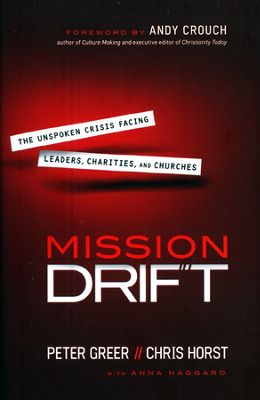
Book Review : Mission Drift

missiondriftEvery business or ministry had a reason for its beginning. In the mind of the executive or ministry leader, there was a specific reason for launch. At the root of their existence was a service to be provided; whether it was for profit or not. In the beginning, it is very clear what the purpose and mission is. It is very easy to hold onto it. Over time however, the organization begins to make decisions and set priorities that pull them away from the original mission which causes a blurring of the lines. In the military community this phenomenon is known as mission creep. It is the broadening of the mission beyond the original goals and objectives. In the secular world it goes by a different name: mission drift. Peter Greer and Chris Horst, both serving with HOPE International have written a new book dealing with this very issue. “Mission Drift; The Unspoken Crisis Facing Leaders, Charities, and Churches” is their contribution to the defeat of this silent killer.

Mission Drift can be defined as the gradual movement of a business or ministry away from its founding principles and mission. This is the natural tendency of any business or ministry. The authors begin their explanation of mission drift by providing a case study. They highlighted Harvard and Yale. Both Ivy League schools were, at their inception, schools dedicated to the training and equipping of pastors in the proclamation of the gospel. Fast forwarding to the current day, we see these two institutions have drifted from their distinctively Christian founding. Greer and Horst smartly weave stories of other companies who drifted from their original mission. Mission Drift organizations include Harvard, Yale, Big Idea® (Veggie Tales), Child Fund®, YMCA®, Pew Trusts®, and United Airlines®. The authors introduce another phrase into the discussion early on: mission true. Mission True organizations protect their identity and remain faithful to their founding principles/mission. In an attempt to educate organizations on how to remain true to their mission, Greer and Horst offer thirteen characteristics of Mission True organizations. A sample of those characteristics are that these organizations make hard decisions to protect and propel their mission, assume they will drift and build safeguards against it, and boldly proclaim their core tenets to protect themselves from drift. At the end of each chapter, there are steps to carrying out the given instruction. Examples of Mission True organizations are HOPE International ®, Intervarsity®, Young Life®, Cru®, and Buck Knives®.

As a pastor, I can see the reality of this book. Knowing our true purpose, it is a challenging task to keep society and culture from dictating what we do. Greer and Horst have written a book that will serve organizations positively in their pursuit of remaining mission true. The authors close with this statement, “Today, you have the privilege of choosing which path your organization, church, and ministry will take. Will you follow the path toward Mission Drift or will you have the intentionality, courage, and resolve to follow a path of faithfulness?” A solid, helpful, and much-needed work. I would recommend this book to all organizational and ministry leaders.

Disclosure of Material Connection: I received this book free from Bethany House Publishers as part of their Blogger Review Program. I was not required to write a positive review. The opinions I have expressed are my own. I am disclosing this in accordance with the Federal Trade Commission’s 16 CFR, Part 255: “Guides Concerning the Use of Endorsements and Testimonials in Advertising.”

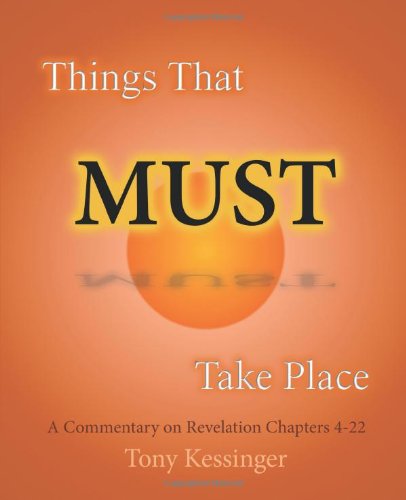
Book Review : Things That Must Take Place; A Commentary on Revelation 4-22

thingsthatmustOf all the books in the Bible, the book of Revelation is arguably the most exciting book to study and the least understood. The language, imagery, and future events make it interesting, yet complicated. While at points invoking a sense of fear and angst, there is a greater sense of peace and comfort to be found in the fact that Jesus Christ will deal with this world in a way that honors the Father. There is no shortage of books, commentaries, and movies that deal with how the events of Revelation will unfold. Recently, I finished reading one such commentary. Pastor Tony Kessinger has written a commentary entitled, “Things That Must Take Place; a Commentary on Revelation Chapter 4-22”.

Kessinger, in his introduction, front loads a great deal of information that will help the reader as the book moves along. Kessinger begins with chapter four of Revelation which marks, as Kessinger states, “a break in the narrative” moving from the things that have been to the “things that must take place after these things.” It is also in chapter four that we find the church having been raptured out of the world. Kessinger speaks of methods of interpretation. He suggests that many scholars interpret the Bible literally until they get to Revelation and then shift to symbolic interpretation. He gives fifteen reasons why Revelation should be interpreted literally. Kessinger also describes the different millennial views of the Second Coming of Christ. The author holds to, and writes from, the premillennial viewpoint. Also, Kessinger explains the significance of certain numbers used throughout the book that cast a helpful light in many places.

The remainder of the book flows like most commentaries. Each chapter of Kessinger’s book deals with one chapter of Revelation. In these chapters, Kessinger offers a verse-by-verse exposition and giving appropriate attention to the weightier portions. He brings other prophetic scriptures (Daniel, Ezekiel) into this commentary for a balanced biblical exposition of end-times prophecy. What is unique and very helpful about this commentary is that Kessinger offers background information (word studies, historical people/places, etc.) that seem to pull everything together. For example, in the chapter covering Revelation 15, Kessinger offers what he calls a “Comparison of the Plagues of Egypt and the Revelation Judgments”. At the end of a majority of the chapters are two helpful features. There is a Sequence of Events that quickly gives a recap of the order of the previously described events. There is also an Application section. It is here that Kessinger answers the question, “What does this mean for me today?” This is a great book. I really enjoyed the work and will use it without a doubt.

Disclosure of Material Connection: I received this book free from Worthy Publishers as part of their Blogger Review Program. I was not required to write a positive review. The opinions I have expressed are my own. I am disclosing this in accordance with the Federal Trade Commission’s 16 CFR, Part 255: “Guides Concerning the Use of Endorsements and Testimonials in Advertising.”

Book Review : Blood Moon Rising

4bloodmoonsProphecy and end-time discussion is big business today. We constantly see new books, studies, and movies that deal with various interpretations of end-time events. People are curious. People are scared. People today want to know if the failing economy and ongoing wars are a precursor to some apocalyptic event. The Bible is very clear in two things: the world as we know it will come to an end and there will be signs that point toward that end. Pastor and attorney Mark Hitchcock has written a book that addresses one of these believed signs pointing to the Lord’s coming. His book is called “Four Blood Moons; Bible Prophecy, Israel, and the Four Blood Moons”. The theory that a series of four blood moons are linked to the return of the Lord Jesus Christ was first brought to mainstream media by Mark Blitz and then picked up by John Hagee.

Hitchcock, speaking of signs says, “Simply stated, prophetic signs of the times are current events that foreshadow future events predicted in the Bible. Signs of the times are like signs on the highway: they point toward or herald what’s ahead. They indicate what’s coming. Signs of the times are not fulfillment of prophecy per se but are events that indicate future fulfillment of prophecy.” One such supposed “sign” that is gaining traction today is called the Blood Moon Prophecy. This prophecy is wrapped up in an astronomical event known as a tetrad. A tetrad is the appearance of four blood moons (lunar eclipses) falling on two Jewish feast days (Passover and Feast of Tabernacles) in successive years. Adding to the interest of this prophecy is the reality that significant events have happened in the nation of Israel in conjunction with the occurrence of these blood moons. There have been three previous tetrads (1493-1494, 1949-1950, and 1967-1968) with the next predicted for 2014-2015. This will be the final tetrad of this century. Hitchcock begins his book with an introduction as to what spiritual signs are how one should approach and respond to them. In order to present the proper framework and context for this later discussion regarding blood moons, Hitchcock gives ten signs that he believes are the “biblical framework or mirror for events today that serve as true signs of the times”. Chapters five, seven, and eight offer the much needed background and context.

Hitchcock’s book takes on a critique feel toward the latter half. He deals a lot with John Hagee’s book, “Four Blood Moons; Something is About to Change”. Hitchcock is not convinced that the blood moon prophecy, as an actual signpost to the Lord’s coming, holds water as many proponents do. Beginning in chapter seven, Hitchcock lays down his own groundwork as to why the blood moon prophecy is full of holes and is not reliable. The major premise of the blood moon prophecy is that the four blood moons serve as signs of major events in Israel’s history. Hitchcock examines the five passages of scripture that blood moon proponents base their theories upon. He concludes that blood moon theorists have two main problems. First, the major events that took place in the nation of Israel occurred before the actual tetrad. So, in the author’s conclusion, they cannot serve as a sign pointing forward. Second, the blood moon theorists are guilty of faulty methods of interpretation. When they look at the scriptures dealing with blood moons, they neglect the other signs that go along with it. Having read John Hagee’s “Four Blood Moons” prior to this one, I am convinced that blood moon theorists are guilty of proof-texting and sensationalism.

Mark Hitchcock has written a great book. It is well researched, balanced, and fair to the other books on the same subject. As this subject gains attention in the future, it is important to have a work that deals with the Blood Moons Prophecy in a way that highlights its flaws and shortcomings. I would highly recommend this book to any Christian who is interested in the signs that are pointing to the coming of the Lord.

Disclosure of Material Connection: I received this book free from Tyndale House Publishers as part of their Blogger Review Program. I was not required to write a positive review. The opinions I have expressed are my own. I am disclosing this in accordance with the Federal Trade Commission’s 16 CFR, Part 255: “Guides Concerning the Use of Endorsements and Testimonials in Advertising.”

Book Review : The People Factor

peoplefactorIn life, you cannot get around relationships. Regardless of where we go or what we do, there will be people involved. Whether it is school, work, church, or family, it is important that we know how to involve ourselves in healthy, functioning, and beneficial relationships. This is the premise of Pastor Van Moody’s new book “The People Factor; How Building Great Relationships and Ending Bad Ones Unlocks Your God-Given Purpose”. On this subject, Moody writes, “You have some kind of relationship with everyone you encounter. Some relationships are extremely personal and some are strictly professional. Some are casual and on-the-surface relationships, and some are intimate and deep. But every relationship you have influences your life. There are no neutral relationships. Each one lifts you up or weighs your down. It moves your forward or holds you back. It helps you or it hurts you.”

Moods begins the first section of his book by giving the reader ten relationship laws that govern all relationships regardless of the nature. These include the Laws of Being Real, Mutual Benefit, Agreement, Letting Go, Selectivity, Sacrifice, Against Secrets, True Value, Loyalty, and Constructive Transition. In each chapter, Moody goes into detail about how each law is fleshed out in our daily lives. Also, each chapter also has a Relationship Reminder section at the end that are simply bullet points that summarize the chapter. In addition, there are questions designed to dig deeper into the covered material in each chapter. In Section Two, Moody covers how to deal with unhealthy relationships by explaining what they look like and how to get out of them if necessary. In Section Three, Moody talks healthy relationships. He introduces the reader to what he calls the Vertical Factor. Speaking of God’s love, Moody writes, “This is the vertical aspect of relationship; it goes up and down, between God in heaven and us on earth.” Moody has a good book here. It is in-depth without being too much like a textbook. I highly recommend.

Disclosure of Material Connection: I received this book free from Thomas Nelson Publishers as part of their Blogger Review Program. I was not required to write a positive review. The opinions I have expressed are my own. I am disclosing this in accordance with the Federal Trade Commission’s 16 CFR, Part 255: “Guides Concerning the Use of Endorsements and Testimonials in Advertising.”

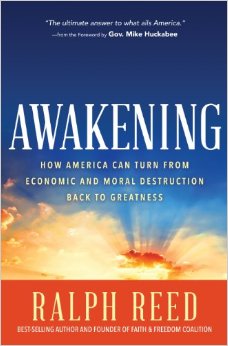
Book Review : Awakening; How America Can Turn From Economic and Moral Destruction to Greatness

awakeningI would dare say that little argument can be found over the notion that the United States has lost/is gaining ground as a leader among other nations. Signs pointing to this reality are clear and increasing. It seems every day that another block is removed from the conservative foundation that this great nation was built upon. It has been argued that Rome fell, not because of an outside military threat, but fell because of inward corruption. Ralph Reed, founder of the Faith and Freedom Coalition, in his new book, “Awakening; How America Can Turn From Economic and Moral Destruction Back to Greatness”, seems to agree as he writes, “Similarly in America, the most lethal threat to freedom today comes not from a foreign military opponent. It comes from within.” The faces of this internal corrosion include, but are not limited to tax-payer funded abortion, bi-partisan conflict in Congress, weakened foreign policy, economic slowdown bordering on depression, an overstretched and burdened military, exponential growth in the national debt, government sanctioned persecution of the Christian faith as seen in IRS harassment, assaults on the institution of marriage, rises in pornography, gambling, human trafficking, and many other moral issues.

Reed sets the stage for a comeback with a sobering picture of what a prosperous and conservative America looks like. He begins by describing what is a called spiritual cycles. This refers to the course that a country runs from prosperity to want. He uses the nation of Israel as an example. The Bible gives us an up close picture of a nation that went from good to bad to good. Spiritual cycles, as Reed writes, move through a series of six stages, “Faith leading to obedience to God’s laws, obedience creating abundance, abundance leading to pride, pride leading to apostasy, apostasy leading to defeat and judgment, and repentance leading back to faith.” Reed shows how America was on the front side of this cycle as a nation built upon Judeo-Christian values. He also shows how America prospered under the leadership of President Ronal Reagan. This is section entitled “In Motion”, or what America looked like before the wheels starting coming off the cart.

In the second section, entitled “Off Course”, Reed demonstrates how America, now under the leadership of a President Barrack Obama, who is the polar opposite of Ronald Reagan, is languishing in the fourth and fifth part of the spiritual cycle. Reed cites matters such as a disregard for sanctity of the US Constitution, his spoken support of same-sex marriage, failure to act decisively in foreign policy matters, and increasing the dependency of the poor on government services as the signs of a dangerous drifting from conservative roots. In Section Three, “Awakening”, Reed gives the steps that we can take to bring America back to greatness. His steps are: The Reenergizing of Lincoln’s Party, A Bold Pro-Family Plan, and A Call to Christian Citizenship.

Reed has written a great book. I really enjoyed Reed’s background on the forming of America as a conservative nation. This is very helpful. I also liked how Reed set the presidencies of Reagan and Obama alongside each other using the words and press reports from each presidency. The book becomes a summary of the failures of the current administration. I have no problem with this, but I am sure Democrats will take issue here. All in all, Awakening is a well-researched, passionately written clarion call to return to the moorings that made America great.

Disclosure of Material Connection: I received this book free from Worthy Publishers as part of their Blogger Review Program. I was not required to write a positive review. The opinions I have expressed are my own. I am disclosing this in accordance with the Federal Trade Commission’s 16 CFR, Part 255: “Guides Concerning the Use of Endorsements and Testimonials in Advertising.”

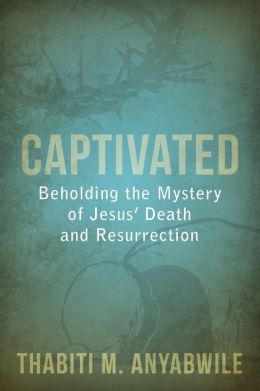
Book Review : Captivated

captivatedIt is possible to be exposed to something for so long it loses its significance and value. I believe this has happened as it relates to Jesus Christ. So many books, so many moves, so many sermons have been dedicated toward the life and ministry of Jesus Christ. Sadly, He is becoming common-place, with all of the wonder and reverence quietly diminishing. Thabiti Anyabwile, pastor of First Baptist Church Grand Cayman has written a new book entitled, “Captivated; Beholding the Mystery of Jesus’ Death and Resurrection”. In this relatively short work, ninety-four pages, Anyabwile makes a passionate plea to return our attention and amazement back to the person of Jesus Christ. With the Easter holiday season fast approaching, the timing for this book is perfect.

Captivated takes an honest and probing look at five questions surrounding the death and resurrection of Jesus Christ. These events stretch from Jesus before Pilate to the resurrection itself. Captivated began as a series of sermons Anyabwile shared with his congregation. I enjoyed the subject matter very much. A challenge to refocus and reexamine the teachings we have heard for years is always a good thing. There are a few things I did not like about the book. Due to the weightiness of the subject matter, the brevity of the book is a hindrance. I believe there is a lot more that could and should have been said in order to fully develop some points. Books that begin as sermons often struggle to capture what the original listeners heard. The flow seemed to clearly be one of “preaching points”. Although scripturally sound and passionately written, Anyabwile’s work is good, but not great.

Disclosure of Material Connection: I received this book free from CrossFocused Reviews Publishers as part of their Blogger Review Program. I was not required to write a positive review. The opinions I have expressed are my own. I am disclosing this in accordance with the Federal Trade Commission’s 16 CFR, Part 255: “Guides Concerning the Use of Endorsements and Testimonials in Advertising.”