Book Review : Jesus; A Theography

Do we really need another book about the life and ministry of Jesus Christ? Is there really anything new to be said that has not been said already? I believe that another book was needed. I believe this book was needed. Leonard Sweet and Frank Viola have come together to write, “Jesus; a Theography”. The authors offer as a given that most books on the person of Jesus Christ start with the manger in Bethlehem and for the most part single out the gospels from which to tell His story. Sweet and Viola reveal early on what their intent and focus of the book will be. They write, “we are less concerned with every fact and detail of Jesus’ life than we are about the narratives, metaphors, signs, and symbols that reveal pictures of God’s touching of humanity through the person and identity of Jesus.”

This book has a unique approach. It begins with the Old Testament (the authors call it the First Testament) which they show is the story of Jesus Himself. The authors take the reader all the way back to creation and then begin walking forward highlighting all the signs, forms, shadows, people, structures, and pictures that show Jesus existed before creation itself. This forward-walking from the past also highlights man’s sin and the reason why Jesus can be the once-for-all atonement for his sin.

As the authors approach the New Testament (they call it the Second Testament), they do so chronicling  Jesus’ presence ad activity not only in Bethlehem, but through His childhood, earthly ministry, call of the disciples, healing and miracles, His trial, death, burial, resurrection, and ascension. While sharing the New Testament Jesus, the authors faithfully looked back and connected Jesus’ life to the Old. Their purpose for this approach is further stated when they write, “The twenty-seven books of the New Testament are largely a commentary on the Old Testament, and each part of the Bible is a signpost to Jesus. Once this is properly understood, everything changes, including our own identities.”

 “Jesus; a Theography” is well written and well researched. Although this book has better than 300 pages and is extensively documented, it does not a have that textbook feel. I believe all Christians can pick up this book and be enlightened, challenged, and blessed. I believe the uniqueness of this book, the one trait that sets it apart, is the fact that the authors show Jesus’ relationship to the Old and New Testaments not as an “either/or” choice, but as a “both/and” fact. Outstanding work. I highly recommend.

 Disclosure of Material Connection: I received this book free from Thomas Nelson Publishers as part of their Blogger Review Program. I was not required to write a positive review. The opinions I have expressed are my own. I am disclosing this in accordance with the Federal Trade Commission’s 16
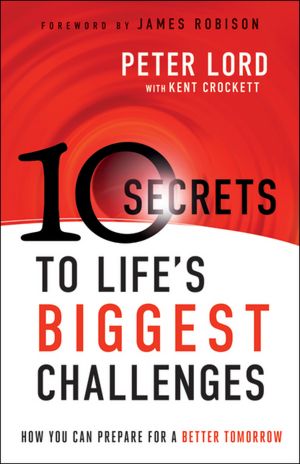
Book Review : 10 Secrets to Life’s Biggest Challenges

I recently completed Peter Lord’s new book, “10 Secrets to Life’s Biggest Challenges: How You Can Prepare For a Better Tomorrow”. Something about the title drew me in. I mean, everyone has challenges. Life is full of them. Who would not want to become better prepared in dealing with these challenges? Lord provides a solid framework to overcoming life’s major challenges. With a healthy and balanced mixture of scripture, personal experience, and practical wisdom, Lord has presented a deep subject with ease and clarity. The ten challenges are as follows:

1. Making Decisions
2. Overcoming Temptations
3. Developing Relationships
4. Resolving Conflicts
5. Healing Your Hurts
6. Adjusting Your Attitudes
7. Managing Money
8. Trusting through Trials
9. Submitting to Authorities
10.Preparing for Death

Lord presents these ten challenges broadly on the front end, but then narrows them down by giving specific steps, instructions, and keys to overcoming each challenge. Each chapter (challenge) also contains study and reflection questions that further allow the reader to understand the make-up and pitfalls of each challenge. I am glad I picked up this book. Although this book is written for a Christian audience, the lessons and principles are universal. A great work, one that I will use in the future.

Disclosure of Material Connection: I received this book free from Bethany House Publishers as part of their Blogger Review Program. I was not required to write a positive review. The opinions I have expressed are my own. I am disclosing this in accordance with the Federal Trade Commission’s 16 CFR, Part 255: “Guides Concerning the Use of Endorsements and Testimonials in Advertising.”

Book Review : American Patriots

We often hear of the sacrifices our founding fathers made for their country. We often hear of the price our founding fathers had to pay to ensure the freedoms we all enjoy today would always be. We often hear of these “founding fathers”, but we are rarely introduced to them or enlightened as to their personal sacrifices. In his new book, “American Patriots; Answering the Call to Freedom”, Senator Rick Santorum presents the reader a fresh and insightful look as twenty-five of the heroes and heroines of our nation’s founding.

Santorum starts his book by revealing what he believes to the “anchor” of America. This anchor, he says, makes up the “why” of America and is summed up in the simple but familiar words of the Declaration of Independence. He quotes, “We hold these truths to be self-evident, that all men are created equal, that they are endowed by their Creator with certain unalienable Rights, that among these are Life, Liberty, and the Pursuit of Happiness.” Santorum breaks the book down into three main sections entitled “Life”, “Liberty”, and “The Pursuit of Happiness”, respectively. Here are a few of the heroes you may never have heard of that Santorum introduces us to in this book.

John Laurens was a man of great wealth who joined the Patriot cause against the desires of his father. He gave his life in the defense of the principle that all people should be able to live free (including the 260 slaves owned by his father).

Frances Marion fought against the British with a small group a men hiding in swamps and using tactics he learned while fighting the Cherokee in the French/Indian War. Marion earned the nickname “swamp fox” and served as the inspiration for Mel Gibson’s character Benjamin Martin in “The Patriot”.

American Patriots is a good book. It is an easy read at only 136 pages. Santorum challenges the reader to think about the past prices that were paid for the freedoms we enjoy today. I found this book to be very interesting and engaging. If you enjoy American history, you will enjoy this book.

Disclosure of Material Connection: I received this book free from Tyndale House Publishers as part of their Blogger Review Program. I was not required to write a positive review. The opinions I have expressed are my own. I am disclosing this in accordance with the Federal Trade Commission’s 16 CFR, Part 255: “Guides Concerning the Use of Endorsements and Testimonials in Advertising.”
 

Book Review : Accidental Pharisees

There is a natural tendency for us to be less forgiving and more critical of others for the same offenses we ourselves are guilty of. We see our intentions and motives as being sincere and upright while looking for the hidden agendas in others. It is very easy for us to see the sin and faults in others, yet look past the glaring inconsistencies in our own lives. This tendency becomes more troubling when it makes its way into our spiritual lives. Understanding and dealing with this tendency is the subject of Larry Osborne’s new book “ Accidental Pharisees; Avoiding Pride, Exclusivity, and the Other Dangers of Overzealous Faith.” Osborne takes the reader back to the New Testament and examines the Pharisees. The Pharisees were the main religious leader of Jesus’ day. They were looked upon highly by the people of the day as being models of devotion to God, spiritual passion, and commitment to the spiritual disciplines of prayer, fasting, and giving. By others, they were seen as “hypocritical, narrow-minded, and puffed-up” according to Osborne.

Osborne makes the case that there is a sense of “over-zealousness” in the modern church today. Christians are adopting this sense and spirit of “pharisaism” more and more, albeit by accident. Osborne writes that the essence of the accidental Pharisee is simply “extra”. At times, well meaning Christians make up extra-biblical rules to make sure everyone stays inside the fences they believe are necessary. Many well meaning Christians require extra-biblical behavior (usually restrictive) to ensure everyone looks and acts the same. After all, the accidental Pharisee, whether he/she realizes it or not, wants everyone to look, act, and sound just like them. Osborne does a very good job of describing how the journey towards an accidental Pharisee happens. He says that usually some event takes place in a person’s life (speaker, conference, book, etc) that challenges the believer to step out in faith. As the individual presses forward, they discover that not everyone is running at the same speed, or may be lagging behind. At this point, as Osborne writes, something critical happens, “If you allow your frustration to turn into disgust and disdain for people you’ve left behind, you’ll end up on a dangerous detour. Instead of becoming more like Jesus, you’ll become more like his archenemies, the Pharisees of old, looking down on others, confident in your own righteousness.”

Accidental Pharisees has seven divisions. These divisions paint a picture of the dangers of pharisaism by detailing its characteristics. In part one, Osborne deals with the characteristics of our own pharisaism. In part two, “Pride”, Osborne describes the sin of pride and how it causes us to look at others. In part three, “Exclusivity”, Osborne shows how the Pharisees wanted to raise the bar to keep others out and how we should resist the urge to “thin the herd”. In part four, “Legalism”, he talks about how unreasonable litmus tests are used to ensure people are “true” Christians. In part five, “Idolizing the Past”, we learn how idealism can distort true reality. In part six, “The Quest for Uniformity”, Osborn writes that uniformity is not unity and a quest for everyone to be just like us is not healthy. Finally in part seven, “Gift Projection”, he shows how gifts can become the basis for comparison.

Osborne has a winner here. This is a great book. Accidental Pharisees would serve new believers and experienced believers  well in order to know the trappings of pharisaism and how to avoid it. Very well written on a very important topic.

Disclosure of Material Connection: I received this book free from Cross Focused Reviews as part of their Blogger Review Program. I was not required to write a positive review. The opinions I have expressed are my own. I am disclosing this in accordance with the Federal Trade Commission’s 16 CFR, Part 255: “Guides Concerning the Use of Endorsements and Testimonials in Advertising.”

Book Review : Greater

Steven Furtick, pastor of Elevation Church in Charlotte, NC has written a new book entitled “Greater”. Furtick writes on the premise that the Christian can have a better and greater life than the one they are living. He writes, “most believers aren’t in imminent danger of ruining their lives. They’re facing a danger that’s far greater, wasting them.” He deals with the choices of lives we as believers can live. There is Good Enough, baseline life marked by mediocrity. There is Greatness, unrealistic aspirations of somehow doing better only to be frustrated. There is Greater, in his words, “the life-altering understanding that God is ready to accomplish a greatness in your life that is entirely out of human reach.” Furtick loosely pins his book to one single verse, John 14:12. The framework of this book is the story of the calling of the Old Testament prophet Elisha. Each of the latter chapters deal with different aspects of Elisha’s life and ministry.

There is nothing new in this book. I found “Greater”, in my opinion, to be too far on the side of “Name It Claim It” theology. Furtick writes, “You only have to be willing to believe and press into the greater things God has already prepared for you.”  He writes, “it is true that God has a greater life in store for you than anything you have known before.” He further writes, “You’ve come too far to give up now.” The best part of this book is the story of Elisha’s calling. Furtick communicates this powerful Old Testament story very well. As far as the focal verse of John 14:12 goes, I believe the true meaning and context of the verse did not match the premise of the book. “Greater” is “Sun Stand Still” with a different story line. To be perfectly honest, if you have read Joel Osteen’s “Your Best Life Now”, don’t waste your time on this book.

Disclosure of Material Connection: I received this book free from Waterbrook Multnomah Publishers as part of their Blogger Review Program. I was not required to write a positive review. The opinions I have expressed are my own. I am disclosing this in accordance with the Federal Trade Commission’s 16 CFR, Part 255: “Guides Concerning the Use of Endorsements and Testimonials in Advertising.”
Book Review : inSIGNIFICANT

Each of us have our days when we would rather give than go on. We have our days when we would rather, if given the choice, quit instead of continue. I think that most of us at one time or another have thought about just dropping off the radar of life because we felt as if our lives don’t matter and we’re not making a difference. If no one else can identify with the above, I certainly can. Sometimes you just feel insignificant. “Insignificant; Why You Matter in the Surprising Way God is Changing the World” tells the story of Chris Travis, a successful pastor who gave up his pastoral position and moved to New York City to become a middle school math teacher in one of the toughest schools in the entire city.

 This book is an honest look into the journey and struggles that Travis and his family dealt with in his transition from the comfortable suburban life to the uncomfortable life of the inner-city. It is the honest look of his transition from the certain significance to seemingly insignificance. The book takes place in his classroom and he writes with great honesty about the dealings and conversations with his students. He speaks of his times of wanting to give up, while at the same time sharing the God-given victories along the way that allowed him to keep going. These victories showed him that he was truly making a difference in the lives of his students and that he mattered in the kingdom of God.

This book teaches a very powerful lesson. A lesson that I believe I knew but needed to be reminded of. The lesson is that is significance must be found in the everyday things we do, understanding how all we do works into God’s plan for our lives. What makes this book powerful is that Travis uses his story and scripture. He does not pull in a lot of other outside quotes. He just tells his story of how God worked through him and his students those two years in that classroom. My favorite quote is found on page 58. Travis writes, “Some days I would go into that awful school and deal with the stress for the sake of the kids. Some days I couldn’t. On those days, I did it for Jesus.” Powerfully simple and engaging, Travis challenges each reader to stare success in the face and ask, “If no one knows my name, is Jesus enough for me?” This book sparked something inside of me. I’m not sure if it was the story, his journey, his courage, his faith, or God’s faithfulness. A great book.

Disclosure of Material Connection: I received this book free from Baker Publishers  as part of their Blogger Review Program. I was not required to write a positive review. The opinions I have expressed are my own. I am disclosing this in accordance with the Federal Trade Commission’s 16 CFR, Part 255: “Guides Concerning the Use of Endorsements and Testimonials in Advertising.”

Book Review : The Invested Life

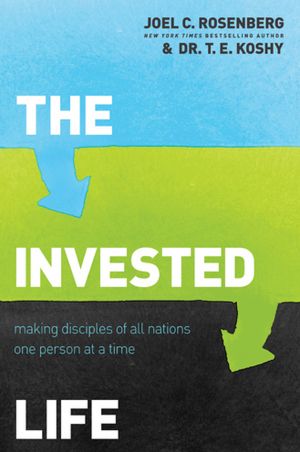
Of all the Christian disciplines and practices, personal discipleship, the intentional one-on-one process of growing closer to Jesus Christ, is one that is perhaps the most easily neglected. This can be case for many reasons: too busy, lack of motivation, fear of failure due to a lack of knowledge, too messy, and a myriad of others. That being the case, the pages of the Bible as littered with references to, procedures for, an benefits of personal discipleship. In The Invested Life; Making Disciples of All Nations One Person at a Time, authors Joel Rosenberg and T.E. Koshy have written a thought-provoking look at this subject. They have crafted their book around two foundational questions: “Who is investing in me?” and “Who am I investing in?”

Rosenberg and Koshy write, as a premise for their book, “Christianity is not a solo sport. It’s about building strong healthy teams of fully devoted followers of Jesus Christ whom God can use to change the world. It’s about older believers taking younger believers under their wings to love them, help them grow in Christ, and help them reproduce their faith in the lives of other younger believers.” They develop their case intentionally by dealing with such topics as Christ’s model for discipleship, selecting a person to disciple, seeking out a discipler for yourself, and the subjects that should be part of an investing relationship. The Invested Life is grounded in scripture and pulls examples from within of disciple-making relationships and principles. They cite the relationships between Jethro and Moses, Jesus and His disciples, and Paul and Timothy.

This is a 270 page how-to, nuts and bolts look at discipleship. The authors give many lists, points, and checklists to get their point across to their readers. For me, this is great. I learn better by those methods. This may be a drawback to other readers. Woven into the scriptural mandate are personal testimonies and study questions to further develop their burden of discipleship. All in all, a good book that worth your time.

Disclosure of Material Connection: I received this book free from Tyndale House Publishers as part of their Blogger Review Program. I was not required to write a positive review. The opinions I have expressed are my own. I am disclosing this in accordance with the Federal Trade Commission’s 16 CFR, Part 255: “Guides Concerning the Use of Endorsements and Testimonials in Advertising.”

Book Review : When Bad Christians Happen to Good People

People can be hurtful. Christians included. Unfortunately, that hurts is sometimes intentional. Fortunately, it is not always intentional. It is sad to say that this hurt , at times, comes from those who should certainly know better and who have been given the strength and spirit to refrain from such practice. Dave Burchett, author of When Bad Christians Happen to Good People; Where We Have Failed Each Other and How to Reverse the Damage, has written a smart, honest, and insightful book that pulls no punches when calling out the bad behavior that Christians display today. Burchett offers no excuses. Instead he offers a fresh perspective on the fragile relationship between those he considers his target audience; those who have “been hurt by a judgmental person or church” and the “Christians who inflict the wounds”.

Burchett has smartly divided his book into three common sense sections: The Indefensible Things We Do to One Another (evaluation), Thoughts on How We Lost Our Audience (diagnosis), and Being Real in an Artificial World (prescription). Burchett does a great job in his evaluation of Christian conduct today. He writes that Christians are at times hypocritical, prone to fuss and fight, guilty of further harming the already wounded, and successful at majoring in the minor things. Chapter three (Would Jesus Spend His Time on This?) is the most powerful in this first section. It shows how easily distracted Christians are today from what should be their true focus in life. The author’s diagnosis, or the reasons Christians are losing their audience, is shamefully accurate. Issues such as an inconsistent witness, church language, and the contrasting portraits of love and forgiveness are given as reasons for the push-back. Chapter nine (Jesus Wept… And He Still Does) is especially powerful. In the third and final section, Burchett offers a prescription for Christians to become more genuine before a watching world. Stressed are embracing the hard-teachings of Christ as being vital to growth and witness, a return to biblical literacy, and the exercising of grace when dealing with those in whom we disagree. Chapter thirteen (All God’s Children Got Souls, Even the Annoying Ones) is truly convicting. His call to “hate the message and love the messenger” is spot on.

A book such as this one needed to be written. What I really like about this book is that the author’s views and critiques do not come from a sterile laboratory, nor is it simply an academic exercise. Instead, by his own admission, he has been hurt by Christians and as Christian has hurt others. His style of writing, containing humor, scripture, and real-life stories, is engaging and insightful. A great work on a serious subject. I highly recommend.

Disclosure of Material Connection: I received this book free from Waterbrook Multnomah Publishers as part of their Blogger Review Program. I was not required to write a positive review. The opinions I have expressed are my own. I am disclosing this in accordance with the Federal Trade Commission’s 16 CFR, Part 255: “Guides Concerning the Use of Endorsements and Testimonials in Advertising.”

Book Review : Running for My Life: One Lost Boy’s Journey from the Killing Fields of Sudan to the Olympic Games

Running for My Life: One Lost Boy’s Journey from the Killing Fields of Sudan to the Olympic Games is the autobiography of Lopez Lomong. At the age of six, Lopez was part of a large group of children kidnapped by the Sudanese militia in 1991. These children were trained and forced to become soldiers in the Sudanese militia. Lopez, and many like him, are often referred to as the “Lost Boys of Sudan”. Lopez goes on to tell the story of life under the control of the Sudanese rebels. He describes the deplorable sleeping, eating, and sanitary conditions, as well as the state of constant fear all the boys felt. As the months went on, we was befriended by three older boys who were from the same region as he was. Lopez referred to these boys as his “angels”. These three older boys helped Lopez escape the rebel camp. After days of running, they crossed the border into Kenya and were picked up by border control agents and sent to a United Nations refugee camp where he lived as an orphan (by choice) for the next ten years.

Lopez writes in detail about his life inside the refugee camp. He described the rationing of food, standing in line for water, the need to hide food from the gangs that were always looking to steal, and playing soccer to pass the time. Lope was also a runner. He ran around the camp every day. The faster you could run around the camp, the more time you had on the soccer field. In 2000, Lopez and a few other boys managed o sneak out of camp one night to the home of a farmer near the refugee camp. He would let them watch his black and white television that was powered  by a car battery. Each boy paid their money. (This farmer is the man Lopez was working for, illegally,). That night, Lopez watched Michael Johnson run the 400m dash in the Olympics. Lopez’s dream to one day run in the Olympics himself was forever solidified.

One day in camp, a UN worker shared that there were spots available for a certain number of boys to go to America. Lopez shows how, through God’s intervention, he was able to leave the refugee camp, find his way to America, and be adopted by an American family. Lopez enrolls in high school, joins the cross-country team, and goes off to college. His views and insights into the immigration process and the 9/11 tragedy are both humorous and moving. Lopez eventually made it to the 2008 Beijing Olympics can competed in the 1500m, although he did not medal.

Lopez says that he now “runs with a purpose”, He has used his influence and resources to help make a difference back in his home of Sudan, Partnering with World Vision, he established a foundation to help bring clean water, food, medicine, and education to his people back in Sudan. Lopez will be competing in the 5000m in the 2012 London Olympics going on now. I look forward to cheering him on to a win. Running For My Life is an outstanding and inspiring work. This review does not do the book adequate justice. It is full of humor, emotion, sadness, hope, and surprise. You will be moved by his story. An addictive read.

Disclosure of Material Connection: I received this book free from Thomas Nelson Publishers as part of their Blogger Review Program. I was not required to write a positive review. The opinions I have expressed are my own. I am disclosing this in accordance with the Federal Trade Commission’s 16 CFR, Part 255: “Guides Concerning the Use of Endorsements and Testimonials in Advertising.”


Book Review : Coming Apart

In his latest book, Coming Apart; The State of White America 1960-2010, Charles Murray has written a book that paints a picture of a segment of America that is not often covered by the mainstream media. Murray’s thesis is that there is a widening class gap in the United States today. This class gap is the result of a reoccurring race war. In fact, it is not based on different skin colors at all. This class gap is occurring within what Murray calls “White America”. Through an overabundance of statistical data that is interesting at best and burdensome at worst, Murray shows how these two worlds exist at the same time, yet rarely cross paths.

 In order to prove his point about this ever-widening gap across White America, he introduces the reader to two fictional cities; Belmont and Fishtown. Belmont represents a city of the upper class (defined by Murray as that having a population in the top 5% in both wealth and education). Belmont is marked by the high income family, the college educated, and the culturally affluent. Fishtown, on the other hand, represents the lower class of White America, everything that Belmont is not. Fishtown is marked by the absence of culture, the high school dropout, and the blue-collar worker.

The better part of the book is spent exploring the four areas that Murray believes are the causes for the widening gap in White America: marriage, industriousness, honesty, and religion. Murray does a good job demonstrating how the breakdown in and the inattention to these four areas lead to the gap being widened. I must say that this book is not an easy read. On the contrary, it is laborious at times. It is written in a very scholarly manner and format that reminds me of a textbook for a college socioeconomics class. All in all, a good book about a topic that I was not fully aware of.

Disclosure of Material Connection: I received this book free from Waterbrook Multnomah Publishers as part of their Blogger Review Program. I was not required to write a positive review. The opinions I have expressed are my own. I am disclosing this in accordance with the Federal Trade Commission’s 16 CFR, Part 255: “Guides Concerning the Use of Endorsements and Testimonials in Advertising.”