Monday is For Missions : What Are You Doing For Others This Year?

mmThe Christmas season is upon us. Our city has begun putting up lights and decorations on the light poles that line the streets. Families have begun putting up their trees and are well into their Christmas shopping. Our church calendar is filling up quickly. Between class and ministry parties, choir celebrations, and Christmas-themed sermons, we are reminded at every turn that we have entered into a very special time in the life of the church; the celebration of the birth of Jesus Christ. It would be very easy for us to get lost in all of the fun and fellowship side of the holiday. There is certainly a place for all of these. I often tell our people that the priority in all that we do is life-changing ministry that leads others to worship the One True God and His Son Jesus. Don’t get me wrong here, I enjoy Christmas parties. I enjoy spending time with our various ministries/classes in times of fellowship. I enjoy the fun of the Christmas season. I am thankful that in the midst of all this, we prioritize ministry opportunities that intentionally introduce people to the love of the Savior. What does this look like for us?

1. Angel Tree Christmas Party

Angel Tree is a ministry program of Prison Fellowship which reaches out to the children of inmates who are incarcerated in our state prisons and their families with the love of Christ. Angel Tree gives us the opportunity to share the Savior’s love by helping to meet the physical, emotional, and spiritual needs of the prisoner’s family. Angel Tree works to connect the gift requests/desires of the inmate for his/her family and the need for the children to remain connected to their parent during an especially emotional time of year. All of this happens while maintaining the dignity of both the inmate and the family. We help to provide toy and clothing gifts to the children as well as hand-written letters and family pictures to the inmates.

2. Christmas Party at Local Multi-Housing Complex

Across the street from our church is a multi-housing complex that have been volunteering and ministering in for many years. We take time on a Saturday and provide a simple party for the residents and children. There is food, games, a small gift, and a gospel presentation through the telling of the Christmas story. The greatest present we give here is our presence. This party is a simple way for us to communicate that each one is important and that we care about them. We have found that this event, along with other seasonal events (Easter, back-to-school, etc.), are critical to building lasting and meaningful relationships.

3. Operation Christmas Child – Charlotte Distribution Center

We have some of our people heading to Charlotte to work at the Operation Christmas Child Distribution Center this year. Operation Christmas Child is a ministry of Samaritan’s Purse which delivers shoeboxes filled with toys, hygiene items, candy, etc. to children around the world who may not have any gifts this Christmas season. Once the shoeboxes leave local collection centers, they make their way to Charlotte to be prepared for their final trip to over one hundred countries around the world.

Allow me to leave you with a question today. What are you doing this Christmas season for someone who will in no way be able to return the favor?
Book Review : Persuasive Preaching

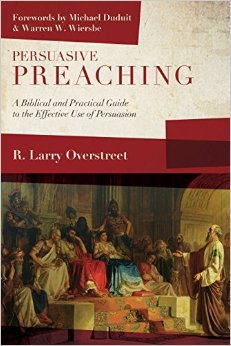
Tpersuasivepreachinghe preaching of the gospel is a two-sided coin. On one side there is the grave responsibility of faithfully preaching the “whole counsel of God” correctly, contextually, and free of any personal agenda. On the other side of the coin there is the challenge of not coming off as a used car salesman who is trying to simply move inventory. Every time a preacher stands behind a pulpit and delivers a sermon that he believes God has given him he, in essence, wrestles with this tension. At the very core of this tension is the purpose of preaching. What is the purpose of preaching? Is the purpose to simply dispense information? If this is true, churches would be better served to hire a professor to lecture or give the congregants a list of suggested reading. Is the purpose of preaching life transformation? If this is true (I believe it is), then sermons that are delivered must ask the listeners to do something, positively or negatively, with what they have heard. This is clearly the biblical example. The Old Testament prophets of God and the New Testament apostles/preachers, upon delivering God’s message, asked their audience, whether individuals or nations, to respond to the message. In his new book, Persuasive Preaching: A Biblical and Practical Guide to the Effective Use of Persuasion, pastor and professor R. Larry Overstreet takes the position that biblical preaching must bring, even guide the listener to/toward a decision. He goes one step farther by arguing in favor of public invitations in church services.

I was skeptical when I first read the title of this book. Immediately I put on the defensive thinking that it is not my job as a pastor to persuade anyone. This is the ministry of the Holy Spirit in preaching. To me, persuasion was too close to manipulation for me to be comfortable. As I read the book I began to understand that Overstreet’s premise is not the support of the manipulation of people to do something through preaching. His premise is a call for a return of persuasive preaching as a means of positive change in the lives of the listeners. Overstreet’s book has four main topics. They are: Identify the Issues Facing Persuasive Preaching; What is the Biblical Basis of Persuasive Preaching; How to Structure Persuasive Messages; and How to Apply Persuasion.

In Part One Overstreet sets forth what he believes are the seven purposes of persuasive preaching. Here he stresses the importance of being transformed to the image of Christ. He also lists the barriers that persuasive preaching run into. In Part Two Overstreet meticulously shines a light on biblical preaching by examining the use of persuasion throughout the New Testament. Highlighting the Greek word for persuasion, peitho (πείθω) Overstreet shows that persuasion is about convincing people toward some action and not only accumulating head knowledge. He highlights the apostle Paul’s preaching theology and how he employed the three most commonly used modes of persuasion: logos (logical appeal), ethos (how well the presenter convinces his/her audience of their qualification to speak on a subject), and pathos (emotional appeal). The author also highlights the Old Testament example in the prophets persuading the hearers to return to and follow God above anyone else. Part Three provides the scaffolding for persuasive preaching. Overstreet speaks on the topics of problem-solving, attention, and motivation. Part Four is the “how to” part of the book and concludes topics such as the role of the Holy Spirit in preaching, eight ways to distinguish persuasion from manipulation, and public invitations. In today’s churches, most often seen in those of the Reformed Theology persuasion, are moving away from the public invitation. Overstreet deals with this unbiblical position by giving biblical support for the public invitation and gives his readers advice on how to craft the invitation. He unpacks these pointers: Be Sensitive to Length, Be Clear in Appeal, Be Exact in Action, Be Loving in Presentation, Be Consistent with Message, be Positive in Expectation, and Be Earnest in Delivery. Also included are the liabilities that accompany the public invitation.

Persuasive Preaching: A Biblical and Practical Guide to the Effective Use of Persuasion is a great book. Overstreet does a superb job of reminding us that moving people toward action/change is the true purpose of biblical preaching. This book is well written and heavily documented/footnoted. This is not a book that you can simply pick and expect to do a quick read of. It reads more like a textbook. I believe that all pastors, regardless of the congregation size, will benefit from Overstreet’s work. I highly recommend it.

Disclosure of Material Connection: I received this book free from Cross Focused Reviews as part of their Blogger Review Program. I was not required to write a positive review. The opinions I have expressed are my own. I am disclosing this in accordance with the Federal Trade Commission’s 16 CFR, Part 255: “Guides Concerning the Use of Endorsements and Testimonials in Advertising.”

Book Review : Invitation to Philippians; Building a Great Church Through Humility

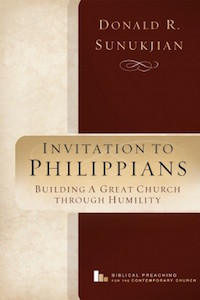
Invitation-to-PhilippiansI recently received Donald R. Sunukjian’s new book “Invitation to Philippians; Building a Great Church Through Humility” for review. This book is part of the author’s “Biblical Preaching for the Contemporary Church” with books on Galatians, Mark, and Joshua forthcoming. Sunukjian is the Professor of Christian Ministry and Leadership at the Talbot School of Theology, Biola University. The content of this book is a series of sermons that the author delivered at some point in the past that have been “slightly edited to their present form in order to adjust from the hearing ear to the reading eye.” The focus of the book is to present a case for personal humility based on Christ’s example of humility.

Simply put, this book doesn’t work. Sunukjian published a textbook entitled, “Invitation to Biblical Preaching”. He writes, “The purpose of this series is to offer models of the principles presented in the textbook.” Although the material of this particular book is okay, the fact that the reader would need to have read the textbook to properly understand what Sunukjian wanted them to understand creates a huge vacuum. I cannot recommend this book.

Disclosure of Material Connection: I received this book free from CrossFocus Reviews as part of their Blogger Review Program. I was not required to write a positive review. The opinions I have expressed are my own. I am disclosing this in accordance with the Federal Trade Commission’s 16 CFR, Part 255: “Guides Concerning the Use of Endorsements and Testimonials in Advertising.”

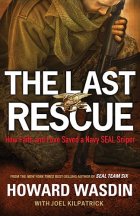
Book Review : The Last Rescue

lastI always enjoy books and movies that are based upon true-to-life military stories. Movies such as Saving Private Ryan and Black Hawk Down; books such as No Place to Hide and Fearless have been instrumental in educating the general public as to the reality of war. I would say that this affinity to the military genre of entertainment has to do with the fact that I am a former Marine. The instant connection through terminology and experience makes the reading/viewing much more enjoyable. I recently finished “The Last Rescue; How Faith and Loved Saved a Navy SEAL Sniper” by Howard Wasdin. Wasdin is a former member of the US Navy’s SEAL Team Six, the elite of all SEAL teams. He is also the author of a book, “SEAL Team Six.”

Wasdin was a member of SEAL Team Six in Mogadishu, Somalia in 1993. His team participated in the recovery of two downed Black Hawk helicopters and crew who were participating in a mission to capture Somali warlord Mohamed Farrah Aidid’s top military leaders. This battle was made famous by the 1999 book, Black Hawk Down; A Story of Modern War and the 2001 movie with the same title. This book is not a full account of the Battle of Mogadishu. The book begins with a snapshot of the battle and the leg/ankle injuries that Wasdin received through enemy fire. Following his injuries, Wasdin was evacuated and eventually separated from the teams and active duty altogether. What follows this separation is the major part of the book.

The Last Rescue is the story of a man’s struggle to heal; physically, emotionally, and psychologically. To use a familiar expression, this is a story of a man dealing with a journey from “hero to zero”. Wasdin went from being part of the toughest and most respected special forces unit in the world to being confined to his house in rural Georgia practicing wound care on a daily basis. At times throughout the book he himself how things could have went from so good to so bad and if he could deal with it all. The reader is allowed to follow Wasdin on his journey through a difficult and long physical recovery, divorce, raising children, finding meaningful employment that matches his military experiences, years as a car salesman, marriage to his new wife Debbie, college, and finally the opening of his medical practice as a chiropractor. Through these major life events, his military life and experiences are never too far from Wasdin’s mind. He often has to deal with the desire to “get back in” his old life. We also experience Wasdin’s battle with survivor’s guilt over the loss of his close friends in Mogadishu. The subtitle of the book speaks of faith and love. We are introduced to Wasdin’s personal faith in God and the love of and for his family is seen throughout. These are what gave him the ability to not only survive coming out of the military but to thrive in life. This is a great book. It is easy to read, informative, enjoyable, and encouraging. I highly recommend it.

Disclosure of Material Connection: I received this book free from Thomas Nelson Publishers as part of their Blogger Review Program. I was not required to write a positive review. The opinions I have expressed are my own. I am disclosing this in accordance with the Federal Trade Commission’s 16 CFR, Part 255: “Guides Concerning the Use of Endorsements and Testimonials in Advertising.”

Book Review : The New King James Study Bible

nkjvIt seems that daily there is a new study Bible on the market. Each offers something special and significant that their contemporaries do not. I recently received the New King James Study Bible, Full Color Edition by General Editor Ear; D. Radmacher. I was looking forward to receiving this Bible because it is the version that I teach and preach from weekly. This Bible has a great deal going for it. The editors included a section in the Foreword that explains how the NKJV version came about and why it is a reliable translation. The full color format is a great asset. It brings the maps and articles to life. There is an extensive set of study helps found in this Bible which make this Bible a great tool for study.

1. Full length articles. Articles found in almost every book give extended detail about subjects unique to the book. For example: Psalms (The Messiah in the Psalms).

2. Bible Times and Culture Notes. Found in many of the books, these notes shine a light on the key parts of life in biblical times. For example: Matthew (Tax Collectors).

3. Charts and Diagrams. These helps aid the reader in organizing information by having in laid out in chart form. For example: 1 Samuel (The Sad and Sinful Life of Saul).

4. Word Studies. I found this to be especially helpful. Included in the great majority of the books are studies of key Hebrew and Greek words that aid in understanding. For example: Isaiah (salvation) and 1 John (advocate).

Disclosure of Material Connection: I received this book free from Thomas Nelson Publishers as part of their Blogger Review Program. I was not required to write a positive review. The opinions I have expressed are my own. I am disclosing this in accordance with the Federal Trade Commission’s 16 CFR, Part 255: “Guides Concerning the Use of Endorsements and Testimonials in Advertising.”

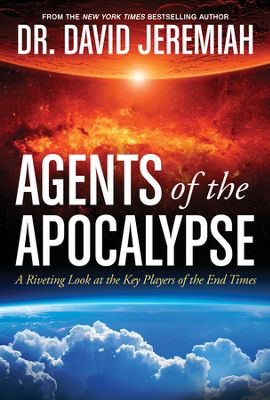
Book Review : Agents of the Apocalypse

agentsBooks that deal with the “end time” events and a coming “apocalypse” are very common today. It seems almost daily that a new book comes out claiming to have new insight into the revelatory events found in the Bible. Couple this with the movies coming out of Hollywood and the “end times” themes on television and you can see that we are a society that is inundated with the reality of biblical prophecy. One of the sound, conservative, and dependable voices within the “end times” conversation has been, and still remains, Dr. David Jeremiah. In his latest book, “Agents of the Apocalypse; A Riveting Look at the Key Players of the End Times”, he writes from a perspective that stands against his other works on this subject.

Agents of the Apocalypse is a fictional narrative. Simply out, the book uses a set of characters to demonstrate what life might be like on earth as the biblical events such as the Rapture, the Great Tribulation, and the Battle of Armageddon unfold. Jeremiah tells ten fictional stories: The Exile, The Martyrs, The 144,000, The Two Witnesses, The Dragon, The Beast from the Sea, The Beast from the Earth, The Victor, The King and The Judge. Each story is followed by a “The Scripture Behind The Story” section. In this section, the author dives into the biblical content of the previous story. For example, in Jeremiah’s chapter, “The Beast From The Sea”, he details the nature of the Antichrist. He includes two charts. The first contrasts Christ and the Antichrist. The second deals with the Antichrist’s work during the Tribulation Period. Subsections in this chapter include: His (The Antichrist) Preparation, Presentation, Personality, Plan, Pride, Peace Treaty, Persecutions, Power, Profaneness, and Punishment.

I do not read a great deal of fiction work. However, Agents of the Apocalypse is a great work. Jeremiah has smartly woven sound biblical teaching in an easily relatable storyline. Due to the fictional side of the work, it seems at times that the author is reaching to make his point. The biblical exposition outweighs any negative feelings on the fiction side.

Disclosure of Material Connection: I received this book free from Tyndale House Publishers as part of their Blogger Review Program. I was not required to write a positive review. The opinions I have expressed are my own. I am disclosing this in accordance with the Federal Trade Commission’s 16 CFR, Part 255: “Guides Concerning the Use of Endorsements and Testimonials in Advertising.”

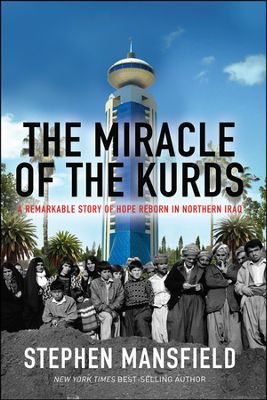
Book Review : The Miracle of the Kurds

kurdsThe Kurdish people of Northern Iraq gained attention from the rest of the world during the reign of Sadaam Hussein in the 1980’s. It was under his reign of terror that hundreds of thousands of Kurds were gassed, tortured, and forced to flee their homeland. Following the Persian Gulf War in 1991, the United States along with Great Britain established a “no-fly zone” over Northern Iraq that provided the Kurds the needed relief from air attacks. The Kurds have come back into the news recently as victims of the Islamic militant group ISIS. They are again enduring horrible atrocities at the hands of a terrorist group. Within the decades of tragedy is the story of a peace-loving and simple people. In his latest book, “The Miracle of the Kurds; A Remarkable Story of Hope Reborn in Northern Iraq” tells the story of these people from not only a historical perspective, but from personal reflection as well.

Who are the Kurds? They are a group whose ancestry reaches back to the ancient Medes of the book of Daniel and Babylon and today reside in Northern Iraq. They are a variety of religions: Muslim, Christian, Jew, Yezidi, and Sufi who welcome people of all religions: Muslim, Jew and Christian. Mansfield writes they are “largely pro-American, pro-Israel, and pro-democracy…in the belly of the troubled Middle East”. Mansfield shares the Kurd’s history of being skilled fighters with a deeply personal connection to the mountains which make up their lands today. He also describes those along the way who have held control of the Kurds including European empires, Russia, and Turkey. Mansfield says that the Kurds have always held onto an “undying dream of freedom” and their journey toward that freedom has been littered with “epic battles, religious passions and vile betrayals”. The longing for freedom, broken promises, and periods of fortune and misfortune is summed up by a story that Mansfield tells of a memorable Kurdish expression, “we have jam, but we have no jam”. The broader meaning is of disappointment.

The title of Mansfield’s book speaks of a “miracle”. With the enforcement of the No-Fly Zone during the 1990’s, the United States and Great Britain provided the Kurds protection from their enemies and they began to flourish and became known as “the miracle of the Middle East”. He tells of how infrastructure development led to foreign investors setting up businesses in Kurdistan. This became possible by allowing foreign investors to have equal status with indigenous investors. These foreign investors were tax breaks with full rights of ownership and profit. The result was millions of investment dollars, new jobs, and a standard of living that was the best in the country. By 2010 Kurdistan had a world class airport, six-star hotels, new cars, city parks, and quiet neighborhoods. Kurdish private schools chose to adopt an English-only position. Through this rebirth and international influence, public schools no longer favored Islam only. Instead, all religions would be taught equally.

The Miracle of the Kurds is a good work. It is easy to read, informative, encouraging. Mansfield has done a great job, as he always does, in telling the story of the people. Although light-hearted most of the way through, one chapter is dedicated to Sadaam Hussein’s gassing of a certain village in the late 80’s. As strange as this may sound, this graphic inclusion makes the book work. It allows the reader to see the resilient nature of the Kurdish people. Mansfield makes a very powerful statement toward the end. He says, “Kurdistan is what America wanted Iraq to be. It is what we wanted from the war.”

Disclosure of Material Connection: I received this book free from Worthy Publishing as part of their Blogger Review Program. I was not required to write a positive review. The opinions I have expressed are my own. I am disclosing this in accordance with the Federal Trade Commission’s 16 CFR, Part 255: “Guides Concerning the Use of Endorsements and Testimonials in Advertising.”

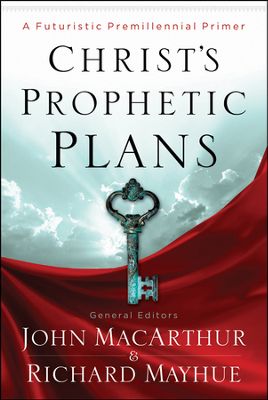
Book Review : Christ’s Prophetic Plans

christpropheticOf all the theological disciplines and areas of study, eschatology (the study of end things) has to be the most interesting to study while at the same time the most difficult to understand. This truth can be seen in the popularity of end-times prophecy books, movies, and lectures. It’s not too hard to draw a crowd around a prophecy conference or course. I can understand the interest. Who doesn’t want to know what is going to happen in the future? Who doesn’t want to know how the events along God’s prophetic timetable will unfold here on Earth? This is natural. Despite the intense interest, confusion swirls. An honest study of eschatology will entail dealing with matters such as rapture, millennium, tribulation, dispensation, prophecy types, and the proper placement of Israel. As you peel this eschatology onion, layers such as pretribulation rapture, posttribulation rapture, premillennial reign of Christ, amillennial reign of Christ, replacement theology, and dispensationalism become exposed. It doesn’t take long for the average person to get lost and abandon their study, despite their intense interest in the subject matter.

In his latest work, author, pastor, and president of The Master’s Seminary John MacArthur, along with faculty members Richard Mayhue, Michael Vlach, Nathan Busenitz, and Matthew Waymeyer have contributed to Christ’s Prophetic Plans; A Futuristic Premillennial Primer. This primer, a work that provides basic elements to a given subject, zeroes in on very specific eschatological elements. Christ’s Prophetic Plans is an explanation and apologetic of futuristic premillennialism, the pretribulational rapture, and classical dispensationalism. On the surface these sound daunting and frightening. Futuristic premillennialism is the teaching that Jesus Christ will come back to earth in the future and will rule the world for one thousand years. Prior to Christ’s second coming, futuristic premillennialism teaches that there will be a Great Tribulation that the world will experience. The pretribulational rapture is the belief that Christians will be removed, “raptured” from this world before this Tribulation occurs. Classical dispensationalism states that God is still committed to the nation of Israel, interprets the Old Testament promises to Israel literally rather than spiritualizing them, and rejects the notion that the church has replaced Israel as God’s chosen people (also known as replacement theology). For classical dispensationalists, Israel continues to be God’s chosen nation.

MacArthur begins stating the intended purpose of this book. He writes that this primer “intends to provide a clear and convincing biblical explanation for the interpretive approach to Scripture that results in knowable futuristic view of Christ’s millennial reign on earth, the certain validity of God’s promises to future Israel, and the crucial differences between Israel (as a people and a nation) and the NT church. With this primer dealing with three specific areas of eschatology, this book breaks apart into the same three sections. Futuristic Premillennialism holds to four main tenets: A normal interpretation of scripture used for prophesy, God’s promises to Israel in the Old and New Testament are future, God’s promises in Revelation are future, and the church is not Israel.

In his introduction, Richard Mayhue tells why we studying prophecy should matter to – the Biblical message of the end times is abundantly clear throughout Scripture. We can be certain about Biblical prophecy because God’s Word has clearly spoken on the matter. This book is not a glamorous “interpret the headlines” kind of book like those written by John Hagee or Tim LaHaye. These sensationalist authors have muddied the eschatological waters as to the true teaching of dispensationalism. Michael Vlach takes a few chapters to educate the reader on what dispensationalism is and what it is not. MacArthur believes there has to be a clear line drawn between eschatology and soteriology. He writes, “Dispensationalism shapes one’s eschatology and ecclesiology. That is the extent of it. Pure dispensationalism has no ramifications for the doctrines of God, man, sin, or sanctification. More significantly, true dispensationalism makes no relevant contribution to soteriology or the doctrine of salvation.”

This book’s strength is what other books of the same subject fail to do – it starts at the beginning with the interpretation of scripture. The differences in eschatology can be boiled down to one question: “How do we interpret the Scriptures?” Macarthur writes “Futuristic Premillennialism is the result of an understanding and application of the prophetic texts in a way that is consistent with the normal, literal approach to interpreting Scripture.” This is how the authors come to their Futuristic Premillennial view. Later chapters such as “What About Israel?”, “Does Calvinism Lead to Futuristic Premillennialism?”, and “Does the New Testament Reject Futuristic Premillennialism?” deal with the inconsistencies that form when literal and allegorical interpretation methods are used interchangeably. This book is not simply about hermeneutics. Instead, it establishes that the Futuristic Premillennial view is the natural conclusion after a literal interpretation of scripture is applied to prophesy.

Christ’s Prophetic Plans, a collection of essays on the subject of Futuristic Premillennialism is a good primer. I found the information offered to be well-researched and simply presented. It was not overly-scholarly. It provides a great starting point for your own personal end-times study. There are places where I wish the authors had gone a little more in-depth. Overall, a good work.

Disclosure of Material Connection: I received this book free from Moody Publishers as part of their Blogger Review Program. I was not required to write a positive review. The opinions I have expressed are my own. I am disclosing this in accordance with the Federal Trade Commission’s 16 CFR, Part 255: “Guides Concerning the Use of Endorsements and Testimonials in Advertising.”

Book Review : The Maxwell Leadership Bible

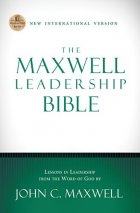
maxwellI must admit that I am a fan of John Maxwell. For years now he has been a personal source of encouragement and inspiration when it comes to matters of effective leadership. Many of his works remain best-sellers and have become timeless resources for leaders in all types of leadership positions. When I discovered that Maxwell had leant his leadership expertise to the creation of a leadership Bible, whether or not I would read it was never in question. The Maxwell Leadership Bible; Lessons in Leadership from the Word of God is Maxwell’s latest work which combines the NIV Bible with a host of leadership tips, secrets, principles, and strategies woven throughout. With all the Bibles available today, why is another one needed? Maxwell writes, “The best source of leadership teaching today is the same as it has been for thousands of years. If you want to learn leadership, go to the greatest Book on leadership ever written – the Bible.”

The resources contained with this Bible are immense. The best way to highlight them is to simply list what you will find within the pages of this NIV Bible.

• The Maxwell Leadership Bible offers dozens of “Profiles in Leadership”. These profiles highlight specific leadership traits of people such as Nehemiah, Samuel, Elijah, Priscilla, Elisha, and Paul to name a few.

• The Maxwell Leadership Bible provides a solid introduction to each of the Bible’s books looking specifically at the leaders, leadership lessons and highlights contained in each.

• The Maxwell Leadership Bible weaves his well-known 21 Irrefutable Laws of Leadership throughout its pages. Laws such as the Law of Influence (all leaders influence whether negatively or positively), the Law of Sacrifice (a leader must give up to go up) and many others. Articles and features appear throughout that highlight prime examples of these “laws.” A very helpful chart is found on pages 1282-1283 where Maxwell unveils “Jesus and the 21 Irrefutable Laws of Leadership”. Excellent.

• Indexes highlight of excerpts from other books such as 25 Ways to Win With People, Talent is Never Enough, The 360 Degree Leader, The Difference Maker, and Winning With People to name a few.

The Maxwell Leadership Bible is a winner. Smartly assembled and written with leadership development in mind, the unique approach to this Bible will without a doubt pay dividends to the reader. The only negative points I could offer would be that there is almost no margin for personal notes as the reader interacts with the content. Also, I am not a personal fan of the NIV version. Aside from that, Maxwell has given us a tremendous resource that will aid each reader in becoming a better leader. I highly recommend to all.

Disclosure of Material Connection: I received this book free from Harper Collins Publishers and BookLook Bloggers as part of their Blogger Review Program. I was not required to write a positive review. The opinions I have expressed are my own. I am disclosing this in accordance with the Federal Trade Commission’s 16 CFR, Part 255: “Guides Concerning the Use of Endorsements and Testimonials in Advertising.”

Book Review : Misfits Welcome

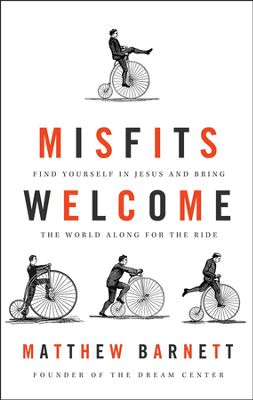
Imisfitst goes without saying that there are many different kinds of people in the world today. Different colors, nationalities, interests, backgrounds, life-experiences, problems, and physical appearances make up the fabric of today’s society. With that being said, our world has labeled a person based on characteristics like those above which has led to a hierarchy where some are perceived as more desirable than others. The end result of this errant classification is a people that are pushed to the fringes of society simply because they are “not good enough” for some. In his new book, “Misfits Welcome; Find Yourself is Jesus and Bring the World Along for the Ride”, Matthew Barnett shares the stories of this group of people. Barnett is the pastor of Angelus Temple and the Dream Center in Los Angeles, California. He refers to this group of marginalized people as “misfits” as they don’t seem to “fit” anywhere into the mainstream of society.

Barnett begins with a question that sets the stage for the book. He writes, “Have you ever felt like a misfit? Just saying the word misfit seems to strike a nerve. The truth is, in many ways, we all feel like misfits. We just don’t fit into the pattern and flow of life. But that’s where things get interesting. In fact, the unknown, the things unseen, is where miracles happen.” This book describes the life of Matthew Barnett, son a megachurch pastor in Phoenix who makes a move to the Skid Row neighborhood of Los Angeles and the events, people, and experiences that follow. His book is full of stories of how Angelus Temple and the Dream Center embraced and welcomed the kinds of people the world would have happily thrown aside. The “misfits” include prostitutes, gang members, drug addicts, drug dealers, runaways, alcoholics, and the homeless. Throughout the book Barnett continually emphasizes the fact God has called us to seek out, love, and care for the hurting, confused, and marginalized. He shares that most often people just simply want a second chance at life and to be valued as humans. This love and redemption can be seen in the fact that the great majority of his church staff include those who were once involved in the Dream Center’s various recovery programs.

Misfits Welcome is an encouraging book. It is a challenge, a dare, a call to reach out and love the hurting, the misunderstood, and the castaway. While not every church can be involved in the vast array of ministries that the Dream Center offers, Barnett challenge the reader to simply love those you can. Scattered throughout the book are testimonies of those who were helped and now are involved in helping others. The book does not provide the “how to” of social and recovery ministry. It does however clearly articulate the “why”. This book challenged me as a pastor and I recommend it without reservation.

Disclosure of Material Connection: I received this book free from Harper Collins and BookLook Bloggers as part of their Blogger Review Program. I was not required to write a positive review. The opinions I have expressed are my own. I am disclosing this in accordance with the Federal Trade Commission’s 16 CFR, Part 255: “Guides Concerning the Use of Endorsements and Testimonials in Advertising.”