A Pastor’s Take on Vacation Bible School 2013

ccwColossal Coaster World Vacation Bible School has pulled into the station for the final time this year. Our theme park inspired adventure is complete. The screams and shouts of kids running through down the hallways and in the sanctuary are now a distant, but treasured memory. Decorations have come down and the once vibrant and colorful rooms, hallways, sanctuary, and common areas have now been returned to their traditional look. Sadly, it looks as if Vacation Bible School never happened. Vacation Bible School makes for a very long week around the church. If you take into account the weeks leading up to the actual teaching week, many long, long hours have been logged over the past three weeks. I am a huge fan of Vacation Bible School and am sold on its ministry value. As a pastor, I fully understand how important this week is in the life of the church. Now that Vacation Bible School 2013 is over, I have a few observations that I would like to offer here.

1. Attendance: For better or worse, this is often the criteria by which Vacation Bible School is judged as a success or a failure. I am not completely sold on this marker of success. Our average attendance for the week was approximately 115. As far as the numbers go, our attendance was down slightly from last year. I was encouraged by our attendance this summer. My reason for being encouraged is not so much about how many, but who was here. It is obvious that our people were active in inviting others this week. We did something different this year with our teenagers. Instead of Youth Vacation Bible School occurring the weeks before the children’s, our youth met the same week as everyone else. This was a success and we averaged 8 teenagers nightly. This does not count the high school students who were assisting in other areas. We had the expected students who were members of other churches. That is perfectly fine. We are happy to have them for a week. We also had students who were unchurched and not affiliated with a local church. This is one of the markers by which I judge success. We averaged 53 elementary aged children this year. I was further encouraged by our Adult Vacation Bible School class. We had an average this week of 30 adults. Our adult class was not only made up of our own church members. One of goals in Adult Vacation Bible School is to give parents who are not involved in a local church a place to go instead of dropping their children off and going home. We accomplished our goal here. Parents had the opportunity to interact and meet other people in a non-threatening manner and be exposed to the gospel message. I believe this was a success.

2. Volunteers: I am thankful to all of the volunteers who worked this week. As I mentioned earlier, it was a long week. It was also very hot. I am especially thankful and grateful to all of our teachers who worked full-time jobs who left work and came straight to church for five straight days. I want to especially mention and thank those who worked in the kitchen all week. During our Vacation Bible School, we skip the Snack Rotation. Instead, we choose to provide a meal for parents, children, and workers every night. Our kitchen workers came out early, set everything up, served the kids, and stayed until all was cleaned up. Thank you. I also want to thank the summer student missionaries who are a part of the Savannah River Baptist Association Low Country Ministries who came out and helped with our big kick-off event. To all those who worked so hard, your pastor wants you to know that you are appreciated.

3. Ministry: Any time you have kids on campus you have an opportunity to be engaged in real, one-on-one, life-changing ministry. I believe with all of my heart that is what happened this week. During our Worship Rally, our students take up an offering each night. There is anticipated and spirit-filled battle between boys and girls to see who can raise the most money for our designate ministry cause. This gives us an opportunity to further educate our students on the importance of missions. I am excited to report that this year we raised $510.00 for the Connie Maxwell Children’s Home. Vacation Bible School is intentionally evangelistic. We are diligent to make sure that we communicate the gospel message all week long, not just on the night of the “evangelistic” lesson. With that being said, we did not have any public professions of faith (to my knowledge) this week. I can’t explain it in human reasoning. For many who read this, the assumption will be that we failed as a church in Vacation Bible School. Nothing could be further from the truth. We are here to share a message and plant a seed, understanding that it is God who gives the increase. We trust God’s Word knowing that it will not return unto Him void. Real ministry takes place when you take time to listen, talk to, and show love toward a child in the name of Christ. This is what we did this week. If down the road a year or two or five, in God’s timing, a gospel presentation is given and a child responds because of something that was planted in their heart this week, then we were faithful to have done our part.

4. Sharing: Once again this year we had the opportunity to share and pass on the decorations and other resources we used to another church that was in need of them. The bulk of our props, supplies, and decorations will be utilized by at least two additional churches before the summer is over. I believe this is a stewardship issue. Lifeway Vacation Bible School material is not inexpensive. It does not make sense to spend all of that money and then store everything in a closet. I am pleased that we were able to help others in this way.

Overall, we had a great week and look forward to what comes out of the efforts of this week. Again I want to thank every teacher, worker, and parent who allowed their child to be a part of our Vacation Bible School. We are eagerly looking forward to Lifeway’s VBS 2014; “Agency D3: Discover. Decide. Defend.” After all, it is only 11 months away.

Book Review : Is College Worth It?

iscollegeMy son Jordan is an inbound high school junior. Conversations as of late have dealt with the importance of grades, potential college majors, and which, if any, colleges to attend. At the beginning of his freshman year, he was required, as every high school student is, to fill out an individual graduation plan. This is an ongoing process where parents, students, and guidance counselors meet and select future high school courses based on what the student anticipates majoring on in college. There is an assumption that every student will be attending college of some sort. Whether this turns out to be true or not, it is, at present, the across-the-board expectation. In his new book “Is College Worth It?, former US Secretary of Education William Bennett shares his perspectives on higher education in America and what the future of such education may look like. The premise and purpose of this book is found in his own words. He writes, “It’s time for parents and students to look at the entire enterprise of higher education and ask how, when, where, for whom, in what studies, and at what cost is a college education appropriate? And if it is not appropriate, what are the alternatives?” Bennett deals with the expectation I shared above.

“Is College Worth It?” breaks down into five chapters. In Chapter One: The Borrowing Binge, Bennett examines the costs of higher education. He deals with issues such as methods of paying for college, why tuition costs continue to rise at all schools, and the danger of amassing student loan debt. In Chapter Two: Creating a Financial Monster, Bennett deals in greater detail the national student debt crisis and the policies, both government and institutional, that have contributed to the growth of this “monster”. In Chapter Three: So Is It Worth It?, Bennett dives into the tangible and intangible factors that help to determine whether a college degree is worth the time and money. Here, Bennett deals with career choices and gives several lists of schools and universities to be considered based on student priorities. In Chapter Four: The Lower Side of Higher Ed, Bennett brings to light the reality that despite the high price tag of a college education, students are exposed to professors pushing their personal political and societal agendas, classroom instruction being farmed out to adjunct professors and graduate students, and ever-lowering expectation of students. He also deals with the party atmosphere of colleges and what students are exposed to. In Chapter Five: With Eyes Wide Open, Bennett shares suggestions, recommendations, and possible solutions to problems that are plaguing the higher education system today. A few of the options include online learning, hybrid models, and non-traditional approaches to obtaining a quality education including religious and military institutions.

“Is College Worth It?” is, in my opinion, a monumental work. Well-written, smart, honest, thoroughly researched, and extremely relevant, this book brings into plain view the challenges and obstacles facing students preparing for college. I will certainly use the information and wisdom here as we as a family deal with our upcoming college decisions. Every parent would benefit greatly by reading. I highly recommend.

Disclosure of Material Connection: I received this book free from Thomas Nelson Publishers as part of their Blogger Review Program. I was not required to write a positive review. The opinions I have expressed are my own. I am disclosing this in accordance with the Federal Trade Commission’s 16 CFR, Part 255: “Guides Concerning the Use of Endorsements and Testimonials in Advertising.”

Book Review : The Spiritual Warrior’s Guide to Defeating Jezebel

jezebelJezebel. Not a name mothers give to their daughters. The very name invokes an image. Biblically, it is an image of false worship, idolatry, pride, and manipulation. Culturally, it is an image of seduction, immorality, control, and power. in her new book, “The Spiritual Warrior’s Guide to Defeating Jezebel; How to Overcome the Spirit of Control, Idolatry, and Immorality” author and pastor Jennifer LeClaire introduces the reader to the “spirit of Jezebel” that is present in the world today. We know of the woman Jezebel from the biblical accounts from First and Second Kings. She was the wife of Israel’s King Ahab. A few of her sinister activities included having the prophets of God killed, the propagation of  false worship across the nation of Israel, and the scheme to defraud Naboth of a vineyard for her husband. LeClaire states that the spirit of Jezebel existed long before the woman Jezebel ever come along.

Although many descriptions have been given through the years, LeClaire succinctly proclaims “Jezebel is essentially the spirit of seduction. Jezebel works to seduce us into immorality and idolatry.” LeClaire uses Easton Bible Dictionary to show how evil this spirit is. “Jezebel has stamped her name on history as the representative of all that is designing, crafty, malicious, revengeful, and cruel. She is the first great instigator of persecution against the saints of God.” Matthew Henry call Jezebel “a zealous idolater, extremely imperious and malicious in her natural temper, addicted to witchcrafts and whoredoms, and every way vicious.”  LeClaire goes into great detail to show how this spirit is at work today. She demonstrates what this spirit looks like in the church today, the avenues by which the spirit of Jezebel operates, and the desired outcomes. She also gives the spiritual tools and weapons to defeat this spirit.

Overall, this is an okay book. I had a difficult time in a few places due to LeClaire’s theology (i.e. her belief that the office of the apostle still exists and the female pastorate). In her attempt to cover every possible manner in which this spirit could manifest itself, she has left this book a mile wide and an inch deep. This detracts from the overall effectiveness of the book.

Disclosure of Material Connection: I received this book free from Bethany House Publishers as part of their Blogger Review Program. I was not required to write a positive review. The opinions I have expressed are my own. I am disclosing this in accordance with the Federal Trade Commission’s 16 CFR, Part 255: “Guides Concerning the Use of Endorsements and Testimonials in Advertising.”

Book Review : Prepared for Grace, by Grace

preparedDepending on one’s theological point of view, the terms salvation, election, and grace have different connotations. For example, of an individual leans toward reformed theology, most commonly known as Calvinism, there is a belief that God’s sovereignty crowds out man’s God-given free will. As a result, He chooses who will be saved and they have no choice either way because God’s grace is irresistible. One of the functions of grace that reformers hold to is the Puritan belief in “preparatory grace”. This is the focus of Joel Beeke and Paul Smalley’s new book, “Prepared by Grace, for Grace; The Puritans on God’s Ordinary Way of Leading Sinners to Christ”. The authors point out that the Puritans believed and taught that God was working grace in the lives of individuals before they accepted the call of salvation. Simply put, the Puritans believed that the grace that was necessary for their salvation is applied to the believer even before the moment they are saved.

The authors state that this doctrine preparation addresses the question as to the manner in which God “ordinarily” brings a person to a saving knowledge of Christ. Not all questions are answered. In their own words, “Specifically, is conversion an event or a process? If a process, how does the work of conversion begin? There may be exceptional cases, but in general, is there a pattern to conversion? They take the position that it is a process. They write, “Many Puritans of England and New England answered these questions with the doctrine of preparation. People must be prepared to believe in Christ before they exercise such faith. Such preparation of the heart may be viewed as a part of the process that leads to conversion.” Even here, questions remain. The remainder of the book is dedicated to explaining this pre-working of God’s grace.

This book is full of quotes from Puritan authors and modern day reformed scholars. This book is well researched and has the feel of a collection of essays that don’t quite fit together. It also has a textbook feel to it. There are so many quotes and footnotes that is becomes distracting. The authors, in an attempt to elaborate their point, bring in too much peripheral work. For example, while saying what preparatory grace is, many times they give extensive examples of what it is not. Thus muddying the water. There is too much inclusion of unnecessary thought. Far too much time is given to trying to figure out God’s mind in terms of a human process.

I have to be honest here. I do not embrace Reformed Theology. I have a difficult time with the subject, not intellectually but practically. I am quickly offended by the pride and arrogance with which a number of reformed authors write. That being said, “Prepared by Grace, for Grace” has some excellent content with the covers and there is much to be gleaned here. I took away some great things from this book. It is however not a book that I can recommend.

Disclosure of Material Connection: I received this book free from Cross Focused Reviews as part of their Blogger Review Program. I was not required to write a positive review. The opinions I have expressed are my own. I am disclosing this in accordance with the Federal Trade Commission’s 16 CFR, Part 255: “Guides Concerning the Use of Endorsements and Testimonials in Advertising.”

Father’s Day Without My Dad

My dad, Carol Ruff, died on December 25, 2012 after being diagnosed with Stage 4 Lung Cancer in the summer of 2012. The remainder of the year was filled with doctors appointments, hospital stays, and tough decisions. I had the great privilege of preaching my dad’s funeral. I can’t say how many funerals I have officiated over the past 15 years. I can say however this one was the most difficult. This is my first Father’s Day without my dad. I have been thinking a lot about him lately. For some reason I don’t believe I have grieved his death. I want to share with you the words that I shared at his funeral service on December 29, 2012.

Growing up, we had a rather difficult life. We moved around a great deal. Dad was a dairy-farmer and this migrant, nomadic lifestyle caused us to live wherever there was housing. By the time I had entered the 7th grade, we had moved a total of thirteen times; from south Florida to the mountains of North Carolina. My dad battled many personal demons. He lived in two different rescue missions (Tifton, GA and Paducah, KY) for approximately eight years after his divorce from my mother. This was a rough time for him. During his stay at the mission in Tifton, he enrolled in a faith-based alcohol rehabilitation program. During this three month program, my dad gave his heart and life to Jesus Christ. I remember the day he called me to share the news. He was so excited. Needless to say, I was extremely excited and proud of him. Jesus made a difference in my dad’s life. The change was evident and real. Allow me to share that change with you. My scripture:

1 Therefore, having been justified by faith, we have peace with God through our Lord Jesus Christ, 2 through whom also we have access by faith into this grace in which we stand, and rejoice in hope of the glory of God. 3 And not only that, but we also glory in tribulations, knowing that tribulation produces perseverance; 4 and perseverance, character; and character, hope. 5 Now hope does not disappoint, because the love of God has been poured out in our hearts by the Holy Spirit who was given to us. 6 For when we were still without strength, in due time Christ died for the ungodly. 7 For scarcely for a righteous man will one die; yet perhaps for a good man someone would even dare to die. 8 But God demonstrates His own love toward us, in that while we were still sinners, Christ died for us. (Romans 5:1-8)

The apostle Paul speaks of a change in natures. My dad’s nature changed as well.

1. MY DAD DEVELOPED A GIVING NATURE:

My dad moved from serving himself to serving others. Up until that point, his life was all about him. If my dad had a bad day at work, he would quit. I can’t say how many times we moved simply because my dad got mad at his boss over something silly. In his new nature, after Jesus saved him, he began to think of others. He served and worked at the mission where he was a resident. He volunteered with activities at the church he attended.

2. MY DAD DEVELOPED A FORGIVING NATURE:

My dad could stay mad at someone and hold a grudge better than anyone I knew. If you offended him there was a pretty good chance he would not forgive you. After Christ came into his life, he understood the need for and necessity in extending forgiveness. Why? He had experienced forgiveness through the blood of Christ. Dad had a desire to mend broken relationships. My dad and my brother Jason had not spoken to each other in a long time. He set out to make things right with him and with my mother. Forgiveness from above leads to forgiveness among others.

3. MY DAD DEVELOPED A LOVING NATURE:

Let me qualify this statement. My dad loved us before he was saved. However, he could not properly love us until Christ took hold of his heart. He understood love finally and as a result relationships meant more to him. Again, the apostle Paul wrote about our new bodies and our new natures.

1 For we know that if our earthly house, this tent, is destroyed, we have a building from God, a house not made with hands, eternal in the heavens. 2 For in this we groan, earnestly desiring to be clothed with our habitation which is from heaven, 3 if indeed, having been clothed, we shall not be found naked. 4 For we who are in this tent groan, being burdened, not because we want to be unclothed, but further clothed, that mortality may be swallowed up by life. 5 Now He who has prepared us for this very thing is God, who also has given us the Spirit as a guarantee. (2 Cor. 5:1-5)

Paul’s words are most comforting. While we wait for our new heavenly bodies, while we wait to see Jesus face to face, we have a guarantee, or a deposit, of what is to come. That guarantee is the person of the Holy Spirit living inside every believer. I miss my dad today. I really wish I could talk with him. This is the first time that I have written about him since his death. Maybe this is the beginning of my season of grief. I hope so.

Book Review : Insourcing

insourceOne of the most talked about subjects in the local church today is that of discipleship. Questions such as “What model should we use?” or “How do we know what a disciple looks like?” or “Doesn’t discipleship happen naturally?” are common today. Conferences are held, workshops are offered, and books have been written to meet the growing desire of churches to be effectively engaged in the discipleship process. In his new book “Insourcing; Bringing Discipleship Back to the Local Church”, Randy Pope, lead pastor of Perimeter Church in Atlanta, Georgia lends his thoughts and convictions to this ongoing conversation.

Pope begins his book by introducing the principle of models. He writes, “models marry dream to function.” They are a means to an end. Pope begins by giving some background on commonly embraced discipleship models today. First, the Pastoral Model. He writes, “It is a model of ministry whose basic building blocks are a small, stable flock and a loving, multitalented, maintenance-oriented shepherd.” Second, the Attractional Model. Pope writes, “A new breed of Christians flocked to churches where the message, the music, and the method suited their tastes.” Third, the Influential Model. Again, he writes, “As we strengthened the hand of our ministry, we joined with other churches in our community who desired the same kind of change.” Reading that Jesus spent nearly all of His time in small group communication, Pope speaks of a model that revolves around people. In place of these three oft-accepted models, Pope and his congregation embraced a fourth model: Life on Life Missional Discipleship. This new model falls in between the pastoral and attractional models and, as Pope writes, asks the question, “Were our people becoming the right people?”

In his LOLMD model, there are five main emphases that Pope gives to the reader. They follow the acronym TEAMS. Truth: Members of the small group learn how to study the Bible on their own and bring questions back to the entire group. Equipping: Members are given specific plans to follow which are modeled before them in group with assignments given for follow-up. Accountability: Hard questions are asked of the members and behavior is challenged in a grace-filled environment. Mission: Members are challenged to take the mission of Christ into their homes and workplace. Supplication: An atmosphere of prayer is always present among the members of the group. Scattered throughout the chapters is a mock small group meeting. Pope uses these fictional characters to illustrate how the model is fleshed out in men’s and women’s groups.

All in all, Pope has written a good book that lends an interesting twist to the discipleship conversation. “Insourcing” is well-written and informative. However, there is nothing ground-breaking here. Leaders who have been following the ever-changing pursuit of discipleship through courses, conferences, and books will recognize the content here.

Disclosure of Material Connection: I received this book free from Thomas Nelson Publishers as part of their Blogger Review Program. I was not required to write a positive review. The opinions I have expressed are my own. I am disclosing this in accordance with the Federal Trade Commission’s 16 CFR, Part 255: “Guides Concerning the Use of Endorsements and Testimonials in Advertising.”

Free Book Friday

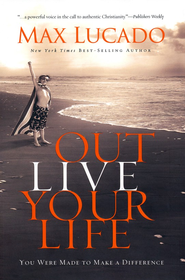
outliveIt is time for me to take down and give away another book off of my bookshelf.  I am giving away a copy of Max Lucado’s “Out Live Your Life”. In this book, Lucado challenges the reader to make a difference that will last beyond your time on earth.

To be entered to win, you must do (2) things.

1. Follow my blog by clicking on the button at the bottom of the page.

2. Answer the following question by leaving your answer in the comment stream.

If time and resources were of no concern, what is the one thing you would you do in order to make a difference in this world? Be specific.

I will select a winner from all the entries and announce the winner here.

Good luck. Entry deadline is June 13th.

Book Review : The Sin of Forgiveness

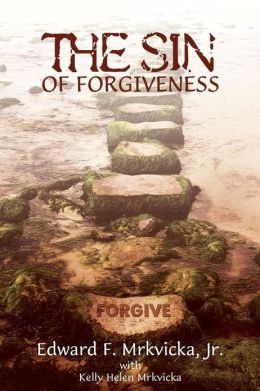
forgiveOne of the issues today that many people struggle with is the concept and practice of forgiveness. It is natural once someone has offended us that we hold a grudge against them and try to exact some type of payment from them. Unforgiveness has the capacity to keep both parties (offender and offended) locked up in a very personal prison. The Bible clearly teaches forgiveness and gives directives for both the offender and the offended. I recently finished lay minister and Christian counselor Edward Mrkvicka’s new book, “The Sin of Forgiveness”. I must say that I was drawn to the somewhat oxymoronic title. I have to say that with a title such as this, I was afraid of what I would find inside. What I found inside was an unclear, and at times, inconsistent treatment of the subject matter.

From the beginning, Mrkvicka speaks of a wrong and right kind of forgiveness. He speaks of secular forgiveness and divine forgiveness. If I understand it correctly, the author believes the necessary element, the pivotal point between secular and divine forgiveness, is the matter of repentance on behalf of the offender. He writes, “The secular world calls for forgiveness no matter the circumstances, or, at best, in response to the offender saying, ‘I’m sorry.’ Christian forgiveness is given in response to repentance.” I don’t know where to begin with this book. At every turn, and at the moment the author is building toward a good point, he introduces an unrelated thought that muddies the waters.

 Mrkvicka further confused me by constantly going back and forth between two examples of forgiveness that should have been stand-alone discussions: forgiveness between two people and forgiveness that results in salvation. While one is an example and picture of the other, it does not keep with the flow of the book. At times the book seems more of a treatise on the decline of American morals than a treatment of biblical forgiveness. Doctrinally, the book is hit and miss for me. As a pastor, I understand where the author is going with the concept of divine forgiveness and the necessity of forgiveness therein. That’s a hit for me. The author’s example of the consequences of unconditional forgiveness as it relates to remarriage and his views of salvation are a miss for me because they took away from the flow and purpose of the book.

I was asked to write an honest review of this book. You may not agree and that’s okay. You don’t have to. The thoughts and reflections offered in this review are my personal opinion. “The Sin of Forgiveness” is relatively short, approximately 150 pages. I enjoyed how Mrkvicka used extensive amounts of scripture to make his points. That is always a plus. However, his introduction of so peripheral information takes away from the main point. I personally believe “The Sin of Forgiveness” is a book that is best left alone.

Disclosure of Material Connection: I received this book free from Cross Focused Reviews as part of their Blogger Review Program. I was not required to write a positive review. The opinions I have expressed are my own. I am disclosing this in accordance with the Federal Trade Commission’s 16 CFR, Part 255: “Guides Concerning the Use of Endorsements and Testimonials in Advertising.”