Book Review : The Great Evangelical Recession

recessWhen you hear the word “recession”, you get the idea that something is receding. The thought is of something shrinking. The thought is of something disappearing. The thought is of something going away. The image that comes to mind is that of an outgoing tide. Standing on the beach, for a period of time, there appears to be more and more sand and less and less water. We are hearing the word recession linked to our national economy almost daily since 2009. We are seeing less money available for loans. We are seeing a decreasing number of homes being built. Paychecks are shrinking and confidence is our national leaders to remedy the situation is going away. The principles of recession are also being applied to the evangelical church today. In his new book, “The Great Evangelical Recession; Six Factors That Will Crash the American Church and How to Prepare”, pastor and journalist John S. Dickerson writes about the current state of affairs plaguing the evangelical church in America today. Drawing on his years of journalism skills and pastoral passion, Dickerson paints a picture of the evangelical church in crisis and in the midst of deep recession. Dickerson writes, “The problem with the Great Recession wasn’t that nobody saw it coming. The problem was that the people who needed to listen, to put on the brakes, to adjust course, never got the message. Or else they ignored it. The American church stands today in a similar position, on the precipice of a great evangelical recession.”

Dickerson separates his book into two clear, concise, and logical parts. In Part One, Six Trends of Decline, he lays before the reader factors causing the present decline. He identifies the six problem areas of the church as Inflated, Hated, Dividing, Bankrupt, Bleeding, and Sputtering. He devotes an entire chapter describing the symptoms and causes of each. Dickerson describes the evangelical church as Inflated. He says the church is not as large as we have been led to believe and as a result, our significance and influence in a changing world in waning. Dickerson describes the evangelical church as Hated. He says that society’s ever-increasing pro-homosexuality agenda is making evangelicals hated due to their biblical opposition. Dickerson describes the evangelical church as Dividing. He says that rather than elevating the kingdom of God, evangelicals have elevated political parties and their platforms as their defining criteria. Dickerson describes the evangelical church as Bankrupt. He writes that as churches have become so dependent upon donations and faithful givers, that very dynamic has become an Achilles heel as current giving generations pass away with no replacement.  Dickerson describes the evangelical church as Bleeding. He writes that the church is not keeping its own kids as they reach early adulthood. He writes, “Research indicates that more than half of those born into evangelicalism are leaving the movement during their twenties. And the majority of them never return.” Dickerson describes the evangelical church as Sputtering. He asserts that the church s failing in its primary mission which is marked by the simple biblical litmus test: reproducing disciples that share the good news with others.

In Part Two, Six Solutions for Recovery, he identifies six recovery strategies to be embraced  by the evangelical church in order to stem the tide of recession. They are: Re-Valuing, Good, Uniting, Solvent, Healing, and Re-Igniting. I won’t go into detail here on each one, after all, this is a review and not a report. However, in each these six chapters, Dickerson offers the proactive steps the church can take in order to pull herself out of the recessional grip she has found herself in. Throughout these two parts, it is obvious that Dickerson is not shooting from the hip, guessing, speculating, or carelessly sounding an alarmist’s bell. He is precise and thorough. He is well-documented. He is scripturally on point. He paints a portrait of the evangelical church’s future that is both frightening and stirring, without crushing the hope of God’s people.

I believe most experts in their field want to know everything they can about their business; the good, the bad, and the ugly. I believe that is what John Dickerson has done here. As the pastor of an evangelical Southern Baptist church, I needed to hear what Dickerson wrote. I can identify with a great deal in this book. “The Great Evangelical Recession” is a clarion call to the church that is sleep-walking through a commission in which she should be sprinting. I rarely label a book as “must read”.  John Dickerson has written just that. I believe every church leader would benefit at some level from what he has written. Sobering, humbling, and tempered with a measure of grace and urgency, The Great Evangelical Recession will serve as that “stake in the ground” for righting the evangelical ship. Very well done.

Disclosure of Material Connection: I received this book free from Baker Publishing Group as part of their Blogger Review Program. I was not required to write a positive review. The opinions I have expressed are my own. I am disclosing this in accordance with the Federal Trade Commission’s 16 CFR, Part 255: “Guides Concerning the Use of Endorsements and Testimonials in Advertising.”
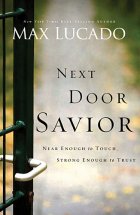
Book Review : Next Door Savior

nextdoorsaviorA great portion of society views God as distant, removed, uninvolved, and personally unknowable. And His son Jesus Christ, even more so. Is it possible that Jesus is not that distant? Is it possible that He cares and wants to be involved in our day to day lives? In his book, “Next Door Savior”, Max Lucado argues that such a Savior exists. As a result, Lucado writes, “we can’t ignore him.” He presents Jesus Christ as the prize of Christianity. He is the great reward of our faith, not a better life, money in the bank, or multiple cars in the garage. Jesus Himself. Lucado sets forth to illustrate the closeness and nearness of Jesus using the imagery of a next-door neighbor. His premise is to present Jesus, fully God and fully human, in a real manner, just as real as the person living next door. He is not merely a spirit, a distant part of our imagination, or an out-of-touch adviser. Instead, He is real. Near. Concerned. Involved.

Lucado breaks the book down into two parts: No Person He Won’t Touch and No Place He Won’t Go. Each chapter is based upon a specific bible story mixed with personal experience and  Lucado-esque style of wording. He uses the life of Peter, a blind man, Lazarus, and the woman with an issue of blood to demonstrate that Jesus was, and is, willing to involve Himself in the lives of people. Lives that are often complicated, dirty, and messy. This is a great book. It is a very easy read, as are most of Lucado’s books. Next Door Savior was just as I expected it to be. If you have read even one of Lucado’s books, then you know what is coming next. I found nothing new in the content. He had handled the same stories in past books. If you are looking for a deeper treatment of these stories, it won’t be found here. Encouraging. A good inspirational book.

Disclosure of Material Connection: I received this book free from Thomas Nelson Publishers as part of their Blogger Review Program. I was not required to write a positive review. The opinions I have expressed are my own. I am disclosing this in accordance with the Federal Trade Commission’s 16 CFR, Part 255: “Guides Concerning the Use of Endorsements and Testimonials in Advertising.”

Book Review : Loving the Church

lovingCountless books have been written on the subject of the local church. Subjects include principles of growth, recovering from hurt caused by, evangelism practices, missional tendencies, and theological types and shadows, to name a few. A discussion that is taking place in the circles of the Christian faith is how does a Christian  live out their love for Jesus Christ when the church, the bride of Christ, does not enable that, or at worst, hinders that from happening? Simply put: they love Jesus but not His bride. More and more Christians today are divorcing themselves from the body of Christ. They are saying “yes” to Jesus Christ, but “no thanks” to the church. In John Crotts’ new book, “Loving the Church; God’s People Flourishing in God’s Family”, he sets out to address and give pastoral insight to this issue that is before the church today.

Crotts’ book follows the story of a group of friends who met in a coffee shop, he tells each of their stories as it relates to their experiences in the local church. Some were not challenged by their congregation and leaders while others felt the church took too much time away from their families. One felt as though she had been abandoned by her church because of the personal choices she had made. As these friends meet regularly to discuss and come to terms with the function and purpose of the church, Crotts follows up their discussion by expounding on the scriptural principles and doctrinal matters that deal with the local church. He deals with such topics as the definition and value of the church, fellowship and gifts, and an individual’s relationship to the church staff and each other.

I believe Crotts has written a good book. The manner in which he sets up the book, interjecting this circle of friends into the storyline, makes the book easier to read and kept it from becoming too much like a textbook. It is a fairly easy read at only 131 pages. He gives an accurate picture as to why church and the church body should not be dismissed. There is one point of the book that I did not agree with and felt was severely out of place. In Chapter Five, Crotts says, “The second manner through which Jesus leads his church is a team of elders.” After previously setting up different leadership models often practiced by churches today, Crotts make this exclusive and, in my personal opinion, arrogant statement. Although I don’t personally agree with Crotts’ theology, he has written a good book from which much can be gleaned.

Disclosure of Material Connection: I received this book free from Cross Focused Reviews as part of their Blogger Review Program. I was not required to write a positive review. The opinions I have expressed are my own. I am disclosing this in accordance with the Federal Trade Commission’s 16 CFR, Part 255: “Guides Concerning the Use of Endorsements and Testimonials in Advertising.”

Book Review : Next Generation Leader

leaderLeadership. Those who have been given charge over others often struggle with the nuts and bolts of it. Questions swirl around this subject in the areas of leadership principles, characteristics of successful leaders, and indicators of dysfunctional leadership. The mere mention of leadership brings to mind certain authors who have written extensively on leadership. Men such as Al Mohler, John Maxwell, and Stephen Covey are powerful and influential voices today in this arena. However, another voice has emerged in the circles of leadership. Andy Stanley, pastor of Northpoint Community Church in Atlanta, GA has written a book entitled, “Next Generation Leader; Five Essentials for Those Who Will Shape the Future”. Stanley has emerged as a leadership voice to a younger generation. From his leadership podcasts to Catalyst Conferences, he provides leadership principles in a fresh and exciting light. He writes, “My passion is to help equip you to become a leader whose life is marked by qualities that ensure a no-regrets experience for those who choose to follow; a leader who leaves this world in better shape than he found it.”

Stanley divides his book into five sections. In each of these sections, he zeroes in on the important traits and qualifications that he believes makes an effective leader. The five sections are: competence, courage, clarity, coaching, and character. In the first section, competence, Stanley states that leaders must focus their energy toward the areas of leadership they have the greatest capacity to succeed in. He stresses the importance of maximizing you strengths and delegating your weaknesses. In the second section, courage, he shares that a leader is not always the smartest one in the office. Leaders possess courage to initiate action and move ahead. In the third section, clarity, Stanley shares that the leader cannot be vague, instead, he/she must clear, even if uncertain. He writes, “Uncertainty will not be your undoing as a leader. However, your inability to give a clear directive in the midst of uncertainty might very well be the thing that takes you out or causes you to plateau in your career”. In the fourth section, coaching, he emphasizes that regardless of how good or talented you are, everyone needs coaching to take us to the next level. In the fifth section, character, Stanley talks about the importance of “moral accountability” and how the personal life of a leader determines their followship.

Stanley has written a good book. It is not a difficult read, only 158 pages. The strengths of the book are his personal experiences and transparency. He allows the reader to learn from his past mistakes. He also utilizes scripture in a way that is especially insightful. As with all of his books, Stanley’s writing style is engaging, easy-to-follow, and profoundly simplistic. As far as weaknesses go, from a church leader’s stand point, it is a bit narrow and did not expand upon leadership challenged unique to church leadership. Overall, a great work. I recommend it to all who have been given the privilege to lead others.

Disclosure of Material Connection: I received this book free from Waterbrook Multnomah Publishers as part of their Blogger Review Program. I was not required to write a positive review. The opinions I have expressed are my own. I am disclosing this in accordance with the Federal Trade Commission’s 16 CFR, Part 255: “Guides Concerning the Use of Endorsements and Testimonials in Advertising.”

Book Review : The Best Question Ever

bestquestionLife is a myriad of decisions. Should I marry? Should I take that job? Is this the right investment for me? Should I go back to school? Is this the right move for my family? These decisions, and thousands more like them, shape the very fabric of our lives and the lives of those closest to us. In his book, “The Best Question Ever; A Revolutionary Approach to Decision Making”, Pastor Andy Stanley tackles the minefield that is creating effective and meaning decision-making processes. Stanley asserts that the reasons that people end up regretting past decisions is that proper and probing questions were not asked on the front end of the decision. He states that the flaw in our decision-making process looks like this: if it is not wrong, then it must be right. Looking to the Bible, Stanley concludes from Ephesians 5:15-17 what he considers to be the foundational question of decision making. A question that, in his words, “provides you with a context for addressing questions of where to draw the line morally, relationally, and ethically” and “exposes the irrationability of our own excuses.” His question: “What is the wise thing to do?”

As Stanley goes forward in his book, he further refines his “best question”. He deals with past experiences, present circumstances, and future hopes of an individual that form the framework for a decision that is individually wise. Having built this framework, Stanley leaves the reader with a truly thought-provoking and introspective question. Here is refined question: “In light of your past experiences, present circumstances, and future hopes and dreams, what is the wise thing for you to do?” In the latter part of the book, Stanley applies this question to three critical areas of life: time, finances, and morality. His call for the reader to apply wisdom, instead of what is merely legal or simply “not wrong”, to these areas is clear and sobering.

Stanley has written a great book. I enjoy his style of writing. His mixture of humor, scripture, and personal/professional experience is engaging and easy to follow. The Best Question Ever serves as a necessary filter and grid to sift all of life’s decisions through, whether large or small. Challenging. Probing. Inspiring. Time well spent. I highly recommend.

Disclosure of Material Connection: I received this book free from Waterbrook Multnomah Publishers as part of their Blogger Review Program. I was not required to write a positive review. The opinions I have expressed are my own. I am disclosing this in accordance with the Federal Trade Commission’s 16 CFR, Part 255: “Guides Concerning the Use of Endorsements and Testimonials in Advertising.”